How to Make Fish Feed Pellet
Fish feed pellets are the most commonly used and efficient feeding feed in aquaculture, pond and aquarium culture, which can provide balanced nutrition for freshwater and marine fish. Mastering the production method of fish feed pellets can effectively reduce the cost and improve the aquaculture efficiency, whether it is used by small family workshops, farms or large-scale production. This article explains how to make high quality floating fish feed, slow sinking fish feed and submerged fish feed from raw materials, formula, equipment, steps, troubleshooting to quality control.
What is fish feed pellets?
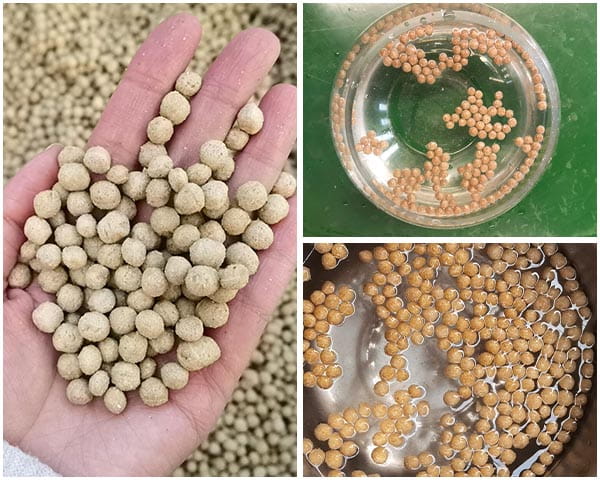
Fish feed pellets are high-nutrition molded feeds specially designed for aquaculture, with precise nutritional ratios, easy feeding, less waste and less water pollution. According to the sinking and floating characteristics, it is divided into three categories: floating fish feed: suitable for grass carp, carp, tilapia and other upper feeding fish. Slow-sinking fish feeds: suitable for middle and lower layer fish. Sinking fish feeds: suitable for catfish, shrimp, benthic fish.
Different types of pellets have obvious differences in formulation and processing technology, which directly affects the feeding efficiency of fish and the quality of aquaculture water. High-quality fish feed pellets can not only accurately meet the nutritional requirements of different fish, but also have the characteristics of good water stability, not easy to be broken up, high digestibility and absorption rate, which can effectively reduce the waste of feed, reduce water pollution and improve the breeding efficiency.
Basic composition of fish feed pellets
1. Macronutrients: basic substances for fish growth
Protein is the most core and expensive ingredient in fish feed pellets, which is the main building material for fish growth, development and tissue repair. The proportion of protein in the feed for carnivorous fish can reach 35%-50%, while that for omnivorous and herbivorous fish is 25%-35%, and it must contain essential amino acids such as lysine and methionine, etc., which can not be synthesized by the fish themselves.
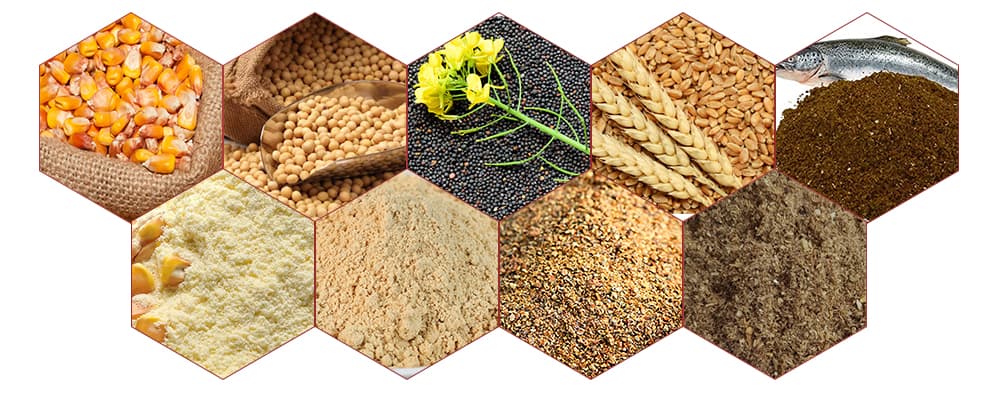
Protein sources are divided into animal and plant sources. Animal sources are mainly fishmeal, shrimp meal and meat and bone meal, which have high digestibility and absorption rates; plant sources are mainly soybean meal, corn protein powder and peanut meal, which have lower costs, and nowadays sustainable raw materials, such as insect meal, single-cell proteins, and algae, are gradually becoming an alternative choice. Fats provide efficient energy for fish, with twice the amount of protein and carbohydrates. They also aid in the absorption of fat-soluble vitamins and provide essential fatty acids such as Omega-3 and Omega-6. The percentage of fats in feeds is usually 5-25%, and sources include fish oil, soybean oil, canola oil, and poultry fat. Carbohydrates mainly play the role of saving protein and providing energy, and at the same time, it is the key to particle molding and buoyancy control, the starch content of floating feeds should be more than 20%, and 10%-15% for submerged feeds, and commonly used raw materials are corn meal, wheat bran, rice bran, tapioca starch, etc., and the digestibility rate will be greatly improved after maturation.
2. Micronutrients and Functional Additives: Protecting Fish Health
Vitamins and minerals, as micronutrients, account for 1%-5% of the total amount of feed, and are the key to maintaining fish metabolism, immunity and bone health. Vitamins are mainly used in artificial compound premixes, which contain vitamins A, D, E, K and B vitamins, while minerals come from bone meal, calcium phosphate and shellac, supplementing calcium, phosphorus, zinc, iron and other elements. Binder and functional additives are important parts to improve the quality of pellets. Binders such as wheat flour, gelatin, seaweed gum, etc. can enhance the hardness of pellets and reduce the loss of nutrients in water; functional additives include food attractant, astaxanthin, probiotics, enzymes, antioxidants, preservatives, etc., which can enhance the palatability, improve the color and luster of the fish, regulate the health of intestinal tract, and prevent the oxidation of fats and oils, so as to make feeds more compatible with the growth needs of fish. Fish growth needs.
Your Attractive Heading
Basic knowledge of fish feed formulation
1. Basic principles of formula design
Fish feed formulation design is the process of matching ingredients scientifically according to the target fish species, growth stage and culture mode to create a nutritionally balanced, cost-effective, palatable, water-tolerant and stable feed, with the core of balancing macronutrients, micronutrients and functional additives, while taking into account the cost and sustainability. First of all, to match the nutritional needs of fish, carnivorous fish need high protein, high fat, omnivorous, herbivorous fish can increase the proportion of carbohydrates, fish fry, fish breeding stage requires higher protein and easy to digest raw materials, adult fish, fish need to adjust the proportion of nutrients. Secondly, we should do a good job of protein-energy balance, use carbohydrates and fats to provide energy, reduce protein waste, and pay attention to the digestibility of raw materials to avoid anti-nutritional factors in plant materials, but also to control the floatation and sinking characteristics of particles, to adapt to the feeding habits of fish.
2.Practical steps of formula design
When designing the formula, firstly, we should clarify the target fish, growth stage, target protein and energy level, and feeding layer; secondly, we should sort out the nutrient composition, cost, and maximum additive ratio of the available raw materials; then we should balance the core nutrients through trial and error, Pearson’s square, linear planning software, etc., and then we should check whether the essential amino acids, vitamins, and minerals are up to the standard, and adjust the constraints on the palatability, pellet quality, and cost. Finally, the effectiveness of the formulation was verified through digestibility test, water tolerance test, and feeding test. In the case of adult tilapia feeds, for example, soybean meal accounts for 30%-50%, wheat gluten and maize for 20%-40%, fishmeal or alternative proteins for 10%-20%, and the rest being fats and oils, vitamin-mineral premixes, and binders. In the case of juvenile feeds for carnivorous fishes, the fishmeal percentage is increased to 20%-40%, with soybean meal and poultry meal, supplemented by grains and fats, to satisfy the demand for high proteins.
Equipment required for producing fish feed pellets
1. Equipment selection based on production scale and processing technology
There is no uniform standard for the equipment configuration of fish feed pellet production line, which is mainly based on two major dimensions, namely, production scale (small, medium and commercial large-scale) and processing technology (ordinary pelletizing process, puffing process). Compared with the traditional granulation process, the advantages of puffing process are very prominent, it can precisely regulate the particle density to realize floating, slow sinking, sinking a variety of forms, and at the same time, the digestive absorption rate of the raw material after high temperature ripening has been greatly improved, which is currently the mainstream process of the high-end aquatic feed processing plant, and the different scale sites can choose the dry puffing or wet puffing equipment with a complete set of supporting units as required.
2.Raw material pretreatment and mixing and tempering supporting equipment
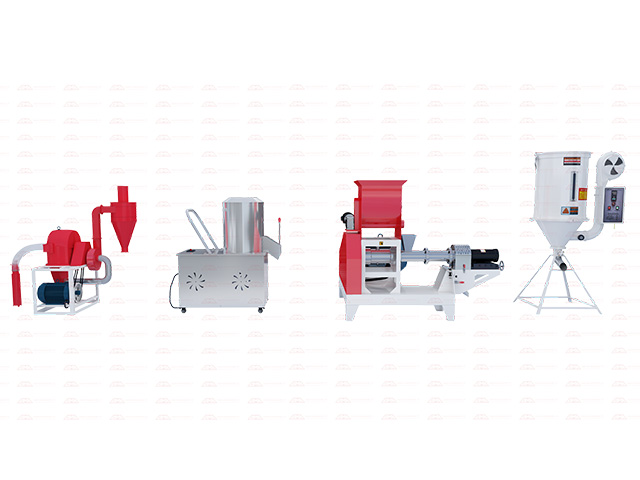
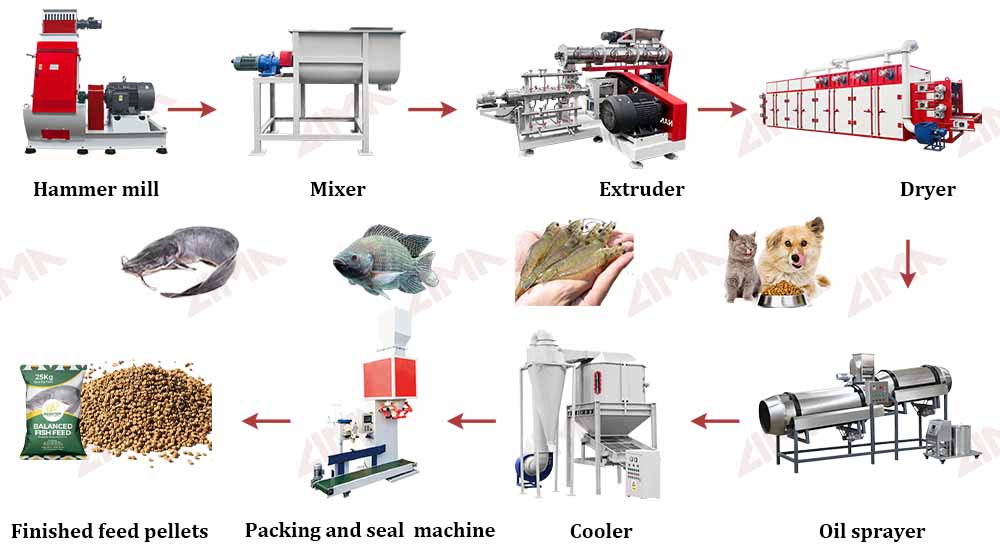
Raw material pretreatment stage of the core equipment for the hammer mill, the processing of various types of raw materials need to be crushed to 60-120 mesh, fine powder can enhance the bonding effect of molding, while facilitating the digestion and absorption of fish, is to ensure the quality of the pellet base of the first key equipment. After crushing, it enters the mixing process, and the mainstream models include horizontal screw belt mixer and vertical mixer, which can mix protein raw materials, grains, oils and fats, vitamins and minerals additives, and the production line is equipped with high-precision weighing equipment, so that the ingredients are fed in strict accordance with the formula ratio to avoid imbalance in the nutrient ratios. The tempering process is equipped with steam tempering device, with the help of high-temperature steam heating and humidifying the mixed powder, prompting the internal starch of the raw material to be fully pasted, fundamentally improving the water stability of the molded particles, and reducing the collapse of the loss when feeding.
3. Core molding equipment: the difference between granulator and expander
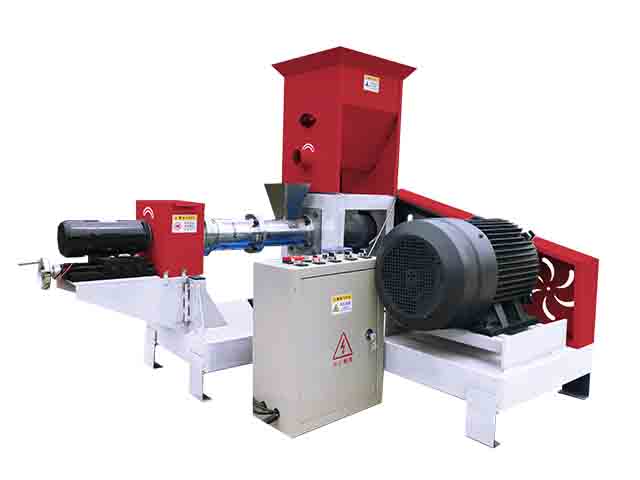
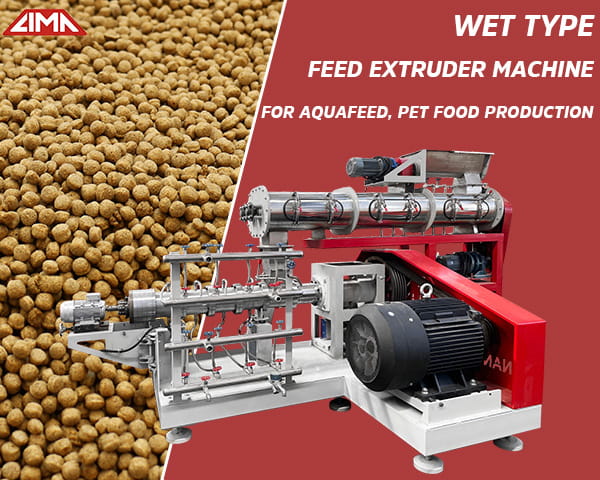
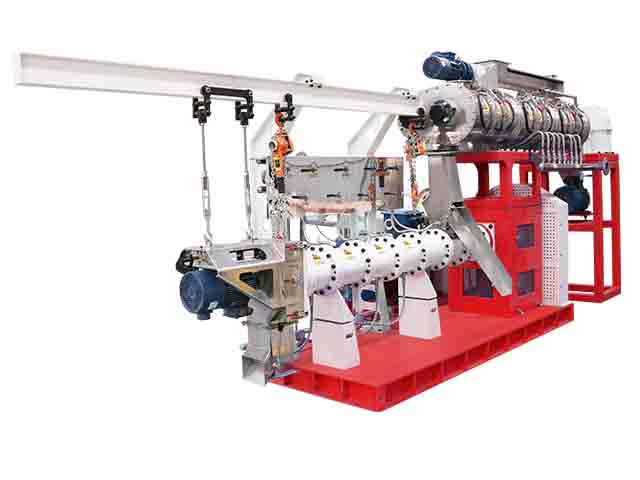
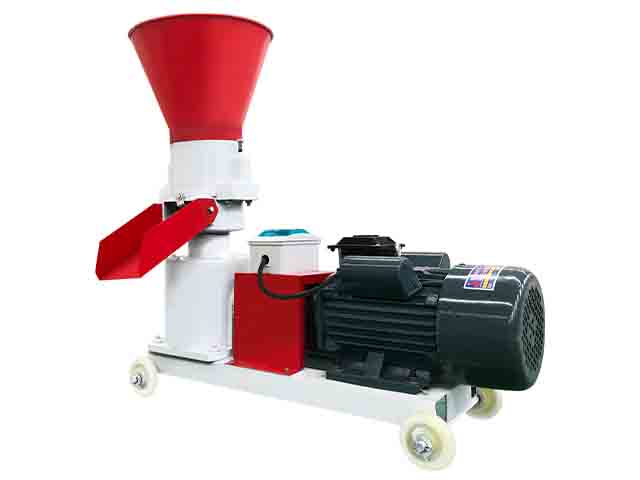
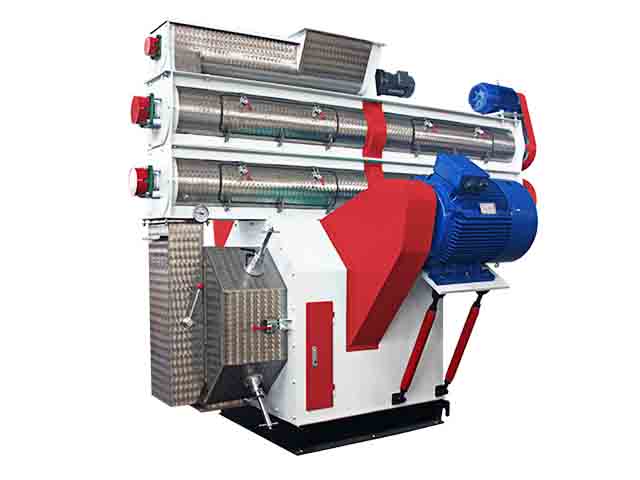
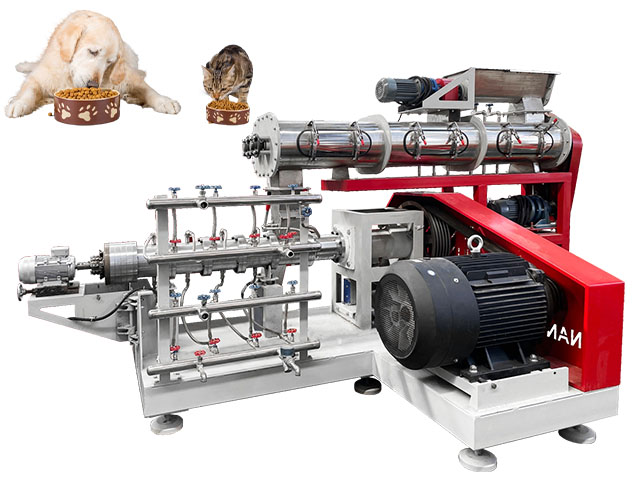
Molding is the core of the entire production line, divided into two types of equipment granulator and puffer. Flat die, ring die granulator rely on mechanical extrusion to complete the molding, equipment purchasing and operating costs are lower, but can only make higher density of submerged feed, suitable for feed quality requirements are not high for the basic breeding scene. Single-screw, twin-screw extruder adopts high-temperature and high-pressure extrusion process, the material is extruded out of the mold instantaneous pressure drop to produce the expansion effect, and can flexibly produce floating, slow-sinking, submerged particles of three categories; of which the wet extruder needs to be equipped with a steam boiler, with large capacity and better quality of the finished product, which is suitable for medium-sized and commercial large-scale processing plant, dry extruder does not require additional configuration of the boiler, with a simple layout of the equipment, occupying a smaller area, which is more suitable for small-sized The dry puffer does not need additional boiler, simple equipment layout, smaller footprint, more suitable for small farms for personal use.
3. Finishing and packaging equipment for finished products
After pellet molding, a series of processes such as drying, cooling, finishing and packaging have to be completed, and the corresponding supporting equipment is indispensable. The combination of dryer and cooler is responsible for regulating the moisture of pellets, controlling the moisture content of finished products at 6%-10%, inhibiting the growth of mold and prolonging the shelf life of feed storage. The crusher can crush the big particles into tiny powder, which is specially supplied for fry and young fish; the grease sprayer can spray fish oil and enticing grease on the surface of the dried particles to enhance the palatability of the feed; the sieving machine can sieve out the dust and debris produced during the production process to ensure the finished particles are complete and even; and finally, the whole set of fish feed pellet processing is completed by the packaging machine with automatic packing and sealing bag.
Production steps of fish feed pellets
(I) Raw material screening and pretreatment
According to the formula, select fresh, no mold, no impurity raw materials, clean up to remove gravel, foreign matter, and weigh accurately with electronic scales, floating feed to ensure that the starch content of ≥ 20%, submerged type control at 10%-15%. Raw material crushing is a key step, need to be crushed to 150-500 microns, coarse particles will lead to loose particles, easy to break, small-scale production can be used in household mills, commercial production lines are equipped with professional mills, to ensure uniform particle size.
(B) mixing and tempering
Crushed raw materials into the mixer to mix thoroughly, first mix the bulk raw materials, and finally add vitamins, minerals premix and fats, to ensure that each particle nutritionally consistent. Expansion process needs to add water or steam to adjust the moisture of the mixture to 20%-30% to form plastic material blanks; commercial production lines need to be tempered, through 50-150 ℃ steam heating, further paste starch, kill pathogenic bacteria, improve the stability of particles and digestibility.
(iii) Molding and cutting
Pelleting process will feed the material blank into the pelletizer, through the pressure roller and mold extrusion to form high-density submerged particles, cut by the cutter into a uniform length; puffing process will feed the material blank into the puffing machine, high-temperature and high-pressure ripening extrusion molds, the pressure drop to make the particles expand, the formation of floating particles of porous, through the adjustment of the screw speed, temperature, mold aperture, to control the size of the particles (0.8-12 mm) and the buoyancy. Small-scale homemade feed can be kneaded into dough, extruded into shape with manual meat grinder and pasta press, and then cut by hand.
(D) Drying, cooling and post-treatment
After molding the pellets need to be dried to moisture 6%-10%, commercial with belt dryers, small with ovens, air-drying equipment, to avoid mold. Subsequently, the pellets are cooled down to room temperature with a counter-current cooler to harden the pellets and improve their resistance to falls. Post-processing link, through the sieving machine to remove dust, crusher to break large particles into fish fry material, spraying machine to spray grease, enticing agent, to enhance the palatability and nutrition, and finally test the particles of moisture, hardness, buoyancy, water resistance, after passing the sealing and packaging, stored in a cool and dry place.
Common problems and solutions in the production of fish feed pellets
1. The pellets are easy to be broken and dusty, and the water resistance is poor.
It is easy to have the problem that the particles will be broken when the feeds are molded, produce a lot of dust, and lose the nutrients quickly after being put into the water, which is mainly caused by the insufficient addition of binder in the formula, roughness of raw material crushing granularity or the lack of steam, moisture and temperature control in the tempering stage, which makes starch unable to be fully pasted and lose the binder effect. For this kind of problem, the production can be increased in the formula of tapioca starch, wheat gluten and other starch binder, improve the fineness of raw material crushing, while the tempering temperature is steadily increased to more than 80 ℃, so that the starch is fully pasted, enhance the overall structural strength of the particles to reduce the generation of dust, prolonging the particles of the integrity of the retention time in the water.
2. Feed buoyancy does not meet expectations, floating and sinking effect of disorganization
Part of the production line will be floating feed should be fast sinking, submerged feed floating in the water buoyancy abnormalities, the root cause of floating feed puffing processing is not sufficient, the internal pore space is not enough density bias, submerged feed formulas starch accounted for a high proportion of over-expansion and expansion of excessive. The solution is to adjust the internal temperature and pressure parameters of the puffing machine, optimize the proportion of starch added to the formula, floating feed to ensure that the starch is sufficient to achieve full expansion, submerged feed to moderately reduce the starch content, and accurately control the density of particles, to match the needs of different fish feeding layer.
3.Different particle sizes and poor uniformity of the finished product.
The output of feed particles length, thickness gap is obvious, feeding small fish can not ingest large particles, large particles of fish waste fine powder, the problem mostly comes from the equipment feeding and conveying speed is not stable, long-term use of molds, pressure rollers wear gap imbalance. Daily production should regularly calibrate the feeding equipment to ensure that the material enters the molding host at an even speed, regularly check the degree of mold loss, wear and tear after the serious and timely replacement of brand new molds, uniform pellet molding specifications, to ensure that the finished product size uniformity.
4. Oil leakage oxidation, feed storage easy to deteriorate
After storing feed for a period of time, the surface oozes oil and produces a harry smell, and the oil oxidizes and deteriorates, firstly, the total amount of oil added to the formula is too high, and secondly, the internal structure of the pellet is loose and weak in locking up the oil. The optimized solution adopts vacuum spraying process after puffing, does not add a large amount of grease in the pre-mixing stage, and at the same time adds compliant antioxidant in the formula to reinforce the particle molding structure to lock the grease and avoid grease precipitation and oxidation, so as to prolong the shelf-life of the feed in storage.
5. Equipment clogging and jamming, unsmooth discharge
In the middle of production, puffer and pelletizer frequently clogging and not discharging, the core of the material moisture is too high or too low, and the holes of the mold are clogged by the accumulation of powder and residue. Real-time monitoring of the production process and timely adjustment of the mixture of moisture, after the end of each shift of production to clean up the mold, screw residue, regular replacement of screws, dies and other easy to wear fittings, to ensure that the material conveying, molding process smooth, to avoid downtime loss of production capacity.
6.Nutrition loss is serious, and the digestive absorption rate of fish is low.
After processing the feed vitamins and other nutrients after a large number of losses, breeding and feeding of slow growth of fish, low feed utilization, mainly due to the processing of high temperature for too long to destroy the heat-sensitive nutrients, or the selection of low-quality raw materials itself is low digestibility. Reasonable control of expansion and tempering processing temperature in production, avoiding long time ultra-high temperature processing, purchasing fresh and high-quality raw materials, relying on moderate expansion process to complete the maturation of raw materials, improve the utilization rate of starch and protein digestion, and reduce the nutrient loss.
Tips for producing high quality fish feed pellets
1. Strictly control the screening and crushing process of raw materials.
If you want to produce fish feed pellets with standard quality, the first step is to control the quality of raw materials from the source, and use fresh, mold-free and unadulterated raw materials to prevent deteriorated raw materials from being put into production. The fineness of raw material crushing directly affects the hardness, water resistance and fish digestion and absorption rate of the particles. The crushing size of conventional feed materials should be controlled within 0.5-0.8 mm, and the requirement is even higher for the expanded fish feed, which needs to ensure that 95% of the raw materials can pass through the sieve with the specifications of 177-250 microns. To avoid the problems of loose and fragile particles and rapid dispersion in water, the feed formula should be scientifically formulated.
2. Scientifically formulate feeds to optimize the internal nutritional structure.
Formulation design is the core link to determine the effect of feed use, and it is necessary to accurately match the nutritional ratios of protein, carbohydrates and fats according to the species and growth stages of farmed fish. The starch content directly determines the bonding effect and floating performance of the particles, which should be reasonably adjusted according to the needs of floating and submerged materials, and at the same time, the proportion of oil added should be strictly controlled, as too much oil is prone to ooze and oxidize, which can be combined with high-quality starch binder to enhance the firmness of the particles. On this basis, add probiotics as needed to regulate fish intestinal health, with antioxidants to slow down the rancidity of fats and oils, you can also use soybean meal, insect proteins and other raw materials to partially replace the high-priced fishmeal, to control the cost of production at the same time taking into account the sustainability of feed production.
3.Standardize the core process of mixing, tempering and molding.
Powder mixing and steam conditioning process can not be simplified, sufficient and uniform mixing can ensure that the nutrient composition of each grain of feed to maintain consistency, to avoid local nutritional imbalance. In the tempering stage, the temperature is steadily controlled at 80℃ to 100℃, so as to fully paste the internal starch of raw materials with the help of high-temperature steam, which greatly improves the water-resistant stability of pellets after molding. Processing and molding priority selection of expansion process, the production process of precise control of processing temperature, screw speed and moisture content of the material, in order to flexibly adjust the density of particles, stable floating, slow sinking, sinking and other different buoyancy effects; particles after molding should also complete the full drying and cooling process, the moisture of the finished product is controlled within 10%, to prevent insufficient cooling condensation back to the moisture, the particles crushed to increase the loss of the situation. After the drying and cooling is completed, the outer layer can be supplemented with grease and enticing ingredients through spraying equipment to enhance the palatability and nutritional content of the feed.
4.Perfect quality control, equipment operation and maintenance and continuous optimization of process.
Feed production needs to be supported by a complete quality inspection, regular sampling and testing of particle durability, hardness, water stability time, floating and settling performance, conditional processing plant can carry out the actual feeding test, visual verification of feed growth and feeding effect. In daily production, do a good job of regular maintenance and repair of equipment, timely replacement of worn out molds, screws and other accessories, to maintain a hygienic workshop production environment to reduce the risk of microbial contamination; simultaneous enhancement of professional training of operators, complete records of the parameters of the production process for each batch, and according to the results of the finished product testing and optimization of the production process. Small-scale feed processing does not need to use complex formulas at the beginning, but can start from simple and mature formulas, and gradually upgrade the processing equipment and process solutions according to its own production capacity requirements, so as to balance the feed quality and the overall production cost.
Comparison between small-scale production and commercial fish feed production
1. Capacity, equipment investment and site conditions
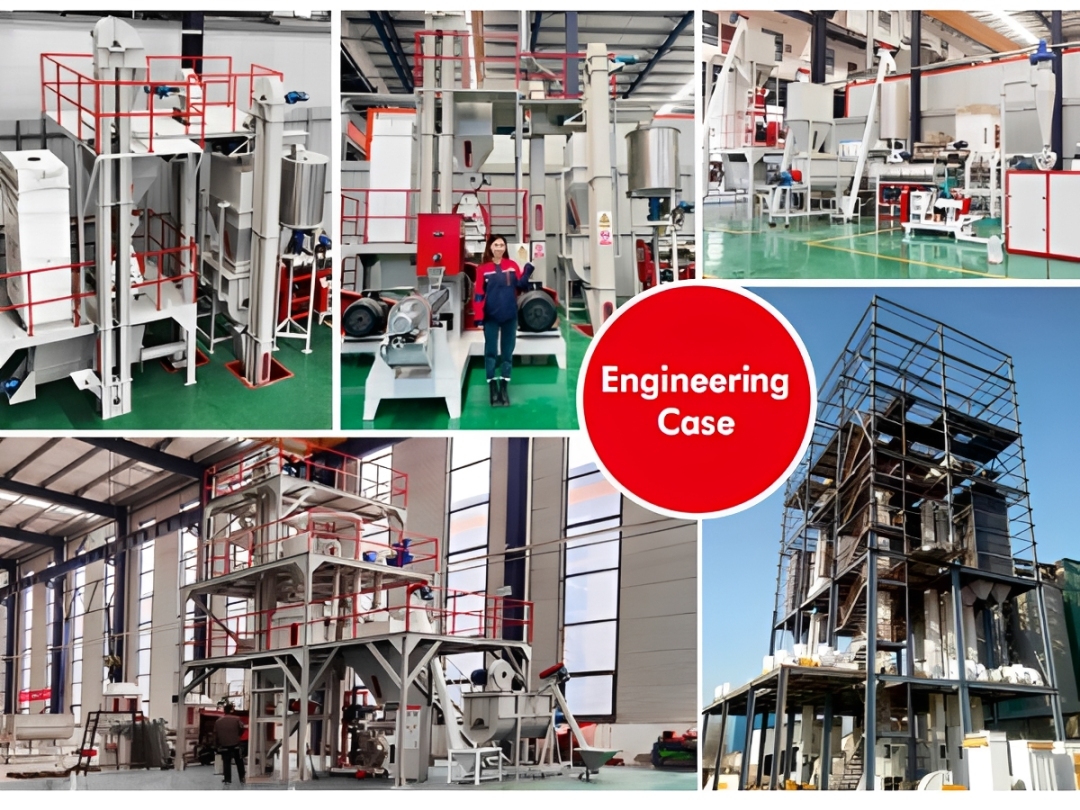
The hourly capacity of small-scale fish feed production line is maintained at 50 to 500 kilograms, the investment range of the whole set of equipment is 8,000 to 100,000 U.S. dollars, and the production site only needs 100 to 300 square meters, with the equipment configuration of ordinary pelletizing machine or dry puffer as the main equipment, and the automation level of the whole production line is on the low side, and most of it relies on manpower to complete the process of batching, transferring, packing, etc., which is mainly used by the self-supply of aquatic farms and small start-up processors. It mainly serves the self-supply of aquaculture farms and small-scale start-up processing practitioners. Commercial feed production line capacity of 1 to 10 tons per hour and above, the total investment in equipment to start 100,000 U.S. dollars, high-end complete sets of production line input up to 1.2 million U.S. dollars or more, the equipment comes standard with a wet twin-screw extruder host, fully automated dosage and conveying system, but also supporting a complete set of quality inspection and control equipment, the required plant, warehousing, environmental protection site area is larger, dedicated to docking large-scale, intensive aquaculture enterprise Supply.
2.Production process, automation and finished feed quality
Small-scale production line is limited by equipment configuration, can only complete the basic granulation or simple dry puffing processing, lack of steam conditioning, multi-layer drying, oil and grease vacuum spraying and other fine processes, the output of the feed floating, sinking effect is difficult to accurately regulate the feed nutrition, hardness, water resistance of each batch of feed is prone to differences in the stability of the finished product quality is weak. Relying on the wet twin-screw expansion process, the commercial production line can precisely regulate the feed density and produce floating, slow-sinking and submerged pellets according to the demand, with the whole automated closed-loop processing combined with the normalization of quality inspection, which results in a higher degree of starch pasting, better feed digestibility and absorption rate, better performance of the stabilization in the water, uniform size of the finished pellets, less dust, and lower loss of feeds in the process of aquaculture and feeding.
3. Advantages and disadvantages of the two production modes
The biggest advantage of small-scale production is the low threshold for entry, simple equipment installation, fast production speed, flexible adjustment of formulas to match the local breeding species, shorter payback cycle; the shortcomings lie in the limited hourly output, unable to undertake large orders, the processing process relies on manual operation, the quality of each batch of feed fluctuations are obvious, it is difficult to meet the demand for large quantities of standardized export sales. Commercial production relies on high automation and large capacity to achieve high production efficiency, high degree of standardization of finished feed products, market premiums and overall profit margins; the core disadvantage is the huge investment in fixed assets in the early stage, the operation of the production line, equipment maintenance, quality control processes are complex, requiring professional and technical personnel to operate for a long period of time, and at the same time, it must be stable to undertake large orders in order to maintain profitability.
4. Raw materials and comprehensive production cost differences
Raw material procurement cost is the most important expense of the two production modes, accounting for 50% to 85% of the total production cost. Small-scale production can locally purchase local raw materials such as scraps of agricultural and sideline products, effectively compressing raw material procurement expenses, and the farm’s self-produced feed can directly save 20% to 50% of the farming input costs compared to purchasing finished feeds; however, small-scale purchasing is small, and it is not possible to get wholesale discounts for bulk raw materials, so the cost of labor and energy consumption is higher when apportioned to the cost of each ton of feed. Commercialized production relies on large-volume centralized purchasing to depress the purchase price of protein and grain raw materials, and large-scale production capacity significantly dilutes fixed expenses such as electricity, steam, labor, depreciation of equipment, etc., so that the comprehensive processing cost per ton of feed is even lower, and the cost advantage brought by the scale effect is incomparable to that of the small-scale processing mode.
Fish feed pellet production cost analysis
1. Fixed assets investment and depreciation cost
The fixed assets investment in the early stage of fish feed production mainly includes production equipment, plant construction, environmental protection and storage facilities, and the investment scale varies greatly with the production capacity and process. Small self-use production line with simple pelleting or dry expansion equipment is the main investment, only tens of thousands of dollars, while large-scale commercial wet expansion automatic production line equipment, civil construction, installation of the total investment can reach millions to tens of millions of dollars level. These fixed assets will be depreciated over a period of time to each ton of feed, large-scale factories due to high production capacity, the unit depreciation cost is significantly diluted, small workshops due to the limited production, fixed cost sharing pressure is even greater, and directly pull up the base cost of the unit of feed.
2. Raw material cost ratio and influencing factors
Raw material is the core component of fish feed production cost, accounting for 70%-85% of the total operating cost, which is the key to determine the feed price. The cost of protein raw materials such as fishmeal and soybean meal is the highest in the feed formula, and the raw material cost of carnivorous fish feed is much higher than that of omnivorous fish feed due to the large amount of fishmeal added. At the same time, the price of bulk raw materials by market conditions, international supply fluctuations in the impact of obvious, large-scale enterprises have a bargaining advantage by virtue of centralized purchasing, small producers fragmented procurement costs are higher, coupled with the production of dust, residues and other losses, which further increase the actual expenditure on raw materials.
3. Energy consumption, labor and auxiliary operating costs
In addition to raw materials, energy consumption, labor, equipment maintenance, packaging and environmental protection constitute the main auxiliary costs. Expanded floating feed power, steam energy consumption is significantly higher than ordinary submerged pelletized feed, wet expansion due to the need for steam tempering, energy costs are even higher. Labor costs depend on the degree of automation, fully automated production lines can significantly reduce manpower, labor per ton of feed is much lower than the manual operation of small production lines. In addition, the expansion screw, pelleting molds and other wearing parts replacement, bag procurement, environmental protection and other ongoing expenses, as well as production management and improper management of the hidden waste, will increase the overall operating costs.
4. The impact of production scale and process on the comprehensive cost
Production scale and processing technology directly determine the comprehensive cost of feed and profitability. Small self-production mode of low investment, flexible and convenient, suitable for farms for their own use, can save the middleman price difference, but the unit processing cost is high, does not have the advantage of external sales; large commercial puffed production line of large upfront investment, but relying on the scale effect of dilution of depreciation, energy consumption, labor costs, and the puffed feed digestibility is high, the market premium space, the gross profit margin is more substantial.
At the same time, the production capacity is the key to start rate, full production can effectively reduce the unit cost of assessment, the start is not enough will significantly increase the cost and lengthen the return on investment cycle.