How to improve the quality of chicken feed pellets
The quality of chicken feed pellets directly determines the feed utilization, flock growth and overall profitability of poultry farming. Poor quality pellets are easy to crumble, dusty, unstable moisture, uneven nutrition, which may cause uneven growth, feed waste and chicken health problems. This article combines first-line production experience, systematically introduces how to improve the quality of chicken feed pellets, from quality standards, raw materials, formulations, processing technology to warehouse management, sorting out a full set of quality improvement methods to help farms to stabilize the quality of pellets, reduce costs and increase efficiency.
The core judgment standard of high quality chicken feed pellets
Before optimizing the quality of pellets, it is crucial to accurately grasp the parameters and indicators of high-quality feed pellets, which is the core basis for judging the production effect and optimizing the quality:
Pellet Durability Index (PDI)
Pellet Durability Index (PDI) is the core index to measure the quality of feed pellets, which represents the ability of pellets to resist breakage during the whole process of production, transportation and feeding. The PDI standard for high quality pellets is 90%-95%; the qualified bottom line for broiler feed is 85%-90%; waterfowl feed such as ducks and geese require higher PDI of 92% or more. High PDI pellets can reduce powder generation from the source and avoid nutritional stratification caused by broken pellets.
Low powder content
Powder refers to the broken fine particles and debris in the feed. Excessive feed powder will lead to picky eating, unbalanced nutritional intake and a significant drop in feed utilization. The industry quality standard is that the proportion of powder at the end of feed is less than 10%, and the optimal control interval is 5%-8%.
Moderate particle hardness
The ideal crushing hardness of chicken feed pellets is 3.5-4.5 kgf. Pellets with too high hardness will increase the digestive burden of chickens and affect the development of muscle and stomach; pellets with too low hardness will break easily and generate a lot of dust, both of which will significantly reduce the feeding effect.
Stable moisture content
The moisture content of the cooled finished feed pellets should be controlled at 10%-12%, with a maximum of 13%. Excessive moisture will lead to mold, caking and deterioration during storage; too low moisture will make the pellets brittle and easy to break during transportation and feeding.
Uniform appearance and stable nutrition
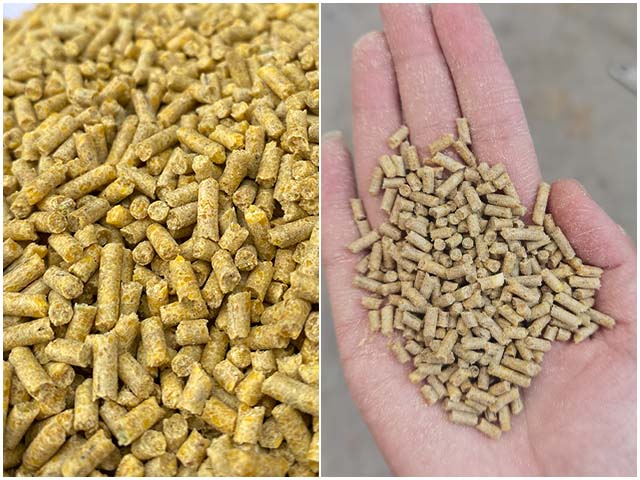
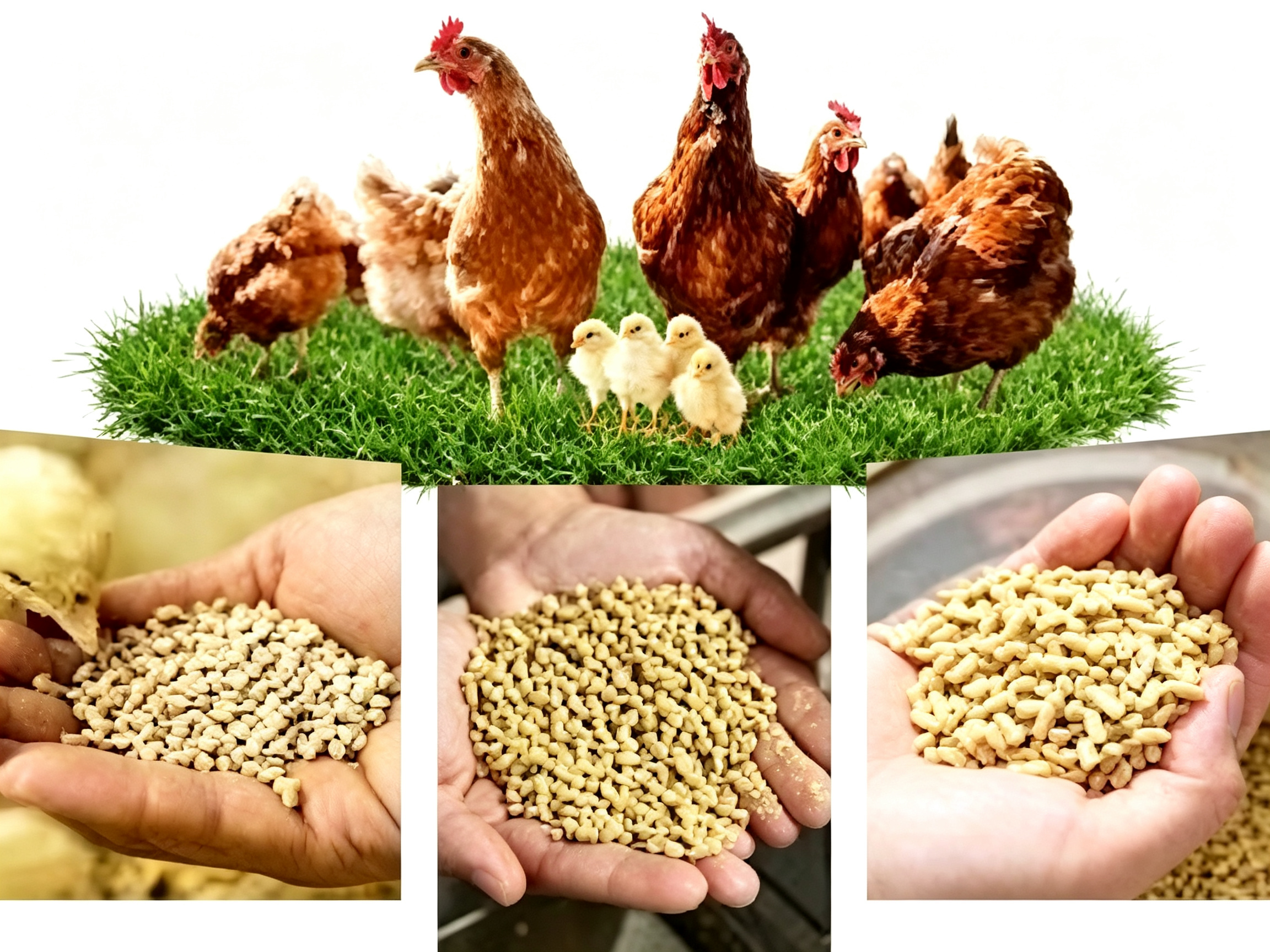
High-quality chicken feed particles have uniform particle size (conventional particle size of poultry feed is 2-4 mm), uniform length, smooth surface, uniform color, and no burning and other odors. At the same time, the nutritional ratio of feed is stable, without the phenomenon of layering of ingredients. Standardized pelleting process can promote starch pasting, improve nutritional digestion and absorption rate, to protect the healthy growth of chickens.
Important value of high quality chicken feed pellets for poultry farming
The quality of feed pellets is not only a production and processing index, but also a key factor in determining the economic benefits of farms, and the difference between the farming benefits of high-quality pellets and low-quality pellets is very significant:
Core advantages of high quality feed pellets
Tight and palatable complete feed pellets can effectively increase the feed intake of chickens, accelerate the rate of weight gain, the breeding performance is much better than powder and high powder feed, significantly improve the overall growth performance of chickens, while every 10 percentage points increase in feed completeness, the feed conversion rate can be optimized by about 0.4 points, significantly reducing the feed consumption per unit of weight gain corresponding to the chickens, and the low-powder high-quality pellets can also fundamentally prevent the chickens from picking at food and spilling feed. Low powder quality pellets can also fundamentally avoid the problems of picky eating and feed spillage, ensure the continuous and stable intake of balanced nutrition by chickens, and reduce feed waste. Stable and uniform pellet quality can make the nutritional intake of the whole flock of chickens consistent, effectively avoiding individual growth differences, improving the uniformity of chicken growth and reducing the subsequent slaughtering and processing losses. In addition, high-density complete pellets not only save storage and transportation space, reduce logistics costs, but also improve the efficiency of feed circulation in the farm, reduce equipment clogging, material bridging and other common failures, and further reduce the overall operating costs of farming.
Risks of poor quality feed pellets
Substandard quality feed particles are easy to break and produce a large amount of powder, which causes a series of breeding problems: nutritional stratification leads to uneven growth of chickens; when the proportion of powder exceeds 40%, the feed conversion rate will increase by 3-6 points, and the weight of chickens will drop by 20% in some scenarios; moldy, damp and poor-quality feeds will induce diseases in the chickens, which will greatly increase the breeding wastage and production costs.
Selection of high-quality raw materials
The quality of raw materials determines the upper limit of feed pellet quality, which is the basic core of producing high-quality chicken feed pellets. The bonding, nutritional properties and processing characteristics of different raw materials are very different, scientific, reasonable and standardized raw material selection and control is the primary key to enhance the pellet molding effect, stability and quality uniformity from the source, and the specific operation can be divided into three core points.
Scientific selection of raw materials to control nutritional quality
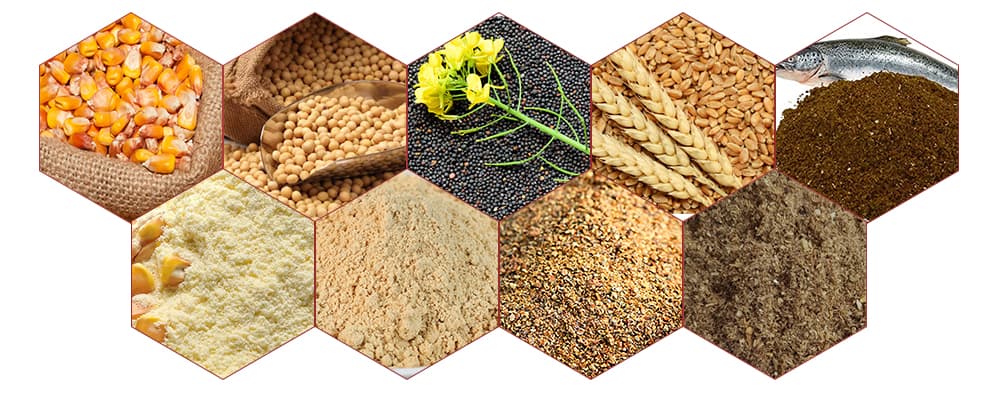
Breeding production needs to be based on the differences in the categories of broilers and laying hens, combined with the physiological characteristics of chickens at various stages of growth and feeding needs, scientific matching of raw materials and adjust the nutritional ratios. Production of corn, wheat, sorghum as the core energy raw materials, with soybean meal, fishmeal and other high-quality protein raw materials, to build a balanced feed base system. At the same time, reasonable deployment of vitamins, minerals and other additives to improve the nutritional structure of the feed to meet the growth of chickens. In order to ensure stable quality of raw materials, the need to establish a regular raw material sampling mechanism, focusing on testing protein, moisture, crude fiber, amino acids and other key indicators. Strictly control the quality of all incoming raw materials, to prevent unqualified raw materials into production. In order to ensure the nutritional balance of the feed, and at the same time adapt the pelleting process, solidifying the foundation of pellet quality.
Selection of bonding raw materials and strict control of the proportion of auxiliary materials
The bonding performance of raw materials is a key factor in determining the firmness, molding effect and durability index of feed pellets. In the production, 10%-20% of wheat and by-products can be added in the right amount, using starch pasting characteristics to effectively improve the bonding of materials, and significantly improve the quality index of pellet PDI. Soybean meal can be used as auxiliary bonding raw materials to further optimize the overall molding stability. The production process needs to strictly control the proportion of auxiliary materials added, additional oil and grease additions need to be controlled within 5% -8%, to prevent the lubricating effect of oil and grease to weaken the structural strength of the particles. Animal fat is preferred for oil supplementation to minimize the negative impact on pellet quality. At the same time, the proportion of crude fiber should be reasonably controlled to avoid the problem of loose structure and easy to crumble and fall powder caused by too high content.
Strictly control the quality of raw materials to ensure the safety of traceability
The freshness and safety of raw materials are directly related to feed quality and chickens’ health, which is the key link of raw material control. The moisture of raw materials entering the factory should be strictly controlled within 12%-14%, and moldy, lumpy and damp raw materials should not be put into production. At the same time, the implementation of raw material safety testing, strict screening of mycotoxins, heavy metals, harmful bacteria and other harmful substances, eliminating impurities, contaminated substandard raw materials. At the supply chain level, it is recommended to dock with high-quality and compliant suppliers for a long time, and adopt multi-channel stocking mode, which can not only guarantee the stable supply of raw materials, but also realize the traceability of raw material quality, so as to avoid the risk of feed safety and pellet quality problems from the source.
Optimized Feed Formulation
Scientific chicken feed formulation design is a key link to balance the production efficiency of breeding and pellet processing quality, not only to meet the stage-by-stage nutritional needs of chickens, but also to adapt to the physical characteristics of raw materials and pelleting process requirements, taking into account both nutritional and technological, to avoid loose pellets, dust, poor molding, batch instability, and other quality problems at the source, the specific optimization of the key points are divided into the following three aspects.
Optimize formula logic by taking nutritional process into consideration
Traditional single nutrient formula only focuses on the supply of nutrients for the growth of chickens, ignoring the bonding, fluidity and other processing properties of the material, which will easily lead to poor pelleting and molding, fragile particles, nutrient layering and other problems. Scientific formula design is based on the core of “Nutritional standards, adaptive technology”, through the fine proportioning control, not only can accurately match the metabolic pattern of chickens, improve the nutrient absorption rate, but also optimize the processing performance of the material as a whole, to build a solid foundation for pelleting quality, effectively solve all kinds of particle quality defects, and achieve the two-way improvement of the breeding efficiency and feed quality.
Implementing precise formulation to match the breeding category by stage.
Chickens have different physiological characteristics at different growth stages, which require differentiated formulations. Broiler brooder 0-14 days of age with high-energy and high-protein formula to meet the rapid development needs; 11-24 days of age growth period appropriate downward adjustment of protein, improve metabolism energy, suitable for skeleton growth and weight gain; 25 days of age after the fattening period to further optimize the ratio, taking into account the cost of breeding and material firmness. Laying hens dynamically adjust the nutritional ratio according to the egg laying cycle, taking into account the production performance and pellet processing quality.
Matching raw material additives to strengthen pelleting performance
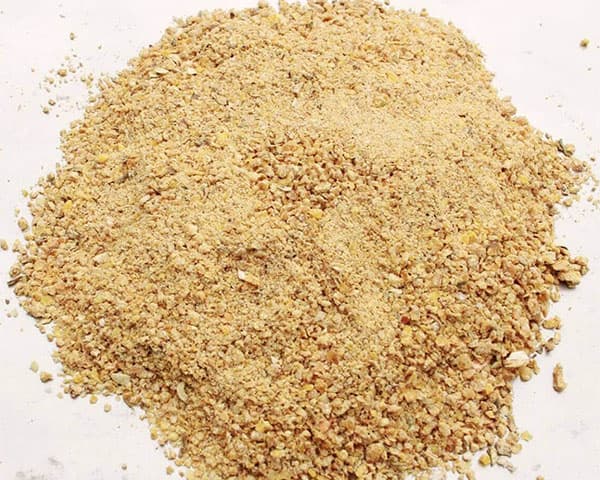
High-quality pelleting formula needs to optimize the combination of raw materials and functional additives to strengthen the bonding and molding ability of the material. Conventional corn as the core energy base, soybean meal as the source of high-quality protein, with 10% -20% wheat and by-products, the use of wheat gluten and starch pasting characteristics, significantly enhance the material bonding force, improve the granule firmness and durability. At the same time, matching restricted amino acids, phytase, antioxidants and complex minerals and vitamins as needed can not only make up for the shortcomings of nutrition, improve the utilization rate of feed, but also improve the looseness of the material, the composition of the stratification and other issues, all-round stability of the pelleting effect, improve the pellet PDI indicators, locking the nutrition of the feed and the stability of the storage.
Optimize crushing fineness
Define the core role of crushing process
Material crushing fineness is an important pre-process to ensure the quality of feed pellets, which directly affects the quality of pellet molding, structural strength and nutrient absorption efficiency. Fine crushing can increase the specific surface area of raw materials, promote starch pasting and softening of coarse fibers in the conditioning stage, improve the bonding properties of materials, make pelleting and extrusion more compact and stable, effectively improve the durability of pellets, reduce the loose particles, cracking, dust and other common quality problems.
Control reasonable crushing size standard
Combined with the requirements of poultry farming and pelleting process, the appropriate crushing particle size for chicken feed materials is 600-900 microns, corn, wheat and other starch raw materials are refined to 300-500 microns, which can give full play to the role of starch bonding and enhance the particle firmness and toughness. Production needs to be avoided in the particle size bipolar problem: crushing too coarse will lead to poor bonding of materials, finished particles loose and fragile, dust increased; crushing too fine print will weaken the chickens’ muscle and stomach grinding function, resulting in decreased digestive capacity, higher meat ratio, uneven growth of chickens. At the same time, we need to ensure that the particle size of the material is uniform, to prevent mixing of coarse and fine, to avoid the finished particles of different hardness, nutritional layering and other batch quality problems.
Optimal selection of equipment and standardized operation and maintenance
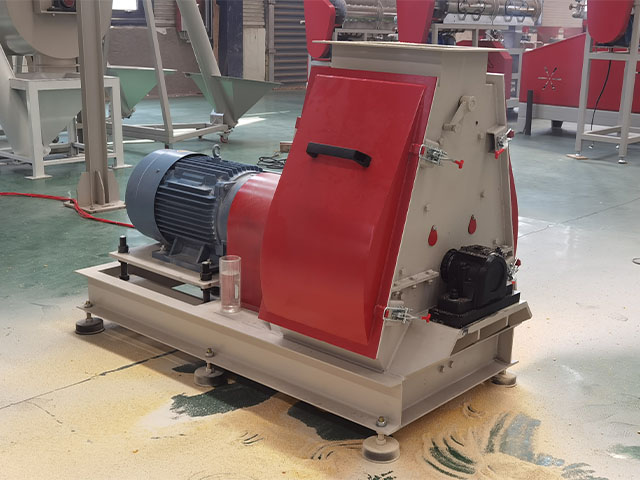
Reasonable selection and standardized operation and maintenance of crushing equipment are the important basis for stabilizing material crushing granularity and guaranteeing batch processing consistency. Conventional mass production of chicken feed can choose cost-effective and adaptable hammer mill, which can efficiently complete the crushing operation of large quantities of materials. High-end boutique feeds and brooder feeds are suitable for roller mills, which, by virtue of the flexible crushing process, produce materials with uniform particle size, less dust and better processing quality. Daily production needs to establish a normalized equipment operation and maintenance system, regular inspection and replacement of hammer blades, screens, roller skins and other wear parts, to avoid aging equipment affects the precision of crushing. At the same time, according to the texture of corn, soybean meal, bran and other different raw materials, flexible adjustment of crushing parameters, accurate control of material fineness and uniformity. Stable quality of the crushing process, can build a solid foundation for the subsequent tempering, granulation process, from the source to avoid all kinds of particle quality problems.
Improve the efficiency of tempering
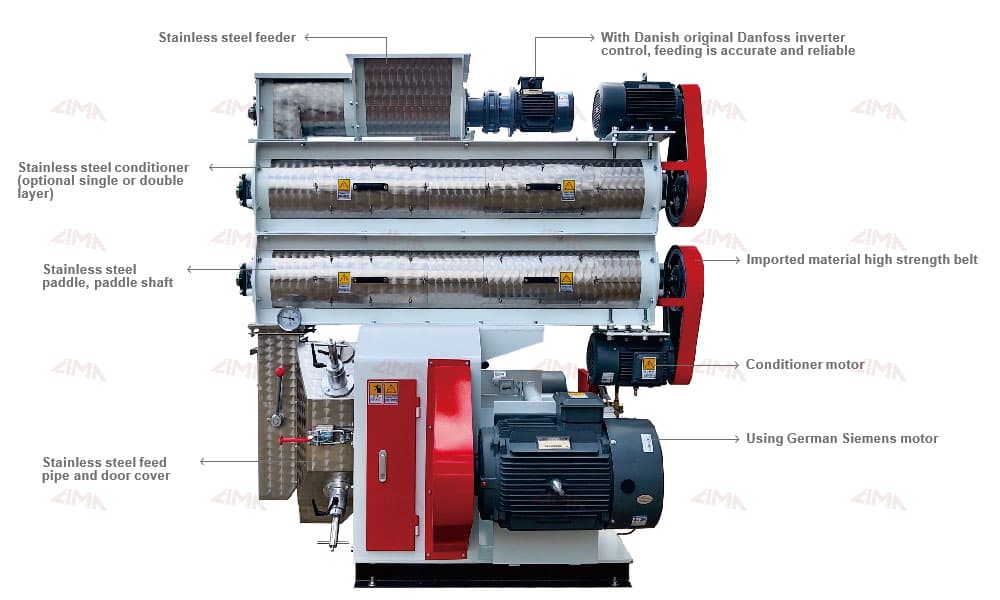
Steam conditioning is the core process of chicken feed pelletizing, and is crucial for improving pellet structural strength, PDI and feed safety. Through high-temperature and high-humidity moist heat, the material starch is fully pasted, fiber softened and protein modified, which greatly improves the adhesion of the powder, making the pelleting more compact and stable, and effectively reduces pellet crushing and dust. At the same time, tempering can kill salmonella and other harmful bacteria, improve feed palatability and digestive absorption rate, taking into account the quality of pellets, feeding safety and breeding efficiency.
Corn-soybean meal chicken feed needs precise control of tempering parameters: optimal temperature of 80-85℃, effective range of 75-90℃, which can improve the molding effect of high-fat, high-fiber formulations, while avoiding high temperature damage to heat-sensitive nutrients. Through dry saturated steam rehydration, the moisture into the mold is controlled at 15%-18%, and the conditioning retention time is maintained at 45-75 seconds, which can be extended to 90 seconds for high-end feeds, to ensure the uniformity of moisture and heat penetration. Production needs to use more than 90% dry saturated steam, pressure 1-2.5 bar, to eliminate wet steam caking and superheated steam scorching problem.
Stable tempering effect requires systematic optimization: perfect steam supporting equipment, discharge condensate, stable steam dryness and pressure, using multi-point jet, biaxial tempering to achieve uniform wet heat mixing; equipment, material filling rate control at 50% -70%, to ensure that the full turnover of the tempering. At the same time linkage front-end crushing process, relying on uniform refinement of the material to enhance the efficiency of wet heat penetration, completely solve the problem of uneven tempering, loose particles, dust and so on, steadily improve the firmness of the particles and the overall quality.
Optimize cooling and drying process
Cooling and drying is the key finishing process to lock the quality of chicken feed pellet molding, stabilize the structural strength and extend the shelf life. The temperature of just finished pellets is as high as 65-85℃, moisture is 15%-18%, colloidal structure is not yet solidified, texture is soft and unstable, direct storage is very easy to accumulate heat and return to moisture, deformation and crushing, caking and mold and nutrition loss. Standardized cooling and drying can effectively dissipate heat and dehumidification, curing starch and protein bonding structure, enhance the hardness and durability of particles to avoid cracking, mildew, dust exceeding the standard, to protect the stability of the batch quality.
Large-scale production needs to adopt standardized cooling parameters, giving priority to the use of counter-current cooling process to ensure uniform heat dissipation and drying. Finished pellet temperature should be higher than the ambient temperature of 3-5 ℃, the final moisture stabilized at 10% -12% of the safety zone, the cooling wind speed control at 0.8-1.5 m / s, to avoid the wind speed is too fast to cause internal and external drying and wetting is not uniform, particles cracking dust, or the wind speed is too slow to lead to insufficient heat dehumidification, The feed is soft and moldy. At the same time, according to the seasonal temperature and humidity dynamic adjustment of air volume, high humidity in summer to increase ventilation, winter dry moderate speed reduction, and regularly clean up the air ducts and equipment to ensure uniform cooling, batch quality uniformity.
Precise balance of drying intensity is needed in production, moisture below 10% will make the particles dry and easy to crack, higher losses, moisture exceeds the standard particles are soft, easy to mold and deterioration. Adding feed additives such as glycerin ester can stabilize the moisture of pellets, improve the surface finish and reduce dust. Equipped with automatic temperature and humidity intelligent control system, it can monitor and automatically adjust the cooling air volume and duration in real time, eliminating the error of manual adjustment and stabilizing the quality and storage safety of feed pellets in each batch.
Reduce pellet breakage
Chicken feed pellets are still brittle after cooling and shaping, and are prone to crushing and powdering during transportation, loading and unloading, so it is necessary to reduce loss through multi-dimensional fine control. The quality improvement measures, operation standards and functions of each link are shown in the table below:
| Core control dimensions | Specific practical measures | Standards for implementation on the ground | Core quality-enhancing role |
| Full transit management and control | Implementing gentle and standardized transshipment management for finished feeds to avoid multi-frequency transit losses | The crushing rate of granule single transit can be controlled within 3%-4%, which reduces the ineffective transit process. | Avoiding the soaring of fine powder caused by multiple flows, retaining the quality enhancement effect of pre-pelletizing and tempering processes, and stabilizing the integrity of the particle base. |
| Conveying equipment optimization | Replacement of suitable conveying equipment, optimization of production line layout, and installation of additional buffer protection structures. | Choose belt and scraper conveyor to replace wind conveyor and bucket lifting equipment; control the material transfer difference within 2 meters; add buffer device at the lower material transfer point to streamline the transit process and shorten the conveying distance. | Reduce particle impact, friction, falling impact, from the equipment side to significantly reduce the mechanical transfer of particles caused by the loss of broken |
| Screening quality improvement and equipment operation and maintenance | Matching post-screening equipment, the implementation of equipment regular inspection and maintenance, targeted addition of feed binder | Add high-precision sieving equipment after cooling, fine powder can be returned to the machine to remake; regular replacement of granulation, conveying aging broken parts; appropriate amount of lignosulfonate added natural binder | Eliminate the residual powder, ensure the uniformity of the granule; stabilize the precision of equipment operation; reduce the dust generation rate by 25%-50%, improve the granule resistance to breakage, and stabilize the PDI index of the finished product. |
| Standardized operations for loading and unloading outbound transport | Standardized control of the whole process of discharging, loading, stacking and transporting operations | Prohibit high-speed feeding, overload loading; the use of thickened pressure-resistant bags; the whole process of light take light, standardized stacking, to prevent the throwing of heavy pressure | Reduce the pellet pressure and impact damage in the later storage and transportation process, reduce the loss of finished products, and ensure the stable quality of terminal feeding pellets. |
In order to effectively reduce the loss of chicken feed particles in the process of transfer, storage and transportation of broken powder, can be controlled from four core dimensions to improve quality. The first is to standardize the whole transit care, streamline the transit process, control the transit crushing rate, and retain the effect of quality improvement in the early stage of the process; the second is to optimize the conveyor equipment and the layout of the production line, replace the low-loss conveyor equipment, add buffer structures, shorten the conveying distance, and reduce the mechanical impact of crushing; the third is to implement the screening quality improvement and equipment operation and maintenance, through the screening of the residual crushed powder, the return of reuse of the material, with the binder and equipment maintenance to improve the anti-shattering performance of the pellets and stabilize the quality of the finished product. The fourth is to standardize and control the loading and unloading process, standardize the stacking and feeding operation, choose high-quality packaging, eliminate external damage and loss in the storage and transportation process, and protect the integrity and quality stability of finished particles in an all-round way.
Standardized storage management
Risk of quality deterioration during storage
Finished feed products storage stage is very susceptible to external environmental interference quality degradation, storage temperature and humidity exceeds the standard, the environment is humid, the temperature fluctuation is too large, is the main cause of the pellets moisture absorption softening, caking and cracking, mold and deterioration. At the same time, poor storage conditions will cause loss of feed nutrients, poor palatability, breeding mycotoxins, directly endangering the health of chickens feeding and reducing the benefits of farming production. Refined and standardized storage management is the key to stabilize the quality of finished pellets, reduce late loss and extend the shelf life of feed, which can stabilize the hardness, integrity and nutritional stability of pellets for a long time, and guarantee the uniformity of the quality of each batch of feed.
Bulk feed storage standardized management
For bulk feed storage, it is necessary to do standardized transformation of silo, storage workshop for sealing and seepage prevention, heat insulation and ventilation, supporting aeration and ventilation system and real-time temperature and humidity monitoring equipment, to control the environmental status of storage around the clock, and to discharge the residual heat and humidity in the silo in a timely manner. The daily management strictly implements the principle of first-in-first-out to avoid long-term accumulation of feeds, which leads to the compaction and caking of the bottom layer and the oxidative deterioration of nutrients, and at the same time to avoid the condensation problem caused by the temperature difference between day and night and the alternation of seasons, and to eliminate the quality problems of moisture return, softness, mildew, and breakage of pellets from the source of the environment.
Standardized management of bagged feed storage
Bagged finished feed needs to adopt standardized overhead storage, the bottom of the storage must be cushioned more than 15 cm high, effectively isolate the ground moisture invasion, from the source to avoid moisture deterioration of feed. The storage area should be kept in a cool and dry environment, avoiding light and ventilation, and strictly eliminating direct sunlight, high temperature and high humidity and closed storage conditions. During the storage process, the whole process should be sealed to effectively isolate the water vapor, dust and other impurities in the air, to prevent the feed particles from secondary moisture absorption and softening. At the same time, it can effectively avoid the problems of granule softening and breaking, caking and mold, etc., and continue to stabilize the palatability and nutritional quality of feed. The standardized bag storage management can retain the integrity of the pellets, significantly reduce the loss of feed storage and ensure the stability of the quality of the finished feed.
Summarize
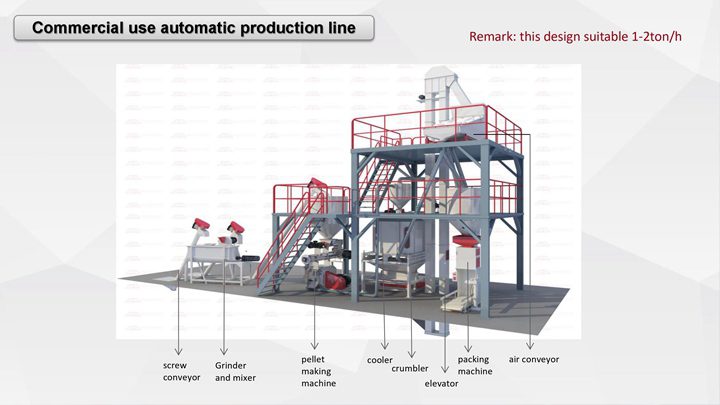
Improving the quality of chicken feed pellets is not the optimization of a single process, but a systematic project of the whole process of raw materials, formulation, crushing, tempering, pelletizing, cooling and storage. Taking the four core indexes of PDI, moisture, hardness and powder percentage as the standard, through the selection of high-quality raw materials, precise formula design, refined crushing process, high-efficiency steam conditioning, scientific cooling and drying, gentle transfer care and standardized storage and maintenance of seven practical means, we can stably produce high-quality chicken feed pellets with high durability, low dust, balanced nutrition and not easy to be mildewed.
High-quality feed pellets can continuously optimize the growth performance of chickens, reduce the waste of feed, and improve the profitability of farming, which is the core key to reduce costs and increase efficiency of large-scale poultry farming and improve the quality and income.