How to Choose the right Chicken Feed Pellet Machine
For all poultry farms and those in the poultry farming industry, a chicken feed pelletiser is a key piece of equipment for ensuring feed quality, controlling production costs and increasing profits. Many farmers mistakenly believe that a pelletiser merely needs to be capable of pelletising feed; in reality, selecting the right chicken feed pelletiser suited to the scale of one’s operation directly determines the health of the flock, feed utilisation, production efficiency and the farm’s long-term profitability. Whether for small-scale backyard farming, large-scale operations on small to medium-sized farms, or commercial feed processing, selecting the right machine is a crucial step in reducing costs and increasing revenue. This article provides a comprehensive guide to the selection criteria for chicken feed pelletisers, including the logic behind choosing the right model, differences between equipment types, key considerations and tips for avoiding pitfalls, helping you easily select equipment that is highly suitable, offers excellent value for money and delivers a high return on investment.
Why choosing the right chicken feed pelletiser is crucial
Producing high-quality pellets to ensure flock health and growth performance
Professional chicken feed pelletisers produce uniform, low-dust pelletised feed, resolving issues such as selective eating, nutritional imbalance and uneven growth in flocks caused by feeding powdered feed. The equipment features a built-in steam conditioning function at 70–85°C, which cooks and sterilises the feed, improves its palatability and reduces intestinal diseases in the flock. Pelleted feed can improve feed conversion rates by 3–12 per cent, accelerate weight gain in broilers, shorten the market-ready period, and stabilise egg quality in laying hens; conversely, substandard equipment produces poor-quality pellets, which directly reduces farming profits.
Reducing feed wastage and significantly lowering farming operating costs
Compared to traditional powdered feed, pelleted feed is denser and less prone to dust and spillage, effectively reducing feed wastage by 10–20 per cent. A low-dust feeding environment not only preserves feed nutrients and prevents nutrient loss but also optimises the house environment, reducing the likelihood of respiratory diseases in flocks and lowering the costs of disease prevention and medication. At the same time, a pelletiser suited to the farm’s production capacity can effectively manage energy consumption and labour costs, avoiding the issues of small equipment being overloaded and wearing out prematurely, or large equipment lying idle and wasting electricity. By precisely matching the production rhythm, it effectively reduces comprehensive operational costs—including electricity, maintenance and labour—resulting in significant long-term economic benefits for the farm.
Accurately Assess Your Own Feed Production Requirements
There is no ‘one-size-fits-all’ chicken feed pelletiser on the market; the key to selecting a high-quality model lies in tailoring it to your specific farming needs. Blindly following trends when purchasing equipment is likely to result in issues such as idle machinery, insufficient production capacity and frequent breakdowns. Before selecting a model, you should conduct a self-assessment based on four key dimensions: production capacity, raw materials, pellet specifications and site conditions.
Calculate daily feed consumption to determine baseline production capacity
Feed intake varies significantly across different growth stages of the flock, and this is the key factor in calculating the pelletiser’s production capacity. Farmers can estimate daily feed consumption based on the total flock size; it is recommended to allow a 10–20 per cent buffer in production capacity to accommodate fluctuations in feed intake due to the flock’s growth stage, seasonal variations, and future expansion needs. Reference feed intake figures for each stage: chicks average 20–50 g per day, growing chickens 60–100 g, laying hens 100–120 g, and late-stage broilers 150–200 g or more. Taking 1,000 laying hens as an example, daily feed consumption is approximately 110–140 kg; by combining this with the farm’s operating hours of 4–8 hours, the equipment’s hourly production capacity can be precisely matched, thereby avoiding issues of insufficient capacity or idle equipment.
Adapting to Your Own Feed Raw Materials and Formulations
Many farmers overlook the importance of raw material compatibility, which can lead to problems such as poor pellet formation, excessive dust and frequent machine blockages. The moisture content, fat content, fibre content and grinding fineness of the feed directly affect pelletisation results; it is recommended that raw material moisture be controlled between 10% and 16%, with a particle size of ≤1 mm. As feed formulations vary across different rearing stages, manufacturers can customise dies and compression ratios to accommodate multi-formula production, thereby ensuring stable pellet quality and production efficiency.
Determining the Appropriate Pellet Size for the Flock
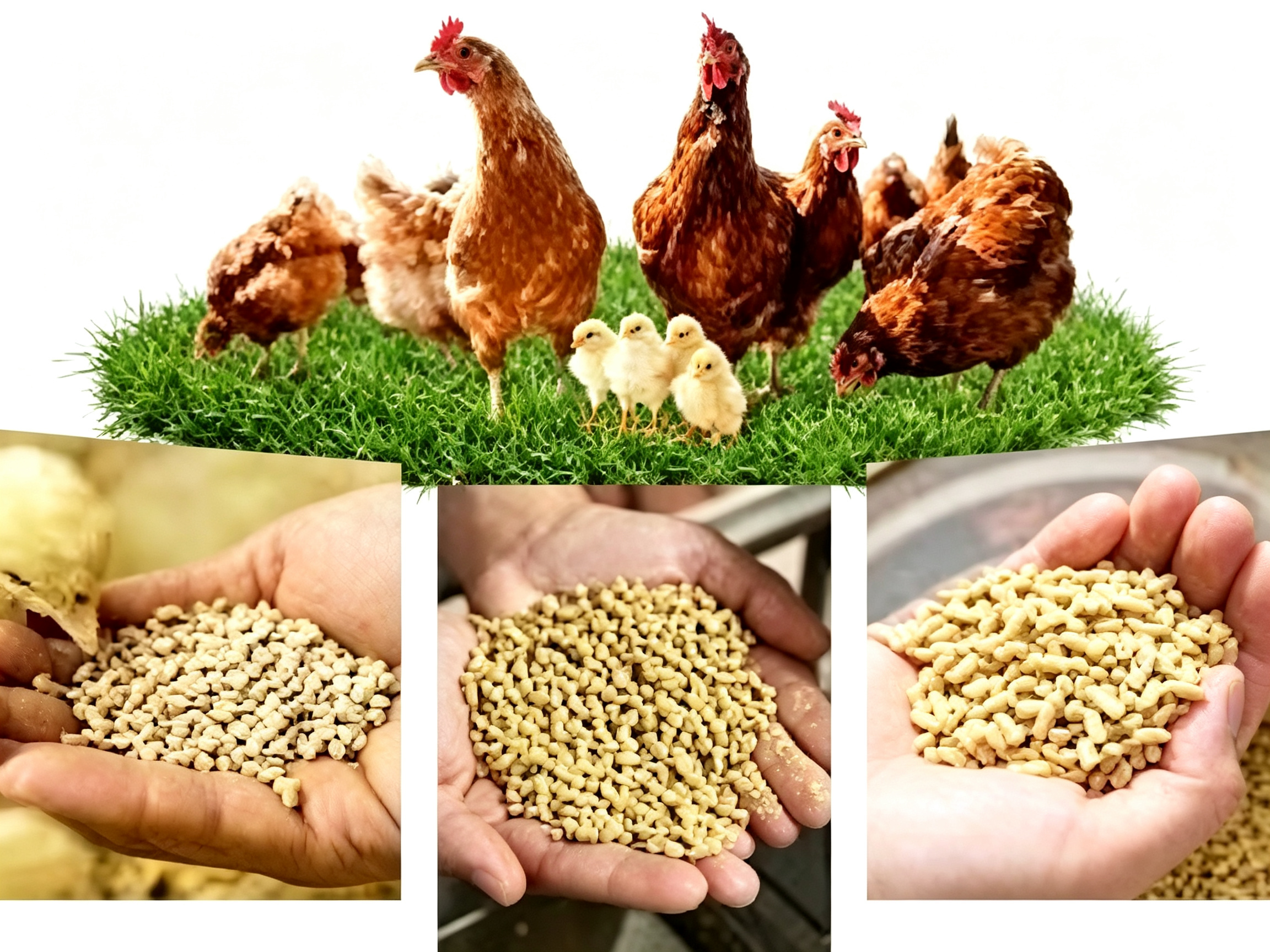
As a flock’s feeding and digestive capacities vary across different growth stages, pellets of corresponding sizes must be provided. Chicks require fine pellets of 2–3 mm in diameter, which are palatable and easily digestible, helping to prevent choking and refusal to feed; adult and laying hens are suited to standard pellets of 3–5 mm; and broiler chickens in the early growth phase can be fed crushed pellets to enhance feeding efficiency and feed utilisation.
High-quality feed pellets should be of moderate hardness and consistent shape. The industry standard for durability is a PDI of ≥85 per cent; this ensures they do not break easily during feeding or transport, produce minimal dust, and do not place an additional digestive burden on the flock. The optimal length of a pellet is 1–1.5 times its diameter; uniform appearance and good storage stability effectively reduce feed wastage and ensure consistent feeding quality.
Consider site layout, power supply and future expansion requirements
Small-scale family farms are typically supplied with single-phase electricity, which is suitable for small to medium-sized equipment; large-scale farming operations and commercial feed production lines require three-phase power. It is also necessary to set aside space for equipment installation, raw material processing and finished product storage. A complete feed production line comprises a crusher, mixer, pelletiser and cooling equipment, so operational workflows must be planned in advance. Furthermore, priority should be given to modular, upgradeable equipment to accommodate future expansion of housing capacity and production capacity.
Flat-die vs Ring-die
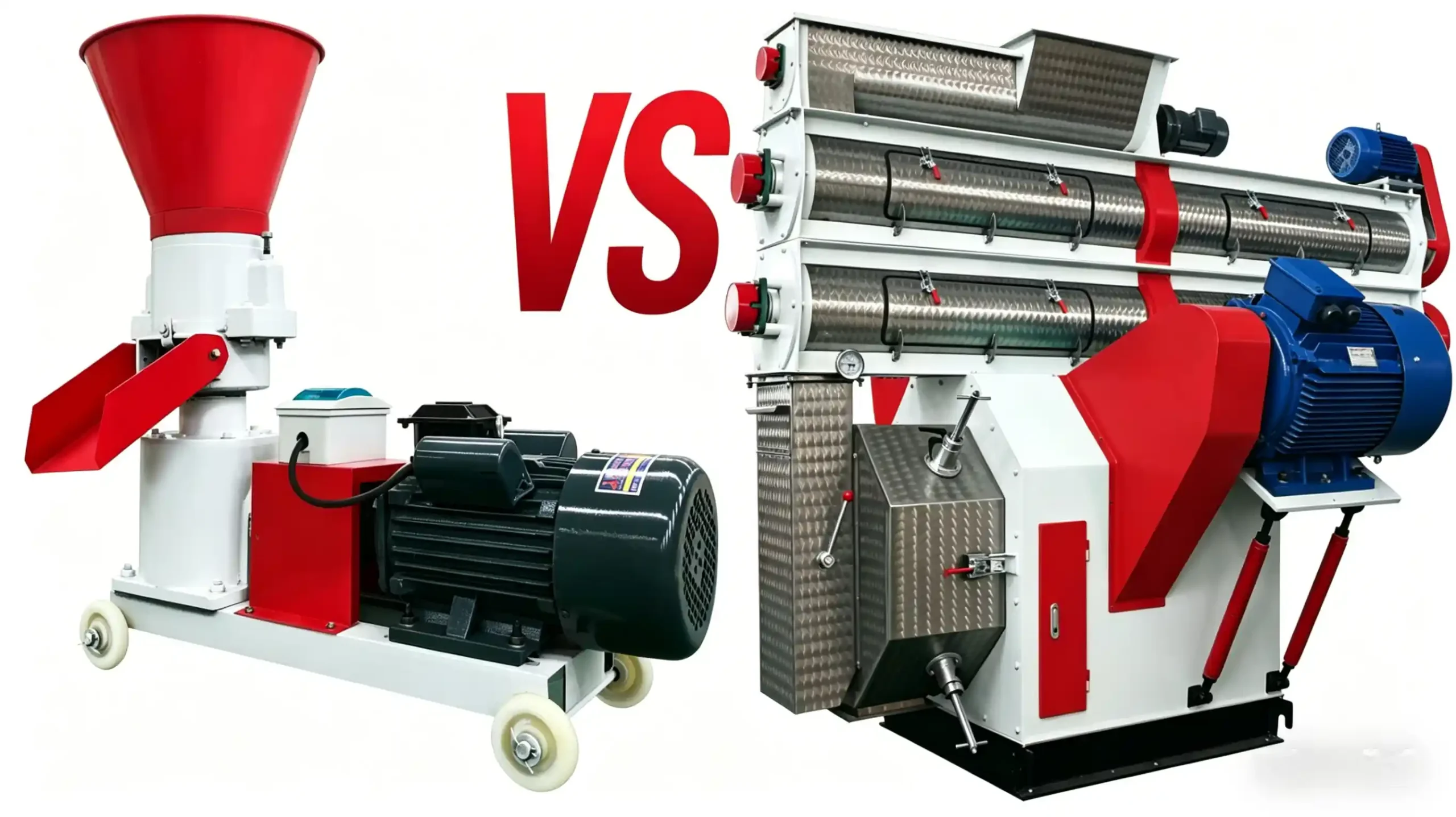
Currently, chicken feed pelletisers on the market are primarily divided into two main categories: flat-die pelletisers and ring-die pelletisers. The two differ significantly in terms of production capacity, price, performance and suitability for specific applications, and these are the key distinguishing factors when selecting a model.
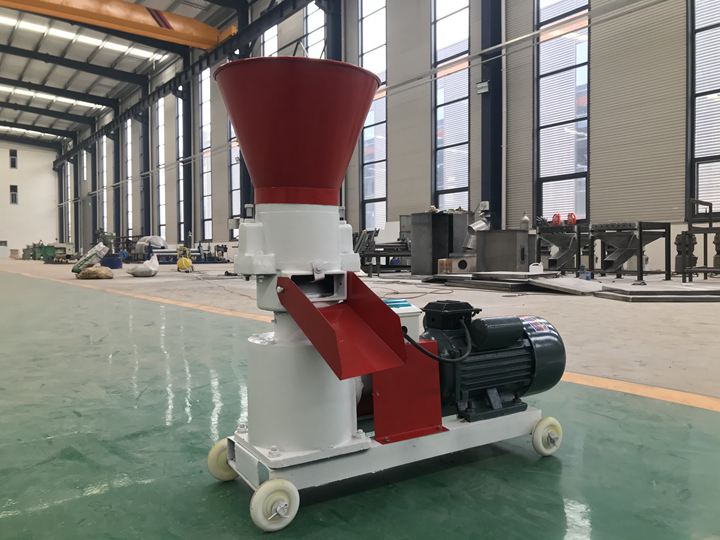
Flat-die pelletiser
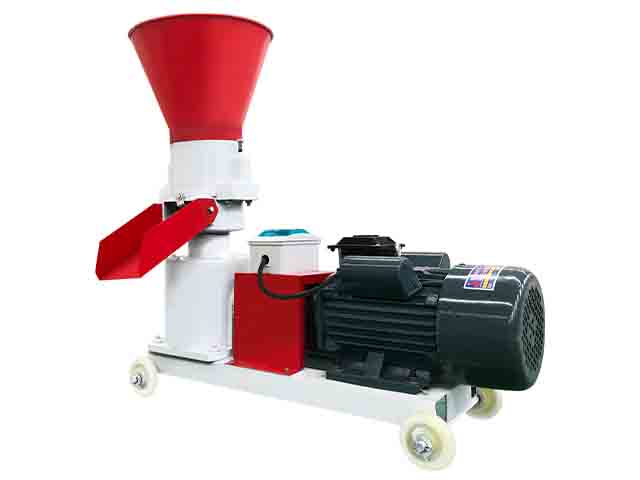
Working Principle: Flat-die pelletisers rely on a flat, multi-perforated die combined with pressure rollers to produce pellets. Qualified raw materials are spread evenly across the die surface and, through continuous rolling and compression by the rollers, are forced through the die holes to form standard cylindrical pellets. The equipment features a simple structure, direct drive, few faults and stable operation, making it highly suitable for routine pellet production at small and medium-sized farms.
Key Advantages: Flat-die pelletisers are characterised by their excellent value for money and high flexibility, making them the mainstream choice for small and medium-sized livestock farmers. The equipment is low-cost, compact in size and flexible in placement; it requires no dedicated workshop, resulting in an extremely low entry threshold. The machine features a simple design, is easy to operate and maintain, and can be mastered quickly even by novices. It supports a variety of power sources, including mains electricity, diesel, petrol and tractor power, making it suitable for remote locations and areas with unstable power grids. Furthermore, it offers exceptional compatibility with various chicken feed ingredients and is highly versatile for small-batch production of multiple formulations, making it exceptionally practical.
Limitations: Due to structural and pressure constraints, flat-die machines are unsuitable for prolonged, high-intensity, large-scale continuous mass production. High-load operation leads to reduced efficiency and unstable output, making them incapable of supporting tonne-scale production. Under frequent operation, the dies and press rollers wear out more quickly, requiring more frequent replacement. Furthermore, the level of automation is limited, with many stages relying on manual labour; consequently, labour costs for long-term, large-scale production are higher, and overall efficiency is lower than that of ring-die models.
Suitable Applications: Flat-die pelletisers are suited to small- to medium-scale, low-volume production, making them ideal for small-scale backyard farming, start-up farms and small-to-medium-sized poultry farms. They are suitable for flocks of up to 5,000 birds, with an hourly output of 50–1,000 kg, fully meeting the needs for feed for personal use and small-batch custom production. They are particularly well-suited to farmers who require flexible start-up times, frequent formula adjustments and seek low investment with high adaptability. They effectively prevent equipment idling and wasted costs, making them the preferred choice for small and medium-sized farms seeking to reduce costs and improve efficiency.
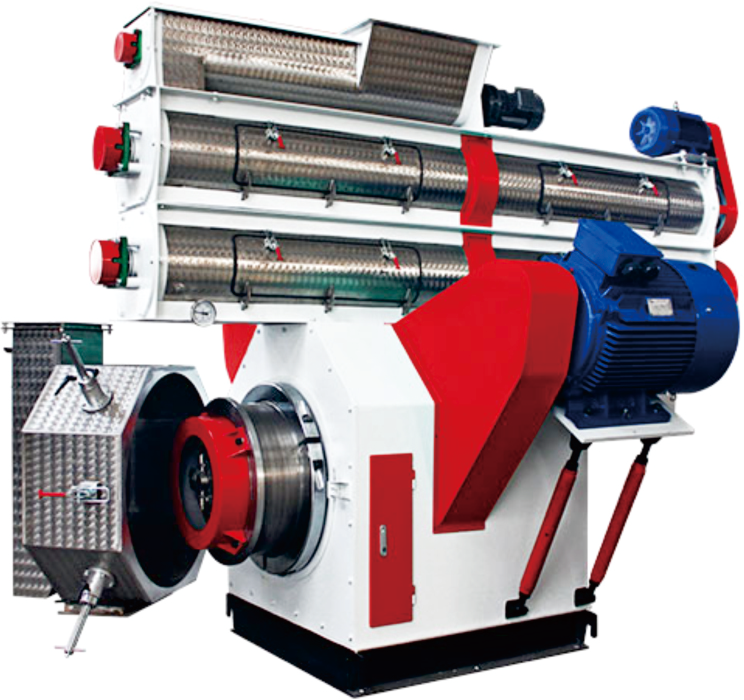
Ring-die pellet mill
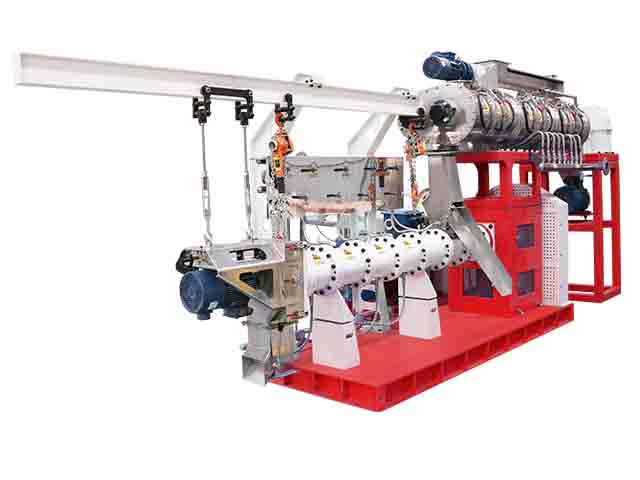
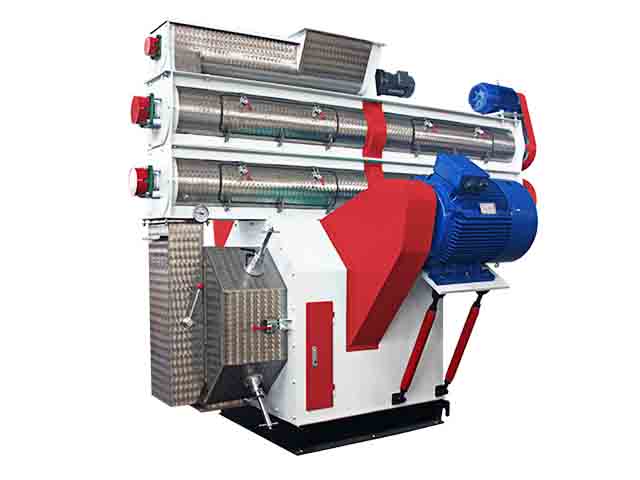
Working principle: The ring-die pellet mill utilises a rotating ring die combined with a built-in roller structure, making it professional pelletising equipment suited to large-scale mass production. After the raw materials are fed uniformly and softened and sterilised by steam conditioning at 70–85°C, they are subjected to uniform high-pressure extrusion by high-precision press rollers through the die holes, and uniformly shaped by cutting blades. The equipment operates in a fully enclosed, automated and continuous manner, ensuring stable formation and uniform specifications. This effectively resolves the issues of intermittent output and inconsistent pellet quality associated with traditional pelletising methods, making it suitable for standardised, uninterrupted production.
Key Advantages: The annular die pelletiser boasts four key advantages: high output, high quality, low energy consumption and automation. The equipment offers robust production capacity, with hourly output ranging from 1 to 15 tonnes, supporting round-the-clock continuous production and thoroughly resolving capacity bottlenecks in large-scale livestock farming. Relying on uniform high-pressure extrusion and steam conditioning processes, the resulting pellets are dense, uniform, low in dust and highly durable, with a PDI of over 90 per cent, effectively reducing feed wastage and improving feed intake and conversion efficiency. The equipment offers excellent wear resistance and lower energy consumption per unit of output, ensuring outstanding long-term economic efficiency. It can be integrated with a full suite of equipment—including crushing, mixing, cooling and packaging units—to establish an automated production line, significantly reducing labour costs and adapting to a wide range of scenarios, from on-farm use to the external sale of feed.
Limitations: The overall entry barrier for ring-die pelletisers is relatively high, and their adaptability to different scenarios is limited. The investment costs for the equipment and supporting production lines are high, resulting in significant upfront financial pressure; they are therefore unsuitable for small-scale, scattered livestock farming operations. The equipment requires a high power supply and a stable three-phase industrial electricity supply, with strict requirements regarding floor space and workshop environment, resulting in poor portability and flexibility. Furthermore, the machine’s structure is intricate and complex, incorporating multiple systems such as conditioning, electrical control and speed regulation. Maintenance, repairs and spare part replacement require specialised technical support; novices find it difficult to operate independently, making it unsuitable for remote, small-scale farms with unstable power supplies or limited space.
Suitable Applications: Ring-die pelletisers are specifically designed for medium- to large-scale, standardised and commercial feed production. They are suitable for large-scale laying hen and broiler farms with over 5,000 birds, enabling large-volume, routine self-sufficiency in feed production. It is also widely used in specialised feed processing plants, where its stable, high output and consistent quality support the bulk production and external sale of finished feed. Furthermore, it is suitable for farming enterprises planning to expand production or upgrade to automation, as it can be integrated with fully automated production lines to standardise formulation, production and output. Although the initial investment is higher, the long-term returns are greater due to its low wastage, low energy consumption and labour-saving advantages, making it the preferred choice for large-scale commercial farming.
Comparison of Core Parameters Between Flat-Die and Ring-Die Pelletisers
| Comparison Aspect | Flat Die Pellet Machine | Ring Die Pellet Machine |
| Application Scale | Small and medium-sized farms | Medium to large commercial breeding operations |
| Hourly Capacity | 50-1100kg/h | 1-15 tons/h and above |
| Equipment Cost | Low initial investment, cost-effective | High upfront cost with excellent long-term ROI |
| Pellet Quality | Meets standard self-breeding requirements | Uniform, dense and superior to industry standards |
| Operation & Maintenance | Simple operation, beginner-friendly | Highly automated, requires professional maintenance |
10 Key Factors for Equipment Selection
Production Capacity Matching
Equipment production capacity is the cornerstone of selection and must be calculated comprehensively, taking into account the farm’s actual total stock, the average daily feed consumption at different stages of the flock’s growth, and the standard daily operating hours. When selecting equipment, it is essential to allow for a 20–50 per cent buffer in production capacity. This not only accommodates sudden production demands—such as peak growth periods, seasonal increases in feed intake and temporary flock expansion—but also prevents the equipment from operating at full capacity or under overload for extended periods, thereby effectively reducing the likelihood of equipment failure and extending the service life of the machinery. At the same time, this completely avoids production bottlenecks caused by ‘using a small horse to pull a large cart’, as well as issues such as equipment idling, power wastage and resource wastage resulting from ‘using a large machine for small tasks’, thereby ensuring maximum production efficiency and equipment utilisation.
Equipment Type Selection
It is necessary to precisely distinguish between flat-die and ring-die pelletisers based on farm scale and production requirements. For small-scale family farming, small and medium-sized farms, and light-duty farming scenarios where feed is produced solely for self-consumption and formulations change frequently, flat-die pelletisers—which feature a simple structure, excellent value for money and high flexibility—should be the preferred choice. For large-scale farming operations with over 5,000 birds, commercial feed processing plants, and scenarios involving the sale of feed to external markets where standardised, high-quality feed is required, ring-die pelletisers—which offer high output and efficiency, consistent pellet quality and a high degree of automation—are the preferred option, precisely matching the production requirements of different scenarios.
Controllable Pellet Quality
The quality of feed pellets directly determines the flock’s feed intake and farming profitability; therefore, when selecting equipment, particular attention must be paid to its pelletisation control functions. Prioritise professional equipment fitted with a steam conditioning system and capable of adjusting die aperture and compression ratio. High-temperature conditioning at 70–85°C enables feed maturation and sterilisation; when combined with appropriate die parameters, this ensures the consistent production of high-quality pellets characterised by low dust content, uniform shape, moderate hardness and high durability. This ensures that flocks at all growth stages can feed easily and digest and absorb nutrients efficiently, whilst also preventing feed wastage and respiratory diseases in the flock caused by broken pellets and excessive dust, thereby comprehensively improving feed conversion rates.
Raw Material Compatibility
The physicochemical properties of different feed raw materials vary greatly, directly affecting pelletisation results and equipment stability. Before selecting a model, it is essential to verify the equipment’s compatibility with raw materials to ensure the machine is perfectly suited to the moisture content, crude fibre percentage, fat content and grind fineness of your commonly used raw materials. For mixed feed formulations with high fibre, high oil content and varying moisture levels, highly adaptable equipment can effectively prevent common issues such as loose pellets, low formation rates, frequent machine blockages and uneven output, ensuring stable pelletisation of all feed formulations and meeting the production requirements for poultry feed across all growth stages.
Power and Energy Consumption
Select equipment based on the farm’s electrical infrastructure and power supply stability. Small-scale farmers and remote farms without access to industrial electricity can opt for models powered by single-phase electricity, diesel or petrol; large-scale production lines and major farming operations require equipment compatible with a stable three-phase industrial power supply. At the same time, priority should be given to energy-efficient, optimised models. Such equipment has undergone professional structural tuning, resulting in lower energy consumption per unit of output, which can significantly reduce long-term electricity costs. It is particularly suitable for high-frequency, routine pellet production, offering highly significant cost-saving benefits over the long term.
Equipment Durability
The service life and operational stability of a pellet mill depend primarily on the materials and manufacturing processes used for core wear-prone components, such as dies and press rollers. When selecting a model, particular attention should be paid to the wear-resistant materials, machining precision and wear resistance of these core components. High-quality, reinforced wear-resistant components can withstand prolonged high-pressure compression operations, exhibiting slow wear rates and low failure rates. This can significantly reduce the frequency of component replacements and lower daily maintenance costs, whilst avoiding frequent downtime due to component damage, thereby ensuring the continuity of feed production and supporting long-term, routine livestock farming operations.
Total Cost
When selecting equipment, one must avoid focusing solely on the initial purchase price; instead, the total cost of ownership over the equipment’s entire lifecycle must be comprehensively assessed. Although low-cost, inferior equipment has a low purchase price, it generally suffers from high energy consumption, prone-to-wear components, frequent breakdowns and high maintenance costs, making it extremely poor value for money in the long term. High-quality equipment requires a moderate initial investment but offers low energy consumption, high durability and a low failure rate. Taking into account all expenses—including electricity bills, maintenance costs, spare part replacement costs and labour costs—the overall operating costs are lower, and the return on investment for long-term livestock farming far exceeds that of low-cost, inferior models.
Ease of Operation
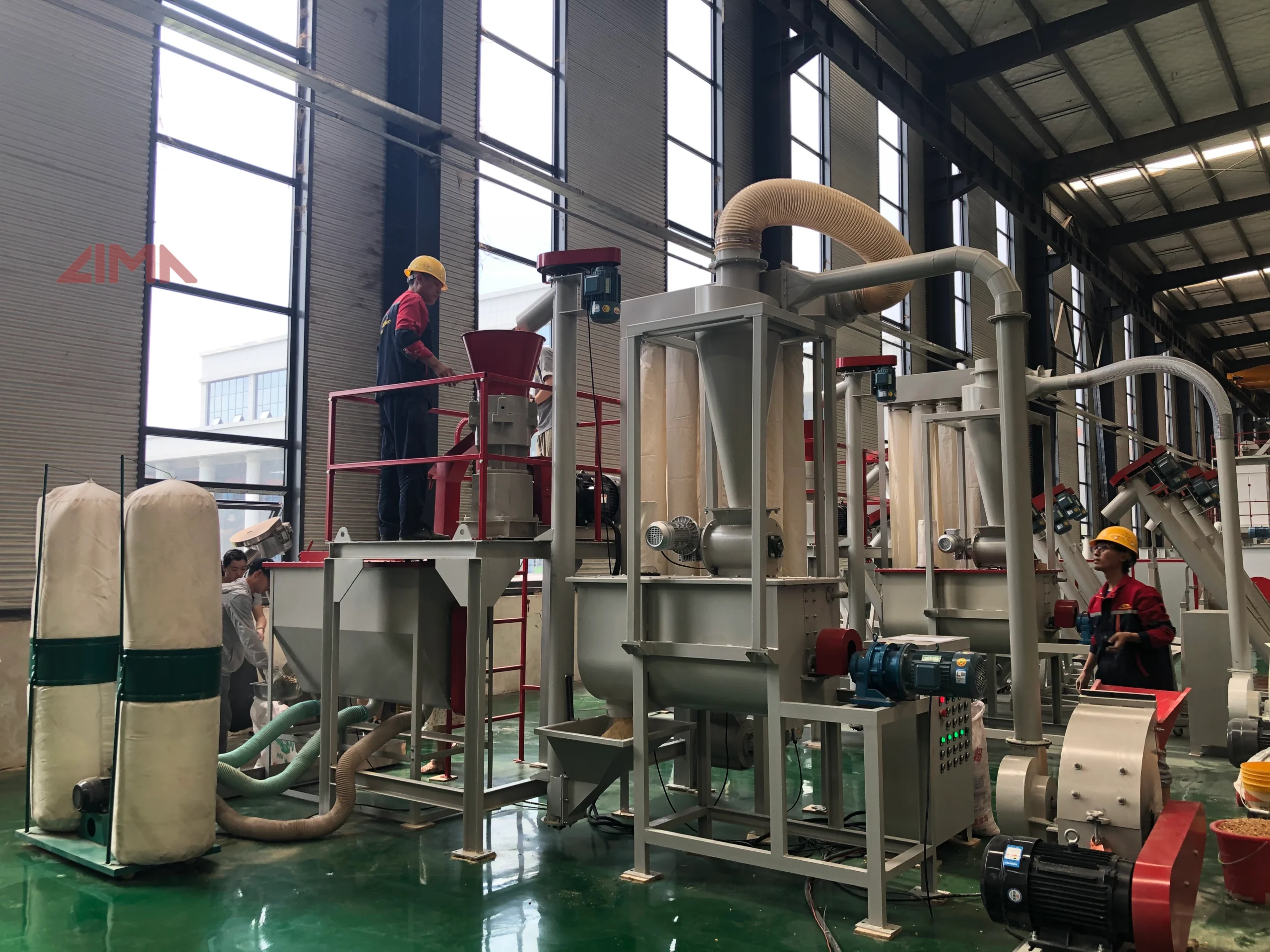
The complexity of equipment operation must be commensurate with the technical proficiency of the farm’s operators and the scale of production. For small-scale family farms and novice farmers, manual models with simple structures, user-friendly operation, one-touch start/stop functions, and ease of cleaning and maintenance should be prioritised. This lowers the operational threshold and learning curve, enabling independent completion of pelletising tasks on a daily basis. For large-scale, industrial feed production lines, semi-automated or fully automated equipment should be prioritised. These systems enable integrated operations—including automatic feeding, pelletising, discharge and cooling—significantly reducing labour costs, enhancing overall production efficiency and meeting the demands of large-scale mass production.
After-sales Support
A comprehensive after-sales support system is vital for ensuring stable production at livestock farms and is a key factor in the selection process. Prioritise reputable manufacturers that offer formal warranties, free on-site installation and commissioning, technical training for operators, year-round supply of original spare parts, and round-the-clock technical support. This will completely avoid the issues associated with small, unregulated manufacturers—such as equipment failures with no repair service, difficulties in sourcing spare parts, and downtime with no one to troubleshoot—thereby minimising equipment downtime to the greatest extent possible and eliminating losses caused by feed supply disruptions or production stoppages due to equipment failure.
Safety and Scalability
Safety is a fundamental prerequisite for equipment production. Reputable pelletisers must be equipped with comprehensive safety features, including overload protection, emergency stop mechanisms and anti-jamming systems, to effectively prevent equipment damage and production safety hazards caused by voltage fluctuations, material blockages and overloading. At the same time, priority should be given to modular, upgradeable equipment designs. This allows for the addition of ancillary equipment, replacement of dies and increased production capacity to meet future requirements for farm expansion and production upgrades, without the need to replace the entire machine. This supports the long-term, large-scale development of livestock farms and ensures the equipment retains its value more effectively.
Essential Equipment for a Complete Chicken Feed Pellet Production Line
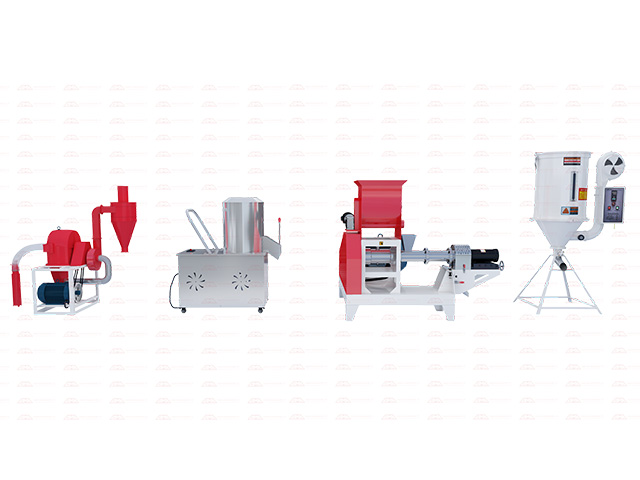
A complete chicken feed pellet production line can efficiently process various raw materials into high-quality, nutritionally balanced finished pellet feed. For very small-scale farmers, a single pelletiser may suffice for basic production; however, a standardised, complete production line can significantly enhance feed quality consistency, increase production capacity and reduce labour costs. The following section details the various core pieces of essential equipment required for the production line, organised according to the standard production process.
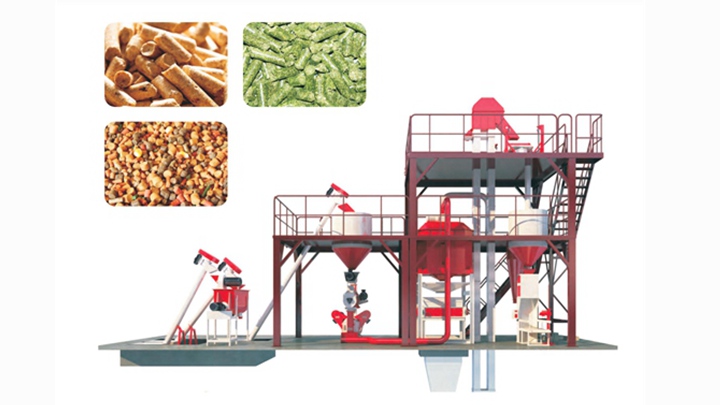
Raw Material Reception and Storage Equipment
This primarily comprises grain storage silos, raw material storage bins and similar equipment, used for the centralised storage of various feed raw materials such as maize, soya bean meal and wheat bran. Its core function is to keep raw materials dry, clean and neatly categorised, effectively preventing moisture absorption, mould growth and contamination from mixing with other materials. This safeguards the quality of feed raw materials at source and lays the foundation for subsequent standardised pelletisation production.
Cleaning and Pre-treatment Equipment
This primarily comprises magnetic separators and raw material screening and cleaning machines, which can precisely screen and remove stones, metallic impurities, dust and mouldy material mixed in with the raw materials. This equipment serves as a vital protective mechanism for the production line; not only does it effectively safeguard downstream core equipment such as crushers and pelletisers—preventing wear caused by hard objects and damage from jamming—but it also thoroughly purifies the raw materials, significantly enhancing feed safety and the quality of the finished product.
Hammer mill
Its core function is to grind various granular and lumpy feed raw materials to a standard fineness suitable for pelletisation; for conventional pelletisation, the raw material fineness must be controlled within 1–2 mm. Uniform, fine powder is a fundamental prerequisite for the tight bonding of feed pellets and their uniform shape; not only does it significantly improve pelletisation success rates and pellet durability, but it also reduces the digestive burden on chickens and enhances feed digestibility and absorption. It is therefore a crucial upstream piece of equipment for ensuring the quality of the finished feed.
Feed Mixer
Commonly used models include screw-rib and paddle-type mixers, which can thoroughly and uniformly blend crushed cereal ingredients, protein sources, vitamins, minerals and various additives. This completely resolves issues of nutrient stratification and uneven formulation in feed, ensuring that the nutritional composition of every feed pellet is balanced and consistent. It effectively prevents selective feeding and uneven nutrient intake among the flock, thereby comprehensively safeguarding the flock’s growth and production performance.
Pelletising Unit (Core Equipment)
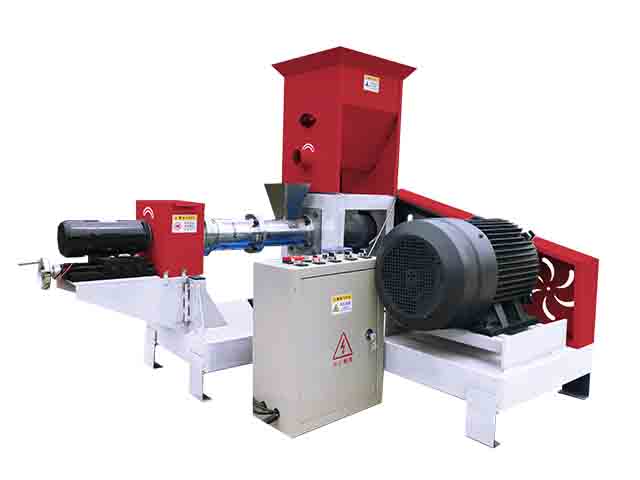
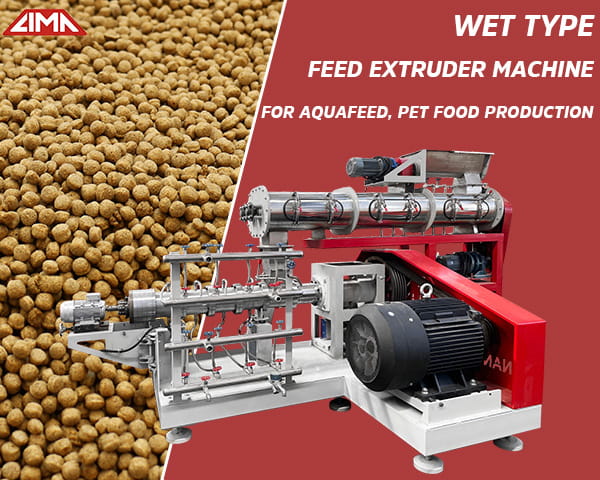
This range includes flat-die pelletisers suitable for small and medium-sized farms, and ring-die pelletisers designed for large-scale commercial production lines. The equipment comes standard with a steam conditioner to facilitate high-temperature conditioning and softening of the raw materials. As the core component of the entire production line, its primary function is to extrude the uniformly mixed powder under high pressure, producing compact, durable and uniformly sized feed pellets. Farmers can select a pelletiser with the appropriate production capacity based on their daily feed consumption and farm scale, thereby meeting their individual production requirements.
Pellet Cooler
The mainstream type is the counter-current cooler, specifically designed to rapidly reduce the temperature and moisture content of hot pellets immediately after pelletisation. Freshly formed feed pellets are hot and highly moist; direct storage makes them highly susceptible to mould, spoilage, softening and fragmentation. Cooling equipment rapidly and stably stabilises pellet hardness and moisture content, effectively preventing feed mould and pellet breakage, whilst significantly improving the storage life and quality stability of the finished feed.
Pellet Crusher (Optional but Essential Equipment)
Although optional, this equipment is highly practical. It crushes large feed pellets into fine particles and powder, specifically tailored to the feeding requirements of young flocks such as chicks. It effectively resolves issues such as difficulty in feeding, choking and refusal to eat among chicks, enabling the production line to cater for feed production across the entire growth cycle of poultry flocks, thereby significantly enhancing the flexibility and adaptability of feed production.
Screening and Grading Equipment
Primarily utilising vibrating screens, this equipment is used to sort finished pellets, separating fine powder, oversized particles and合格 finished pellets. The screened-out substandard powder can be recirculated to the pelletising process for reprocessing, thereby avoiding waste of raw materials. At the same time, it ensures that every batch of feed dispatched from the factory and fed to the flock is uniform in size and consistent in appearance, thoroughly enhancing the overall quality of the finished feed.
Packaging and Filling Equipment
This includes fully automatic and semi-automatic weighing and packaging machines, capable of automatically completing the integrated operations of feed weighing, bagging and sealing. It not only meets the daily storage and self-use requirements of livestock farms but is also suitable for the packaging and sale of commercial feed. It significantly simplifies manual packaging processes, improves the efficiency of feed storage and dispatch, and is well-suited to large-scale, standardised production scenarios.
Conveying and Auxiliary Control Systems
These primarily comprise auxiliary equipment such as bucket elevators, screw conveyors and intelligent electrical control consoles, enabling the automated conveyance and circulation of raw materials and finished products, seamlessly linking all production processes. This effectively reduces the costs associated with manual handling and feeding, achieves automated, coordinated operation across the entire production line, and enhances production fluidity and overall efficiency.
Optional Advanced Supporting Equipment
Large-scale, high-end production lines can be fitted with additional equipment as required, including steam boilers compatible with ring-die production lines, high-energy feed oil spraying equipment, workshop dust extraction and purification systems, and fully automatic intelligent batching and weighing systems. The steam boiler enhances the conditioning of the feed; the oil spraying equipment enables the production of high-energy fattening feed; the dust extraction system optimises the workshop working environment; and the intelligent batching system ensures precise ingredient ratios, further enhancing the production line’s level of automation and precision.
Mainstream Production Line Configuration Options
Small-scale farm production line: comprising a crusher, mixer, flat-die pelletiser and cooler, with an hourly output of 50–500 kg. This is ideally suited for on-farm feed production at small-scale family farms and small-to-medium-sized livestock operations, offering excellent value for money and simple operation.
Medium-sized commercial production line: Equipped with a full set of automated equipment plus a ring-die pelletiser, with an hourly production capacity of 1–10 tonnes or more. Suitable for large-scale livestock farms and specialised feed processing plants, it can meet the demands of both large-scale in-house production and external sales.
Common pitfalls for first-time buyers
Most livestock farmers are prone to falling into common pitfalls when purchasing equipment, leading to idle machinery and rising rather than falling farming costs. The following common mistakes must be avoided:
Focusing solely on low price: Many novice farmers blindly pursue the lowest price for equipment, neglecting quality and long-term running costs. Cheap, unbranded pelletisers often feature core components made from inferior, non-wear-resistant materials. Not only do they consume high levels of energy and produce poor pellet quality—with excessive dust and poorly formed pellets—but they are also highly prone to frequent breakdowns and downtime. Whilst this may appear to save money initially, the subsequent high costs of replacement parts, repairs, electricity consumption and feed wastage far exceed the initial price difference, ultimately reducing farming profits.
Inaccurate production capacity estimates: Estimating production capacity is central to equipment selection, yet most farmers tend to misjudge this. Selecting a machine that is too small—without taking into account the growth of the flock, seasonal increases in feed intake, and future expansion of the rearing area—will result in insufficient production capacity. This forces the equipment to operate at overload for extended periods, making it prone to faults such as jamming, shutdowns and motor damage, thereby hampering production. Conversely, blindly purchasing high-capacity equipment leads to a situation where a large machine is underutilised, resulting in the wastage of equipment, space and electricity resources, reducing equipment utilisation rates and increasing unnecessary farming costs.
Neglecting raw material compatibility: Many farmers blindly purchase pelletisers, overlooking the characteristics of their own feed, such as moisture, fat and fibre content, as well as the fineness of grinding. A mismatch between the equipment and the feed formulation can easily lead to problems such as loose pellets, excessive dust, low pelletisation rates and frequent blockages. This not only reduces production efficiency but also results in nutritional imbalance in the feed and a decline in feed conversion rates, leading to uneven growth in the flock and causing long-term, hidden losses in farming operations.
Prioritising output over quality: Many farmers blindly pursue high-output equipment whilst neglecting core quality factors such as pellet hardness, uniformity and formation quality. Equipment settings that prioritise speed at the expense of other factors result in pellets of inconsistent hardness and high dust content, which fail to meet the feeding and digestive requirements of flocks at different growth stages. Feed that is too hard can easily trigger intestinal diseases in the flock, whilst feed that is too soft is prone to breaking and wastage. This not only affects the flock’s growth and egg-laying performance but also causes farming profits to decline rather than increase.
Neglecting after-sales service and maintenance: As pelletisers operate continuously at high frequencies, routine maintenance and replacement of parts are essential for production, and reliable after-sales support is key to stable output. Many farmers, lured by low prices, opt for niche equipment from unqualified suppliers offering no after-sales service, lacking professional technical support and access to genuine spare parts. When equipment suffers from wear and tear, blockages or motor failures, the inability to carry out timely repairs can lead to prolonged downtime and feed shortages, disrupting normal feeding routines and causing direct financial losses to the farm.
Lack of holistic planning: Feed pelletisation is a continuous assembly-line process in which each stage is closely interlinked. Many novice farmers purchase only the pelletiser, neglecting ancillary equipment such as crushers, mixers and coolers, resulting in disjointed processes and production constraints. Issues such as substandard raw material processing and insufficient cooling of pellets can result in poor feed quality and a high susceptibility to mould. This prevents the equipment from operating at full capacity, leading to low overall production efficiency and making it difficult to achieve standardised, large-scale in-house production, which severely hampers the upgrade of the farm’s production capacity.
Why choose a professional pellet mill manufacturer?
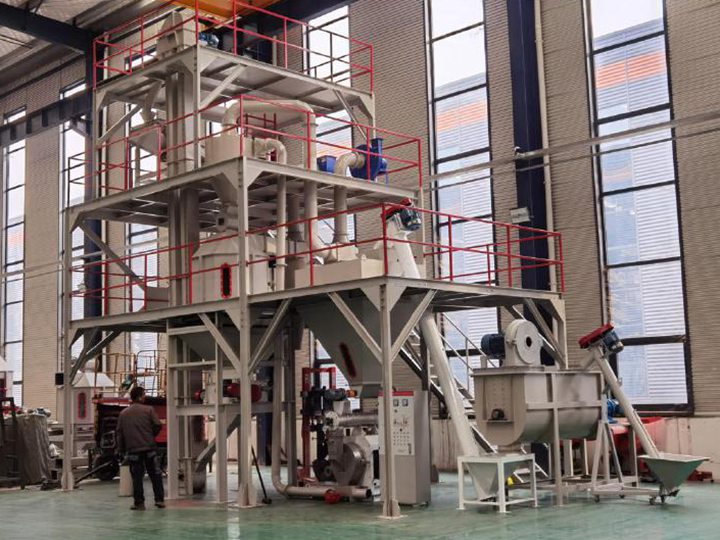
At first glance, equipment from small-scale workshops and professional manufacturers may appear similar, but there is a vast difference in core performance, service life and after-sales support. Equipment from professional, reputable manufacturers is the key to long-term profitability for livestock farms:
Greater durability: Pellet mills from reputable manufacturers utilise wear-resistant alloy steel and reinforced frames, whilst core components undergo wear-resistant treatments, ensuring a sturdy and robust machine. The equipment can withstand long-term, continuous operation under high pressure with a low failure rate; it is resistant to jamming and damage, effectively reducing downtime for repairs, offering a longer service life and ensuring the stable operation of livestock production.
Higher pelletising efficiency: Professional equipment optimises the compression ratio, die hole structure and conditioning system to suit various chicken feed formulations. It consistently produces high-quality pellets that are uniform, low in dust and highly durable, enhancing feed maturation and nutrient retention, effectively improving feed conversion rates, and boosting farm productivity and feeding quality.
Customised services: As the scale, formulations, site conditions and power supply of different farms vary considerably, professional manufacturers can provide one-to-one customised solutions. Equipment capacity, dies, power modes and production line configurations are tailored to specific requirements, aligning with actual production scenarios to resolve issues such as poor equipment compatibility, wasted capacity and production constraints.
Comprehensive after-sales support: Reputable brands possess a mature, comprehensive after-sales system, offering installation and commissioning, full-machine warranty, operator training, technical consultancy and genuine spare parts supply. Professional support is provided throughout the process, enabling rapid troubleshooting and resolution of equipment faults to minimise downtime and avoid losses such as feed supply disruptions and production halts.
Lower energy consumption and greater cost savings: Professional pelletisers feature energy-efficient optimisations to their structure, motors and transmission systems, resulting in high power utilisation and lower electricity consumption per unit of output. The energy-saving benefits are particularly significant during long-term, high-frequency production. At the same time, the equipment experiences minimal wear and tear and few faults, substantially reducing hidden costs such as maintenance, parts replacement and feed wastage, leading to more cost-effective overall operations.
Long-term scalability and upgradeability: Reputable equipment utilises a modular, standardised design, offering strong scalability. There is no need to replace the entire machine; simply by changing dies, upgrading components or installing supplementary equipment, you can increase production capacity, adapt to new formulations, and accommodate future flock expansion and automation upgrades, thereby avoiding the waste associated with repeated equipment purchases and ensuring the equipment retains its value better.
Frequently Asked Questions (FAQ)
Q1: What are the key advantages of producing your own chicken feed pellets?
Producing your own pelletised feed prevents the flock from being fussy eaters and ensures a more balanced nutritional intake; it reduces feed wastage by 10–20 per cent; high-temperature conditioning improves feed digestibility and kills bacteria; allows for customised formulations to meet the needs of flocks at different stages, significantly reducing farming costs.
Q2: How should the chicken feed pelletiser be maintained on a daily basis?
Daily maintenance involves regularly cleaning residual feed from the die and press rollers, lubricating the transmission components on schedule, checking for wear on vulnerable parts, and strictly controlling the moisture content of raw materials. Following the manufacturer’s instructions for regular maintenance will effectively extend the equipment’s service life.
Q3: Can a single machine produce chicken feed for different growth stages?
Yes. Simply by replacing the die with one of a different pore size and adjusting the compression ratio and raw material formulation, you can produce various types of feed, such as starter feed, grower feed, layer feed and broiler feed.
Summary
When selecting a chicken feed pelletiser, the key is not to choose the most expensive machine, but rather the one best suited to your farm’s scale, raw material formulation and production requirements. For small-scale family farms, flat-die pelletisers offering good value for money and simple operation are the preferred choice, whilst large-scale commercial operations should opt for high-efficiency, stable ring-die pelletisers that deliver outstanding quality. By selecting the right model, avoiding common pitfalls and relying on specialist manufacturers, you can ensure the healthy growth of your flocks, improve feed utilisation, reduce farming costs in the long term and maximise the economic returns from poultry farming.