Benefits of Poultry Feed Pellet Making Machine
In the large-scale and refined development of poultry farming, feed quality directly determines poultry growth efficiency, egg production capacity and breeding economic benefits. As the core equipment of feed processing, poultry feed pellet machine has completely changed many disadvantages of traditional powder feeding, and is widely used in chicken, duck, goose, turkey, quail and other poultry farms. This article will analyze poultry feed pellet machine from eight dimensions: equipment definition, core advantages, difference between pellet feed and powder, pellet size influence, equipment performance influencing factors, purchasing skills, cost performance and common problems, providing professional reference for all large, medium and small farms and feed processing plants.
What is a poultry feed pellet machine?
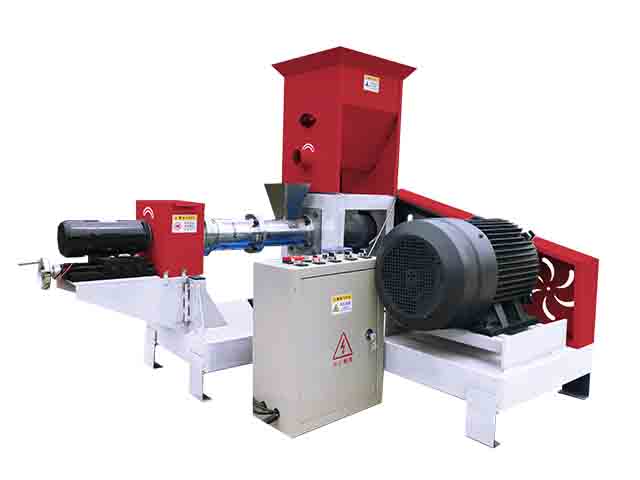
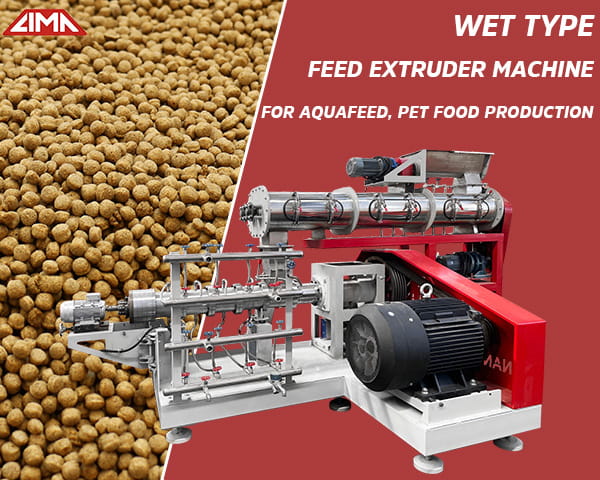
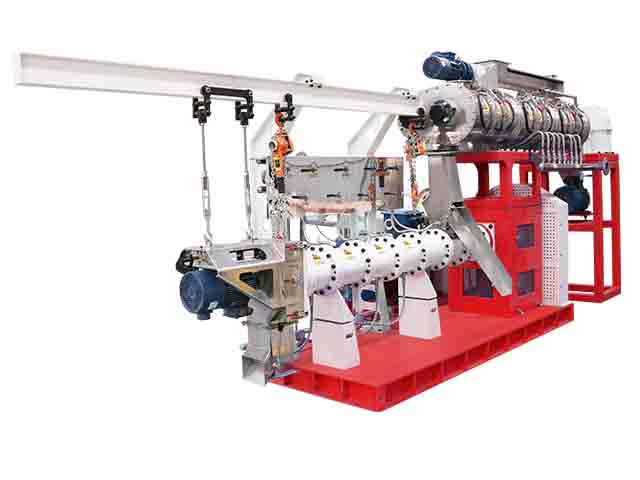
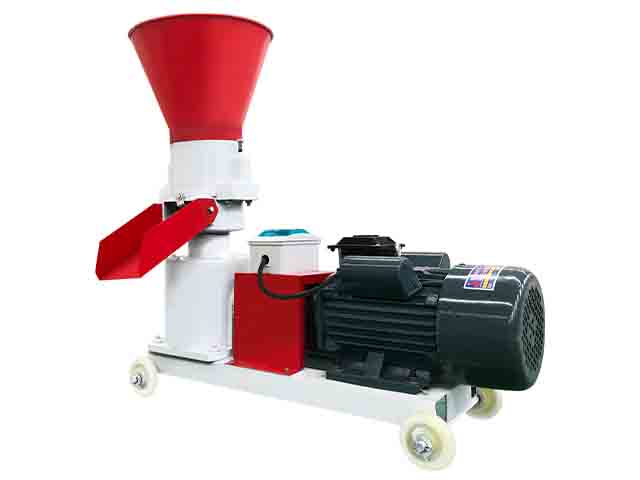
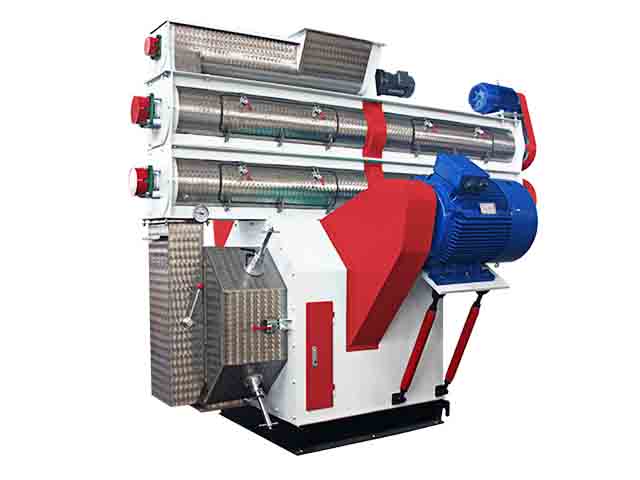
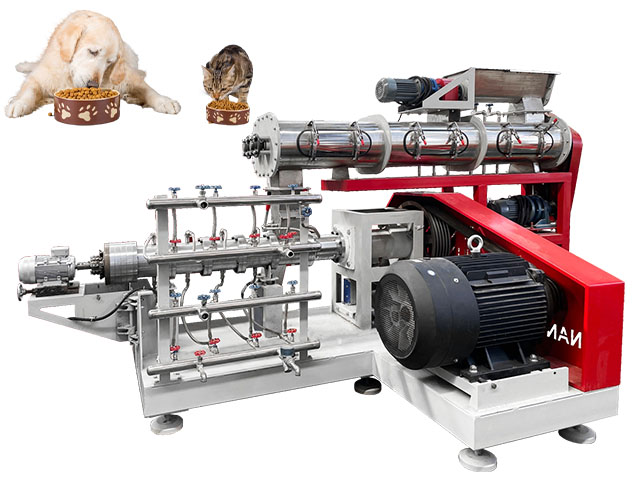
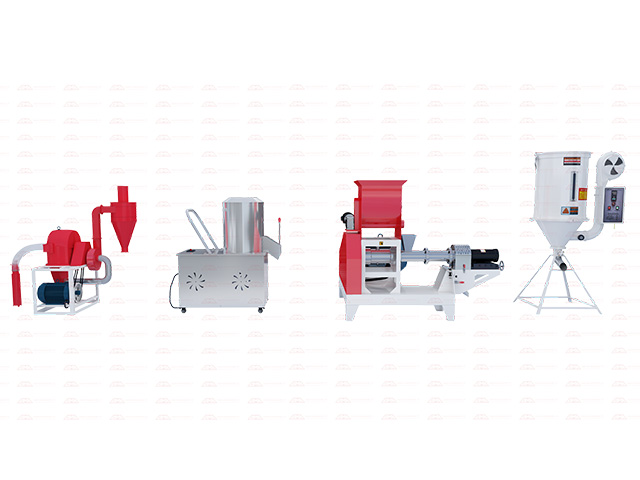
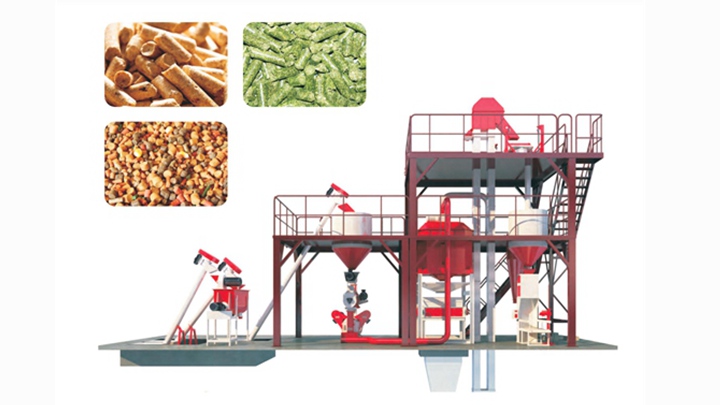
Poultry feed pellet machine is the core equipment of poultry feed production, which can process corn, soybean meal and other powdery raw materials into uniform and dense pellet feed by steam conditioning at 75 – 88℃, high temperature and high pressure extrusion, cutting and cooling, effectively improving feed utilization rate, reducing waste, facilitating storage and transportation and promoting poultry production. The equipment integrates the core structure of feeding, conditioning, granulation, cutting, cooling and dust removal, etc. The raw materials are crushed, conditioned, granulated, screened and packaged to complete the finished product processing. The equipment is divided into two categories: ring mold pellet machine capacity 1 – 45 tons/hour, continuous automatic production, excellent pellet quality, suitable for large and medium-sized farms and feed factories; flat mold pellet machine capacity 1 – 5 tons/hour, simple operation, low maintenance cost, suitable for small farming, can process 0.8 – 6mm multi-specification pellets, suitable for chickens, chickens, ducks and geese and other different poultry.
The core advantages of poultry feed pellet machine
Compared with the traditional powder feeding mode, poultry feed pellet machine relies on standardized processing technology to comprehensively solve the pain points of traditional breeding. It has significant advantages in feed quality, breeding efficiency, poultry health and production cost. The core value is mainly reflected in the following six points:
Improve feed digestibility and optimize poultry performance
Pelletizing high temperature and high pressure environment can promote full gelatinization of feed starch, increase the gelatinization rate of raw materials from 10% to more than 40%, release combined nutrients, and greatly improve feed palatability and digestibility. Pellet feed can increase poultry feed intake by 5 – 15%, optimize feed conversion by 10 – 30%, increase weight gain rate of broilers by 15 – 20%, and significantly improve egg production performance and egg quality of laying hens. At the same time, poultry intake energy consumption decreased by 67%, more nutrients were used for growth and egg production, and the overall breeding capacity was greatly improved.
Reduce feed waste and feed loss
Traditional powder is fluffy and dusty, and poultry is easy to splash, spill, picky food waste when eating, and the loss rate is high. The feed processed by pellet machine has compact structure, good molding degree and less particle dust, which can directly reduce the feed loss by 8%-20%, effectively eliminating the problem of picky eating and waste. At the same time, it can keep the breeding environment clean, avoid the breeding of bacteria by feed residues, and optimize the breeding sanitary conditions.
Balanced nutrition intake ensures even growth of chickens
Through steam conditioning and high-pressure molding process, each grain of feed has the same nutrient ratio, evenly contains all nutrients such as grain, protein, vitamins and minerals, and completely solves the problems of picky eating and uneven nutrient intake commonly existing in powder feeding. It can effectively avoid the problems of uneven growth of chicken flock and fluctuation of egg production of laying hens, ensure uniform intake of feed additives and health care drugs, and improve the standardization and uniformity of breeding.
High temperature sterilization and conditioning to reduce the probability of poultry disease
Equipment 75 – 88℃ high temperature steam conditioning process can effectively kill Salmonella, Escherichia coli, parasite eggs and other pathogenic bacteria in raw materials, reduce the risk of poultry intestinal diseases and cluster diseases from the source, reduce the use of antibiotics, and improve the quality of poultry products. At the same time, the pellet feed has stronger moisture resistance and sealing property, and is not easy to mold and deteriorate during storage, further reducing the hidden danger of breeding diseases.
Convenient storage and transportation, suitable for large-scale breeding
The density of pellet feed can reach 550 – 650kg/m³, which is 1.5 – 2 times that of ordinary powder. It greatly reduces the storage volume, saves storage space, and effectively reduces the logistics cost of batch transportation. It has stable structure, is not easy to have problems such as nutrient stratification and dust dispersion, perfectly adapts to automatic feeding equipment and assembly line operation, and significantly improves the overall operation efficiency of large-scale breeding.
Excellent economic benefits and lower long-term breeding costs
Although pelletizing has a small amount of water, electricity and equipment energy costs, the benefits of improved feed utilization, reduced feeding losses and increased poultry production far exceed processing costs, resulting in an overall savings of 10%-20% in breeding costs. The payback cycle for commercial farm equipment is only 6 – 18 months, and smaller household equipment pays back faster. The equipment has strong universality, can adapt to feed processing in the whole growth stage of poultry, and can also make use of straw and breeding waste to make feed, so as to realize circular breeding income increase.
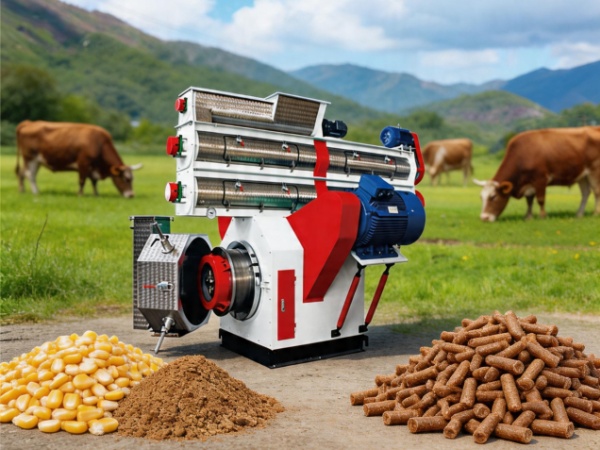
Comparison of core differences between pellet feed and powder feed
Pellet feed and powder feed are the two main feed forms of poultry breeding. The basic raw material formula of the two feeds is the same, but the processing technology is different, resulting in significant differences in texture, performance and breeding benefit, and adapting to different farm scenes. The following is a comprehensive comparison table of the two types of feed:
| contrast dimension | powdered feed | pellet feed |
| processing technic | Only crushing, mixing, no steam conditioning, high pressure compression treatment, simple process | Add 75 – 88℃ steam conditioning, high-pressure granulation, cooling and screening procedures on the basis of powder, and the process is more perfect. |
| Appearance texture | Loose powder, fluffy and easy to dust, no fixed form | Uniform compact cylindrical particles, no obvious dust, good formability |
| feed density | Low, 300 – 400kg/m³ | Higher, 550 – 650kg/m³, 1.5 – 2 times higher than powder |
| nutritional stability | Nutrition stratification, picky eating of poultry and unbalanced nutrition intake are easy to occur | Uniform nutrition ratio of granules, no stratification problem, uniform nutrition intake |
| Digestion and Palatability | Starch is not gelatinized, digestibility is low, palatability is average | High temperature and high pressure realize starch gelatinization, good palatability, greatly improved digestibility |
| feeding loss | Severe spatter, waste rate 10%-15% | Compact structure, controllable loss below 5%, greatly reducing waste |
| Sanitation and storage | Easy to damp and mildew, breeding bacteria, short storage cycle | High temperature sterilization, strong moisture resistance, not easy to deteriorate, longer storage cycle |
| breeding benefits | Low feed intake rate, feed conversion rate, uneven growth of poultry | Feed intake increased by more than 5%, feed conversion rate optimized by 3%-30%, broiler weight gain, laying performance significantly improved |
| cost of production | Equipment investment, lower energy consumption, low production cost | Need supporting granulation equipment, energy consumption and production costs are relatively higher |
| applicable scenarios | Ultra-small retail, customized breeding, breeding/reserve chicken weight control breeding | Large, medium and small scale, standardized poultry farming, suitable for all types of poultry |
On the whole, pellet feed is better than powder feed in breeding performance, sanitary conditions and production yield, and is the first choice for large-scale breeding; powder feed only has the advantage of low cost, suitable for small-scale sporadic breeding or special weight-control farm scene, which can effectively avoid excessive weight gain of poultry, reduce the incidence probability of metabolic diseases and protect limb health.
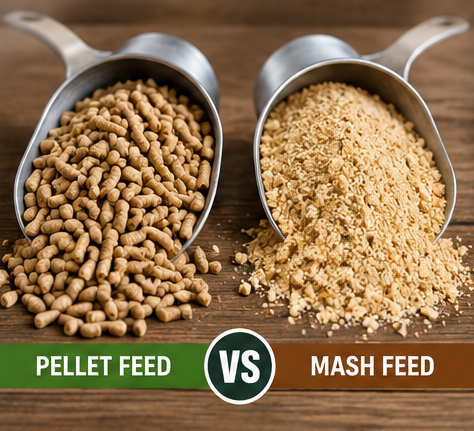
How does pellet size affect poultry feed quality?
Feed pellet size is the core index affecting feed quality and poultry feeding effect, mainly with diameter as core and length as auxiliary, directly related to poultry intake, muscle stomach development, nutrient digestibility, feed conversion rate and chicken growth uniformity. The particle length standard is 1.5 – 2 times of diameter. The imbalance of size will directly cause poultry digestion weakening, feeding difficulties, feed waste and other problems, which will greatly affect the breeding benefit. Specific impact and adaptation criteria are as follows:
Size criteria for adapted particles at different stages of poultry growth
The feeding habits and digestive ability of poultry of different categories and different ages are quite different, and there is a clear industry optimal particle size specification, which is the basis for ensuring efficient breeding. 2 – 3mm pellets or broken pellets are suitable for broilers in brood period (0 – 14 days), which is suitable for weak feeding ability of chicks; 3 – 4mm pellets are suitable for growth period (14 – 28 days); 3 – 5mm pellets are preferred in fattening period (more than 28 days), and the length is controlled at 4.5 – 10mm, which is suitable for rapid weight gain. The laying hens have 3 – 4mm granules in the whole cycle, and the laying period is fine-tuned to 2 – 4mm to ensure stable and balanced nutrient intake. Large poultry such as ducks, geese and turkeys are suitable for 4 – 6mm large size particles to suit their feeding habits.
Effect of particle size on feed intake and production performance of poultry
Pellet size directly determines feed palatability, poultry intake and growth efficiency. Moderate pellets of 3 – 5mm are optimal for increasing poultry intake per feed and overall feed intake by 5 – 15%. Among them, 3 – 4mm pellets are the most preferred type for broilers, which can achieve a high quality feed conversion rate of 1.49 – 1.52, and the average daily weight gain of broilers can reach 63 – 70g. 2mm ultra-fine particles will lead to insufficient satiety and disordered growth rhythm of poultry in growing period, with daily weight gain of only 55 – 60g, feed conversion rate as high as 1.65, and significant decrease in breeding efficiency; ultra-large particles above 6mm are easy to cause feeding difficulties, feed residues, and further loss of breeding income. At the same time, standard size pellets can reduce feeding waste by 8%-20%, reduce poultry stress and disease probability, and ensure uniform growth of chickens.
Effect of granule size on digestive function and granulation production
At the poultry digestive level, moderate particles of 3 – 4mm and above can effectively stimulate the contraction exercise of poultry muscle stomach, strengthen gastrointestinal digestion function, and greatly improve the intestinal absorption rate of protein, fat and energy; too fine particles will weaken muscle stomach exercise, and long-term feeding will lead to deterioration of poultry digestive function. At the equipment production level, the production characteristics of different size molds are significantly different: 2 – 3mm fine particle molds have higher compression ratio, better hardness and durability of finished particles, but the equipment capacity is lower and the energy consumption is higher;4 – 5mm large particle molds have higher production efficiency and higher production capacity, but the quenching temperature of 75 – 82℃ should be strictly controlled to avoid excessive gelatinization of starch, resulting in damage to particle quality.
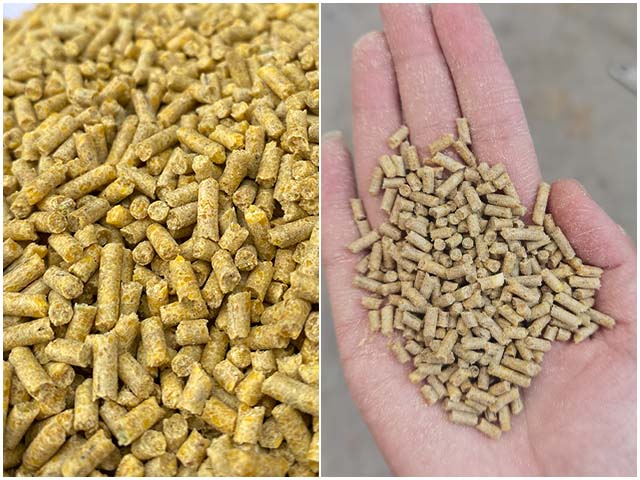
Key Factors Affecting the Performance of Poultry Feed Pellet Machine
The operation performance of poultry feed pellet machine is mainly reflected in the four dimensions of production efficiency, energy consumption level, mold service life and pellet finished product quality, which directly determines the feed processing quality and overall breeding income. Equipment performance is restricted by multiple factors, mainly including raw material characteristics, pretreatment process, equipment configuration, operating parameters and operation and maintenance environment, which can explain more than 90% of particle quality fluctuations and unstable production capacity. The specific details are as follows:
Raw material formula and material characteristics
Raw material formula is the basic core factor determining granulation effect. Corn, soybean meal and other high-starch grain raw materials have good adhesion, low granulation difficulty, sufficient hardness and integrity of processed particles, and stable equipment capacity. High fiber, high fat, high mineral formula (such as high stone powder layer feed) poor adhesion, high friction coefficient, easy to cause loose particles, more dust, while increasing the wear of molds and rollers, resulting in a 10%-15% reduction in equipment productivity. In addition, the fineness of raw materials and moisture are very important, the moisture range is 13%-16%, the moisture is too high to block the machine, too low, the particles are fragile and the durability is poor; the raw materials contain 1.5%-4% fat, which can play a lubricating role. Excessive fat will destroy the particle adhesion and reduce the quality of the finished product.
Pretreatment process before granulation
Crushing and steam conditioning pretreatment process is the key link to ensure particle quality and reduce equipment failure. Raw materials should be crushed evenly and finely without bulk impurities. Coarse materials will greatly increase the granulation pressure and produce a large amount of broken materials. Steam conditioning needs strict control of standard parameters: temperature 75 – 88℃, conditioning time 1 – 3 minutes, steam pressure 0.2 – 0.4MPa. Insufficient conditioning will lead to insufficient starch gelatinization, particle adhesion, durability greatly reduced; excessive conditioning will destroy feed nutrition, produce debris. After material conditioning, moisture should be stable at 15%-18%, moisture imbalance is easy to cause production problems such as machine plugging, particle cracking, dust exceeding the standard.
Equipment core configuration and structural parameters
Equipment core accessories and structural parameters directly determine granulation stability and finished product quality. Mold is the core component, poultry feed is suitable for 2 – 5mm aperture, 3 – 4mm is the universal optimal size, giving consideration to productivity and particle quality; mold aspect ratio is controlled at 8:1 – 12:1, too high ratio will lead to too hard particles, high energy consumption, too low ratio will lead to loose particles, poor molding. The fit gap between the roller and the mold is 0.05 – 0.3mm, the gap is too wide and the pressure is insufficient, the particle molding is poor, and the gap is too narrow, which is easy to cause the equipment to jam and the parts to overheat. At the same time, the motor power and transmission system should be accurately matched with the mold capacity to avoid problems such as capacity reduction and equipment overload caused by insufficient power.
Field operation and operating parameters
Operating parameters such as equipment running speed, feeding speed and motor load directly affect production efficiency and particle uniformity. The linear speed of the ring mold suitable for poultry fine particle production is 7 – 9m/s. The rotation speed is high to improve the production capacity but easy to cause particle breakage. The rotation speed is low. The particle quality is stable but the production efficiency is insufficient. When the equipment is running, the motor load should be maintained at 80%-95%, eliminating no-load energy consumption waste and overload failure. During the production process, it is necessary to ensure that the materials are fed at a constant speed, so as to avoid problems such as equipment pressure fluctuation, uneven particle quality, poor stability of finished products, etc. caused by rapid and slow feeding.
Equipment maintenance and production environmental factors
Dies and pressure rollers are high-frequency and fragile parts. Long-term wear will lead to insufficient granulation pressure, reduced production capacity, and increased dust. They need to be polished and maintained regularly and replaced as needed to ensure stable equipment working conditions. Equipment lubrication and cooling system shall operate normally to prevent parts from blocking and aging at high temperature and prolong the service life of equipment. In addition, the temperature, humidity and ventilation conditions of the production workshop, as well as the standardized operation level of the operators, will slightly affect the stability of equipment operation and the quality of finished particles. The standardized operation and maintenance and production environment can effectively reduce the equipment failure rate and stabilize the product quality.
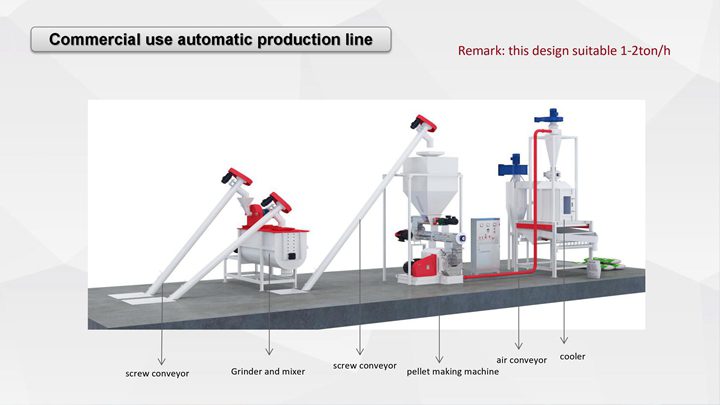
How to choose the appropriate poultry feed pellet machine?
The purchase of poultry feed pellet machine can not blindly pursue high price or large production capacity, but should be combined with its own breeding scale, poultry category and production demand. The adapted equipment can ensure stable particle quality, controllable energy consumption and fast return; the selection error is easy to cause problems such as insufficient production capacity, high energy consumption, many defective particles, high operation and maintenance cost, etc., which will reduce the breeding income for a long time. The following are the five core points of standardized equipment purchase:
Calculate capacity requirements and accurately match equipment specifications
The primary core of equipment purchase is to meet their own production needs, match capacity specifications as needed, and avoid overcapacity or shortage. Farmers can calculate the total daily feed consumption according to the poultry stock and daily feed intake, and reserve 20%-30% of the production capacity margin to adapt to the expansion of breeding scale, feeding peak period and equipment maintenance gap. Small farms with less than 500 chickens are equipped with 100 – 500kg/h production capacity equipment;1000 – 20000 small and medium-sized farms are equipped with 1 – 5 tons/hour equipment; large breeding bases and feed factories need to select industrial equipment with more than 5 tons/hour to avoid energy consumption and production bottlenecks from the source.
According to the breeding scale, reasonable selection of equipment models
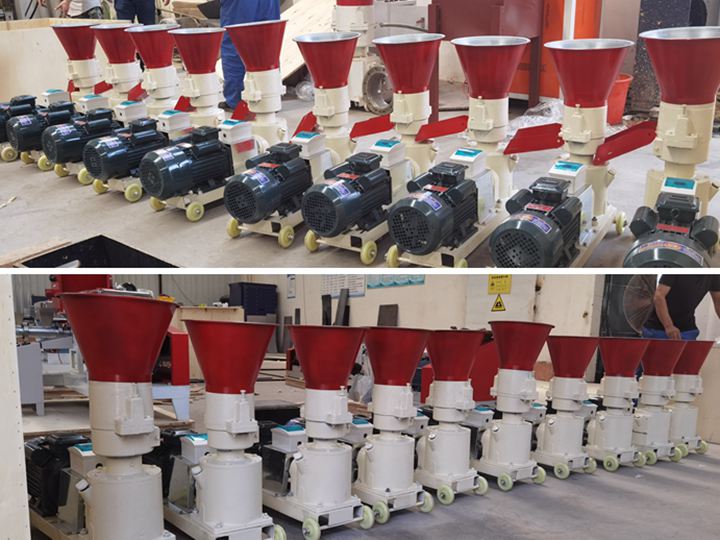
At present, poultry feed pellet machine is mainly divided into flat mold and ring mold two models, adapt to different farm scenery. The flat-die pellet machine has a simple structure, convenient operation and maintenance, supports dual-power drive, and low procurement cost. It is suitable for short-term and intermittent production of small retail investors and family farms, and adapts to the production capacity demand of less than 500kg/h. The ring mold pelletizer has high automation, large production capacity, good particle uniformity, energy saving of 10%-15% compared with the flat mold model, better particle durability, and continuous production of more than 1 ton/hour. It is the best choice for large and medium-sized standardized farms and feed mills. Long-term use is more cost-effective.
Custom mold configuration to suit multi-stage granulation needs
Mold is the core accessory that determines the particle size and quality. When purchasing, it is preferred to support the model with replaceable mold. It can flexibly switch the mold with different aperture of 2 – 5mm to meet the feeding needs of chickens, growing poultry, laying hens, ducks and geese. The mold material is preferably alloy steel or 316 stainless steel, which is wear and corrosion resistant. It can be adapted to the processing of high-fiber and high-mineral special feeds, effectively extending the service life. At the same time, pay attention to the mold length to diameter ratio, the standard ratio of 8:1 – 14:1 is suitable for poultry full-cycle feed production, the high ratio can be used to make hard granules for laying hens, and the low ratio is suitable for soft granules for chicks, which is more adaptable.
Check core performance indicators to ensure the quality of finished feed
When purchasing, it is necessary to focus on verifying the four core performance indicators to ensure that the equipment stably produces high-quality pellet feed. First, energy consumption index, energy consumption of high-quality energy-saving models can be controlled at 15 – 45kWh/ton, equipped with variable frequency motor can further reduce energy consumption; second, particle durability, poultry feed standard durability needs to reach 88%-92%, the higher the value, the less dust, the lower the feeding loss; third, conditioning configuration, must be equipped with 75 – 88℃ precision temperature control steam conditioning system, to ensure full starch gelatinization and raw material sterilization effect; Fourth, the whole machine configuration, preferably thickened fuselage, high-quality transmission bearings, with automatic cooling, dust removal, intelligent control system, improve equipment stability and automation level.
Consider the full cycle cost and attach importance to after-sales service
Equipment purchase should not only pay attention to the initial purchase price, but also comprehensively calculate the whole life cycle cost, including all expenses such as procurement, energy consumption, parts replacement, manual operation and maintenance, etc. Small flat mold equipment has low initial investment, but high energy consumption and fast wearing parts loss; large ring mold equipment has high initial investment, but long-term energy saving, stable production capacity and short return period. At the same time, priority shall be given to the regular manufacturers that can provide formula test machine, on-site commissioning and warranty for more than one year, so as to ensure the stock supply of accessories and avoid the problem of unmanned maintenance of equipment failure in the later period. Conditions allow on-site inspection of the same equipment field operation effect, verification of real production quality.
Is the poultry feed pellet machine worth it?
For normalization and large-scale poultry farming, feed pellet machine is the core efficiency equipment with stable return cost and high cost performance. The return cycle of different specifications of equipment is clear and controllable. Small equipment only takes 4 – 8 months, small and medium-sized equipment 6 – 12 months, and large commercial equipment 12 – 24 months. Long-term use can reduce breeding costs and improve poultry production capacity. It is the core equipment for increasing income of all kinds of regular farms.
The economic and breeding advantages of self-pelleting are very significant. Compared with purchased commercial pelleted feed, self-processing can save 40 – 100 US dollars per ton of feed, reduce feeding waste by 8%-20%, optimize feed conversion rate by 3%-10%, and improve poultry meat and egg production performance by 10%-30%. In addition, the equipment supports flexible customization of feed formulas for various growth stages. The high temperature granulation process can reduce the probability of poultry diseases and reduce veterinary drug consumption. The surplus finished feed can also be exported to generate income, and the stability and income of comprehensive breeding are greatly improved.
From the landing effect of different breeding scales, small family farms, medium-sized large-scale farms and large-scale breeding bases can obtain considerable benefits, but the equipment is not suitable for all scenarios. 50 – 100 birds or less, no stable supply of electricity and raw materials, equipment return cycle is too long, do not need to purchase; use high-quality finished feed and no waste farms can also postpone the purchase. On the whole, the annual feed consumption of 50 – 100 tons, monthly feed input of more than 500 US dollars farm scene, the purchase of pellet machine can quickly recover the cost, long-term income advantage outstanding.
Poultry Feed Pellet Machine FAQ
Combined with the latest industry data in 2026 and the high-frequency questions of the majority of farmers and feed processing plants, sort out the core common problems of poultry feed pellet machines, provide accurate and practical answers, and solve all kinds of puzzles in equipment purchase, use and operation.
How long is the service life of the pellet machine mold and roller? Ordinary alloy steel ring mold in the production of conventional corn soybean meal formula, the service life can reach 1500 – 2500 hours, can process feed 3000 – 8000 tons; high chromium, stainless steel high-end mold service life can reach 30000 – 50000 tons. The service life of consumable materials for flat mold equipment is short, only 500 – 1200 hours. If processing high mineral, high impurity wear formula, the life of the parts will be shortened, need to repair and replace every 500 – 800 hours, standard maintenance can extend the service life of 40%-50%.
Poultry pellet machine power consumption per ton of feed about how much? The energy consumption of equipment varies significantly according to the model. The mainstream commercial ring mold energy-saving model consumes 15 – 45kWh per ton of corn soybean meal feed, while the conventional ring mold model consumes 35 – 55kWh. The energy consumption of small flat mold equipment is relatively high, consuming 50 – 85kWh per ton. The overall electricity cost is low and can be completely covered by the breeding efficiency gains.
How to solve the problem of loose particles and dust? Loose particles and excessive dust are mostly caused by insufficient quenching and tempering, inconsistent mold parameters and imbalance of moisture in raw materials. It can be improved by raising the quenching temperature to 75 – 88℃, optimizing the moisture content of raw materials to 13%-16%, adjusting the aspect ratio of molds, cleaning the worn rollers and molds, etc. After standard debugging, the particle durability can be stabilized to more than 88%, greatly reducing debris and dust.
Epilogue
Poultry feed pellet machine has become an essential equipment for modern poultry breeding by virtue of its four core values of quality improvement, consumption reduction, efficiency enhancement and epidemic prevention. Accurate recognition of equipment performance, control of particle processing standards, scientific selection and operation, can maximize the advantages of equipment, reduce breeding costs, improve the yield and quality of poultry products, and help farms achieve standardized, large-scale and high-yield development.