Floating Fish Feed Production Process Explained
In the aquaculture industry, floating fish feed (expanded floating fish feed) has become the feed of choice for mainstream fish species such as tilapia, carp, catfish, koi, bass and so on, thanks to its core advantages of easy observation, low wastage, water quality protection and high digestibility. Compared with traditional sinking feeds, floating feeds can be suspended on the water surface for a long time, which significantly reduces feed wastage and water pollution, and effectively improves farming efficiency.
What is floating fish feed?
Floating fish feed is an aquatic feed pellet made by extruding and expanding process, which is different from ordinary pressed sinking feeds, and can float on the surface of the water continuously for more than 6-12 hours without sinking rapidly, which is suitable for freshwater and seawater aquaculture fish that feed on the surface and the middle layer, and it is the core feed category of modern intensive aquaculture.
Compared with sinking feeds and powder feeds, floating fish feeds have five core advantages, which are also the key reasons for their popularity:
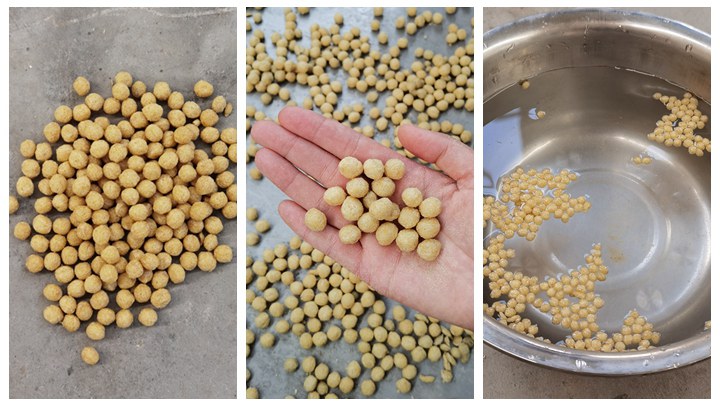
Easy monitoring of feeding: With the feed suspended on the water surface, farmers can visually observe the feeding status and feeding activity of fish, quickly judge the health status of the fish population and their appetite, and accurately adjust the feeding amount to avoid overfeeding or underfeeding.
Significantly reduce feed waste: long-lasting floating pellets effectively prevent feed from sinking to the bottom of the pool and rotting and deteriorating, which saves more than 5%-10% of feed costs compared with traditional feeds, and reduces the expenditures of aquaculture consumables from the source.
Higher nutrient absorption rate: high temperature and high pressure expansion process can complete the starch maturation, destroying the anti-nutritional factors of raw materials, improving the utilisation rate of core nutrients such as protein, starch, etc., so that the fish can digest and absorb better and grow faster.
Conservation of pond water quality: residual bait, rotten bait is greatly reduced, effectively reducing the accumulation of ammonia nitrogen and nitrite in the water body, reducing the deterioration of water quality, water turbidity, fish and shrimp disease frequency and other problems, reducing the cost of aquaculture water change and bottom modification.
Strong feeding convenience: no need to build a special feeding platform, suitable for ponds, net boxes, factory farming and other scenarios, suitable for most of the conventional aquaculture fish species.
Classification and function of core ingredients of floating fish feed
The floating performance, nutritional balance and particle stability of floating fish feed depend entirely on the proportion of raw materials. The core ingredients of the formula are divided into two categories: nutritional ingredients and floating functional ingredients, of which starch content ≥20% is the hard standard for the feed to achieve long-lasting floating. Conventional raw material ratio and its role are as follows:
1、Protein raw materials
Provide core protein for fish growth and muscle synthesis, divided into animal protein and plant protein, according to the needs of both nutrition and cost:
Animal protein (high quality, high absorption rate): fish meal, shrimp meal, poultry meal, meat and bone meal, blood meal, silkworm pupa powder, suitable for carnivorous, omnivorous fish and fry feed.
Vegetable protein (cost-effective, mainstream selection): soybean meal, cotton meal, rapeseed meal, peanut meal, sunflower meal, corn protein powder, is the main source of protein for adult fish feed, which can effectively reduce the cost of the formula.
2、Starch energy raw materials
This is to determine whether the feed can float, float the core raw materials for a long time, starch in the expansion of high temperature and high pressure paste expansion, the formation of porous structure, is the basis of floating water. Commonly used raw materials: corn, wheat flour, wheat bran, rice bran, cassava flour, sorghum, deoiled rice bran (DORB). The higher the starch content, the better the feed puffing effect, the stronger the floating water; On the contrary, the lack of starch will directly lead to feed sinking.
3、Oil and fat raw materials
Mainly provide essential fatty acids for fish and enhance the palatability of feed, commonly used raw materials are fish oil, soybean oil, palm oil, lecithin. Need to strictly control the addition ratio, too much fat will inhibit the expansion effect, reduce feed floating.
4, bonding filler raw materials
Wheat flour, tapioca, rice bran, oil cake meal is the main, to enhance the particle firmness, abrasion resistance, to avoid the rapid collapse of feed into the water, to enhance the stability of the water column.
5, additives premix
It contains vitamin and mineral premix, lysine, methionine and other essential amino acids, as well as toxin binders, antioxidants, probiotics, enzymes, calcium and phosphorus supplements, which can improve the nutritional system, prolong the shelf life of the feeds, and enhance the ability of fish to resist diseases.
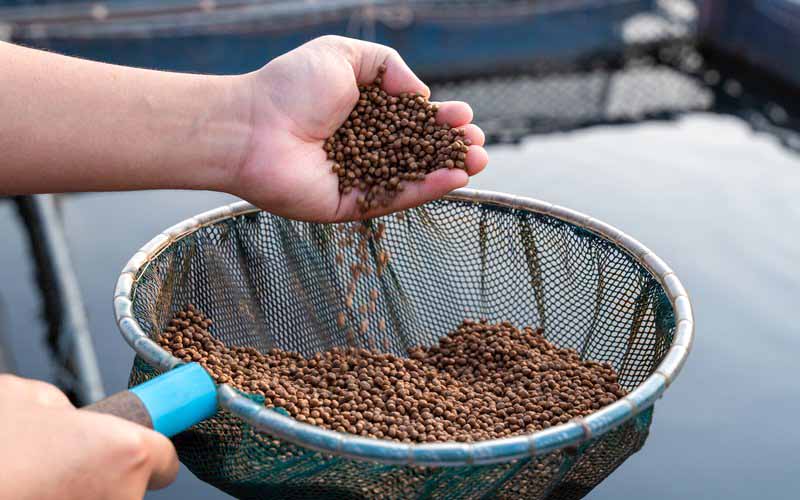
General practical formula reference (1000kg batch)
General tilapia/carp formula: fishmeal 200-400kg, soya bean meal 200-250kg, corn 200-300kg, wheat bran/rice bran 100-250kg, oil 20-50kg, premix and additives. 50kg, premix and additives 5-15kg.
Cost-effective localised formula (common to Asian and African culture): soybean meal cake 220kg, mustard cake/peanut cake 185kg, rice flour/rice meal 390kg, fishmeal/shrimp meal 130kg, vegetable oil 50kg, premix and binder 15-30kg.
Core requirements of floating fish feed formulation
High-quality floating feed formulation must simultaneously meet the nutritional requirements of fish species growth and puffing and floating process requirements, can not only focus on nutrition and ignore the floating water, and can not only protect the floating water missing nutrients. Different fish species, different growth stages of the formula parameters vary greatly.
1、Core nutritional index standard (dry material percentage)
– Crude protein: 32%-40% for tilapia, 28%-32% for catfish (35%-40% for fry), 25%-35% for carp, 40%-45% for carnivorous fish (trout), 40%-45% for omnivorous fish. -45%, omnivorous fish general 28%-38%.
– Crude fat: 5-12%, high energy feeds can be upgraded to 10-25% to supplement fish growth energy.
– Starch and carbohydrates: minimum 20% (hard indicator for floating water), 20%-25% recommended for high quality floating water feeds, 10%-15% starch is only suitable for sinking feeds.
– Crude fibre: <8%-12%, too high fibre will reduce the digestibility and destroy the expansion structure.
– Ash: <8.5%-12%, phosphorus content of 0.5%-1.5%, finished product moisture control within 10%-12% to prevent mould.
2、The core principle of formula design
– Floating water priority: strictly ensure that starch ≥ 20%, strictly control oil, crude fibre over-addition, to avoid inhibiting puffing and swelling.
– Cost optimisation: replacing high price fish meal with vegetable protein, matching with agricultural by-products, compressing the production cost without lowering the quality.
– Adaptation of stages: Fry feed is high in protein and low in fibre; adult fish breeding feed moderately reduces the proportion of protein and increases the proportion of energy raw materials.
– Nutritional balance: balanced protein-energy ratio, avoiding protein waste for energy supply, matching essential amino acids and probiotics to improve feed utilisation.
Standardised production process of floating fish feed
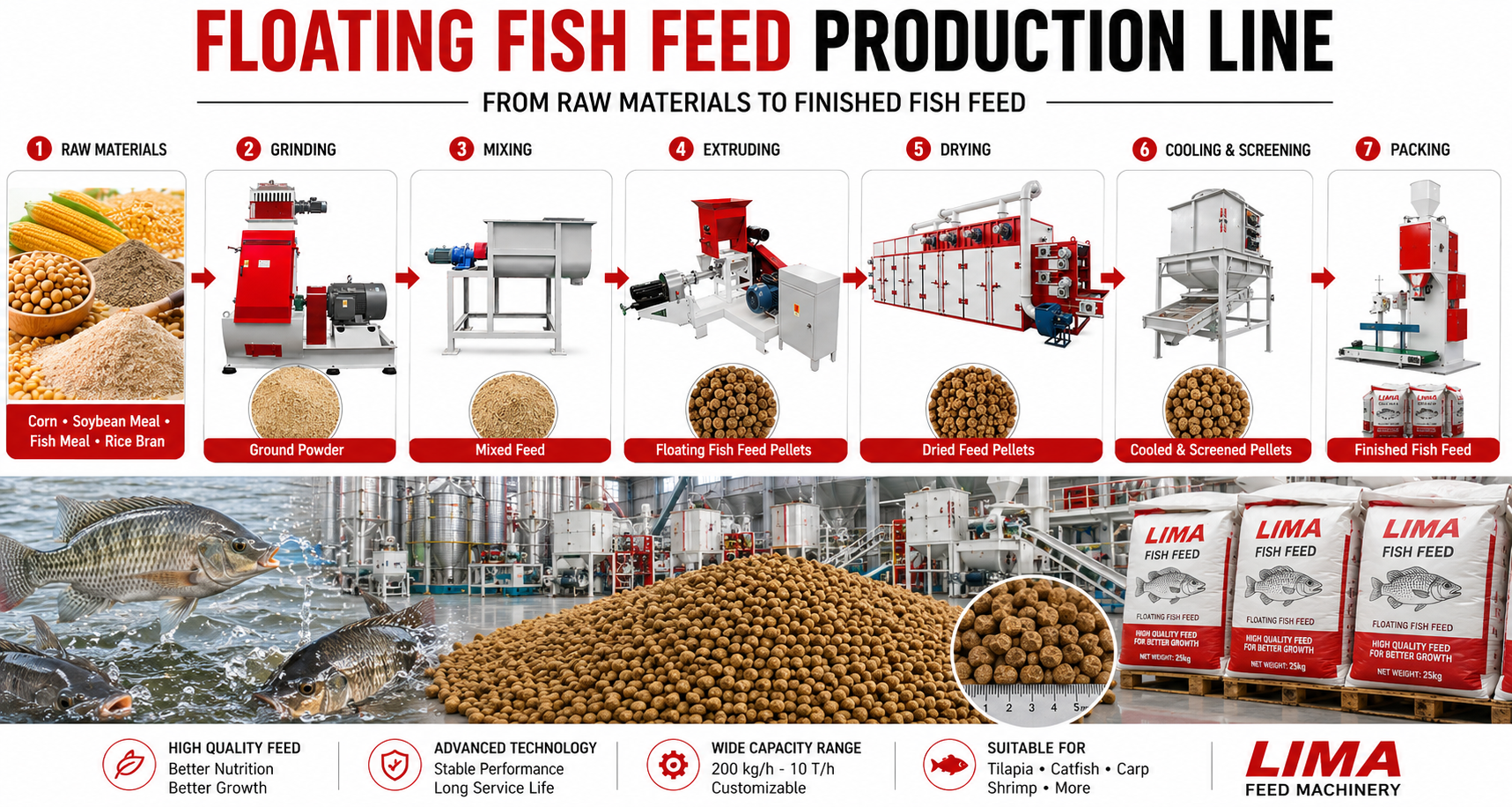
1. Raw material screening and accurate batching:
The stable quality of the finished products of floating fish feed starts from the quality control of raw materials and precise proportioning. Before production, we need to strictly follow the customized formula, screen fresh, no mould, no rancidity, no insects and high quality raw materials, and resolutely eliminate moisture deterioration, expiry date, adulteration and impurities of poor quality materials, so as to avoid the loss of feed nutrients, fragile particles, water pollution and other problems from the source. According to the scale of production, manual weighing or automatic batching equipment can be used to accurately measure all materials such as protein raw materials, starch raw materials, oil and grease, additives, etc., to ensure that the ratio of raw materials in each batch is highly uniform, and to effectively circumvent the production problems such as uneven water floatation, nutritional imbalance, and uneven quality of the finished products due to the deviation of the ratios.
2. Ultra-fine powder processing:
After the dosing is completed, it needs to be uniformly sent to the hammer mill for ultra-fine crushing, and the standard crushing fineness is controlled at 60-100 mesh (0.5-1mm). Raw material crushing is a key pre-process affecting the puffing effect and feed digestibility, coarse and fine uniform powder can greatly enhance the uniformity of the subsequent material mixing and blending, so that the starch, protein, additives and other components are fully integrated. At the same time, the refined raw materials can effectively reduce the difficulty of starch paste, so that the starch in the puffing process is more thoroughly cooked, the structure is more stable, to avoid the uneven thickness of the particles of the local puffing is not enough, the feed floats for different lengths of time, the finished product is too much dust and so on, and comprehensively improve the overall quality and stability of the feed.
3. Uniform mixing and blending:
Crushed materials will be sent to the horizontal or vertical special feed mixer for all-round mixing and blending, using the standardised mixing process of ‘dry and then wet’: firstly, all kinds of dry powder raw materials, vitamin-mineral premixes, amino acids, probiotics and other dry powder additives are fully mixed and stirred to ensure that the dry powder materials are evenly distributed; and then slowly adding Then slowly add fish oil, vegetable oil, liquid food additives and other liquid raw materials, continuous mixing until the material is uniformly dry and wet, no lumps, no local bias phenomenon. The uniform mixing effect can ensure that the nutrient composition, starch proportion and oil content of each feed particle are completely consistent, which can fundamentally solve the problems of large differences in the floating nature of the finished feed, unbalanced nutrition and poor palatability of some particles.
4. Steam tempering pretreatment:
The evenly mixed dry material can not be directly puffed, it must be pre-treated by steam tempering, which is the key process to guarantee the puffing effect and improve the water stability of feed. In the production, high temperature steam will be continuously fed into the material and precisely replenish water, so that the overall moisture of the material will be steadily regulated in the range of 10%-30%, and the temperature of the material will be warmed up to 80-100℃. High temperature and high humidity environment can fully soften the hard raw material particles, start the preliminary starch pasting reaction in advance, improve the flexibility and plasticity of the material, effectively reduce the subsequent expansion machine equipment load, so that the material in the puffing process is more fully ripe, more uniform expansion for the subsequent formation of a stable porous floating water structure to lay a solid foundation.
5. High temperature and high pressure puffing (core process):
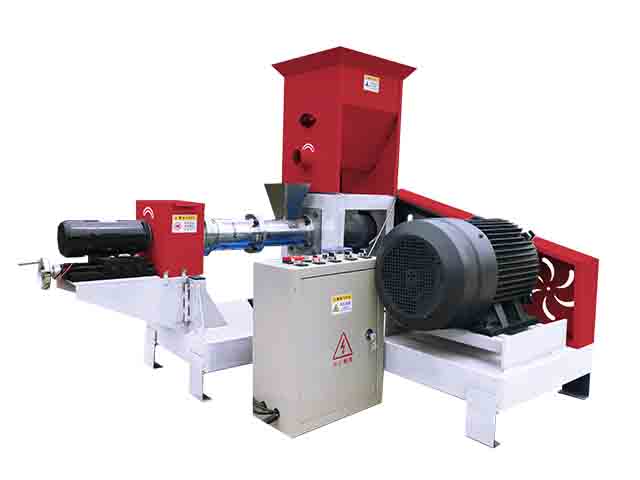
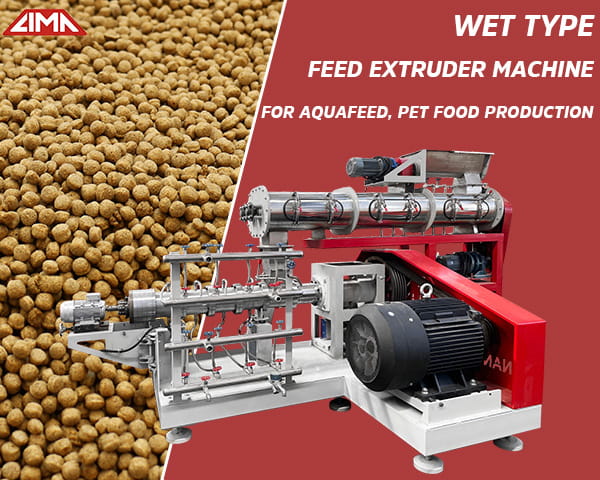
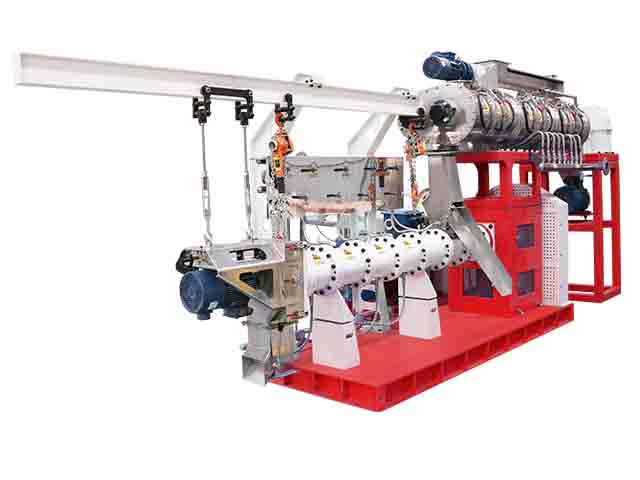
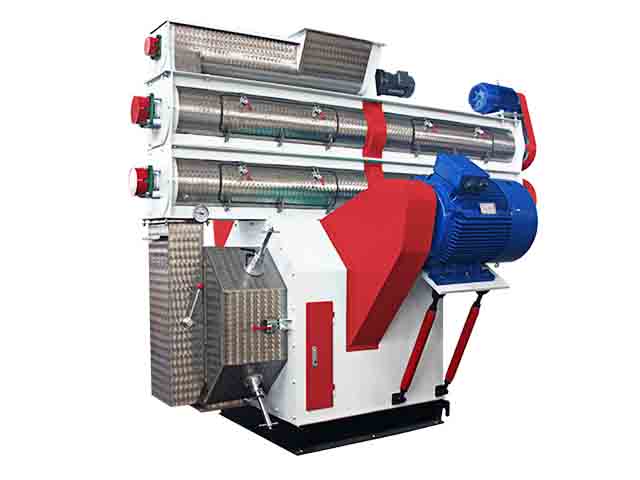
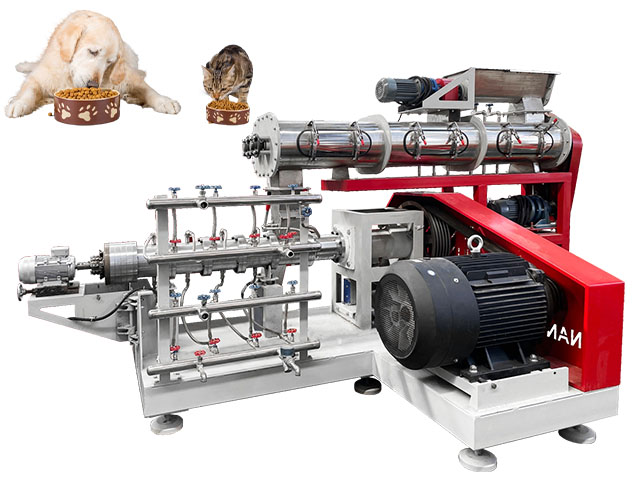
Expansion process is to determine whether the feed can float, particle structure, digestive absorption rate of the core of the core process, but also the floating feed and submerged feed production of the core difference. The tempered material is fed into the single-screw or twin-screw expanding machine at an even speed, and under the multiple effects of 110-200℃ gradient high temperature, 25-100kg/cm² high pressure and strong mechanical shear, the material is thoroughly cooked, melted and reorganised to form a uniform gelatinous molten body. When the high-pressure molten material is instantly extruded from the mould hole, the external air pressure is suddenly lowered, and the high-temperature water vapour inside the material flashes and expands very quickly, spontaneously forming a loose and porous honeycomb structure, realising the light weight of feed. At the same time, the high-speed cutting machine supporting the equipment can accurately regulate the length of the pellets according to the requirements of breeding, ensuring that the finished pellets are uniform in specification and shape.
6. High temperature drying and shaping:
The moisture content of the just expanded feed particles is extremely high, the overall moisture can reach 20%-30%, the texture is fluffy, the structure is unstable, it is very easy to be affected by moisture and mould, deformation and cracking, and it can’t be directly stored and used. Therefore, it needs to be sent to the professional mesh belt dryer for constant temperature drying treatment, and gradually remove the excess water inside the particles, and strictly control the moisture of the finished product within 12%. High-temperature drying can not only solidify the porous floating structure formed by expansion, stabilise the buoyancy and physical form of the feed, but also kill a small amount of residual bacteria in the raw material, inhibit the growth of moulds, effectively extend the shelf life of the feed, to avoid the return of moisture, mould, deterioration in the process of storage to protect the long-term stability of the quality of feed.
7. Cooling heat treatment:
After drying the feed particles at a high temperature, direct packaging will lead to condensation inside the bag, resulting in secondary moisture, caking, crumbling feed. Therefore, the need for counter-current cooling machine on the high-temperature particles of a full range of ventilation cooling, rapid particle temperature down to room temperature. The cooling process can further tighten the internal structure of the pellets, improve the hardness and abrasion resistance of the feed, reduce the debris and dust generated during transport and packaging, and significantly improve the integrity of the pellets, storage resistance and transport stability.
8. Spraying oil for flavouring, screening and packaging:
The qualified pellets after cooling can be fine-tuned according to the requirements of aquaculture, through the automatic oil spraying equipment evenly sprayed with fish oil, special aquatic food attractants, not only to supplement the growth of unsaturated fatty acids needed by fish to enhance the nutritional value of the feed, but also greatly enhance the palatability of the feed, stimulate the desire of fish to eat. After the oil spraying is completed, the feed is screened by vibrating sieve to thoroughly filter the broken material, powder and deformed particles, and only the complete particles with uniform specifications are retained. Finally, it adopts moisture-proof, light-proof and sealed professional feed packaging bag for quantitative encapsulation, and stored in dry, cool and ventilated storage environment to avoid moisture, sun exposure and high temperature deterioration, so as to ensure stable quality of feeds from the factory.
Floating fish feed can float the core principle of water
Many farmers and feed novices have a cognitive misunderstanding that floating fish feed can float in the water because of the addition of special floating agent, buoyancy additives and other chemical additives, but it is not. Formal high-quality floating fish feed, completely relying on physical processes and raw material characteristics to achieve long-lasting floating effect, without the need to add any artificial buoyancy additives, the core floating logic for starch dextrination + puffing flash expansion, and popcorn high temperature and high pressure expansion moulding principle is highly similar to green, safe and more stable.
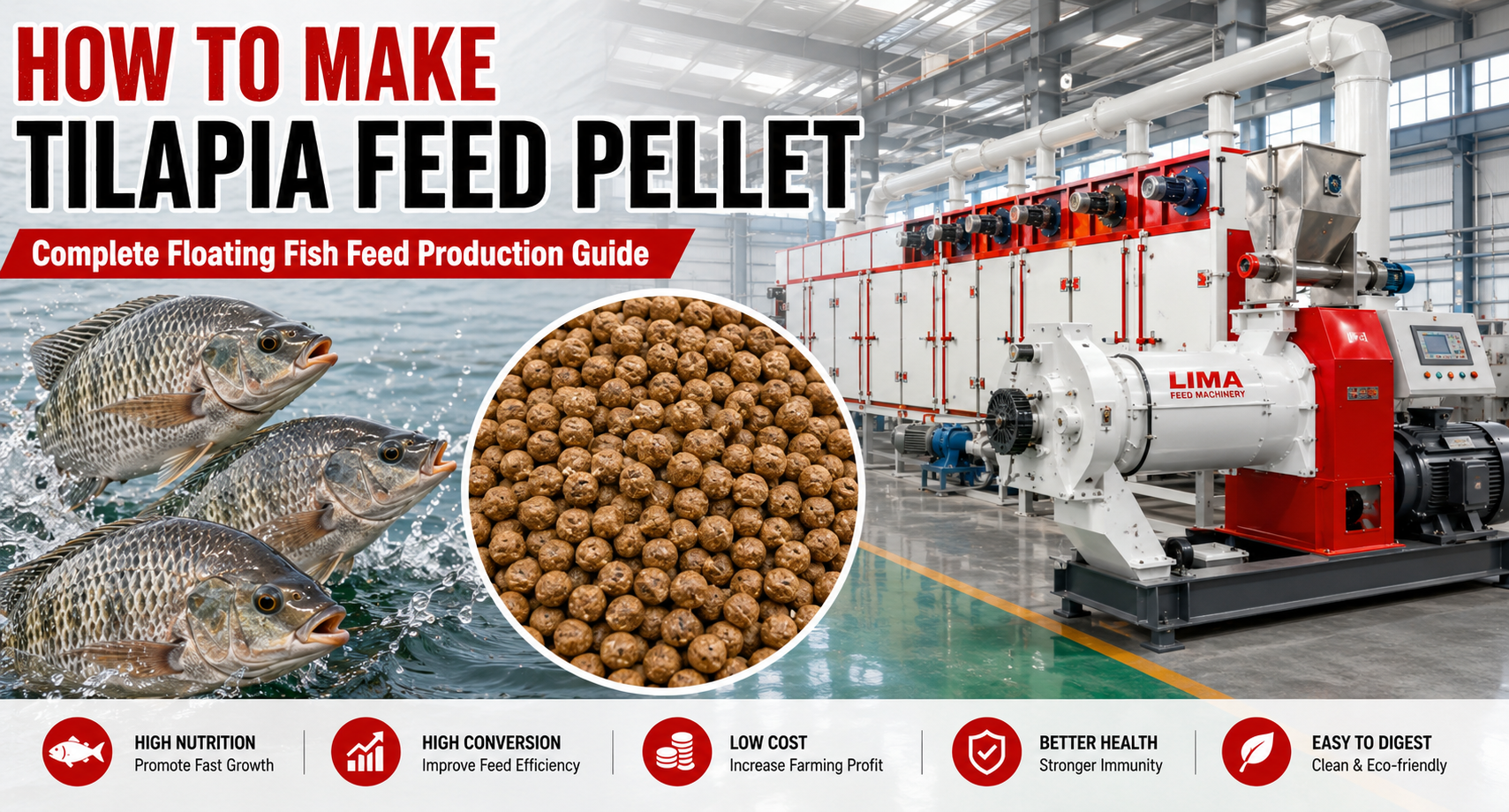
To achieve this effect, the formula must reserve no less than 20% of the pasteable starch raw materials, common corn starch, tapioca starch, wheat starch, etc. are excellent expansion substrate, but also the feed can be smoothly expanded, the formation of buoyant structure of the basic premise.
In the formal production process, after the tempering pretreatment and high temperature and high pressure expansion process, the starch granules in the raw material will fully absorb water, heat expansion and complete rupture, recombination to form a dense and tough gelatinous mesh structure. When the high temperature and high pressure molten material is extruded from the mould holes of the puffing machine, the external pressure drops instantly, and the high temperature water vapour inside the material will be rapidly vaporised and expanded, forming a large number of tiny air pores inside the feed.
After drying and shaping, the feed will be cured into a stable honeycomb porous structure, and the overall weight will be reduced to less than 550g/L, which is much lower than the density of the water body, so as to achieve a long time suspension on the surface of the water. At the same time, the gelatinous mesh structure formed by the pasted starch has excellent adhesion and waterproof, which can effectively avoid the rapid collapse and dissolution of the feed into the water, so that the feed has both long-lasting buoyancy and excellent stability of the water body to meet the needs of fish feeding for a long time.
Four key factors affecting the quality of floating fish feeds
Feed floating time, particle integrity, nutrient conversion rate, water quality stability, mainly affected by four major dimensions, but also the core focus of quality control:
1、Quality and fineness of raw materials
Raw materials are fresh, no mould, no rancidity, crushing fineness is up to standard, is the basic conditions. Raw material impurities, mould will lead to nutrient loss, particles fragile; crushed too coarse will cause uneven mixing, starch pasting is not sufficient, part of the floating water, part of the bottom of the problem.
2、Rationality of formula proportioning
Whether the starch content is up to standard is the key to floating, fat, fibre, protein ratio imbalance will directly destroy the expansion structure. High oil, high fibre formula will reduce the expansion degree, resulting in feed sinking, poor water stability.
3, expansion process parameters
Expansion temperature, pressure, moisture, screw speed, feed speed directly determine the pore structure. If the temperature is too low and the moisture is too high, the expansion will be insufficient; if the temperature is too high and the shear is too strong, it will destroy the heat-sensitive nutrients and cause nutrient loss.
4、After treatment process
Incomplete drying is easy to mould, moisture and sinking; cooling is not in place is easy to crack; excessive oil spraying will increase the self-weight of particles and reduce the floatability, accurate control of post-treatment process in order to stabilise the quality of the finished product.
Common problems and solutions of floating fish feed production
Expanded feed production process requires high precision, novice production is very easy to appear all kinds of quality problems, for the industry’s high-frequency problems, collated targeted solutions:
1、Feed does not float, frequent sinking
Causes: starch ratio <20%, too high fat fibre, insufficient expansion temperature and pressure, material moisture imbalance. Solution: Supplement high starch raw materials, adjust the formula to reduce fat fibre, optimize the expansion temperature and screw speed, precise control of moisture conditioning.
2、Particle size uneven, dusty, unstable quality
Causes: crushing fineness is not up to standard, uneven mixing, unstable puffing feed, clogged mould holes. Solution: unified crushing mesh, extend the mixing time, clean up the mould, stabilise the feeding speed, to ensure the consistency of particles.
3、Particles easy to break, easy to collapse into the water, poor water stability
Causes: insufficient starch pasting, insufficient binder, incomplete drying. Solution: Improve the degree of puffing and maturing, optimise the tempering process, make up for the binder raw materials, and dry strictly to the standard moisture.
4、High temperature leads to nutrient loss
Cause: high temperature destruction of vitamins, lysine, unsaturated fatty acids. Solution: heat-sensitive additives after the (oil spraying stage to add), with the right amount of antioxidants, reasonable control of the expansion of shear force.
5、Equipment jamming, blocking, unstable capacity
Causes: abnormal material moisture, raw material impurities, screw mould wear. Solution: Regular equipment maintenance, strict control of raw material quality, accurate regulation of moisture, adapt to the corresponding specifications of the mould screw.
VIII. Floating fish feed production FAQs
Q1:What is the floating time standard of high quality floating fish feed?
A: Qualified products can float for more than 6 hours, and high-quality industrialised products can float stably for more than 12 hours without collapse or sinking.
Q2:What is the difference between puffer and ordinary pellet machine?
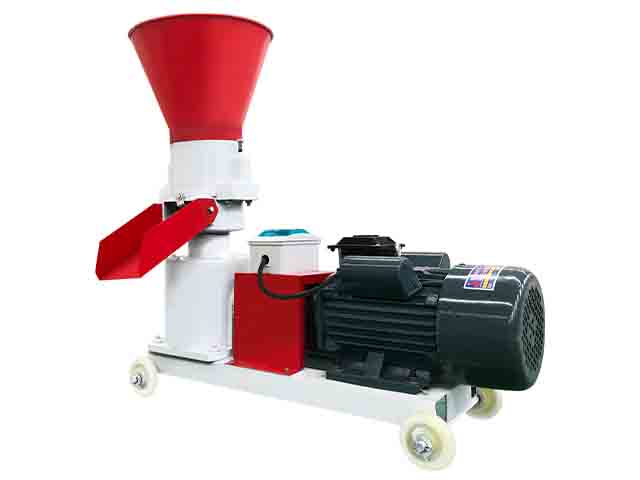
A: Ordinary pellet machine only physical pressing, no expansion effect, particle density, can only produce sinking feed; puffing machine high temperature and high pressure to cook the material, the formation of porous structure, is the only equipment for the production of floating feed, and feed digestibility is higher.
Q3:Can small farmers produce floating feed independently?
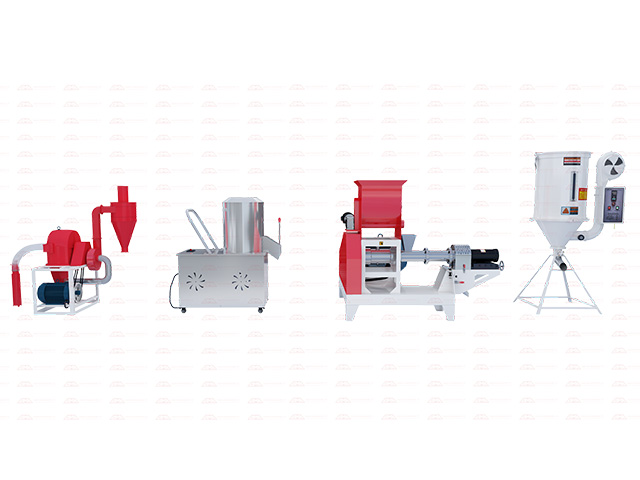
A: Yes. Small dry extruder has low cost, simple operation, suitable for family farming, small processing plant, only need to control the proportion of formula starch, crushing fineness, puffing parameters, you can produce qualified floating feed.
Q4: Is it suitable for all fish to feed floating feed?
A: It is suitable for most of surface and middle feeding fish (tilapia, carp, perch, koi, etc.); bottom feeding aquatic products (some shrimps and crabs, demersal fish) are more suitable for sinking or slow-sinking feeds, which need to be selected according to needs.
Q5:How to improve feed quality and reduce aquaculture cost at low cost?
A: Use local plant protein and agricultural by-products to replace high-priced fishmeal; regularly test the floatability, water stability and nutritional indexes of feeds; continuously optimise the parameters of expansion temperature, moisture and rotation speed, so as to reduce the wastage of raw materials and energy loss.
Summary
The core essence of floating fish feed is scientific formula + standardised expansion process, more than 20% starch ratio is the basis of floating water, precise process parameters, strict control of raw materials is the core guarantee of high quality feed. Compared with traditional sinking feed, floating feed combines the four advantages of high efficiency, saving money, water protection and growth promotion, which is the key to reduce costs and increase efficiency of modern aquaculture. Whether it is the selection of ingredients by aquaculture practitioners or the production of feed processing plant, controlling the three major cores of formula proportioning, expansion process and quality testing, we can stably produce high-quality floating fish feed with high conversion rate and high stability.