What are the different types of feed pellet machines
Feed pellet mill (pellet mill) is a commonly used feed processing equipment in aquaculture industry, can be corn, soybean meal, straw and other powdery raw materials high-pressure extrusion molding, made of high-density, storage-resistant, easy-to-digest pellet feed, effectively reduce feed loss, improve the efficiency of farming.
Feed pellet mill according to the structure, process, use and automation is divided into a variety of models, different models of production capacity, quality of the finished product, suitable for raw materials vary greatly, choose the wrong equipment can easily lead to insufficient production capacity, poor finished product, high cost. This article introduces in detail the characteristics, advantages and disadvantages of various types of feed pellet mill and applicable scenarios to help accurate selection.
What is a feed pellet mill? Feed pellet mill working principle
What is a feed pellet mill? It is a special feed molding equipment, grain, straw, cake meal and other powdery raw materials can be high-pressure extrusion into cylindrical pellets feed, relying on the raw material itself starch, lignin bonding molding, without additional adhesives, widely used in livestock and poultry, aquaculture, pet breeding, and effectively enhance the utilization rate of feed.
The core working principle of the feed pellet mill for high-pressure extrusion + friction heat bonding, relying on mechanical pressure and friction to achieve high temperature powder curing molding, complete granulation process coherent standardization: the equipment will be the first raw material crushed and refined, mixing and dosing and adjusting the moisture to the optimal proportion of 10%-15% of the molding, and then through the feeding equipment will be uniformly sent to the powder pelleting chamber, the high-end model will be through the steam on the raw materials to tempering soften to further enhance the molding effect, followed by the pressure roller to further enhance the molding effect. Further enhance the molding effect, followed by the pressure roller will be high-pressure extrusion of raw materials into the mold hole, with the help of friction heating so that the raw materials are fully bonded and shaped, the extruded material by the cutter cut into standard specifications, and finally through the cooling and hardening, screening and removal of impurities, to get the finished pellet feed. The density of the processed pellets can be 2-3 times of the original powder, which can effectively solve the problems of dust, caking and waste of powder, and greatly improve the palatability of the feed and the digestive and absorption rate of the breeding animals.
Classification by structure
Mold structure is the core standard to distinguish the feed pellet mill, but also the key to determine the capacity of the equipment and the quality of the particles, the mainstream industry is divided into two categories of flat die pellet mill and ring die pellet mill, suitable for completely different production scale.
Flat Die Pellet Mill
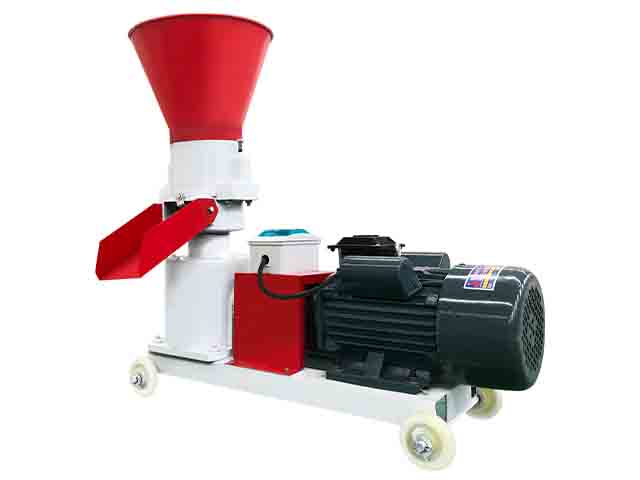
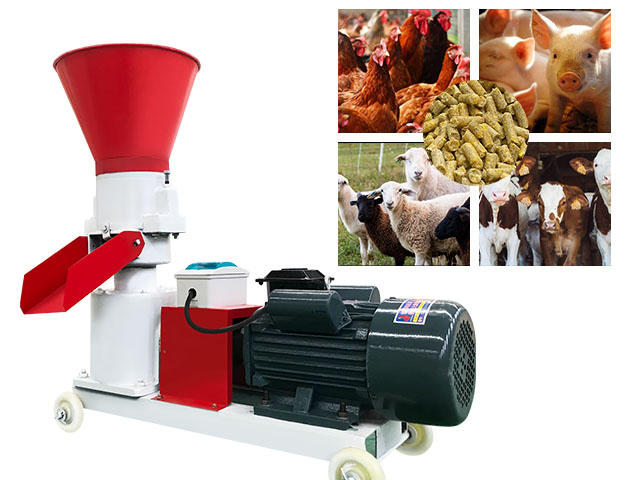
Flat die pellet mill, also known as disc pellet mill, is the mainstream civilian equipment suitable for small and medium-sized farming and small-scale feed processing, with mature structure and low cost. The equipment adopts horizontal disc mold with multiple wear-resistant pressure rollers, relying on the gravity of raw materials to fall, vertical extrusion to complete the pelleting, supporting the pressure roller to mold fixed, mold to pressure roller fixed two modes of operation, the overall structure of the overall solid, fault-tolerant, stable operation, suitable for all kinds of small-scale pelleting conditions.
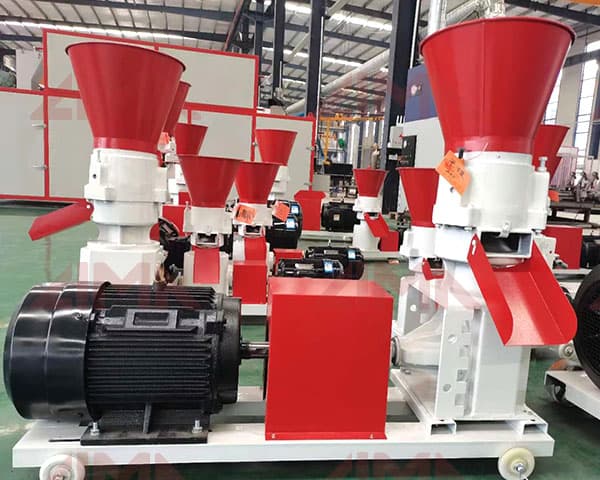
Core advantages: simple equipment structure, no precision and complex components, low failure rate, low operating threshold, ordinary farmers can quickly get started. Equipment disassembly is simple, easy to clean and maintain, compact and lightweight body, strong adaptability of the site, without the need for a special plant. The cost of purchasing the machine is friendly to the public, the accessories are cheap and easy to replace, and the overall operation and maintenance costs are extremely low. At the same time, it can flexibly adjust the pelleting pressure, suitable for corn, soybean meal, wheat bran and other soft raw materials, in small batch, intermittent production of lower energy consumption, outstanding cost-effective.
Main shortcomings: limited by the structure and specifications, the equipment capacity is limited, the conventional output is only 80-1000kg/h, can not be adapted to large-scale continuous industrial production. Gravity drop extrusion leads to uneven force on the equipment, faster wear and tear of pressure rollers and molds, and short service life. Insufficient extrusion pressure of the equipment, the density and hardness of the output particles are general, uneven firmness, easy to crack and powder during storage and transportation, high rate of broken materials, and the stability of the finished products of commercial mass production is poor.
Scenario: It is mainly suitable for rural free-range farming, small and medium-sized family farms, start-up farmers and small feed workshops and other small and medium-sized self-use and small-scale processing scenarios. Suitable for users with limited budget and no need for mass production, it can meet the feed processing needs of pigs, cows, sheep, chickens, ducks and geese and other conventional livestock and poultry, and it is suitable for small batch, multi-formula, multi-frequency flexible production mode, and it is the first choice of cost-effective pelletizing equipment for small and medium-sized farming users.
Ring die feed pellet mill
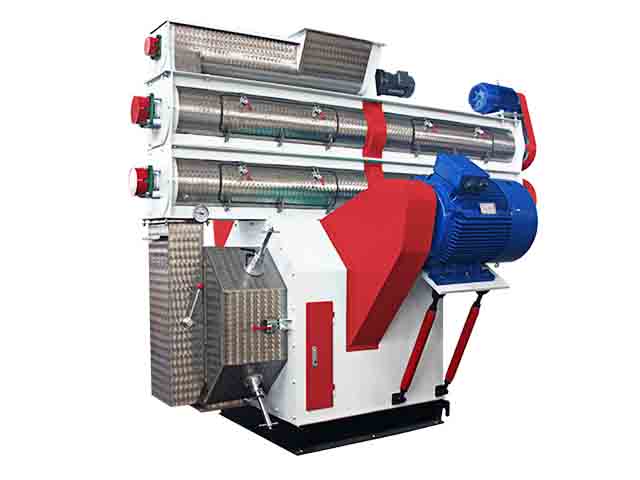
Ring die pellet mill is an industrial-grade high-end pelletizing equipment, designed for large-scale, standardized high-quality feed mass production, is the core model of large-scale feed production. The equipment adopts closed ring mold with built-in wear-resistant pressure roller, relying on the centrifugal force of the ring mold high-pressure extrusion granulation, different from the flat die gravity drop way. The whole machine is equipped with forced feeding and steam tempering system as standard, which can feed the material at uniform speed and mature the raw material at high temperature, with sufficient pelleting pressure and stable molding, precise structure and strong pressure-bearing, suitable for long-time and high-load industrial continuous operation.
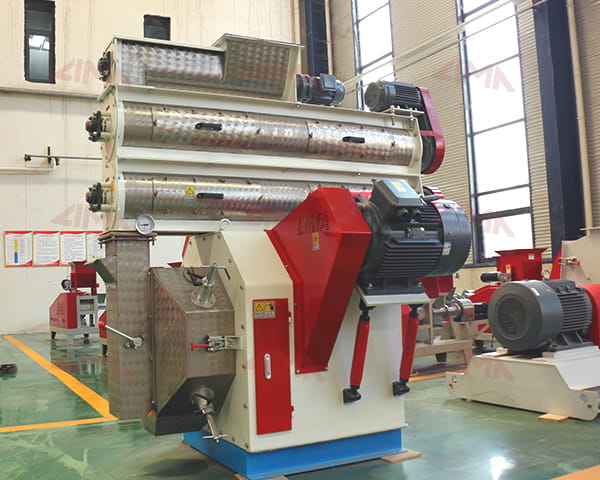
Core advantages: significant capacity advantages, hourly output of up to 0.8 tons to dozens of tons, support 24-hour uninterrupted mass production, fully suitable for large-scale industrial production. Pressure roller and ring mold fit evenly, balanced force, small wear and tear of accessories, long service life of the equipment, high operational stability. With the steam tempering process, the raw materials are thoroughly cooked, and the output particles are firm and smooth, with uniform hardness, not easy to fall out of powder and crack, and the finished products are of high quality, resistant to storage and transportation, and with low loss. Scale continuous production conditions of energy utilization is higher, unit production costs are lower, long-term production benefits are very considerable.
Main shortcomings: high cost of equipment, large size, wide area, strict requirements for plant space, power supply and supporting facilities, initial investment and site remodeling costs are high. The equipment integrates many sets of precision systems, complex structure, routine maintenance, debugging and operation and maintenance is highly specialized, relying on professional technicians, operation and maintenance costs are higher. At the same time, the equipment is suitable for large-volume continuous production, cumbersome startup and debugging, high startup and shutdown costs, and is not suitable for small batches, multi-frequency, multi-formula scattered self-use production, and the cost-effective use of small production is extremely low.
Suitable for industrialized, commercialized and standardized large-scale feed production, mainly serving large-scale feed processing plants, intensive breeding bases, group breeding enterprises and a full set of industrial feed production lines. It can meet the high standard commercial demand for particle molding, hardness, stability, and capacity continuity, and can stably produce all kinds of high-quality feed particles for livestock, poultry, aquatic, compound, etc. It is the first choice of equipment for mass production of industrial feed.
Classification according to processing method
According to the granulation process whether to add steam, moisture conditioning, can be divided into two types of dry, wet models, the core difference is reflected in the molding process, particle quality and raw material suitability.
Dry feed pellet mill
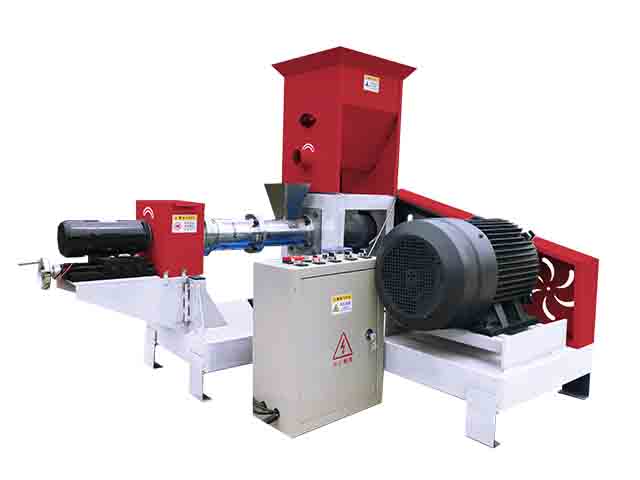
Dry feed pellet mill is the classic “dry in dry out” basic pelleting equipment, mostly adopting simple flat mold structure, simple structure, without steam boiler, tempering and other supporting equipment. Pelleting without additional water, steam, relying on corn, soybean meal and other raw materials with 10% -15% of the natural moisture, through high-pressure extrusion and friction to generate heat, so that the powder naturally bonded to the shape of the operation is simple, is the applicability of the basic pelleting equipment is extremely strong.
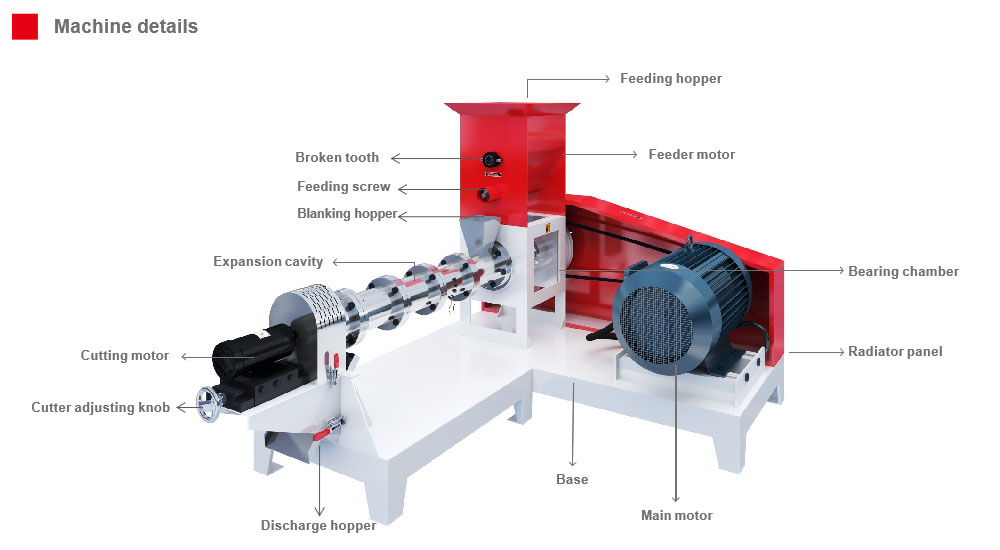
Advantage: low cost of equipment, no need for complex supporting facilities, site requirements are not high, ordinary site can be installed and used. Equipment operation is simple, zero basis can start, stable operation, low failure rate, daily cleaning and maintenance is convenient, low parts loss, low operation and maintenance costs, is very suitable for small-scale breeding of small quantities, intermittent production for personal use, the overall cost-effective outstanding.
Shortcomings: The equipment has no steam tempering process, the raw material starch pasting degree is low, the granule firmness, density and durability are general, the storage and transportation process is prone to produce debris, dust, and feed loss is high. At the same time, the extrusion pressure of the equipment is limited, the range of suitable raw materials is narrow, it is difficult to process straw, pasture and other high-fiber raw materials, it is easy to loose molding, de-powdering and other problems, and the finished product palatability and digestive absorption rate is general, it is not suitable for high-quality feed processing.
Scenario: It is mainly suitable for small-scale farming scenarios such as rural retail households, small family farms and start-up farmers, and is only suitable for fine dry raw materials such as corn, soybean meal and wheat bran, which can satisfy the basic feed processing of regular livestock and poultry, such as pigs, cows, sheep, chickens and ducks, etc. It is mainly used for low-cost and self-use pelleting, and is easy to form and loosen high-fiber raw materials. It mainly focuses on low-cost self-use pelleting, and is not suitable for commercial mass production, high-end feed production and pelleting of high-fiber raw materials.
Wet feed pellet mill
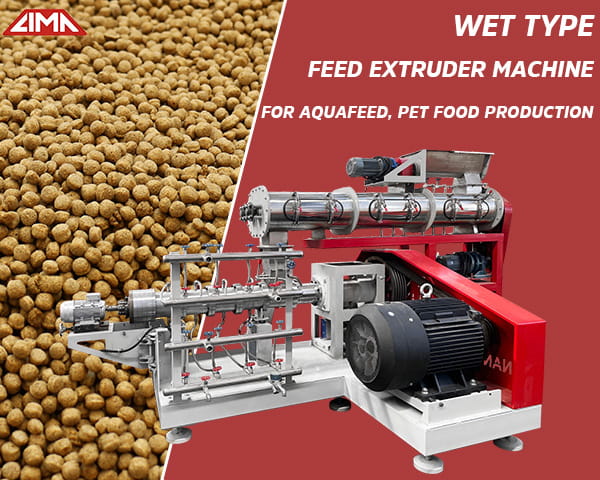
Wet feed pellet mills, also known as steam conditioning pellet mills, are industrial-grade equipment suitable for high-quality feed production, mostly using high-precision ring die structure, standard with steam injection, professional conditioning and temperature control systems. Pelleting can be passed into the high temperature steam, molasses and other media pretreatment of raw materials, precise adjustment of material moisture and temperature, high temperature softening of raw materials, ripening and modification, effective optimization of pelleting conditions, significantly improve the quality of pellet molding and stability of the finished product, is the core equipment for high-end feed processing.
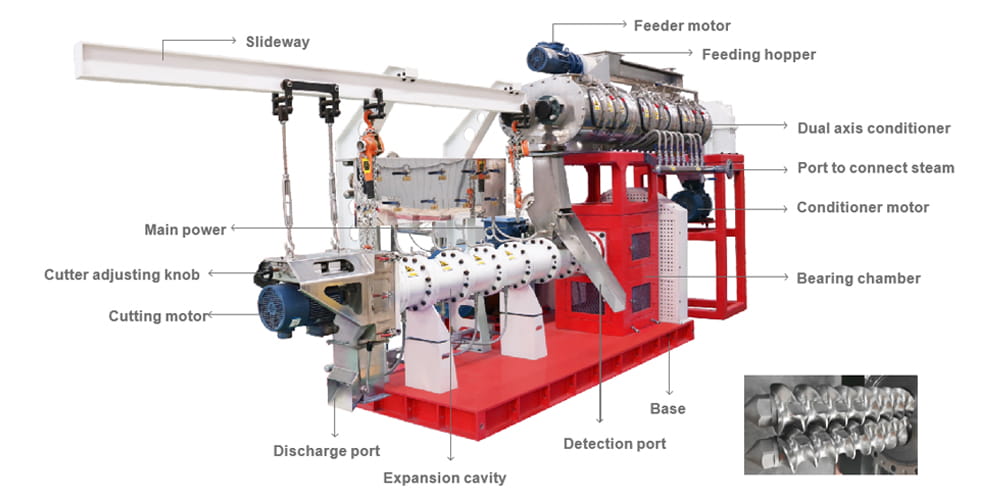
Advantage: Relying on the steam tempering and maturing process, the raw material starch is fully pasted, and the output pellets are firm, smooth and uniform hardness, with good resistance to soaking, storage and transportation, and are not easy to break and raise dust. High-temperature treatment can effectively remove the raw material anti-nutritional factors, kill bacteria, enhance the palatability of feed and animal digestion and absorption rate, reduce feeding waste and breeding diseases. At the same time, it can soften straw, pasture and other high-fiber hard raw materials, with a wide range of raw material suitability, high molding rate, production capacity and finished product quality is far better than dry pellet mill.
Short board: the equipment needs to be equipped with steam boiler, tempering, temperature control and other auxiliary systems, the purchase cost is high, the machine occupies a large area, and there are certain requirements for the site and power supply conditions. The energy consumption, consumables and maintenance costs of the equipment are higher, and the long-term operating costs are higher than those of the dry model. In addition, the equipment operation is highly specialized, according to the raw materials and formulas need to accurately regulate the temperature, humidity, granulation pressure and other parameters, novices are difficult to operate independently, transportation and labor threshold is higher.
Applicable scenarios: the main high-quality, standardized, commercial feed mass production, suitable for feed quality, safety, molding effect of higher requirements of the scene. Widely used in large and medium-sized feed mills, large-scale aquaculture, high-end livestock and poultry breeding enterprises, can process high-quality livestock and poultry feed, water-resistant aquatic feed and customized high-end feed, especially suitable for high-volume processing of high-fiber raw materials, the pursuit of high digestibility, low feeding loss of industrialized production scenarios.
Classification by use
Different types of animals have different requirements on particle size, density, water solubility and nutritional ratio, so a variety of specialized feed pellet mills have been developed to meet the needs of different cultures.
Livestock and poultry feed pellet mill
Livestock and poultry feed pellet mill is for chickens, ducks, geese, pigs, cows, sheep and other conventional livestock and poultry exclusively for the creation of pelletizing equipment, according to the different scale of breeding flexibility to match the appropriate model. Small-scale family farming and retail production priority to use simple structure, cost-effective flat die pellet mill, large-scale intensive farms use larger capacity, more stable finished product ring die pellet mill. The equipment can be customized according to the type and growth stage of livestock and poultry pellet specifications, using 2-4mm ultra-fine particles suitable for all types of poultry small mouth feeding, with 4-8mm large aperture particles to meet the feeding needs of pigs, cattle and sheep and other large livestock. The hardness of the pellets produced by the equipment is uniform and moderate, which can be adapted to the high-fiber feed formula mixed with straw and pasture, which can effectively improve palatability, avoid picking and refusing to eat by livestock and poultry, and significantly reduce the loss and waste of feed in the process of aquaculture.
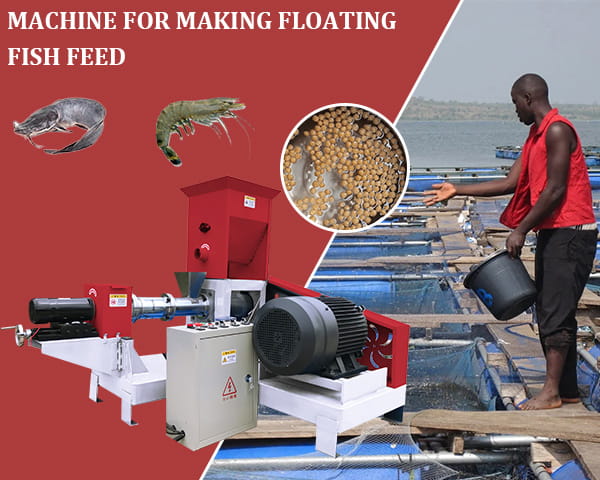
Aquatic feed pellet mill
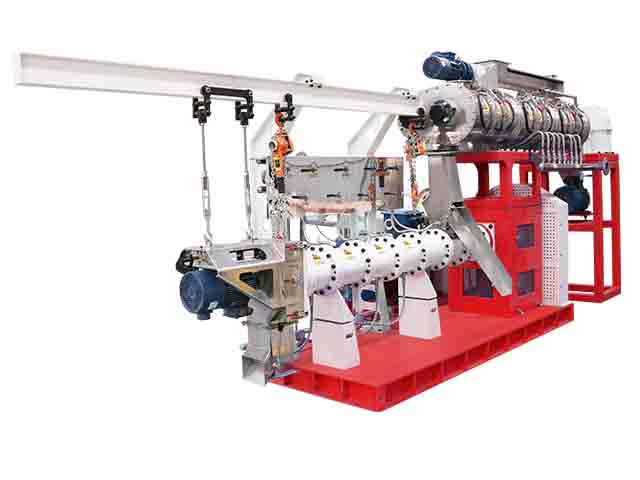
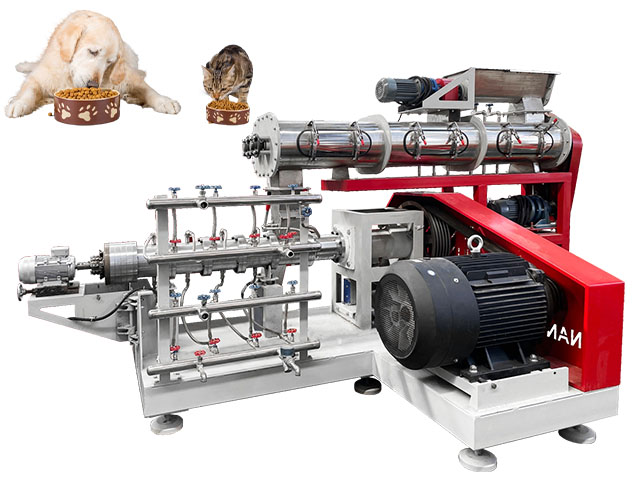
Aquaculture has very high requirements on feed quality, form and water resistance. According to the feeding habits of aquatic organisms, feed is mainly divided into three forms: floating, submerged and slow-sinking, which need to be matched with special aquatic extruding and expanding equipment. The whole equipment is made of corrosion-resistant stainless steel, which is suitable for the special production environment of high salt and high protein of aquatic feed, and it can process 30%-50% of high proportion protein formula feed stably, which is suitable for the needs of fish, shrimp, shellfish and other types of aquaculture. Relying on the precise high-temperature expansion process, the equipment can flexibly regulate the internal pore structure of the feed and accurately control the buoyancy state of the particles, which is suitable for the feeding characteristics of aquatic products in different aquatic layers. The output feed particles are firm and resistant to soaking, not easy to collapse into the water, floating feed is easy to observe feeding and reduce residual bait pollution, submerged and slowly sinking feed is suitable for benthic aquaculture, effectively guaranteeing clean water and normal feeding and growth of aquatic products.
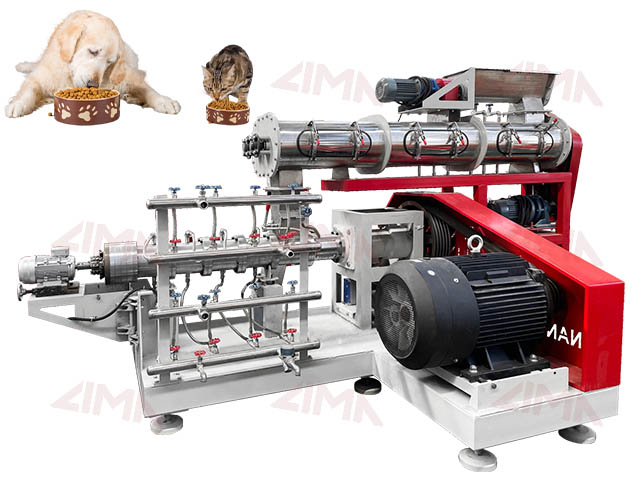
Pet feed pellet machine
Pet feed pellet machine is designed for cats and dogs, ornamental birds, hamsters and other types of small pets to create high-end special granulation equipment, the industry generally used single-screw and twin-screw expansion structure, suitable for all types of high-end pet food production and processing standards. Equipment adaptability is very strong, can easily process high meat content, high fat, high protein, special pet feed formula, highly adapted to the dietary structure and nutritional needs of carnivorous pets. Through the high temperature and high pressure puffing and ripening process, the equipment can effectively enhance the fresh and fragrant taste of the feed, improve the problem of picky pets, and also kill the harmful bacteria in the raw materials, so as to ensure the safety of feeding from the source. The machine supports customized shaped pellet modeling, the finished pellets are even and dry, not easy to crumble powder, and the shelf life is longer after aging, which fully meets the quality and safety requirements of high-end pet food.
Classification by automation level
The level of automation directly determines the labor cost, capacity efficiency and stability of the finished product, which is suitable for different scales of production needs.
Manual feed pellet mill
Manual feed pellet mill is a simple structure of small flat mold equipment, no automation configuration, feeding, controlling, collecting and other processes are completed manually.
The machine has low cost, small body, small energy consumption, simple operation, no complex supporting equipment, zero basis can also be easily operated, suitable for family farming and small-scale farmers in small quantities for their own production. However, its shortcomings are more prominent, the production capacity of only 50-300kg / h, low production efficiency, artificial labor intensity, artificial operation of the differences are likely to lead to uneven particle specifications, firmness, and poor stability of the finished product is only suitable for small-scale self-use, is not suitable for standardized, large-scale commercial feed production.
Semi-automatic feed pellet mill
Semi-automatic feed pellet mill is the mainstream model for small and medium-sized feed production, taking into account the convenience of manual equipment and the high efficiency of fully automatic equipment. The equipment is equipped with automatic feeding, uniform feeding, automatic cutting system, which can accurately control the feeding speed and pellet specifications, avoiding the error of finished products caused by manual operation. The production process only requires manual labor to complete the basic work of feeding, starting and stopping, parameter fine-tuning, without the need for all-day duty, effectively saving labor costs. The production capacity of the machine is stable at 300-2000kg/h, supporting continuous production, and the output of pellets is uniform and compact, with a low fragmentation rate and stable quality. With the advantages of moderate cost, simple operation and maintenance, controllable energy consumption and high cost performance, it is widely used in small and medium-sized family farms, farming cooperatives and small and medium-sized feed mills, and it is the preferred equipment for small and medium-sized standardized feed production.
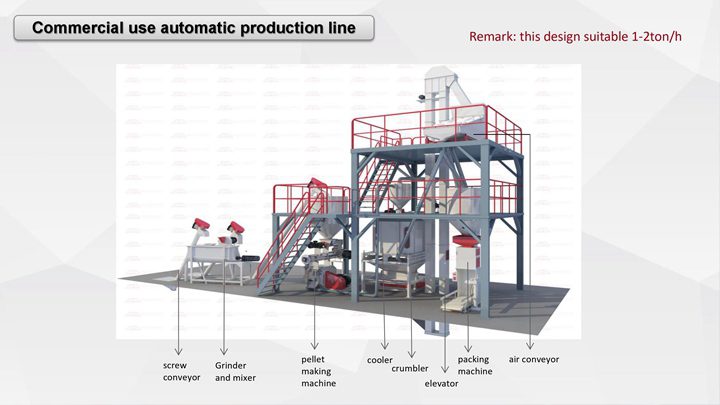
Automatic Pellet Production Line
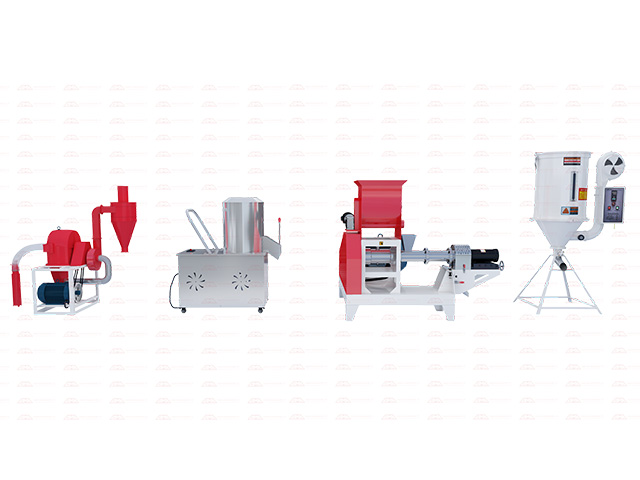
Fully-automatic pellet production line is a large-scale industrialized special intelligent complete set of equipment, which integrates the whole process of automation of crushing, mixing, pelletizing, cooling and packing to realize unmanned closed-loop production.
Equipped with PLC intelligent system, the equipment can be started and stopped by one key, automatic adjustment, only a small number of personnel to monitor and control, effectively saving labor and avoiding operational errors. The production capacity of the equipment can reach 1-50 tons/hour, supporting all-weather continuous production, with uniform specification of finished pellets, low fragmentation rate and stable quality. At the same time can be adapted to all kinds of raw materials and feed formulas, support data record traceability, production accuracy and efficiency far more than semi-automatic equipment, is the core standard equipment for large-scale feed mills and large-scale aquaculture enterprises.
The core difference between feed pellet mill and feed puffing machine
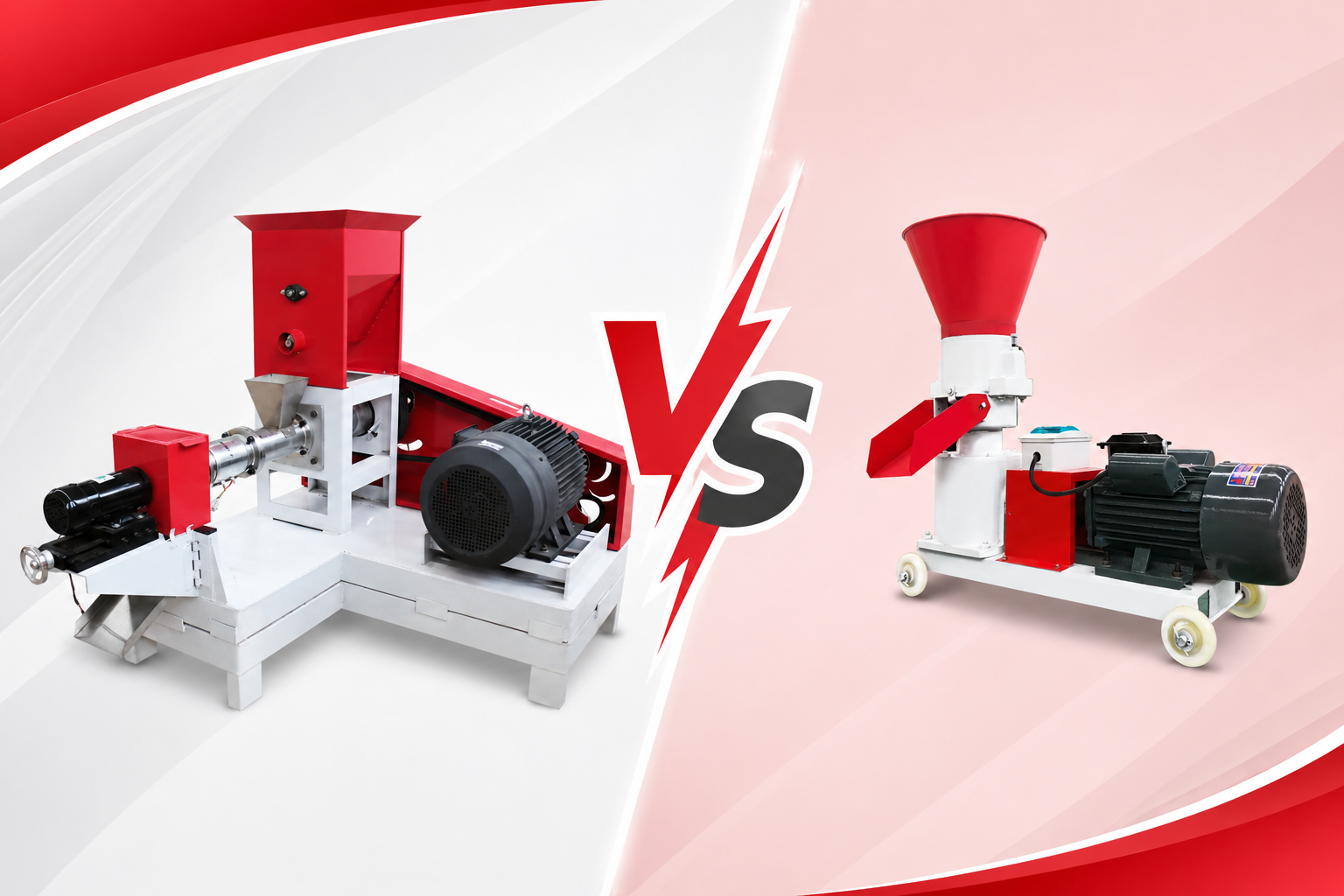
Many farmers and feed manufacturers are easily confused between feed pellet mill and feed puffer. Both equipment can press powdered raw materials into molded particles, reduce feed dust and feeding waste, but the two in the production process, finished product quality, modification effect and application of the scene there are essential differences. Distinguish the difference between the two, can help users accurate selection, effectively avoid equipment mismatch, capacity waste, finished product does not meet the standard.
Different working principles: ordinary feed pellet mill to pure mechanical extrusion molding based on the pressure roller and mold compaction powder, only through the friction of low temperature, basically does not change the structure of the raw material, the maximum degree of retention of the original nutrients, belongs to a simple physical granulation process. Feed puffer adopts screw high-pressure shear process, in the closed cylinder through high temperature, high pressure, strong shear so that the raw material is fully cooked, starch expansion, effective degradation of anti-nutritional factors, both physical modification and high-temperature maturation of the deep-processing process.
Finished product characteristics are different: ordinary pellet machine output particles firm and hard, high density, storage and transportation resistance, less broken material, mostly submerged particles, suitable for conventional trough feeding.
Expanded machine produced particles porous and fluffy, can be adjusted through the parameters to achieve floating, slow sinking, sinking a variety of effects, suitable for all types of aquaculture; high-temperature ripening, feed paste, palatability and digestibility is higher, and water-resistant does not collapse, can effectively reduce the pollution of the water body.Applicable scenarios are different: ordinary feed pellet mill with low cost, easy maintenance, suitable for large-scale mass production, mainly used for pigs, cows, sheep, chickens and ducks and other conventional livestock and poultry feed processing, small and medium-sized aquaculture and feed mills of general equipment. Feed expanding machine input and running costs are higher, the process is more complex, focusing on high-end special feed production, suitable for aquatic floating feed, high-end pet food and other high nutrition, high palatability requirements of the special formula processing.Feed pellet mill selection core skillsFeed pellet mill models are various, parameters are different, blind purchase is prone to production capacity does not match, raw materials do not match, equipment idle or failure frequently and so on. The core of selection is to match according to the need, reasonable production, combined with their own capacity scale, breeding categories, raw material characteristics, site conditions and budget comprehensive selection of suitable models, effective control of costs, and stabilize and improve the quality of production and feed.According to the production capacity selection: capacity is the core basis for equipment selection, combined with the current production and subsequent expansion of production demand reasonable selection. Small family farming is suitable for 50-500kg/h small flat die pellet mill, the equipment occupies a small area, low energy consumption, to meet the self-use production. Small and medium-sized farms, farming cooperatives are suitable for 500-2000kg/h semi-automatic models, taking into account the production capacity and cost-effective, suitable for batch and stable production. Large-scale feed mills and large-scale breeding enterprises can choose more than 1t/h automatic ring die production line, which supports all-weather continuous operation and is suitable for commercialized large-scale production.Selection according to farming categories: Different farming categories have different requirements on feed specifications, hardness, water solubility and quality, and need to match the equipment accordingly. Pigs, cows, sheep, chickens and ducks and other conventional livestock and poultry farming on feed water solubility requirements are low, the choice of ordinary flat die, ring die pellet mill can be, more cost-effective. Aquaculture, pet breeding on the feed standard is strict, the requirements of particles can be controlled buoyancy, water stability, high-temperature ripening, good palatability, ordinary pellet machine can not meet the standard, need to use special puffing equipment for the production of special feeds.Selection according to the characteristics of raw materials: the fiber content of raw materials, the type of ingredients directly affect the molding effect of the equipment. Corn, soybean meal and other fine powder material viscous, easy to mold, suitable for dry flat die pellet mill, stable production and simple operation and maintenance. If the raw material contains a large number of straw, pasture and other high-fiber materials, ordinary dry equipment is prone to clogging, loose particles and other problems, it is recommended to use wet ring die with steam tempering model, effectively improve the raw material molding effect, enhance the overall quality of particles.According to the budget and long-term operation and maintenance selection: selection can not only look at the purchase price of the machine, need to comprehensively consider the energy consumption of the equipment, maintenance, replacement of accessories and other long-term use of costs. Small-scale farming, limited budget for cost-effective flat die pellet mill, low investment, simple maintenance. Scale, commercial production is more suitable for automatic ring die production line, equipment durability, stable production capacity, low operation and maintenance costs, long-term comprehensive benefit is better.
Common Selection Misconceptions and Pit Avoidance Guide
Blindly pursuing large capacity or low-cost equipment: avoid blindly pursuing large capacity or low price. Procurement far beyond the production demand for large capacity equipment, will cause the equipment running on empty, energy waste, site occupation and idle resources. And low-priced miscellaneous equipment accessories poor material, low precision, easy to run the blocking machine, frequent failures, not only delayed production, but also significantly increase the cost of maintenance and replacement of late, the long-term cost-effective even lower.
Ignore the problem of raw material suitability: the fiber content of different feed ingredients, texture differences, equipment pressure and tempering process requirements are different. Many users ignore the characteristics of raw materials blind selection, easy to cause all kinds of production failures. For example, straw, pasture and other high-fiber raw materials, if the use of ordinary dry small pellet mill, due to insufficient pressure, no steam softening and tempering, the raw material is difficult to bonding molding, prone to clogging, loose particles, crushed materials, finished products of poor quality and other issues. Before selecting the type of commonly used raw materials need to confirm the type of high-fiber materials priority selection of high pressure granulation equipment with steam tempering to ensure stable production.
Ignore the site and ancillary facilities planning: many users only focus on equipment performance, ignoring the site, water and electricity and ancillary facilities planning, resulting in the arrival of the equipment can not be installed and put into operation, delayed production. Wet pellet mill and automatic production line are complete sets of equipment, which need to be equipped with power supply, steam, cooling, mixing system, and at the same time need to reserve space for operation and material stacking. Pre-planning is not in place, it is easy to power supply is insufficient, supporting the lack of problems, resulting in idle equipment, put into production is blocked, resulting in economic losses.
Ignore the manufacturers of after-sales service and spare parts protection: feed pellet mill pressure rollers, molds, knives belong to the wearing parts, long-term operation requires regular maintenance and replacement, perfect after-sales service is the key to stable production. Many users are greedy for low price to choose niche manufacturers, often lack of professional installation and commissioning, fault maintenance services, late parts supply is slow, high prices. Equipment failure can not be dealt with in a timely manner, will cause production line downtime, capacity disruption, seriously affecting the production schedule, increasing the risk of long-term operation.
Summarize
The classification of feed pellet mill is clear and the scene is very targeted: flat die models suitable for small and medium-sized low-cost production, ring die models focus on large-scale industrialized high-quality production; dry models are simple and easy to use, wet models better finished products; ordinary pellet mill suitable for livestock and poultry feed, puffed models specializing in aquatic, pet high-end feed.
Cultivation practitioners and feed manufacturers only need to combine their own production scale, breeding categories, raw material characteristics and budget, you can accurately match the model, while controlling the cost, maximize feed quality and production efficiency.