Complete Production Process for Poultry Pellet Feed
Poultry pellet feed is a complete, pelletised feed designed for various farmed poultry species, such as chickens, ducks, turkeys and quails. It is scientifically formulated to meet their nutritional requirements for growth and production, and is processed using modern equipment; it is also the mainstream feed product currently used in large-scale poultry farming. This feed is based on cereals, protein sources and functional additives. It is formed through standardised processes such as grinding, conditioning, high-pressure pelletisation and cooling and solidification. The particle size is typically controlled at 2–5 mm and can be flexibly adjusted according to the feeding characteristics of chicks and adult birds. It is characterised by a uniform texture, compact structure and stable storage properties.
I. Core Advantages of Poultry Pellet Feed
Compared to traditional powdered feed, poultry pellet feed, utilising a unique high-temperature, high-pressure extrusion process, offers distinct advantages in terms of feed utilisation, poultry production performance and farm management. This is also the primary reason for the widespread adoption of pellet feed in large-scale poultry farming and the industry’s standardisation of pellet production lines. Rather than delving into complex details, its core value can be summarised in the following three key dimensions:
1.1 Reducing Feed Loss and Saving Farming Costs
Traditional powdered feed is loose and dusty, making it prone to being scraped away, scattered or selectively eaten by poultry during feeding, resulting in severe feed wastage. Pelleted feed, formed through extrusion, has a compact structure and high integrity, effectively reducing wastage caused by splashing and spillage during feeding. The overall feed wastage rate can be reduced by 5%–15%, significantly lowering raw material consumption in large-scale farming and delivering substantial long-term cost savings. At the same time, pelleted feed has a high density and is less prone to stratification, making storage and transport more stable. It is compatible with automated feeding equipment, further reducing operational and labour costs.
1.2 Uniform and Stable Nutrition, Avoiding Picky Eating
Powdered feed is prone to stratification of raw materials; poultry may selectively consume grain ingredients whilst discarding trace elements and functional additives, leading to nutritional imbalances, uneven growth and unstable egg-laying performance. Pelleted feed binds all ingredients in the formulation together through high-temperature solidification, ensuring a uniform nutritional ratio in each pellet. Poultry consume the feed without preference or pickiness, enabling balanced feeding throughout the entire rearing cycle and effectively stabilising the growth and production quality of the flock.
1.3 High Digestibility and Absorption Rates, Enhancing Farming Profitability
The steam conditioning and high-pressure pelletising processes involved in pellet feed production promote thorough starch gelatinisation, optimise the structure of the feed material, and facilitate digestion and absorption in the poultry’s gastrointestinal tract, thereby effectively improving feed conversion efficiency. At the same time, processing at temperatures above 70°C eliminates most harmful pathogens in the raw materials, reducing the incidence of intestinal diseases in poultry, improving survival rates and growth rates, and helping farms achieve stable and high yields.
III. Eight Core Production Processes for Poultry Pelleted Feed
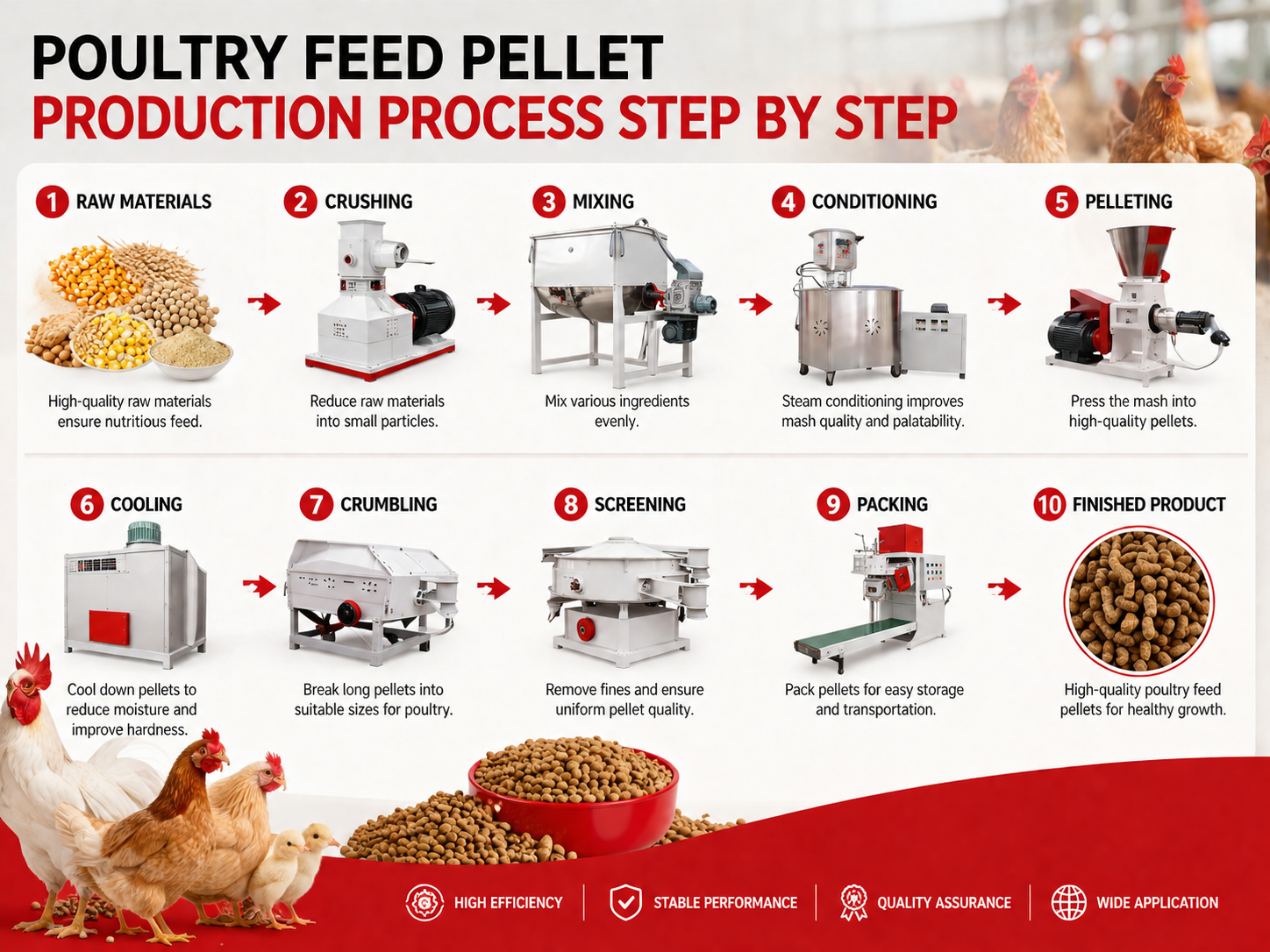
Modern poultry pelleted feed production lines adopt a standardised, continuous operation model. The entire production process is divided into eight core stages, ranging from the receipt, cleaning and storage of raw materials to the automated packaging and warehousing of finished products. Each stage is closely linked to the next in a progressive sequence; the control of process parameters at every step directly determines the quality, durability and feeding performance of the finished pellets, forming the cornerstone of consistent feed quality.
3.1 Step 1: Raw Material Reception and Storage Preparation
Raw material reception and storage preparation is the first stage in poultry feed production, responsible for the inspection, purification and proper storage of raw materials, thereby ensuring feed quality from the source and protecting downstream production equipment. Upon arrival at the plant, raw materials such as maize, soya meal, cereals and additives are automatically unloaded and transferred via conveyor systems. They then undergo multiple purification stages—including magnetic separation, screening and air-suction dust removal—to thoroughly remove metallic impurities, stones, dust and mouldy debris, thereby preventing equipment wear and feed contamination. Qualified raw materials are stored in designated areas according to type: bulk grains are stored in sealed silos, whilst trace additives and moisture-sensitive materials are kept in temperature-controlled warehouses. The factory’s storage facilities are equipped with ventilation and humidity control systems, temperature and humidity monitoring, and pest and rodent control measures. Regular maintenance of the ventilation systems effectively prevents moisture absorption, mould growth and insect infestation, thereby preserving the nutritional value of the raw materials to the greatest extent possible and laying a solid foundation for subsequent standardised production.
3.2 Step Two: Raw Material Grinding
Raw material grinding is a critical stage in feed pre-treatment, directly affecting the quality of pellet formation and the digestibility and absorption rate of the feed. This process utilises hammer mills and roller mills to grind raw materials of varying sizes into uniform particles of 1–2 mm. The fine particle size increases the specific surface area of the raw materials, enhancing the uniformity of subsequent mixing and the penetration of steam, thereby promoting thorough starch gelatinisation and effectively improving pellet density and durability. The industry employs two processes: pre-crushing and post-crushing. Pre-crushing involves crushing individual raw materials before blending; this ensures consistent quality and is suitable for large and medium-sized production lines. Post-crushing involves blending the ingredients first and then crushing them collectively; this is more cost-effective and suitable for small-scale farming operations. During daily production, the screens and hammer blades of the crushers must be replaced regularly to ensure uniform particle size and prevent inconsistencies in the quality of the finished pellets.
3.3 Step Three: Precise Batching and Mixing of Raw Materials
Precise batching and mixing are core processes for ensuring a nutritionally balanced poultry feed. The production line utilises an automated batching system to precisely proportion bulk cereals and protein sources according to different formulations for broilers, laying hens and chicks. Through a micro-dosing system, it accurately adds supplementary ingredients such as vitamins, minerals and enzyme preparations, strictly controlling proportioning errors. All raw materials are fed into specialised screw-rib and paddle mixers, where they undergo thorough mixing for 3–6 minutes to achieve complete homogenisation of the powdered mixture. This uniform mixture ensures that every extruded pellet has a consistent nutritional profile, thereby completely resolving issues such as selective feeding, nutritional imbalance and uneven growth rates in poultry. It stabilises growth and egg-laying performance whilst ensuring consistent feed quality across batches.
3.4 Step Four: Steam Conditioning
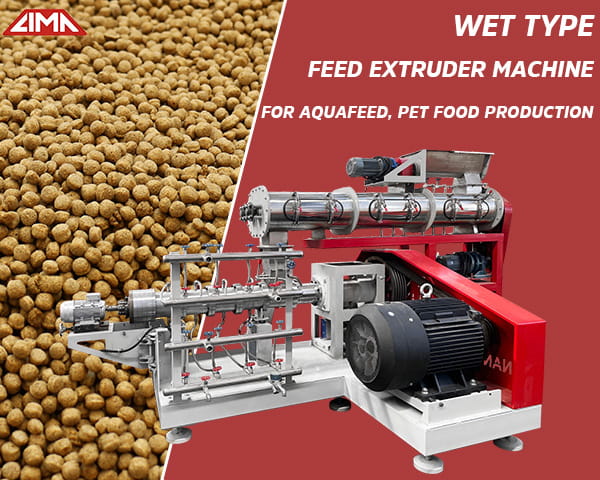
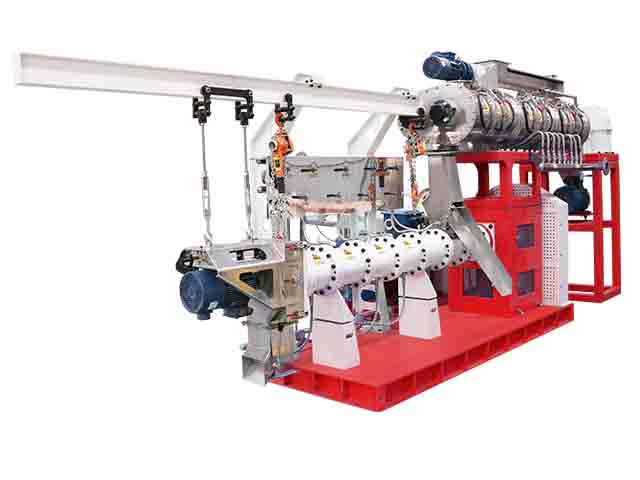
Steam conditioning is the core processing step that determines the quality of pellet formation, palatability and digestibility. Once the uniformly mixed powder enters the conditioner, dry saturated steam at 70–90°C is introduced, adding 4–6% moisture. The material remains in the conditioner for 30–90 seconds, with parameters adjustable according to the characteristics of the raw materials. High-temperature steam softens the texture of the powder, reduces extrusion resistance during pelletisation, and simultaneously promotes thorough gelatinisation of the starch in the raw materials, activating their natural binding properties. This significantly improves pellet formation rates and durability whilst reducing the rate of powdering in the finished product. Furthermore, high-temperature conditioning eliminates most harmful pathogens in the raw materials, enhancing feed safety, whilst also activating functional additives to optimise feed palatability and nutrient absorption rates; it is a key process in the production of high-quality poultry pellet feed.
3.5 Step Five: High-Pressure Pelletising
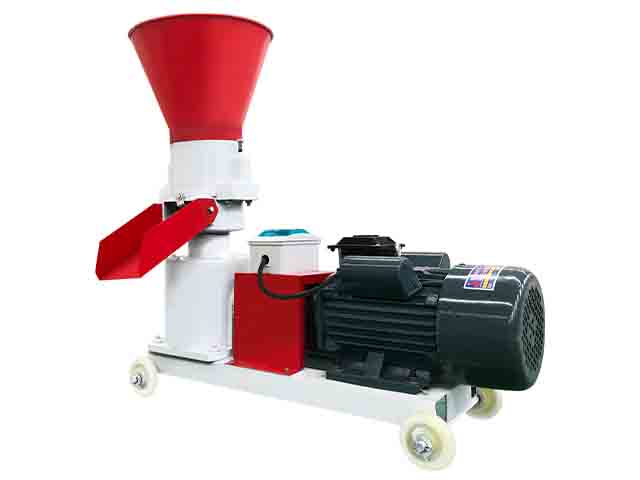
High-pressure pelletising is the core process for shaping the powdered feed into pellets, directly determining the pellets’ size, hardness and durability. The softened, conditioned powder is fed uniformly into the pelletiser, where it is subjected to high-pressure extrusion by press rollers and forced through customised die holes measuring 2–5 mm in diameter; smaller-diameter dies are used for chicks, whilst larger-diameter dies are used for adult birds to suit their feeding requirements. Under high-pressure friction, the material heats up to 90°C, allowing the gelatinised starch to fully bind the raw ingredients, forming dense cylindrical strands which are then precisely cut into standard semi-finished pellets by high-speed cutters. Currently, the mainstream equipment comprises ring-die and flat-die pelletisers. Ring-die pelletisers offer sufficient pressure, stable output and high quality, making them suitable for large and medium-sized production lines; flat-die pelletisers offer good value for money and are simple to operate and maintain, making them suitable for small-scale farms’ own use. During production, the length-to-diameter ratio of the die holes, the gap between the pressure rollers and the feed rate must be precisely controlled to ensure consistent quality of the finished pellets.
3.6 Step 6: Pellet Cooling and Curing
Pellet cooling and curing is an essential process for stabilising the storage properties of the finished product and enhancing pellet hardness. Immediately after pelletisation, the semi-finished pellets reach temperatures as high as 90°C and have a moisture content of 16%–18%. Their soft texture makes them prone to mould, breakage and caking, rendering them unsuitable for direct storage or transport. The production line utilises a counter-current cooler, which removes excess heat and moisture from the pellets at a uniform rate through counter-current heat exchange between hot and cold air streams, ultimately reducing the pellet temperature to room temperature and controlling moisture content to below 12–13 per cent. Once fully cooled, the internal structure of the pellets hardens and sets, significantly improving their hardness and durability. This enables them to effectively withstand friction and impact during transit, storage and feeding, thereby reducing losses due to pulverisation. During production, the cooling air velocity and duration must be strictly controlled to avoid cracks caused by rapid cooling or soft pellets resulting from incomplete cooling, thereby ensuring the pass rate of each batch of finished product.
3.7 Step Seven: Pellet Screening and Crushing
The screening and crushing processes are primarily used to optimise the appearance of the finished product, adapt to the feeding requirements of different poultry species, and improve raw material utilisation. Cooled pellets may contain impurities such as fine powder, lumps and excessively long pellets. These are sorted using vibrating screening equipment to remove non-conforming material and select standard pellets of uniform size. The fine powder and waste generated during screening are conveyed via a recirculation system back to the pelletiser for reprocessing, ensuring zero waste of raw materials and effectively reducing production costs. Pellet crushing is a distinctive process specific to poultry feed. Addressing the limited feeding capacity of young poultry such as chicks and ducklings, standard whole pellets are crushed into fine fragments. This retains the nutritional balance and digestibility of pelletised feed whilst adapting to the feeding habits of young birds, thereby increasing feed intake and survival rates. Pellet crushing is not required for feed intended for adult poultry.
3.8 Step 8: Automated Finished Product Packaging
Automated finished product packaging is the final stage in poultry pellet feed production, enabling standardised packaging, traceability and warehouse dispatch of finished products. Qualified pellet and crumbled feed products are conveyed to fully automated packaging equipment, which carries out integrated operations including automatic weighing, filling and sealing. Standard dispatch specifications are 25kg, 40kg and 50kg bags, ensuring precise weighing and uniform product appearance. The equipment can be integrated with an automatic palletising unit, significantly reducing labour costs and improving dispatch efficiency. All finished product bags are uniformly labelled with traceability information, including product specifications, suitable poultry species, production date, batch number and nutritional composition, facilitating quality control and sales management. Large-scale production lines can be equipped with bulk discharge systems for direct filling of tankers, catering to bulk purchases by large-scale poultry farms. Once in stock, finished products are stored according to the first-in, first-out (FIFO) principle, effectively ensuring feed freshness and consistent quality.
IV. Complete Set of Supporting Equipment for Poultry Pellet Feed Production Lines
A complete set of equipment for poultry pellet feed production lines is rigorously tailored to the eight major production processes, forming an integrated, closed-loop production system. It accommodates production requirements ranging from 0.5 to 30 tonnes per hour. Small-scale farms, medium-sized commercial feed mills and large-scale industrial feed enterprises can flexibly configure equipment according to their production capacity needs to achieve standardised, continuous production.
4.1 Raw Material Receiving and Storage Equipment
The equipment in this section is primarily used for the unloading, purification and storage of raw materials. Core components include receiving and conveying equipment such as unloaders, receiving pits, bucket elevators and screw conveyors, which enable the automated transfer of raw materials; combined with cylindrical pre-cleaning screens, magnetic separators and air-suction dust collection systems, this achieves triple purification to remove impurities, metals and dust; Storage facilities comprise steel-structured and concrete bulk raw material silos, as well as ventilated storage warehouses, equipped with auxiliary ventilation, humidity control and dust removal systems to comprehensively ensure the cleanliness and safe storage of raw materials.
4.2 Raw Material Crushing Equipment
The core machinery in the crushing section consists of hammer mills and roller mills, which are the key equipment for the fine processing of raw materials; these are paired with variable-frequency feeders to ensure uniform and stable feed rates, thereby preventing equipment blockages; Combined with cyclone separators and baghouse dust collection units, these systems collect powdered material and control workshop dust, thereby reducing raw material wastage whilst meeting environmental production standards and ensuring dust-free grinding operations throughout the process.
4.3 Batching and Mixing Equipment
The batching and mixing system comprises automated batch weighing scales, a micro-dose raw material dispensing system and multi-bin batching and storage equipment, enabling precise blending of bulk raw materials with trace additives; The core mixing equipment comprises screw ribbon mixers and paddle mixers, ensuring that the uniformity of raw material mixing meets specifications; complemented by precision weighing equipment and liquid addition systems, it allows for the addition of liquid raw materials such as fats and oils as required, adapting to the production needs of diverse feed formulations and ensuring consistent and uniform powder quality in every batch.
4.4 Steam Conditioning Equipment
The core equipment in the conditioning section is a specialised feed conditioner, fitted with a precise steam injection system that allows flexible adjustment of steam injection volume and material residence time; it is complemented by gas, diesel and biomass steam boilers, which continuously supply dry saturated steam to ensure a stable conditioning process; coupled with intelligent temperature and humidity sensors, it monitors production parameters in real time and automatically regulates process conditions, enabling intelligent and precise control of the conditioning process.
4.5 Pelletising Equipment
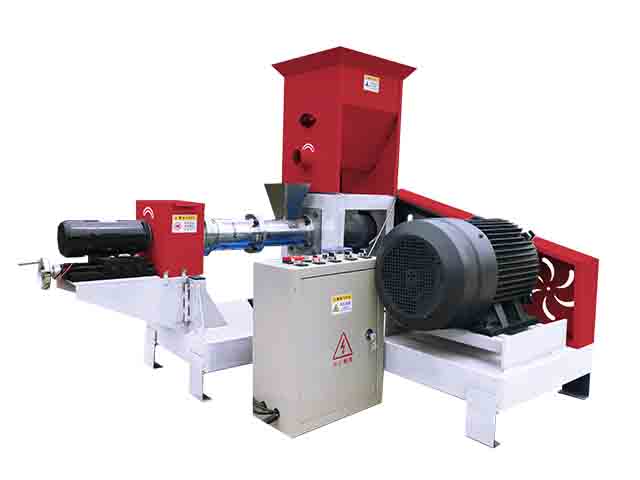
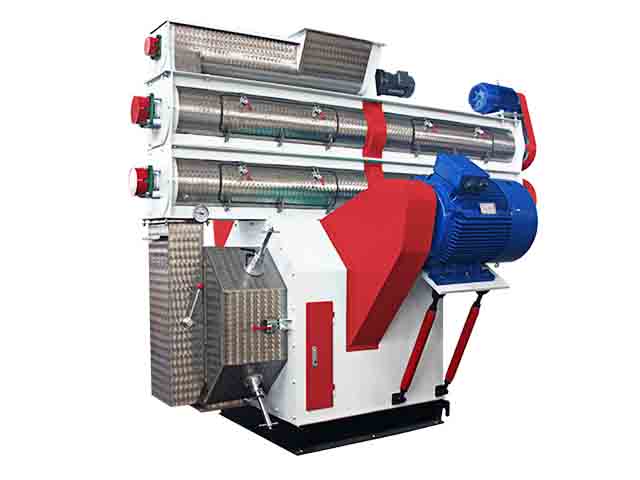
The core pelletising equipment is divided into two main categories: ring-die pelletisers and flat-die pelletisers, to suit different production scales; it is equipped with a range of alloy ring dies in various pore sizes, wear-resistant press rollers and other consumable parts, which can be quickly replaced according to feed type to meet the production requirements for different pellet sizes; fitted with variable-frequency speed-control motors, it precisely regulates equipment operating speed and feed rate, stabilising pellet formation quality and ensuring continuous, efficient operation of the production line.
4.6 Cooling, Screening and Pellet Crushing Equipment
The core of the cooling section is the counter-current pellet cooler, which, when paired with an induced draught fan, cyclone dust collector and rotary discharge device, ensures uniform cooling and solidification of the pellets; the screening section utilises rotary and vibrating grading screens to accurately separate合格 pellets from waste material; the pellet crushing section is equipped with a dedicated roller-type pellet crusher to meet the production requirements for crushed feed for young poultry; A supporting waste material recirculation system enables the recovery and reuse of crushed powder and agglomerated waste, thereby improving raw material utilisation.
4.7 Automated Packaging Equipment
The packaging section comprises fully automatic weighing and packaging machines, bag-sewing machines and heat-sealing machines, enabling integrated operations for quantitative bagging and sealing; large-scale production lines can be supplemented with belt conveyors and automatic palletisers to enhance automation levels and production efficiency; bulk filling equipment is also provided to meet the requirements for bulk shipments via tankers, comprehensively covering the diverse dispatch scenarios of different customers.
V. Core Factors Affecting the Quality of Poultry Pelleted Feed
The Pellet Durability Index (PDI), dusting rate, hardness, particle size uniformity and moisture content are the core indicators for assessing the quality of poultry pellet feed. High-quality finished products must achieve a PDI of 85%–95% or higher, with the dusting rate controlled to within 10%. The quality of finished feed is influenced by multiple factors, including raw materials, processes, equipment and the environment; comprehensive control of all these factors is key to stabilising feed quality and improving farming outcomes.
5.1 Raw Material Formulation Ratios (Core Influencing Factors)
The raw material formulation is the single most significant factor affecting pellet quality, accounting for approximately 40% of the total influence. Cereals such as wheat and maize are high in starch; once gelatinised, they possess strong natural binding properties, resulting in pellets with high hardness and good durability. Protein from pulses and plant fibre can help enhance pellet cohesion and optimise pellet formation quality. However, there are strict thresholds for oil content; adding more than 3–5 per cent forms a lubricating layer on the surface of the raw materials, significantly reducing pellet binding strength and resulting in loose, brittle finished products. For high-fat, high-energy formulations, it is recommended to adopt a post-pelletisation oil spraying process to avoid quality defects. Furthermore, excessive addition of high-fibre, low-binding-strength raw materials such as rice bran and DDGS will weaken the pellet structure and reduce the PDI value; this can be optimised by adding bentonite, lignin or specialised starch-based binders. Excessive moisture content or mould contamination in raw materials will also directly compromise pellet formation quality; therefore, strict control over the quality of incoming raw materials is essential.
5.2 Control of Grinding Particle Size
Grinding particle size directly determines the specific surface area of the raw materials and indirectly affects the conditioning effect and pellet formation quality. The optimal grinding particle size for poultry feed is 600–1,200 micrometres; powder with a suitable particle size can fully absorb the heat and moisture from steam, ensuring thorough starch gelatinisation, resulting in tightly bonded pellets and stable quality. If the grinding particle size is too coarse, the gaps between raw material particles will be large and there will be few bonding points, resulting in finished pellets that are prone to breakage and a high rate of pulverisation; if the grinding particle size is too fine, although pellet quality may be slightly improved, energy consumption during production will increase significantly, whilst dust levels in the workshop will surge, posing safety hazards. During production, the optimal grinding particle size must be selected according to the growth stage of the poultry.
5.3 Uniformity of Ingredient Mixing
Uniform mixing is the foundation for consistent pellet quality. Inadequate mixing leads to an uneven distribution of binders, starch and moisture within the powder, resulting in significant variations in the hardness and durability of pellets within the same batch. This causes some pellets to be dense whilst others are loose and brittle, whilst also leading to uneven nutrient distribution, which adversely affects poultry rearing performance. During production, mixing duration and equipment operating conditions must be strictly controlled to ensure that the coefficient of variation in mixing uniformity remains below 5%–7%, thereby eliminating issues of localised concentration or deficiency of raw materials.
5.4 Steam Conditioning Process Parameters
Conditioning temperature, moisture addition, residence time and steam quality are the four core control parameters. Within the high-temperature range of 70–90 °C, the higher the temperature and the longer the conditioning time, the more thorough the starch gelatinisation, resulting in better pellet bonding and higher durability; a precise moisture addition of 4–6% imparts optimal plasticity to the powder, ensuring effective extrusion moulding. It is essential to use dry saturated steam, as wet steam would cause the powder’s moisture content to exceed limits, leading to mould growth in the finished product; If the conditioning time is less than 30 seconds, the starch cannot be sufficiently gelatinised, resulting in a significant decline in pellet formation quality; fully automated parameter control throughout the process is key to stabilising the conditioning effect.
5.5 Operating Conditions of the Pelletiser
The operating status of the pelletising equipment directly determines the quality of the pellets. The hole diameter, aspect ratio and material of the annular die, the gap between the press rollers and the extrusion pressure, as well as the equipment’s feed rate and operating speed, all affect the quality of the finished product. Alloy die holes with a higher length-to-diameter ratio result in longer extrusion times for the powder, leading to higher pellet density and durability; insufficient roller pressure, uneven feeding and equipment operating under excessive load will result in loose pellets, inconsistent lengths and severe pulverisation. Furthermore, worn or aged die holes and pressure rollers will significantly reduce the effectiveness of the extrusion process; regular maintenance and replacement of wear parts are required to ensure stable equipment operating conditions.
5.6 Effectiveness of the Cooling and Drying Process
The cooling process determines the final hardness and storage stability of the finished product. Granules that have been sufficiently cooled meet moisture content standards, have a hardened structure, and are less prone to mould growth and breakage; granules that have not been thoroughly cooled exceed moisture content limits and are highly susceptible to heat generation, mould growth, softening and deformation during storage. Conversely, excessive cooling air velocity or too rapid a rate of cooling can cause sudden temperature differences between the interior and exterior of the granules, leading to stress cracks, extensive breakage during transport and feeding, and an increased rate of pulverisation. It is essential to strictly control the cooling airflow and duration to ensure uniform cooling and dehydration of the pellets, thereby guaranteeing stable product quality.
5.7 Other Process and Environmental Factors
An inappropriate roller gap setting during the pellet crushing process can generate large amounts of fine powder, affecting the product’s pass rate; excessive height differences and insufficient buffering in the production line’s transfer equipment can cause the finished pellets to collide and break, increasing wastage. At the same time, the temperature, humidity and air moisture levels in the workshop indirectly affect the conditioning and cooling processes; a damp production environment can cause the powdered ingredients and finished product to absorb moisture and soften, thereby reducing pellet durability. During daily production, key indicators such as pellet durability, pulverisation rate, hardness, particle size uniformity and moisture content must be continuously monitored. A quality control log should be maintained to enable timely adjustments to process parameters, ensuring the finished product meets quality standards.
VI. Practical Guide to Selecting Poultry Pellet Feed Production Lines
Selecting a production line suited to one’s specific production needs is key to ensuring production efficiency, maintaining stable feed quality and controlling investment costs. When selecting equipment, both poultry farms and feed mills must take a comprehensive, multi-dimensional approach, considering factors such as production capacity, product range, budget, automation requirements and site conditions, in order to avoid investment issues such as overcapacity, inadequate configuration and difficulties with subsequent operation and maintenance.
6.1 Defining Production Capacity Requirements
Production capacity is the core criterion for selecting a production line. The industry categorises poultry feed production lines into three standard specifications: small-scale production lines for on-farm use have a capacity of 0.5–2 tonnes per hour, suitable for internal consumption at small and medium-sized farms; medium-scale commercial production lines have a capacity of 3–10 tonnes per hour, suitable for regional feed processing plants supplying external markets; large-scale industrial production lines with capacities of 10–30 tonnes per hour or more, suitable for large-scale mass production by major feed enterprises. When selecting a production line, it is advisable to allow for a capacity margin of 20–50 per cent to accommodate future expansion of farming operations and growth in orders. At the same time, actual production capacity requirements should be calculated based on the number of daily production shifts to avoid the waste of energy and capital that can result from blindly purchasing high-capacity equipment.
6.2 Determining Feed Product Categories and Process Requirements
Before selecting equipment, it is essential to clarify the core product categories to be produced, distinguishing between broiler starter feed, grower feed, layer feed, breeding poultry feed and other products, as different categories correspond to different pellet sizes and process requirements. Starter feed for chicks requires the use of fine-pelletising equipment to produce small, fine pellets; whereas standard large-diameter die holes are sufficient for adult poultry feed. For high-fibre, low-starch feed formulations, dual-stage conditioning equipment must be incorporated to enhance the conditioning effect and ensure pellet formation quality; for the production of high-end organic feed and high-durability feed, high-specification pelletisers and coolers must be selected to strictly control the powderisation rate and durability of the finished product.
6.3 Planning Project Investment and Cost Budgeting
The total investment for the entire production line comprises equipment procurement, factory infrastructure, silo construction, supporting utilities, installation and commissioning, and working capital for raw materials, with machinery and equipment accounting for 60–70 per cent of the total investment. The level of equipment automation, the brands of core machinery, and whether the project is a turnkey solution are key factors influencing investment costs. Small-scale farming operations may opt for semi-automatic, basic-configuration equipment to reduce initial investment costs; for medium- to large-scale commercial feed mills, fully automated production lines are recommended, as they rely on stable process parameters, lower labour costs and reduced wastage to enhance long-term return on investment. When selecting equipment, it is necessary to comprehensively calculate energy consumption, labour costs and raw material wastage to accurately estimate the payback period.
6.4 Matching the Level of Production Line Automation
Currently, production lines in the industry are categorised into three types: manual basic, semi-automatic, and fully automatic PLC-controlled intelligent systems. Manual equipment requires low capital investment but is highly labour-dependent, and is only suitable for micro-scale production lines; semi-automatic production lines are equipped with automatic batching systems, with core processes automated and requiring minimal manual assistance, making them suitable for small to medium-sized production scenarios; Fully automated intelligent production lines achieve end-to-end automated control from raw material intake to finished product packaging. They support automatic batching, intelligent parameter adjustment, remote monitoring and safety interlocks. With stable process parameters, low labour costs and consistent product quality, they are the preferred solution for medium- to large-scale feed mills.
6.5 Verifying the Quality and Configuration of Core Equipment
The overall quality of a production line is determined by the core machinery; when selecting equipment, particular attention must be paid to the configuration of the four key pieces of equipment: the crusher must have sufficient power to meet fine grinding requirements and be equipped with sieves of various specifications; the mixer must ensure a coefficient of variation in mixing uniformity of less than 5%–7% to achieve homogeneous blending of raw materials; for the pelletiser, ring-die models should be prioritised, fitted with wear-resistant alloy components to ensure both production capacity and pellet quality; the cooler must utilise a counter-current design to ensure uniform cooling and solidification. At the same time, confirm the supply channels for wear parts to ensure convenient future operation and maintenance, thereby reducing downtime losses.
6.6 Adapting to Site Layout and Infrastructure
Prior to selection, the equipment layout must be planned in conjunction with the site’s spatial layout, with raw material storage, production and processing, and finished product storage areas reasonably demarcated. This should follow the principle of unidirectional material flow to shorten conveying distances and minimise handling and crushing losses. At the same time, verify the site’s infrastructure conditions—including power supply, water supply, steam supply, wastewater disposal and dust extraction—to ensure they meet the production line’s operational requirements. Allow for future equipment upgrades and capacity expansion to avoid incurring additional costs from subsequent site modifications.
6.7 Selection of Equipment Suppliers and After-Sales Support Systems
Prioritise suppliers with one-stop turnkey project capabilities, capable of providing end-to-end services covering site planning, equipment manufacturing, on-site installation, commissioning and start-up, and staff training. Pay particular attention to the supplier’s qualifications, industry certifications, track record of successful projects, quality assurance systems and local technical service capabilities to ensure that equipment faults can be rectified promptly on-site, thereby guaranteeing the continuous and stable operation of the production line. Domestic equipment offers outstanding value for money and is well-suited to small and medium-sized domestic production scenarios, whilst imported brands offer high-end quality and are suitable for large-scale, industrialised, high-end production projects; choices can be made flexibly according to budget and requirements.
6.8 Comprehensive Consideration of Additional Operational Factors
For long-term operations, particular attention must be paid to the energy efficiency of the equipment; priority should be given to low-energy-consumption equipment to reduce the energy cost per tonne of feed produced. Multifunctional production lines should be prioritised, as they allow for flexible switching between powder, pellet and crumb production modes to accommodate diverse product requirements. At the same time, the equipment must be equipped with comprehensive dust extraction, noise reduction and waste treatment systems to meet environmental compliance requirements. Equipment selection should be based on local raw material characteristics, supply chain distances and industry production standards to ensure the long-term, stable, compliant and efficient operation of the production line.
The production of pelleted poultry feed is a standardized, refined, and systematic industrial process. Compared to traditional mash feed, standardized pellets offer significant advantages—such as reduced waste, balanced nutrition, high digestibility, and suitability for automated farming—making them indispensable for modern, large-scale, intensive, and efficient poultry production. For feed manufacturers and large-scale farms, a thorough understanding of the entire production process, effective control of key quality factors, and the scientific selection of production line equipment can optimize efficiency, lower costs, and ensure consistent feed quality; furthermore, these measures help drive the transformation and upgrading of the poultry industry toward standardization, intelligent operation, and high efficiency.