How To Make Tilapia Feed Pellet
High-quality tilapia feed pellets can accelerate the growth of fish, improve the feed conversion rate, increase the farming income and effectively reduce the feeding cost. Finished feeds on the market are expensive and of varying quality. Mastering the production of tilapia feed pellets allows you to customise your own high-quality, cost-effective feeds that are suitable for both home and large-scale tilapia farming. This article will comprehensively explain the full set of core knowledge and practical skills of tilapia feed production.
I. Nutritional Requirements of Tilapia
Tilapia is an omnivorous freshwater fish, with obvious differences in nutritional requirements at different growth stages. Compared with carnivorous fish, tilapia has strong digestion and absorption of plant protein, which is the core reason why homemade low-cost feed can be realised. Precise control of nutritional ratios is the basis for making qualified feed pellets, which can effectively avoid breeding problems such as slow growth, low immunity and feed wastage.
Protein is the core nutrient for tilapia growth. Fry stage (0-50g) needs 30%-35% dietary protein to help rapid development; juvenile stage (50-200g) suitable protein content of 25%-30%; adult fish and breeders only need 20% -25% protein to maintain normal growth and reproduction.
Carbohydrates are the main source of energy for tilapia, accounting for 30-45% of the feed. An appropriate amount of carbohydrates can reduce protein consumption and farming costs, but too much starch can lead to soft feed particles, water pollution and other problems.
The fat content needs to be controlled at 4%-8%. The right amount of fat can enhance the palatability of the feed and promote the absorption of fat-soluble vitamins; too much fat will trigger fatty liver in tilapia and cause eutrophication of the water body at the same time.
Besides, tilapia need balanced vitamins, minerals and trace elements (calcium, phosphorus, zinc, etc.) to enhance disease resistance, improve bone development and reduce common breeding diseases. Scientific nutritional ratio can greatly improve feed digestibility and ensure healthy growth of tilapia.
Commonly used raw materials for tilapia feed pellets
The quality of raw materials directly determines the basic quality of feed pellets. Reasonable matching of animal and plant raw materials can balance the nutrition and effectively control the cost. The following are the most commonly used, most cost-effective and easily accessible core ingredients for home-made and large-scale production of tilapia feed.
Plant-based raw materials are the main ingredients of tilapia feed, which are low-cost and easy to digest and absorb. Soybean meal and soybean cake are the core plant protein raw materials, with high protein content and balanced amino acid ratio; maize meal, rice bran and wheat bran are rich in carbohydrates and crude fibre, which are the main raw materials for energy supply; tapioca is a natural binder, which can significantly improve the water resistance and formability of feed particles.
Animal feedstuffs are used to supplement plant feedstuffs with high quality protein and essential amino acids. Fishmeal is a classic high-protein raw material, which can greatly improve the palatability of feed; gadfly worm meal and earthworm meal are ecological alternative protein raw materials, which are rich in animal proteins and microelements, and are suitable for green ecological breeding mode.
Supplementary additives ensure comprehensive nutrition and stable quality of feed. Vitamin-mineral premix can supplement the scarce trace elements; calcium carbonate and dicalcium phosphate can regulate the balance of minerals in feed; molasses and edible oil are both adhesive and aroma-enhancing, which can improve the shaping effect and palatability of feed; antioxidant and anti-mould agent can prolong the storage cycle of feed and will not harm the health of tilapia.
Tilapia feed formulation reference
Different growth stages of tilapia need to be adapted with exclusive feed formulas. The following three groups of practical, low-cost, high-conversion rate formulas are suitable for fry, juvenile and adult tilapia, and can be used for home-made and mass production.
Fry feed formula (protein content 32%)
Soya bean meal 35%, fish meal 12%, corn meal 28%, rice bran 15%, wheat bran 6%, vitamin premix 2%, calcium phosphate 2%. The formula has sufficient protein content, fine powder, suitable for the delicate stomach of fish fry, easy to digest and absorb, can effectively promote the growth of fish fry in the early stage, improve the survival rate of nursery.
Juvenile fish feed formula (protein content 28%)
Soya bean cake 30%, corn meal 32%, rice bran 20%, fish meal 8%, cassava flour 5%, mineral premix 3%, molasses 2%. Nutritionally balanced, cost-effective, can fully meet the needs of rapid growth of young fish, significantly improve the feed conversion rate, accelerate the fattening speed.
Adult fish feed formula (protein content 22%)
Rice bran 25%, corn flour 35%, soybean meal 20%, black gadfly powder 10%, wheat bran 7%, multi-dimensional mineral additives 3%. Low protein, high energy ratio, while ensuring the healthy growth of adult fish, significantly reduce feeding costs, suitable for large-scale commercial aquaculture.
Detailed production process of tilapia feed pellets
Standardised production process is the key to making tilapia feed with uniform particles, strong stability and high digestibility. Whether it is homemade or commercial assembly line production, the following full set of steps can be followed.
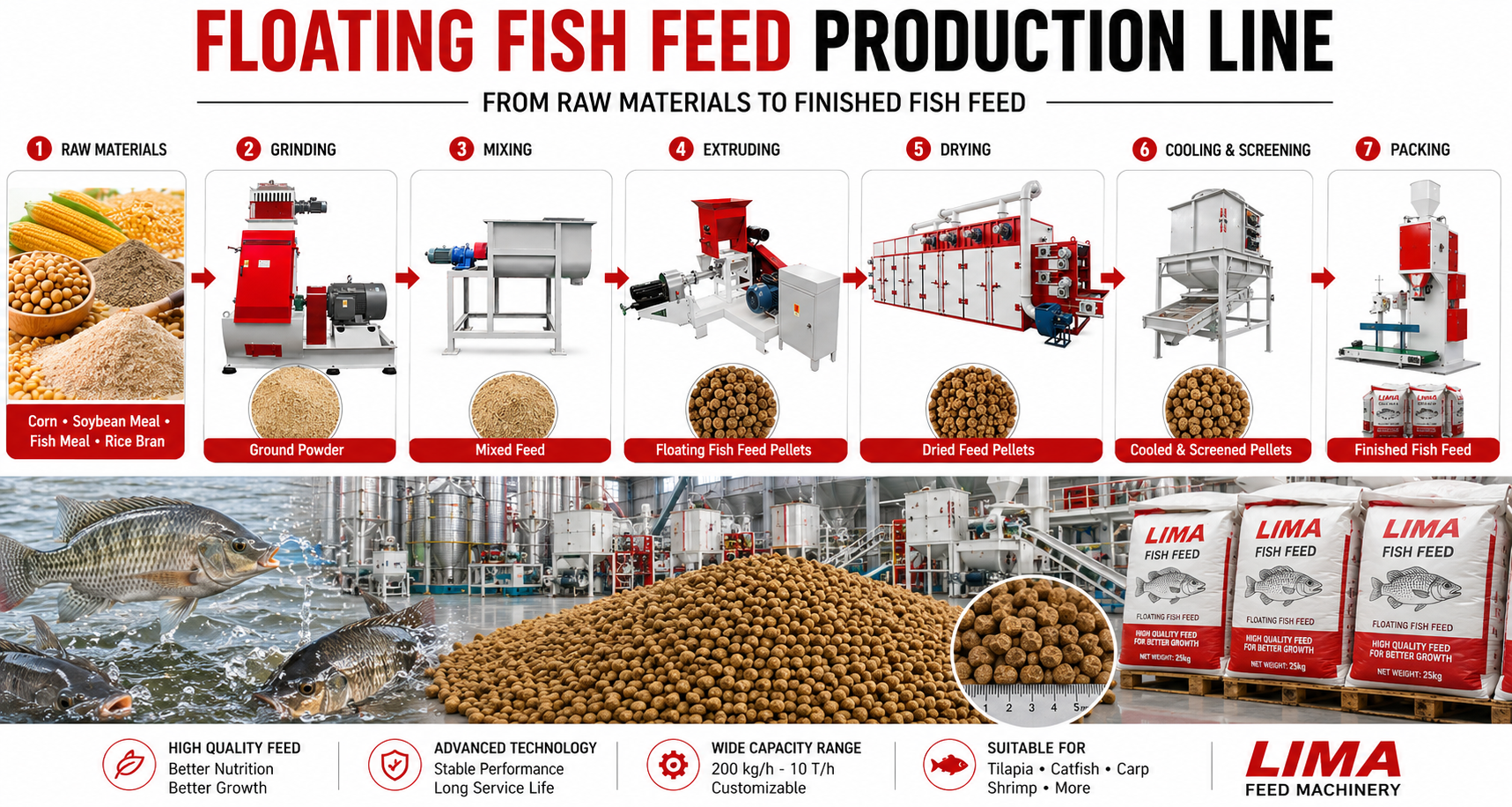
Screening and crushing of raw materials
Operation content: Remove mouldy, spoiled and impurity-containing raw materials. Crush all dry ingredients to standard fineness: 0.2-0.8mm for fry feed, 0.5-2.0mm for juvenile and adult feed.
Core function: eliminate fish disease potential, ensure uniformity of raw materials, and improve the subsequent mixing effect and feed digestibility.
Operation content: Weigh the raw materials accurately according to the formula, and mix the dry powder in the order of ‘more first, less later’ to ensure the uniform distribution of trace additives. Add 8%-10% of water and a small amount of molasses, mixing until there is no dry powder, no lumps of uniform paste.
Core function: to achieve accurate and uniform nutritional ratio, avoid local nutritional imbalance, and guarantee the basic conditions of feed moulding.
Tempering pre-treatment
Operation content: Use 80-100℃ steam to increase temperature and humidity to the mixed raw materials for tempering treatment.
Core function: Promote the starch to be fully pasted, eliminate the anti-nutritional factors of raw materials, improve the palatability and digestibility of feed, and help the pellets to be formed firmly.
Pellet moulding process
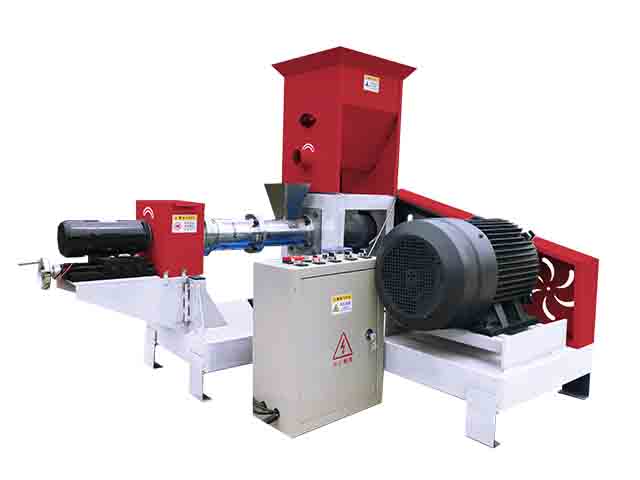
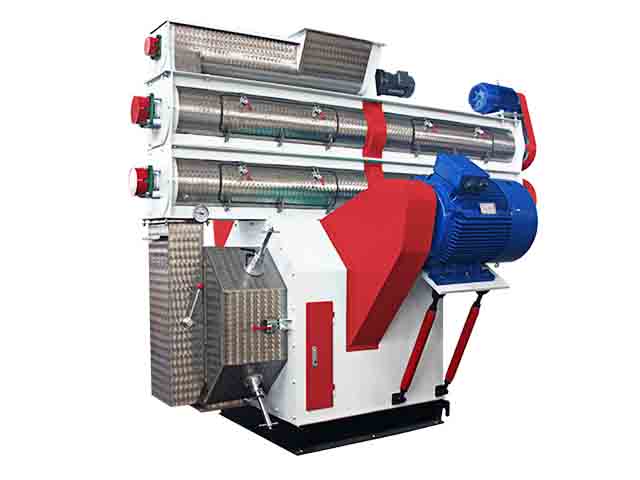
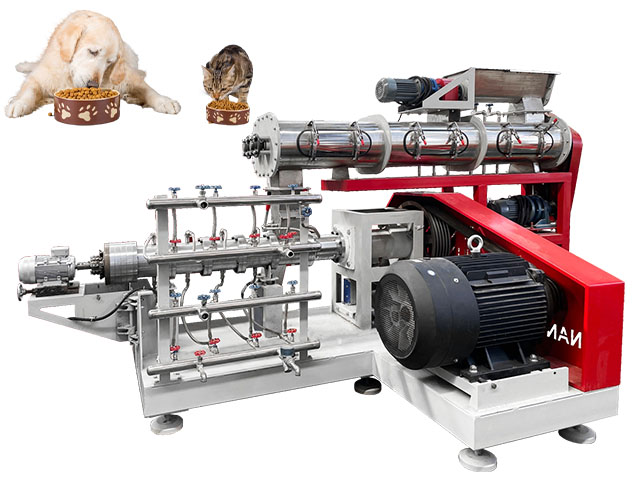
Operation content: choose the equipment according to the demand: expanding machine to make floating feed, ordinary pellet machine to make sinking feed, adjust the parameters of the equipment to ensure that the pellets are uniform in thickness and length.
Core function: to produce the corresponding type of feed according to the needs, to ensure that the finished pellets have a neat appearance and uniform specifications.
Maturing and drying
Operation content: Use the residual heat of the equipment to ripen the newly moulded pellets for a short time, and then carry out drying treatment to control the moisture of the pellets below 12%.
Core function: even out the internal moisture of the pellet, greatly improve the water resistance of the feed, and effectively prevent mould and deterioration in the storage process.
Cooling and sieving
Operation content: Cool down the high temperature pellets to room temperature by counter-current cooling equipment, and then sieve them to eliminate broken particles and powder.
Core function: to avoid moisture and caking after packing, to unify the appearance and quality of the finished products, and to improve the overall quality of the feed.
Packaging and storage
Operation content: Put qualified pellets into moisture-proof and breathable bags, labelled with production date and formula information, and stored in a dry, cool, ventilated and light-proof environment.
Core function: prolong the feed storage cycle, prevent moisture, sun exposure and deterioration, to ensure long-term storage quality and stability.
Fifth, the difference between floating and sinking tilapia feed particles
Tilapia feed is mainly divided into floating pellet feed and sinking pellet feed, the two production process, feeding effect, applicable to the significant differences in the breeding scene, a reasonable choice can reduce feed waste, improve water quality and environment.
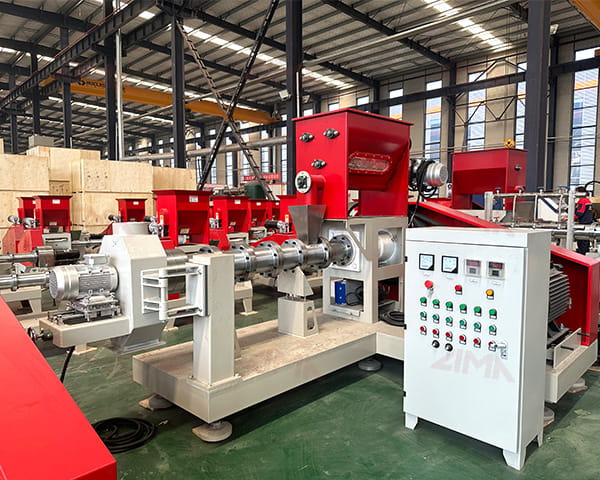
Floating tilapia feed pellets
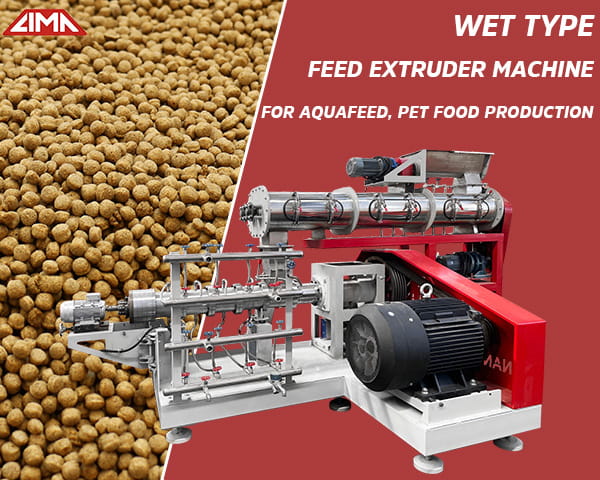
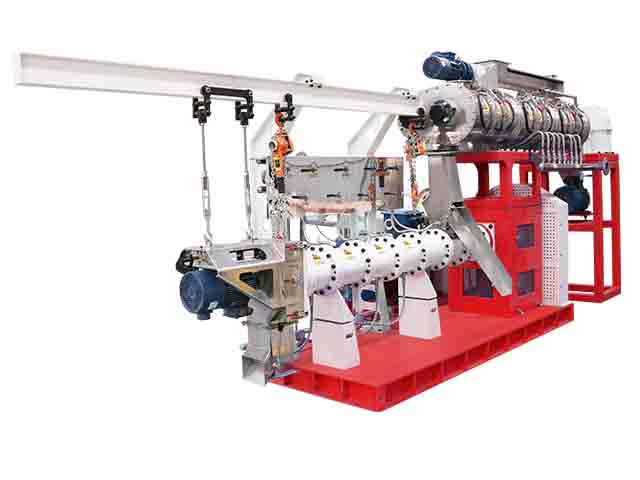
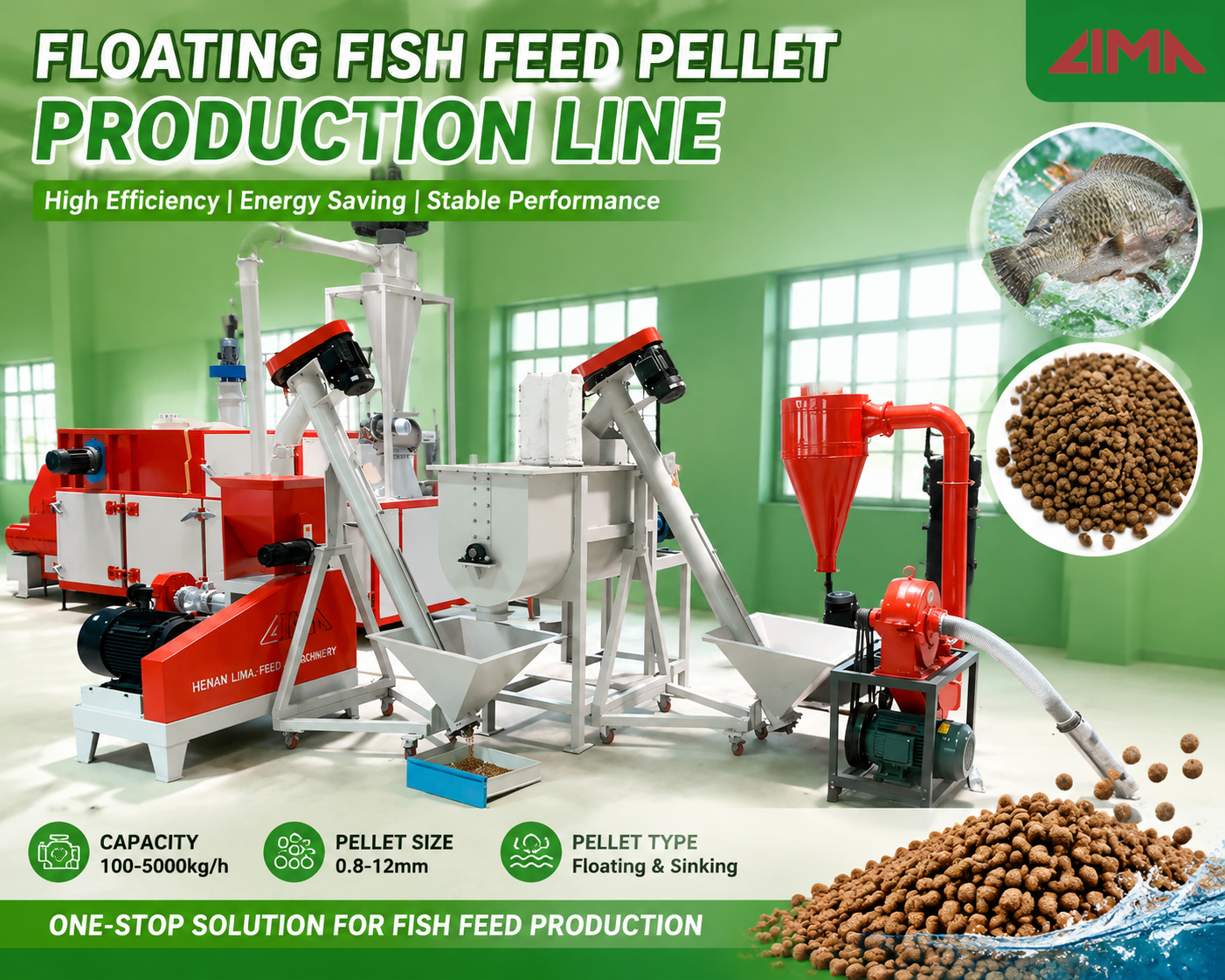
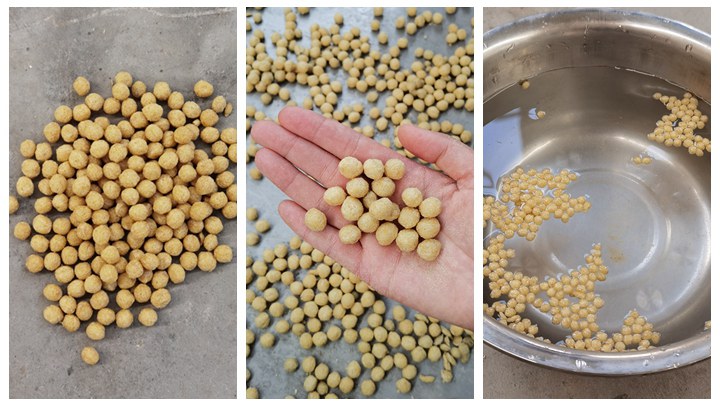
Floating tilapia feed pellets are made by high temperature and high pressure twin-screw expansion process, with porous structure inside, which can float on the water surface for more than 12 hours. Farmers can visually observe the feeding situation of the fish and accurately control the feeding amount to avoid overfeeding. At the same time, it reduces the residual bait deposition at the bottom of the pond, which greatly reduces the risk of water pollution. It is suitable for outdoor aquaculture such as ponds and net pens, and it is suitable for tilapia at all growth stages.
Sinking Tilapia Feed Pellets
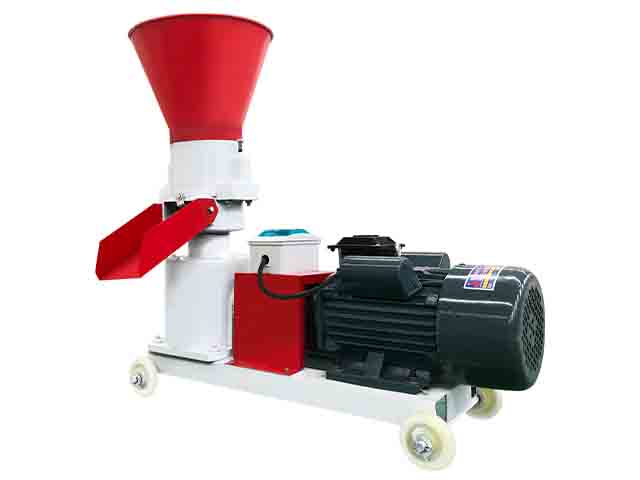
Sinking tilapia feed pellets are made by ordinary pressing process, with high density and smooth surface, sinking quickly after entering water, suitable for benthic tilapia and indoor industrial aquaculture. It is suitable for benthic tilapia and indoor industrial aquaculture. It has lower production cost and higher nutrient retention; the disadvantage is that the residual bait is easy to be deposited on the bottom of the pond, which will easily lead to the deterioration of the water quality if it is not properly controlled.
Feed Selection Suggestions
For outdoor conventional tilapia aquaculture, priority should be given to the use of floating feeds, while for indoor intensive aquaculture with precise control, more cost-effective sinking feeds can be used.
Improving the quality of tilapia feed pellets
High-quality tilapia feed particles have the characteristics of uniform size, strong water resistance, high digestibility, no mould, and balanced nutrition, and the following practical methods can effectively improve feed quality and aquaculture efficiency.
Strictly control the fineness of raw material crushing
Uneven powder coarseness will lead to inadequate mixing and poor moulding effect, fine and even crushing can make the raw materials closely combined, improve the hardness and water resistance of the pellets, improve the moulding texture of the feeds from the source, and reduce the problem of crumbling and chalking.
Optimise formula and binder dosage
Appropriately increase the proportion of cassava flour and molasses to enhance the adhesion of particles and avoid collapse in water; strictly control the proportion of crude fibre added, too much crude fibre will destroy the particle structure, resulting in loose and fragile particles, and a reasonable proportion can effectively improve the stability of water resistance of feed.
Standardise production process parameters
Reasonably control the tempering temperature and duration to ensure that the starch in the raw material is fully pasted to eliminate anti-nutritional factors; accurately adjust the puffing pressure and drying temperature to avoid the problems of scorched pellets and insufficient maturing, so as to ensure that the palatability and nutritional value of feeds are up to standard.
Strict control of pellet moisture
The moisture of finished pellets should be stabilised at 10%-12%, too high moisture will lead to mould and deterioration of feeds, shortening the storage period; too low moisture will make the pellets crispy, which will be easily broken during transportation and feeding, affecting the use effect.
Strengthen the finished product sieving processing
Remove the broken particles and powder in time after the production is completed to ensure that the size and quality of the finished feed particles are uniform, to avoid uneven nutritional intake of tilapia and uneven growth rate, and to improve the overall breeding uniformity and breeding efficiency.
Common problems and solutions of tilapia feed production
In the production of home-made and small-scale feeds, all kinds of quality problems are very likely to occur. The following are high-frequency production problems and targeted solutions to help farmers avoid production errors and ensure feed quality.
Low particle hardness, easy to break
Causes: Raw materials are not crushed finely, binder is not added enough, maturation is not complete.
Solution: Re-crush the raw materials to the standard fineness corresponding to the growth stage, add tapioca or molasses and other adhesive raw materials in the right amount, prolong the tempering time and raise the maturing temperature, so that the raw materials can be fully integrated and cured.
The granule is easy to collapse in water, poor water resistance.
Cause: starch is not fully pasted, formula ratio is not reasonable.
Solution: Optimise the tempering steam temperature and time parameters to ensure that the starch is fully pasted, reduce the proportion of crude fibre in the feed, and supplement the natural bonding raw materials appropriately to strengthen the stability of the pellet structure.
Feed is very easy to mould and deterioration
Causes: excessive moisture in pellets, humid and closed storage environment.
Solution: Extend the drying time, strictly control the moisture of the pellets below 12%, seal and pack the pellets after they are completely cooled, store them in a dry, ventilated, cool and light-avoiding environment, and ventilate and dehumidify them on a regular basis.
Low feeding and slow growth of fish
Causes: imbalance of nutritional ratio, poor palatability of feed, deterioration of raw materials.
Solution: Adjust the protein ratio accurately according to the growth stage of tilapia, add fish meal or edible oil to enhance the palatability of the feed, and strictly screen the raw materials before production to eliminate all mouldy and low-quality raw materials.
Uneven particle size
Cause: unstable operation of equipment, uneven mixing of raw materials.
Solution: Calibrate the mould specification of the pellet machine in advance, check the operation status of the equipment, prolong the mixing time of the raw materials, ensure the mixing of all kinds of raw materials and additives, and ensure the uniform specification of the moulded pellets.
Eight, tilapia feed pellet production equipment selection guide
According to the scale of breeding to match the corresponding equipment, is to improve production efficiency, stable feed quality of the key, home small-scale farming and commercial scale farming equipment selection differences.
Small home equipment (output 10-50kg/h)
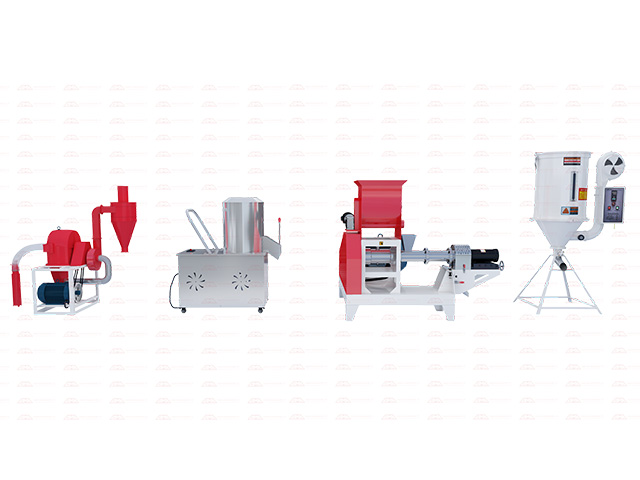
Suitable for home small batch production, with small hammer mill, portable mixer, small flat mould pellet mill. Low cost equipment, simple operation, small footprint, can fully meet the daily feed needs of small fish ponds, ultra-small-scale aquaculture can also be used for hand-cranked crusher and other simple equipment.
Medium-sized aquaculture equipment (output 100-500kg/h)
It is suitable for semi-automatic production line, including automatic crusher, vertical mixer, ordinary pellet machine, simple drying and cooling equipment. It can achieve standardised production, stable pellet quality and greatly improved production efficiency, suitable for medium-sized tilapia farms of 5-20 acres.
Large commercial equipment (output more than 1 tonne/hour)
It adopts fully automatic twin-screw puffing production line, supporting intelligent temperature and pressure regulation, automatic dosing, drying, cooling, sieving and packaging integrated operation. It can stably produce high-quality floating and sinking feed with uniform nutrition and stable quality, suitable for large-scale breeding bases and feed processing plants.
The core principles of equipment selection: matching the scale of breeding, convenient operation, low energy consumption, easy maintenance. The main floating feed is preferred to be expanded, and the regular sinking feed is preferred to be pelletised by flat die, which is more cost-effective.
Summary
Mastering tilapia feed pellet production method can help farmers get rid of the pain point of high price and unstable quality of finished feed, and produce cost-effective, customisable and high-quality aquaculture feed. High-quality feed production is inseparable from accurate nutritional ratios, high-quality raw materials, scientific formulas, standardised production processes and appropriate production equipment, any link is not in place, will affect the feed quality and tilapia aquaculture results.
Farmers only need to strictly follow the standardised production steps, continuously optimise the pellet quality, solve common production problems in a timely manner, and match the production equipment to the scale of farming, in order to produce floating and sinking tilapia feeds with high digestibility, high water tolerance and balanced nutrition. Not only can it effectively accelerate fish growth, reduce feed waste, improve water quality, but also maximise the compression of aquaculture costs, maximising the overall economic benefits of tilapia aquaculture.