How to Choose the Right Size for Different Animals
Different animals in different stages of growth, not only need different nutrients, the size of the feed particles also have their own requirements. This matter is actually quite critical – even if the formula is well balanced, if the particle size is not suitable, the animal will either not like to eat, or will not be able to digest the food well, and the waste will be more, which will affect the growth in the end. Each animal’s mouth structure, eating habits, digestive system are different, in order to raise a good, we must match the particle size according to the needs.
First, why is pellet size so important?
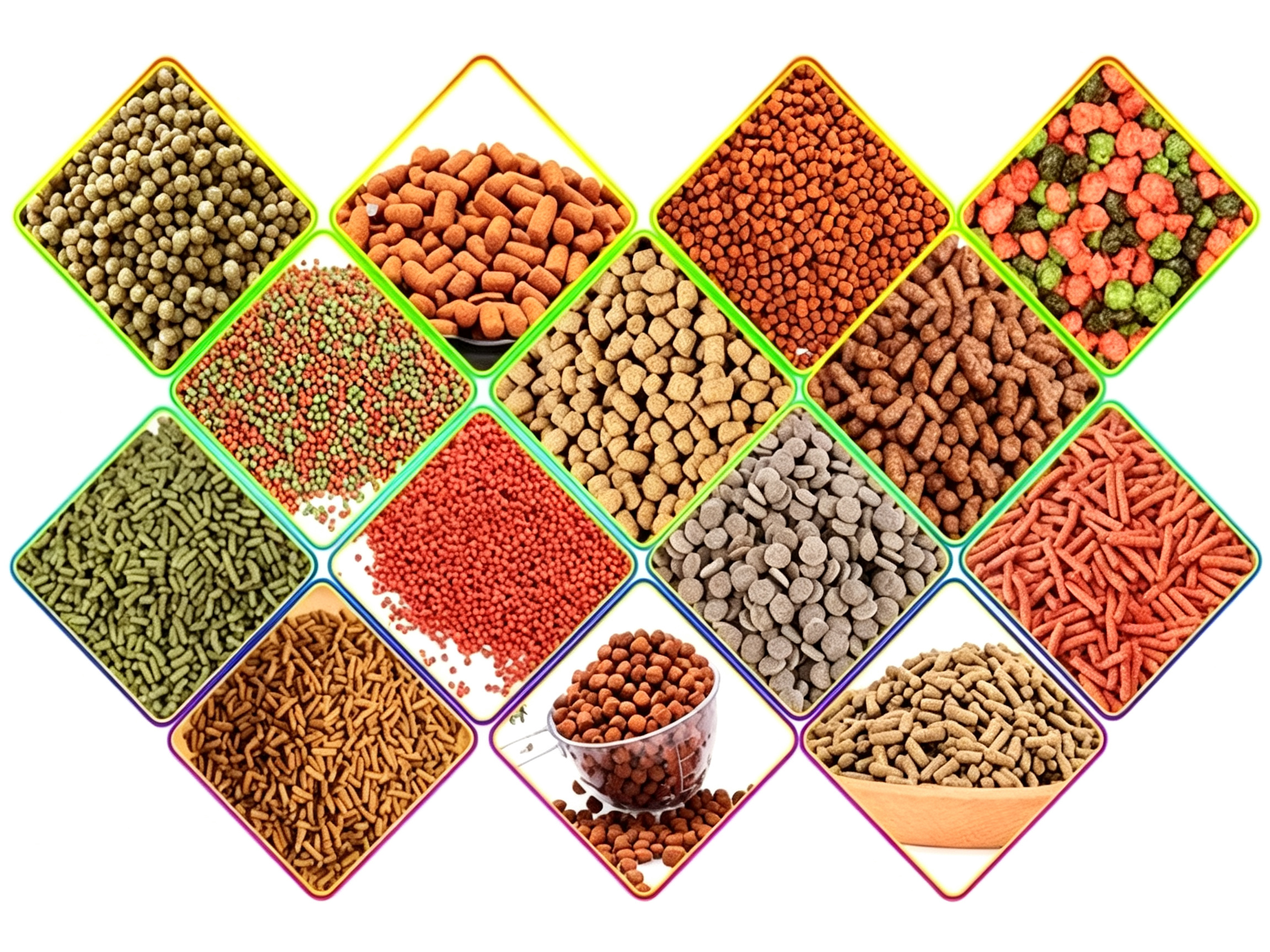
Pellet size directly affects how the animal eats, digests well and absorbs nutrients efficiently. If the particles are too big, the animals can’t chew it, the gastrointestinal tract can’t decompose it, the digestibility will be low, and the nutrition will be wasted; if the particles are too small, there will be too much dust, the taste will be poor, and it is easy to cause respiratory problems or gastric ulcers.
There is also a big difference between different animals. Like cattle and sheep ruminants, when they are young, they need coarse particles to stimulate rumen development, and when they are older, they need finer particles to improve energy utilization. Pigs and chickens are more sensitive monogastric animals – small pigs are suitable for small pellets of 0.5-1.5 mm, which can help digestive enzyme secretion and intestinal health; at the fattening stage, medium pellets of 2-3 mm are the most suitable, which can ensure the amount of food intake without waste. Chickens are the same, chicks want very fine particles, laying chickens prefer large particles to maintain intestinal peristalsis.
Second, a few basic principles of selecting the particle size
The core is three: good palatability, high digestibility, less waste. The specific size depends on the type of animal, how old it is, and what kind of mouth it has.
1. Animal species is the most basic
Cattle and sheep can accept 3-8 mm large particles, because they have a rumen to help fermentation; pigs are suitable for 1.5-3.5 mm medium particles; chickens and ducks because of myogastric grinding, 2-5 mm can be; fish and shrimp need to be 0.5-2 mm small particles, easy to suck up and reduce the water to melt away.
2. Age is also very critical.
The digestive system of small animals has not grown well, the particles must be small. Piglet pre-0.5-1.2 mm, and then slowly increase to 2-3.5 mm; chick 0-21 days with 0.5-1.5 mm, and then gradually switch to 3-4 mm. 3.
3. The structure of the mouth determines how the animal handles the feed.
Chickens use beak to peck, use muscle stomach to grind, too big to eat; pigs will chew, but piglet teeth are not full-grown, too big to bite; cows and sheep rely on ruminants to slowly grind, large particles can be handled, so the structure of the animal’s mouth greatly affects the choice of feed particle size!
Pellet size and feeding efficiency, waste rate of the relationship is very direct: the right size, the animal eats fast, eat steadily, not picky eaters, waste can be controlled within 5%; too big, chewing half a day can not eat much, especially small animals are easy to eat; too small, dusty, the animal does not love to eat, but also easy to scatter arch, waste can be up to 10-15%.
So to summarize one sentence: animal-centered, taking into account the species, age, mouth structure, it is best to do their own tests or reference to empirical data to find the best particle size. Usually observe more animals eating and pulling feces, adjust at any time, so as to raise the benefits.
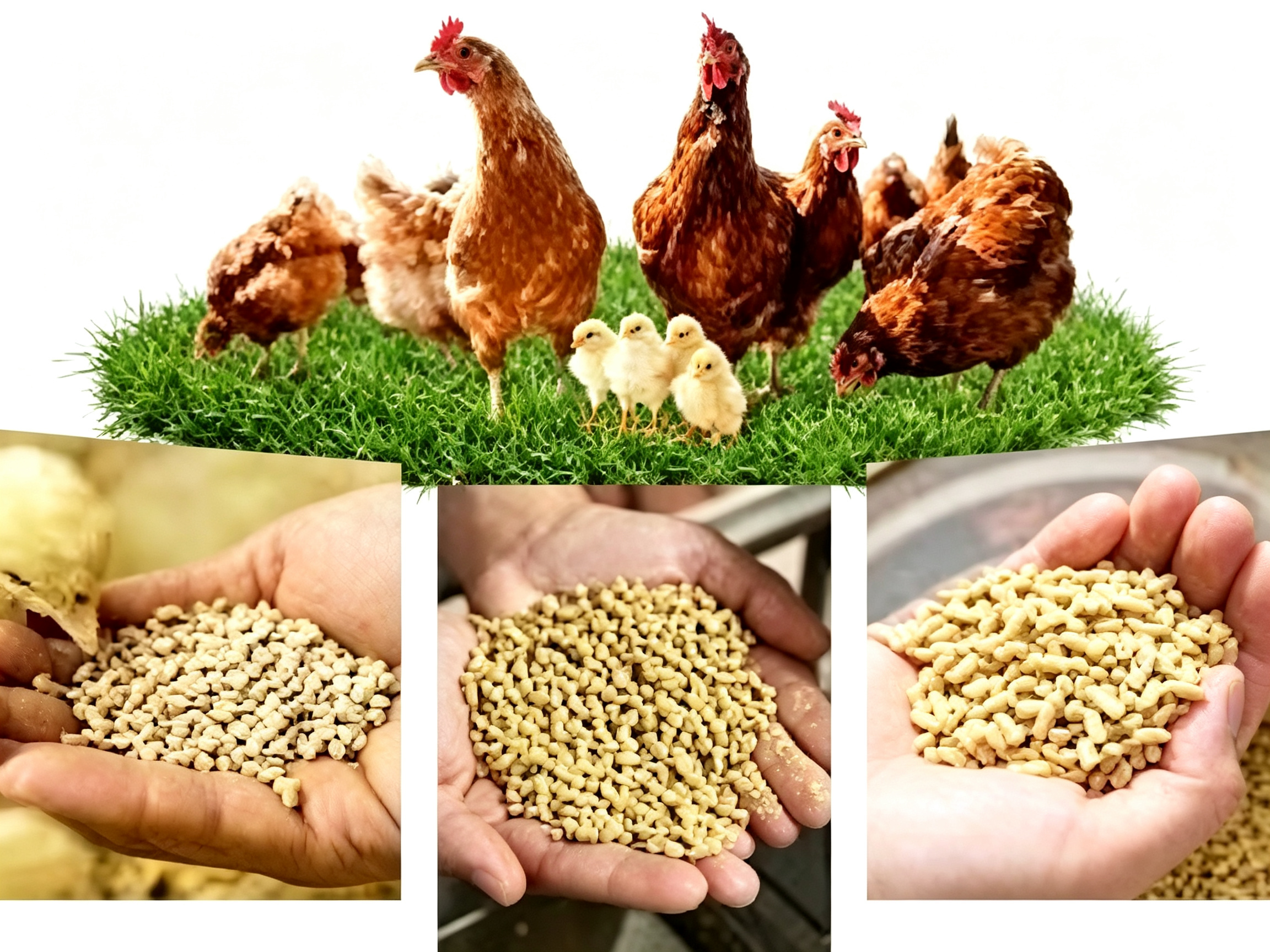
Third, what is the appropriate size of chicken feed particles?
Chickens are very sensitive to the size of feed particles, and the difference between different stages is quite big.
Chick (0-21 days): 0.5-1.5mm fine particles or crushed particles. Chicks have small mouths and their digestive organs are not well developed, so they can’t eat or digest larger ones. Fine granules can increase the eating speed and promote the secretion of digestive enzymes. At this stage, it is also common to use better powder or very fine granules to ensure that the chicks can feed evenly and grow fast.
Broilers (22-56 days): 2.0-3.5mm medium pellets. It is best to phase in: 2.0-2.5 mm for 22-35 days, and 2.5-3.5 mm for 36 days to penning. Broilers grow fast and need to eat a lot. Medium pellets stimulate the development of the muscular stomach, improve digestive efficiency, reduce dust and waste, and contribute to long breast meat.
Laying hens: use 2.0-3.0 mm for the breeding period (8-18 weeks) and 3.0-5.0 mm large pellets for the laying period (19 weeks onwards), sometimes even a bit of whole corn can be added. Laying hens need coarse pellets to stimulate peristalsis in the muscular stomach, to keep the feed in the digestive tract longer and to improve calcium and nutrient absorption, which maintains egg production and eggshell quality. If the pellets are too fine, the function of the muscle stomach will deteriorate, affecting long-term egg production.
How to choose between powder and small pellets?
Powder is suitable for super early chicks from 0-7 days. The advantage is that it is evenly mixed, easy to add medicine and trace elements, and easier for chicks to eat at the beginning. The disadvantage is that it is easy to scatter, waste can be up to 8-12%, dusty also easy to cause respiratory diseases, chickens are also easy to pick food. It is recommended to use it only in the days when the chickens are just out of the shell, and then change to fine granules when the chickens have adapted to it.
Small granules (0.5-2.0mm) are suitable for chicks of 7-28 days and chickens with weaker physique. The advantages are good palatability, uniform eating, high digestibility, less waste (usually less than 5%), which can significantly improve the early weight gain and survival rate. The disadvantages are that pelleting is slightly more expensive and moisture is easily absorbed during storage. The vast majority of modern chicken farms now recommend switching from meal to small pellets from day 7, with better results than using meal throughout.
In general, the pellet size should follow the principle of “from fine to coarse, gradual transition”, and it is best to give a transition period of 5-7 days for each pellet change. Broilers prefer slightly larger pellets to increase feed intake, and laying hens prefer larger pellets to maintain digestive health. In practice, the hardness of the pellets, the feed formulation and the health condition of the chickens should be adjusted. It is recommended to regularly observe the appearance of chicken feed intake, feces shape and production performance indicators, timely optimization.
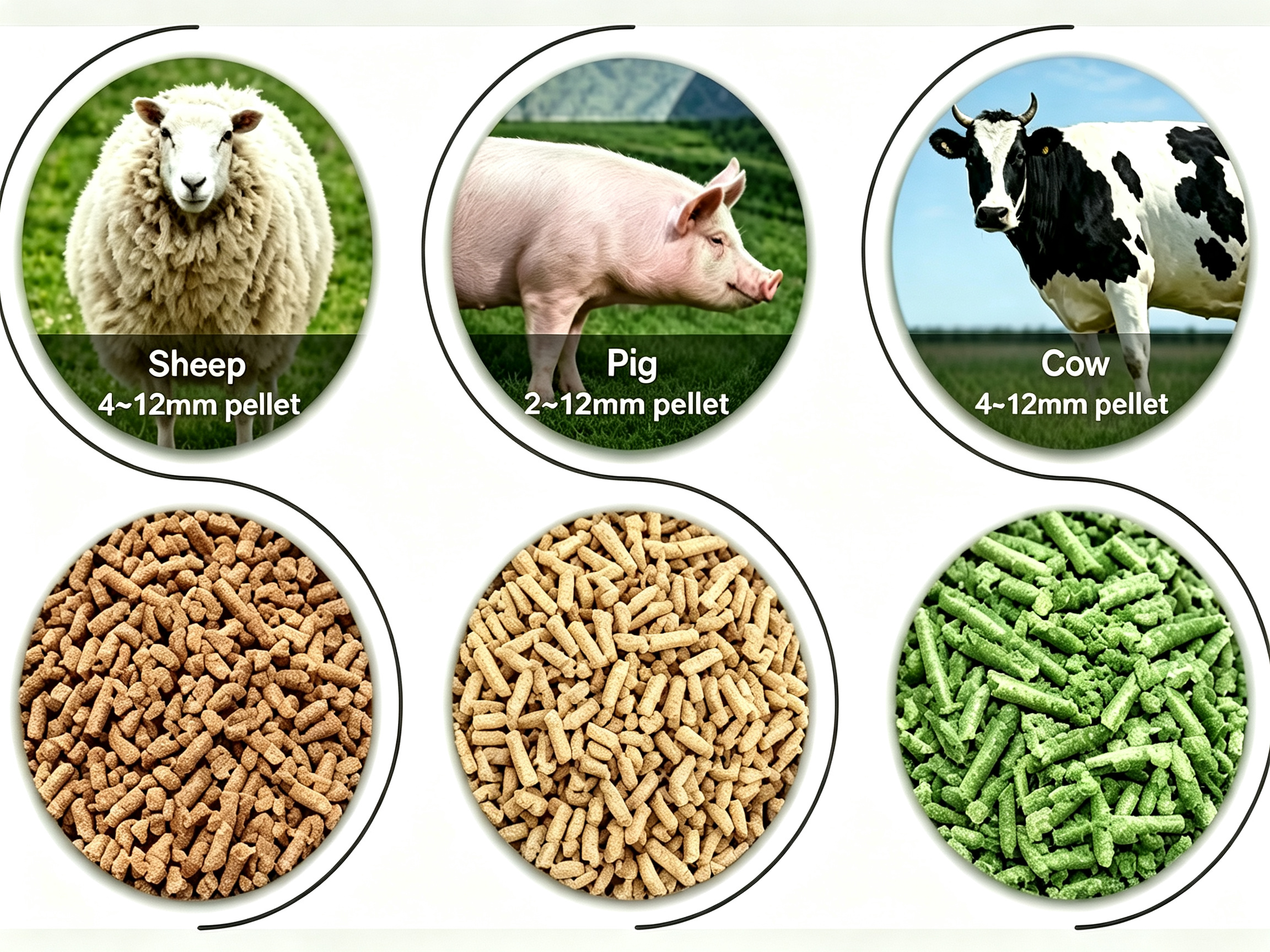
Feed specifications for cattle and ruminants
Ruminants are very different from monogastric animals, the core is to balance energy intake and rumen health. They rely on microbial fermentation of crude fiber in the rumen, so the feed particle size must ensure that there is enough physically effective fiber to stimulate rumination, secretion of saliva, and to maintain the normal pH of the rumen.
Beef cattle: concentrate particles 3-8 mm (commonly 4-6 mm). In the whole mixed ration, the roughage is cut off to 2-5 cm long. In the later stages of fattening, the pellets can be increased appropriately so that the cows can eat more.
Dairy cows: concentrate pellets 4-10 mm (6-8 mm recommended). Roughage particles in the whole mixed ration, recommended to use the Pennsylvania Particle Separator to evaluate: 6-10% of long fibers above 19 mm, 30-50% of medium-length fibers from 8-19 mm, 30-40% of those from 4-8 mm, and no more than 10-15% of fines below 4 mm, too much of which can easily cause rumen acidosis. Dry milk period and periparturient period should appropriately increase the proportion of long fiber, more than 19 mm can be up to 8-12%.
Sheep: concentrate pellets 3-6mm (sheep’s mouth is small, the pellets can not be too big). Roughage cut off to 1.5-4 cm long. Pre-lamb can be finer, 2-4mm, to improve digestibility.
Ruminants are more suitable for large particles or coarse crushed material than pigs and chickens, generally not recommended for too fine powder, the proportion of 1 mm or less should be strictly controlled.
Special requirements of crude fiber structure
The requirement of ruminants for crude fiber is totally different from that of monogastric animals. A certain length of crude fiber (more than 1.5-2 cm) is needed to stimulate the rumen wall to contract, ruminate and secrete saliva, and the ideal rumination time is 400-600 minutes per day. If the pellet is too fine, the feed stays in the rumen for a short period of time, the fermentation is not sufficient, and it is easy to cause metabolic diseases such as rumen acidosis, rumen keratinization insufficiency, and hoof and leaf inflammation.
Too fine (too much below 4 mm): the number of rumination decreases, rumen pH decreases, fiber digestibility decreases, and milk fat rate of cows decreases. Too coarse (too much above 5-8 cm): affects feed intake and feed mix uniformity, leading to picky eating and unbalanced nutrition. Ideally, roughage should be kept at a natural length (corn stover 2-3 cm, alfalfa hay 3-5 cm), and concentrates should be made into larger particles and mixed with the roughage to form a complete mixed ration.
Ruminant feeds should follow the principle of “roughage as the main ingredient, concentrates as the supplement, moderate particles”, focusing on ensuring the proportion of effective long fiber, do not pursue fine particles. It is recommended to regularly test the particle distribution of the total mixed ration with a particle separator, and adjust it according to feeding behavior, rumination time, fecal scores and production performance. Lambs and calves can be properly transitioned with fine particles before weaning, and then hurriedly changed to coarse specifications after weaning to promote rumen development.
Five, pig feed particle size recommendations
Pigs are monogastric animals, especially sensitive to particle size. If the particles are suitable, the feed intake, digestion and absorption rate can be raised, and feed waste and digestive diseases can be reduced.
Piglets (weaned to 25kg): 0.5-1.5mm very fine pellets or crumbles. Use 0.5-1.0 mm for early weaning (5-10 kg), which can be a mixture of better meal with fine pellets; 1.0-1.5 mm for late nursery (10-25 kg). Because the digestive system of piglets is not well developed, teeth and chewing ability is weak, fine particles are palatable, can promote the secretion of digestive enzymes, significantly improve the digestibility of protein and energy, reduce diarrhea.
Fattening pig (25-120kg): 2.0-3.5mm medium granule. Use 1.8-2.5 mm for pre-growth (25-60 kg) and 2.5-3.5 mm for late fattening (60-120 kg). Pigs at this stage grow fast and need to eat a lot, medium pellets can balance the feeding rate and digestion time, which not only stimulates gastrointestinal peristalsis but also reduces dust and waste, which is conducive to improving daily weight gain and feed conversion rate.
Sow (reserve, gestation, lactation): 3.0-5.0mm larger pellets. Late gestation and lactation can be appropriately used with large pellets or mixed with some powder to increase satiety and reduce constipation. Large pellets allow the feed to stay longer in the digestive tract with a feeling of satiety, reducing the risk of overfatting the sow, while helping to maintain gut health and lactation performance.
How can I improve digestibility and reduce waste?
If the particles are too big (more than 4mm), piglets and fattening pigs can’t chew it, the digestive surface area is small, and the protein and energy digestibility is reduced by 5-8%. Pellets that are too small (too many under 0.8 mm) have a large surface area but are dusty, have a high risk of gastric ulcers, and the feed runs through the digestive tract too fast, so actual digestibility is low. Most studies show that growing and fattening pigs have the highest overall digestibility at 2.5-3.0 mm.
With the right grain, feed waste can be kept to 3-6%. Too fine is easy to fly apart, arching, waste can be 10-15%; too large pigs will pick food, leftover material is also more. At the same time, the hardness of the pellets should be controlled to prevent the transportation from crumbling into powder.
Pig feed pellets should follow the “piglet fine, fattening, sow coarse” principle of staging, combined with the feed formula and farm equipment to adjust. It is recommended to observe feeding behavior, fecal score and growth performance of each batch of pigs to dynamically optimize pellet size. Scientific particle control can increase digestibility by 3-7%, while reducing feed waste and significantly improving breeding efficiency.
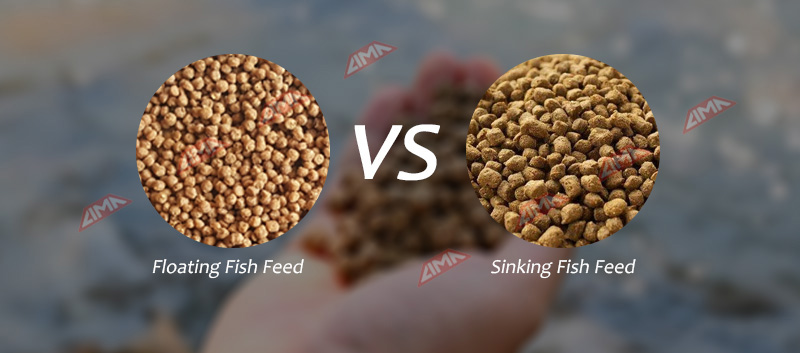
Sixth, fish and aquatic feed size selection
The particle size of aquatic feed is much more delicate than that of terrestrial animals because it directly affects the stability in the water, whether the fish eat or not, whether the nutrients are dissolved or not, and the degree of pollution of the water body. It is important to accurately match the size of the feed to the feeding habits of the fish, their growth stage and the floating and sinking characteristics of the feed.
Floating feed: 1.0-8.0mm. Made by puffing process, it has low density and can float on the water surface for a long time (more than 2-4 hours). 1.0-2.5mm small particles are suitable for small fish and juvenile fish, and 3.0-8.0mm medium-large particles are suitable for medium-large fish. Floating feed is convenient to observe whether the fish eat or not, reduce waste, suitable for pelagic and mesopelagic fish.
Sinking feed: 0.5-6.0mm. High density, will sink slowly, suitable for bottom feeding fish. The particles of sinking feeds are usually slightly smaller than those of floating feeds of the same size, so that they sink more quickly and are less dissolved in the water. Floating feed is suitable for shrimps, crabs, and bottom-feeding fish (e.g., catfish, grouper), but the hardness and water resistance of the pellets must be strictly controlled, so that they can be stabilized in the water for at least 30-60 minutes. Floating feed particles can be appropriately larger to enhance buoyancy, while sinking feed should be smaller and denser to ensure rapid sinking and reduce nutrient leaching.
Matching for different fish and different stages
According to the eating habit: upper layer fish (tilapia, silver carp, bighead carp) preferentially use floating pellets, 1.5-5.0 mm; middle and lower layer fish (grass carp, mackerel) use floating or slow-sinking pellets, 2.0-6.0 mm; demersal fish and shrimps and crabs (catfish, prawns, spot prawns) use sinking pellets, 0.5-3.5 mm, and juvenile shrimps even use micro-pellets of 0.2-0.8 mm; valuable fish ( Grouper, sea bass, yellow croaker) mostly use sinking or slow-sinking pellets, the size of which gradually increases from 1.5 mm to 8 mm.
According to the growth stage: 0.1-0.8 mm micro-pellets or powder paste for fry opening stage (0.01-5 g); 0.8-2.0 mm for juvenile stage (5-50 g); 2.0-4.0 mm for mid-growth stage (50-200 g); 4.0-8.0 mm for adult fattening stage (200 g or more), and up to 10-12 mm for larger fish; parental fish breeders usually need large pellets of 5-10 mm to increase satiety.
Fish feed pellet size should be 60-80% of the width of the fish’s mouth for easy swallowing. As the fish grows up, increase the pellet size gradually, don’t use small pellets all the time, otherwise the feeding efficiency will decrease. The core of aquatic feed pellet selection is “small fish with small particles, floating and sinking to see the habits, gradually increase”. It is recommended to regularly observe the activity of fish feeding and bait left over, and adjust the pellet specifications in time to maximize feed utilization and reduce eutrophication of the water body.
What is the difference between poultry, livestock and aquatic animals?
Poultry, pigs, cattle and sheep, fish and shrimp in the digestive system there are essential differences, these differences directly determine the size of the feed particles how to choose, digestive efficiency is not high, how to feed.
Poultry (chickens and ducks): single stomach to strengthen the large muscle stomach. Myogastric grinding ability is strong, so the tolerance of particle size is wider. However, the digestive organs of chicks are not well developed, so they need fine particles to improve digestibility; adult chickens can use large particles to stimulate the development of the myogastric and prolong the digestion time. If the pellets are too fine, the muscle stomach will shrink, and if they are too big, the eating speed will be affected.
Pig: monogastric animal, digestive system is similar to human, rely on enzyme digestion, most sensitive to particle size. Too big for chewing and digestion, too small for stomach ulcers and dust problems.
Cattle and sheep and other ruminants: have rumen, rely on microbial fermentation of crude fiber. Therefore, coarse pellets and physically effective fibers long enough to stimulate rumination and maintain rumen health are needed. Too fine particles will destroy the rumen environment and cause acidosis and other metabolic diseases.
Aquatic animals (fish and shrimp): The digestive system is varied, some fish have no stomach or a very simple stomach. The feed has to meet both the requirements of stability in the water and being eaten quickly. Particle size not only affects digestion, but is also directly related to floatation, dissolution rate and water quality. Most aquatic animals have small mouths and prefer small pellets, which require extreme hardness and water resistance.
Poultry and pigs rely more on mechanical and enzymatic digestion and tend to have small and medium-sized particles; ruminants rely on microbial fermentation and need coarse structures; aquatic animals are also limited by the water environment and require the highest particle stability. The actual ingredients should be centered on the digestive physiology of the animal, and selected according to the species, stage and environment, so as to make the highest feed utilization and lowest health risk.
Feed particle size and animal demand match well, production efficiency can be improved by a large margin. Scientific selection of particle size, can significantly improve feeding behavior, digestion and absorption rate and feed conversion efficiency, and ultimately realize less feeding, more output. Feed particle size is not just a production parameter, it is a bridge connecting the physiological needs of animals and the economic benefits of farming. Only by adhering to the scientific and refined selection strategy, can we obtain higher production performance and stronger profitability in the fierce market competition.