How to choose the right feed pellet size: a two-way guide to cost reduction in aquaculture and pelleting quality improvement
- The underlying value of feed pellet size
- Matching pellet size by growth stage
- Mechanism of particle size affecting feed-to-meat ratio and growth performance
- Poultry feed pellet size full cycle selection details
- Pellet size selection rules for the whole production cycle of hogs
- Aquaculture feed particle size determination method and selection
- Pellet size and pellet mill ring die parameters matching logic
- All-species feed pellet size summary practical guide
- Conclusion
In livestock, poultry, aquaculture and feed processing, practitioners often focus on formulation, pelleting temperature, compression ratio and other parameters, and it is very easy to overlook the key hidden factor of feed pellet size. Feed cost accounts for 60%-70% of the total cost of aquaculture, improperly adapted particle size will cause 3%-8% feed waste, deterioration of feed-to-meat ratio, bringing high economic losses to large-scale farms. At present, most feed mills and farmers use a single pellet size for feeding, and there is a serious fitness error. This article combines industry test data and front-line operational experience to systematically explain the selection of particle size and pelleting equipment matching skills for different categories and ages of animals, which will help improve the quality of feed production and increase the efficiency of farming cost reduction.
The underlying value of feed pellet size
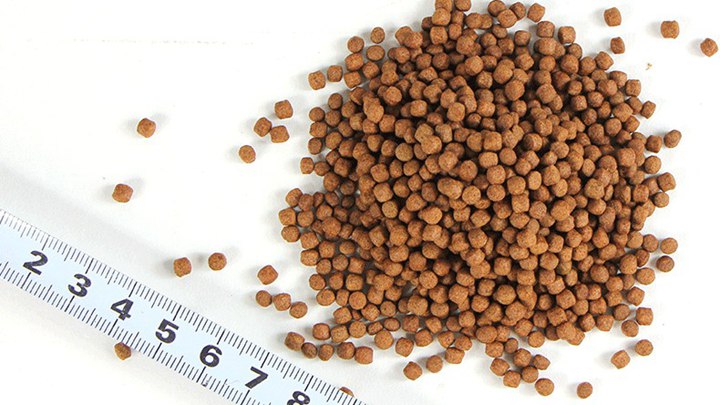
Compared with powder, pellet feed itself has four major advantages: reducing picky eating, reducing feed dust, improving starch pasting rate and shortening feeding time, but whether these advantages can be realized depends entirely on whether the pellet size is suitable for the physiological structure of animals. Even if the size deviation is only 1mm, it will have a chain of negative impacts from four dimensions: feeding, digestion, animal health, and production cost, which are divided into five major practical impact dimensions:
Direct impact on feed intake and feed loss
The core limiting organ of animal feeding is the mouth structure, and there are natural differences in the mouth cleft, beak length and biting ability of different species. Broiler chicks, for example, 0-7 day-old chicks beak cleft width of only 2mm or so, if feeding 3mm particles, single pecking success rate of less than 40%, chicks will actively refuse to eat, the average daily intake decreased by 12%-18%; and 1mm below the ultra-fine particles, through the material tower transfer, the material line delivery will produce more than 45% of the dust fines, poultry will be through the dumping of the head, planing the material to screen the complete particles, fines direct Poultry will sift the complete particles through head shaking and planing, and the fine powder will be directly spilled on the ground, and the loss rate of caged broiler trough can reach 9%.
The loss logic of aquatic animals is even more special. Freshwater fish have the habit of “test swallowing and ingestion”, when the particles are larger than 50% of the mouth crack, fish will give up ingestion directly after 2-3 times of attempts to gulp, and the particles will pollute the water after absorbing the water and dissolving; when the particles are smaller than 25% of the mouth crack, the fish need to ingest 5-8 particles in order to satisfy the energy demand, increasing the energy consumption by 30%, and the excess energy cannot be used for the food. The energy consumption of feeding is increased by 30%, and the excess energy cannot be used for growth, which directly increases the feed ratio.
Influence on feed digestion and absorption rate and nutrient utilization
Particle size and surface area are inversely related, the smaller the diameter of the particle, the larger the area per unit weight of feed in contact with the digestive fluid. For young animals with immature digestive tracts (piglets, chicks, fish fry), 1.5mm particles are 22% faster than 4mm particles in terms of starch digestion rate and 17% faster in terms of protein decomposition rate, which is able to adapt to the physiological shortcomings of young animals with insufficient secretion of gastric acid and digestive enzymes.
However, small size particles are not omnipotent, ruminants and adult poultry need hard and large particles to stimulate the development of the digestive tract. White-feathered broiler breeding test shows that the whole feeding 2mm fine particles of broiler, the weight of myogastric at the time of penning is 19% lower than that of broiler fed 4mm particles, the development of myogastric cuticle is weak, and it is very easy to have indigestion and diarrhea in the late stage; Beef cattle fed 5mm fine particles, the frequency of rumen peristalsis decreased by 27%, the imbalance of rumen microflora, which triggered rumen accumulation of food and flatulence problems. Simply put, young animals emphasize digestive rate, and adult animals emphasize the development of digestive tract structure, and both of them need a reverse pellet size strategy.
Quantitative impact on feed-to-meat ratio, average daily gain
Data from the European and American Poultry Nutrition Association’s 2025 field trials clearly show that for every 10% increase in the proportion of intact pellets in the feed troughs of white-feathered broilers, the feed-to-meat ratio can be optimized by 0.4 points, and the average weight gained in the pen can be increased by 2.1%. The core factor influencing the proportion of intact particles is the size match, when the size is suitable, the feed transfer crushing rate is less than 15%, and when the size is mismatched, the crushing rate can be more than 40%.
There is a differentiation law in the field of pig: every 100μm reduction of raw material crushing fineness before pelletizing (finer fineness), the protein digestibility of 3-4mm pellets after pelletizing will increase by 1%, but when the crushing fineness is lower than 300μm and the pellet size is less than 2mm, the incidence of gastric ulcers in piglets will soar from 2% to 14%. This shows that the particle size needs to be linked with the fineness of raw material crushing, and the small size cannot be pursued alone.
Hidden effects on feeding behavior and health of animals
In large-scale high-density farming scenarios, foraging competition is a major source of animal stress. Uniform pellet size can eliminate picky eating behavior, avoid strong individuals grabbing large pellet feed and weak individuals can only eat fine powder, and reduce the difference in body weight uniformity of the group. Taking fattening pigs as an example, when the particle size is uniformly 4mm, the standard deviation of weight at pen is only 3.2kg; when the size is mixed 2-6mm, the standard deviation reaches 7.8kg, and the group is seriously differentiated.
At the same time, fine powder dust will cause respiratory diseases, when the concentration of fine powder in the chicken coop exceeds the standard, the incidence rate of air sacculitis increased by 23%; pig house dust will induce atrophic rhinitis. These diseases are often attributed by farmers to ventilation problems, but the actual root cause is the particle size is too small, too much transfer dust.
Economic impact on feed mill pelleting productivity
From the perspective of operation and maintenance of feed pelletizing machine, small aperture ring die (1-2mm) friction resistance, equipment capacity decreased by 25% -30%, tonnage of material power consumption increased by 7-9 degrees, and the ring die wear rate doubled, the cost of spare parts replacement rose significantly; large aperture ring die (6mm or more) fast discharging speed, but the hardness of the particles, durability is not enough, the long-distance transport crushing rate is very high. The only way to balance the three production indicators of capacity, energy consumption and pellet durability is to choose the aperture size that matches the breeding needs.
Matching pellet size by growth stage
The selection of pellet size for all terrestrial livestock follows the logic of unified underlying time sequence: use crushed pellets/micro-pellets in the starter phase → slowly adjust the diameter upward in the growth phase → maintain large size and stable feeding in the breeding phase, and prohibit jumping to different sizes across the phases. Aquatic animals additional mouth fracture ratio determination criteria, this chapter in the form of a list to sort out the general guidelines by stage, to refine the landing boundaries:
Young animal stage: prioritize small size, low hardness pellets
Applicable objects: 0-2 weeks chicks, pre-weaning piglets, fish fry up to 5g, calves up to 3 months of age
Size basis: Mouth opening less than 3mm, digestive tract smooth muscle contraction ability is weak, unable to squeeze hard large pellets
Supporting requirements: PDI ≥ 85% of the durability of the pellet, to avoid water, into the trough immediately broken, while controlling the compression ratio of the ring die to reduce the hardness of the pellets
Rapid growth stage: moderate size, enhanced digestive tract stimulation
Applicable objects: 2-8 weeks broiler, 20-60kg growing pig, 5-100g fish species, 3-12 months old lambs
Basis of size: The feeding organs are well developed and need hard pellets to stimulate the development of muscular stomach, rumen and intestinal villi, and the pure pursuit of easy digestion will lead to the degradation of the digestive tract.
Matching requirements: no less than 60% of complete pellets, reduce artificial secondary crushing, relying on the animal’s autonomy to feed grinding.
Breeding / fattening end: large size, high durability pellets
Target: Laying hens, gestating sows, late fattening pigs, fish, adult ruminants.
Size basis: high tolerance of feeding energy consumption, longer feeding intervals, large size pellets can prolong satiety time and reduce ineffective feeding behavior.
Supporting requirements: suitable for long-distance transportation of dosing towers, PDI ≥ 92%, to eliminate the transfer of broken
Supplementary practical transition program: different stages of replacement of particle size, need to adopt a 7-day gradient mixing method, the first 3 days of the old and new particles 7:3 mix, the middle 2 days of 5:5 mix, the last 2 days of 3:7 mix, direct replacement will lead to animal refusal to eat, feeding short-term decline of more than 20%.
Mechanism of particle size affecting feed-to-meat ratio and growth performance
Feed-to-meat ratio (FCR) is a core indicator of farming profitability, the industry is generally concerned about the formula protein-energy ratios, but ignored the prying effect of particle size on the feed-to-meat ratio, and its path of influence is divided into three independent mechanisms, and there is no substitution of each other:
Regulation of feeding energy consumption
Animal feeding needs to consume metabolic energy, energy is divided into three categories: growth energy storage, feeding energy consumption, stress energy consumption. If the size of the pellet is too small, the animal needs to peck and swallow repeatedly, and the feeding frequency is increased by 2 times, and the feeding energy consumption accounts for 18% of the daily metabolism energy; when the size is suitable, the feeding energy consumption only accounts for 7%, and all the excess energy is converted into muscle and fat growth. Take tilapia as an example, the feeding energy consumption of tilapia adapted with 3mm particles is reduced by 11%, and the feed-to-meat ratio is optimized by 0.23 points.
Change the digestive tract emptying speed
Fine particle feed has fast digestive tract emptying speed and short nutrient absorption time, which is suitable for young animals to replenish energy quickly; large particle feed has dense internal structure, slow emptying speed and long nutrient slow-release time, which is suitable for adult livestock and poultry with long fasting interval at night. Laying hens fasting at night for 8 hours, feeding 4.5mm large pellet feed, continuous intestinal absorption of calcium at night, eggshell breakage rate decreased by 5.4%, which is the core reason why the pellet size must be adjusted upward in the late stage of laying hens.
Reduce the nutritional imbalance loss caused by picky eating
Feed formulation is rationed according to the nutritional requirements of the group, and picky eating will lead to individual nutritional intake deviation. When the feed particle size spanning more than 2mm, more than 90% of the livestock and poultry will prioritize the feeding of large particles, the remaining fine powder vitamins, trace elements accounted for a higher proportion of long-term picky eaters will appear vitamin deficiency, hair loss, egg production decline and other hidden problems. Unified pellet size can eliminate picky eating and ensure that the nutritional intake of each animal fully matches the formula standard.
Poultry feed pellet size full cycle selection details
Poultry rostrum is horny hard structure, no teeth grinding function, all feed crushing rely on the muscle stomach, is the most sensitive to the particle size of the terrestrial livestock and poultry, broilers, egg-laying chickens, waterfowls selection standards there are obvious differences in the phases of the refinement is as follows:
Chick opening stage (0-14 days old)
Prohibit the direct use of complete particles, the optimal solution is 1.5-2mm crushed particles (crushed particles), it is not recommended to use 1mm micro-particles or less. Feedback from the first-line breeding, the dust rate of 1mm micro-pellets is more than 35%, which is easy to cause lung damage after the chick inhales it; while 2mm complete pellets are beyond the chick’s beak crack, and the pecking failure rate is high. At this stage, the durability of crushed particles should be ≥83% to avoid dissolving and sticking after entering water.
Broiler growing and fattening stage (15-35 days old)
The standardized 3mm pellets are the optimal size for white feather broilers worldwide. Compared with 2mm pellets, 3mm pellets increase the weight of myogastric development by 16% and decrease the overfeeding rate by 8.2%; compared with 4mm pellets, the success rate of pecking decreases by 11%, and the feed intake decreases slightly. Yellow feather broiler growth cycle is longer, can be adjusted to 3.5mm after 25 days of age.
Broiler finishing stage (36 days of age to penning)
The size is adjusted upward to 4-5mm, at which time the broiler’s beak cleft width reaches 6mm, allowing it to peck large pellets with ease. The core objective of this stage is to improve feed intake, with larger pellets lasting longer for a single full meal, reducing walking stress, and increasing the breast muscle rate at farrowing by 1.8%. It is necessary to ensure that the proportion of intact pellets in the trough is not less than 50%, and the broken fines are cleaned up in time.
Laying hens reserve chickens and peak laying period
0-6 weeks reserve chickens: 2-3mm pellets, focusing on bone development; 7-18 weeks mature chickens: 3.5mm pellets, promoting the development of muscle stomach to improve the efficiency of calcium and phosphorus absorption; peak laying period: 4-5mm pellets, delaying the emptying of digestive tract, to ensure the continuous absorption of calcium at night. It should be noted that egg-laying hens are forbidden to use more than 5mm granules, which will increase the risk of death by choking.
Waterfowl (ducks, geese) differentiated standards
Ducks and geese have a much wider beak cleft width than chickens, and are more resistant to large particles. Ducklings can be fed 3mm particles at 7 days of age, and 5-6mm particles can be used directly in the fattening period without finely chopping, and waterfowls like to eat hard particles, and the hardness of the particles can be higher than the standard for domestic chickens.
Pellet size selection rules for the whole production cycle of hogs
Pigs rely on their molars to grind their feed and are very adaptable to feeding, making them the species most likely to ignore size differences. However, piglets and sows have special needs in reverse, which are completely opposite to conventional knowledge:
Teaching feed for lactating piglets (3-28 days old)
Common industry misconception: piglets with small mouths need small pellets. A large number of controlled trials in pig farms have proved that the feed intake of piglets with 8-12mm long cylindrical large pellets is 27% higher than that of 3mm small pellets. The core principle is that piglets are curious and prefer large size feeds, and large particles are not easy to be arched and spilled, so the loss rate of troughs is reduced by 14%. At the same time, large pellets are less dusty, avoiding respiratory infections in piglets, and weaning diarrhea rate is reduced by 9%.
Weaned nursery piglets (28 days old-25kg)
Weaned piglets have fragile intestinal mucosa, need low hardness 3-4mm particles, raw material crushing fineness control at 600-800μm, both digestibility and intestinal protection. Prohibit the use of ultra-fine particles below 2mm, ultra-fine particles will continue to stimulate the gastric mucosa, the incidence of gastric ulcers in nursery period rises sharply.
5.3 Growing and fattening pigs (25kg – farrowing)
25-60kg growing pigs: 3.5-4mm particles, balancing feeding speed and digestive efficiency; 60kg or more fattening pigs: 4-5mm particles, to improve the single feeding quantity, shorten daily feeding time, and reduce fighting stress in the pen. At this stage, there is no need to over-pursuing fine crushing to avoid intestinal peristalsis inertia.
Breeding sows and boars
Gestation sows are fed with limited feeding, using 6-8mm large particles to prolong feeding time, relieve hunger stress and reduce sows’ nibbling behavior; lactating sows are fed freely, using 5mm particles to balance feeding speed and nutrient absorption, and to protect lactation quantity. Boar fixed 5-6mm pellets throughout the year to maintain the stability of body condition.
Aquaculture feed particle size determination method and selection
Aquatic feed is the most demanding size matching category, the wrong selection not only raises the feed ratio, but also triggers the water body ammonia nitrogen exceeds the standard, disease outbreaks, the core determination standard is the mouth crack ratio method, no need to rely on empirical estimation:
Generalized formula for the determination of mouth crack
Optimal particle diameter = 25%-50% of the width of the open mouth of the fish, taking the lower limit of 25%-35% for benthic fish and the upper limit of 40%-50% for surface predatory fish. For example, for tilapia with an average mouth opening of 10mm, the optimal pellet diameter is 3-5mm. more than 50% is very easy to choke, and less than 25% is too high in energy consumption for feeding.
Mainstream freshwater fish size by stage
Fry stage (<1g): 0.3-0.6mm micro-fragmented particles, fully water-soluble, low settling speed, to avoid physical exertion of fry chasing.
Seedling stage (1-50g): 1.2-2.5mm floating particles, adapted to the surface feeding habit.
Fattening period of adult fish (over 50g): 2.5-6mm, catfish and other benthic fish use the same size of sinking pellets.
Additional requirements for aquatic products
In addition to size, aquatic pellets must match the water stabilization time, freshwater fish feed water stabilization ≥ 20 minutes, marine fish ≥ 30 minutes. The smaller the size, the larger the specific surface area of the particles, the faster the water absorption and dissolution, so the fish fry micro-pellets need to be matched with a high compression ratio ring mold to enhance the waterproof performance, and can not simply reduce the pore size.
Pellet size and pellet mill ring die parameters matching logic
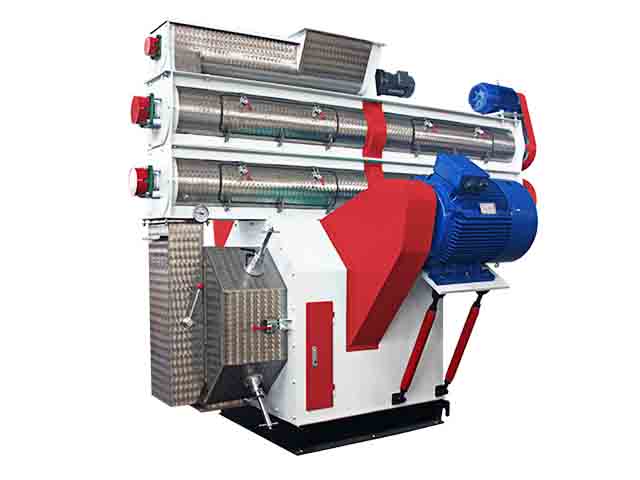
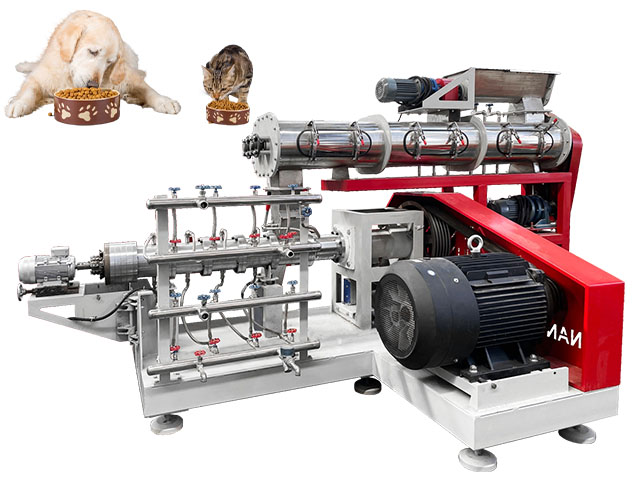
When the feed mill produces its own pellets, the diameter of the pellets is completely determined by the aperture of the ring die, and the hardness and durability of the pellets are determined by the ring die’s length-to-diameter ratio (L/D), and the two must be synchronized to match, and only adjusting the aperture will result in the problem of the size of the standard and the quality of the pellets failing to meet the standards, so the list is broken down by the rules of matching:
The ring die aperture and the target size corresponds to each other
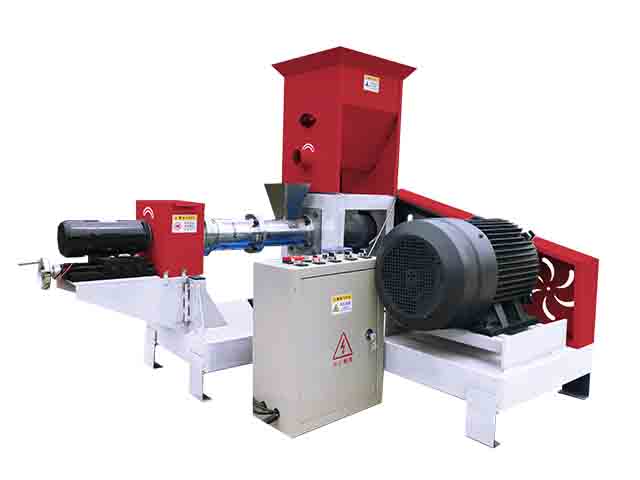
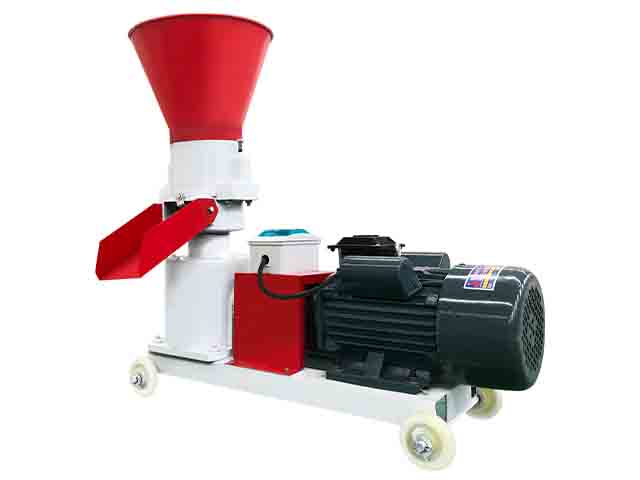
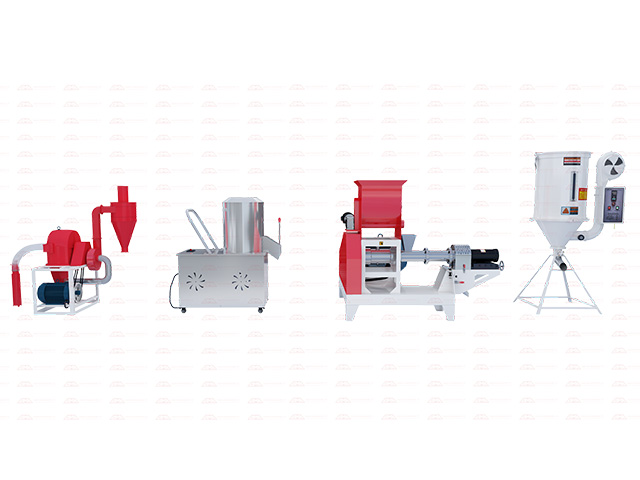
1-3mm micro-granules: suitable for small aperture ring die, recommended flat die, suitable for small home pelletizing machine, low capacity, suitable for young animals feed
3-6mm regular pellets: suitable for ring die, the industry’s mainstream specifications, the highest capacity, suitable for chickens and ducks fattening pigs.
6-12mm large pellets: thickened ring die, die hole inner wall is polished to avoid blocking the die, suitable for sows, nursing piglets, ruminants.
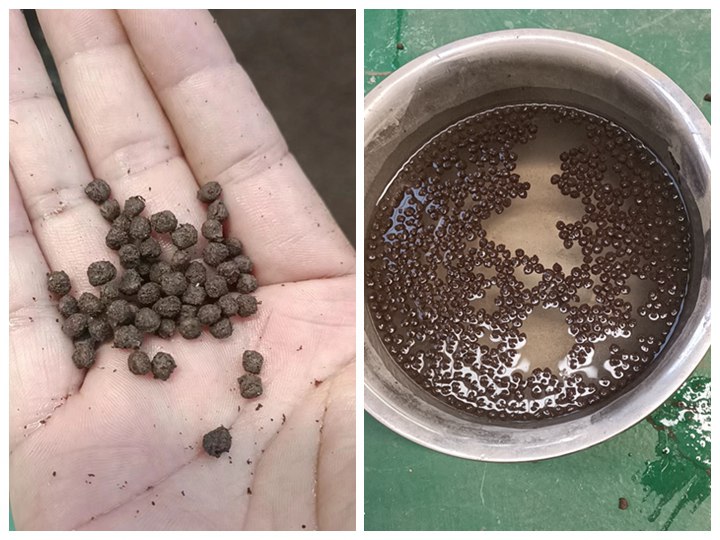
Differentiated matching of length/diameter ratio (L/D)
Young animal feed (1-3mm): L/D=8:1-10:1, low compression ratio, soft and easy to digest, avoiding digestive tract damage.
Terrestrial fattening feed (3-6mm): L/D=12:1-14:1, medium compression ratio, balanced hardness and transit breakage rate.
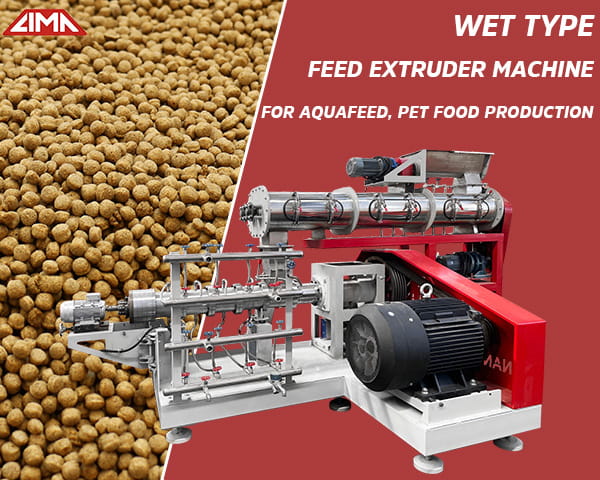
Aquatic feed (2-6mm): L/D=15:1-16:1, high compression ratio, high density particles, improve water stability.
Common equipment matching misunderstanding
A large number of feed mills use the same ring mold to produce multiple types of feed, relying on adjusting the steam temperature to change the hardness of the pellets, which cannot compensate for the size deviation. Steam can only change the starch pasting rate, but not the pellet diameter. Mixing ring molds across species will inevitably lead to feed loss and deterioration of feed ratio. For multi-species production sites, more than 2 sets of interchangeable ring dies must be equipped, which is the lowest cost optimization solution for the equipment side.
All-species feed pellet size summary practical guide
Combined with the details of the previous sub-species, the integration of a unified standard that can be directly landed on the front line, eliminating experimental niche parameters, suitable for small and medium-sized feed mills, family farms directly apply:
Summary of terrestrial livestock and poultry
Broiler: 0-2 weeks 1.5-2mm pellets, 2-5 weeks 3mm pellets, after 5 weeks 4-5mm pellets.
Laying hens: 2-3mm from 0-6 weeks, 3.5mm from 6-18 weeks, 4-5mm during laying period
Hogs: 8-12mm for lactating piglets, 3-4mm for nursery pigs, 4-5mm for fattening pigs and 6-8mm for sows.
Cattle and sheep: calves 3mm, breeding sheep 4-6mm, adult cattle and sheep 6-8mm
Aquatic and niche livestock summary
Tilapia: fry <0.6mm, breeder 1.5-2mm, adult 3-5mm
Catfish: fry <1mm, adult 5-8mm sinking particles
Rabbit: young rabbit 2-3mm, adult rabbit 4-5mm
General Quality Pellet Standard
Regardless of the size, the percentage of fines in all commercial pellets after transfer should not exceed 20%, and the percentage of fines in pellets produced in own farms should not exceed 15%, beyond which priority is given to overhauling the ring die wear degree and the pressure roller clearance rather than adjusting the size.
Conclusion
Feed particle size is the core key to connect feed formulation, pelletizing equipment, animal physiology and breeding costs, most of the problems of feed loss, poor breeding efficiency, are due to the size of the particles do not match with the breeding category, growth stage, production equipment. Farmers need to abandon the extreme misunderstanding of size selection, poultry, hogs and pigs according to the growth stage of the gradual adjustment of pellet specifications, aquaculture follow the core standard selection of 25%-50% of the width of the fish mouth.
Feed mills need to be equipped with multi-size interchangeable ring die, dynamic adjustment of die hole aperture and compression ratio, to eliminate generalized production. Data show that optimized pellet size can improve the feed-to-meat ratio by 0.2-0.4 points, reduce feed loss by 4%-7%, and effectively compress farming costs. In actual production, the pellet quality can be finely controlled through 7-day residual bait monitoring, gradient material change, and regular maintenance of the ring die to realize the comprehensive benefits of breeding efficiency, feed quality, and equipment consumption reduction.