How to choose broiler and laying hen breeding? Guide to all-round farming and feed adaptation
- Basic definitions of broilers and laying hens
- The central significance of category differentiation for poultry farming
- Comparison of core dimension differences between broilers and laying hens
- Analysis on the depth of growth cycle of broilers and laying hens
- Key points of precise adaptation of broiler and layer feed formula
- Farming hardware and management mode adaptation logic
- Analysis on Cost Structure of Broiler and Laying Chicken Breeding
- Comparison of profit and risk between broiler and layer farming
- Practical decision-making method of broiler and layer breeding selection
- sum up
Breed selection of broilers and laying hens is the most critical start-up decision in poultry breeding and feed production projects. There are significant differences in breeding objectives, growth characteristics, management systems and nutritional requirements between the two types of poultry, which directly determine the chicken house planning, manpower allocation, cost input and final profit level. For farmers and feed enterprises that process feed independently, clarifying the core differences between broilers and laying hens, matching appropriate feed production equipment and customized formula can maximize the advantages of varieties and build core market competitiveness.
Before putting into production, farmers should combine market demand, capital strength, site manpower and breeding technology for comprehensive selection. The mature experience of the industry shows that the novice should give priority to deep cultivation of a single category, thoroughly understand the feed formula and management process, and then steadily expand the production, which can effectively reduce the breeding risk and improve the long-term income. Relying on its own resources to match breeding categories and supporting customized independent feed production system is the core key to stable profitability of poultry breeding.
Basic definitions of broilers and laying hens
Core definition and breeding characteristics of broilers
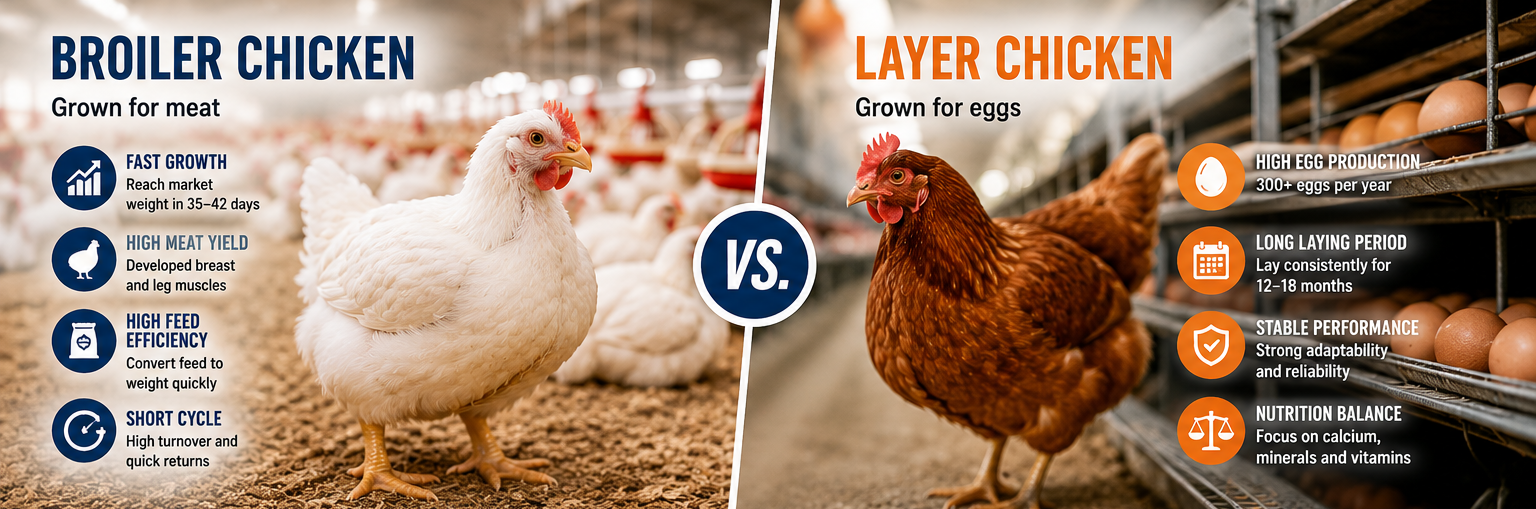
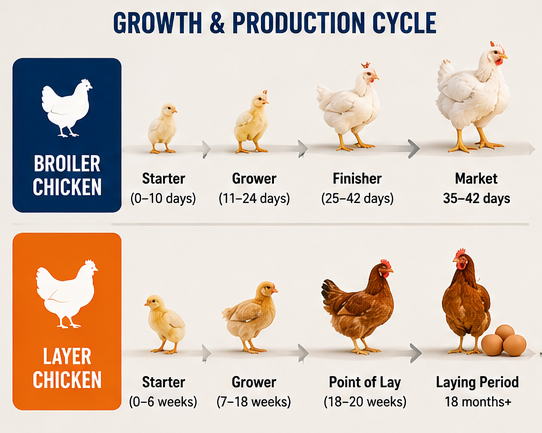
Broiler chicken is a meat poultry specially bred for meat. The core breeding goal is to gain weight rapidly, improve muscle output and meat quality. It is the mainstream breed of global large-scale meat poultry breeding. After modern breed improvement, high-quality broilers have the advantages of fast growth rate, high feed conversion rate, uniform posture and developed chest and leg muscles, which are suitable for standardized and intensive commercial breeding. Under standardized management conditions, broilers can reach the slaughter standard of 2.0 to 2.8 kg in only 35 to 42 days, with short breeding cycle and high turnover efficiency, suitable for high-frequency batch production.
Broiler growth metabolism exuberant, chicks stage can achieve rapid weight gain, feed intake and nutrition conversion efficiency is very high. Due to the influence of rapid growth characteristics, the nutritional requirements of broilers at different stages are obviously different, and they need to be divided into three stages: brood, growth and fattening. The broiler feed takes high energy and high protein as the core, accurately matches amino acids and trace elements, takes into account intestinal health and bone development, solves the metabolic pressure brought by rapid growth, and ensures the qualified rate and meat quality.
Core definition and breeding characteristics of laying hens
Layer chicken is a special egg-type poultry breed. The core breeding goal is long-term stable production, high yield and high quality commercial eggs. It mainly focuses on continuous output advantage, which is completely different from the breeding logic of short-term weight gain of broilers. Modern commercial laying hens have stable performance, can lay eggs continuously for 12 to 18 months after sexual maturity, and the average annual egg production can reach more than 300 eggs. The eggshell hardness and egg shape uniformity all meet the commercial sales standards. It is the core breeding category of egg industry.
Laying hens grow slowly, adult body is light, body weight is low, and there is no excess muscle and fat deposition, which is the exclusive physiological characteristics suitable for long-term egg production. The core of laying hen breeding is not to gain weight, but to maintain calcium and phosphorus metabolism balance, bone health and body stability, and to provide stable nutritional support for daily egg shell formation. Therefore, laying hen feed does not need high energy and high protein ratio, and the core focuses on balanced supply of calcium, available phosphorus, special vitamins and minerals, so as to ensure long-term high yield performance while maintaining basic physical fitness.
The central significance of category differentiation for poultry farming
Broilers and laying hens have similar appearance, but their growth and development, physiological functions and breeding needs are rapidly differentiated at the early stage of breeding. If unified breeding mode and universal feed are adopted, it will directly lead to decline of production performance, increase of breeding cost and decrease of income. Broilers are suitable for short-term high-density and high-intensity breeding, with the core pursuit of high meat yield; laying hens are suitable for long-term refinement and continuous maintenance, with the core guarantee of egg production and egg quality. The breeding logic of the two is completely different, and mixed breeding is not allowed.
Feed costs account for 60% to 70% of the total cost of poultry farming and are the core variable determining farming profits, while there are essential barriers to feed demand for both types of poultry. Broilers need staged, nutrient-dense feeds to support rapid muscle growth, and laying hens need special feeds with stable mineral balance to sustain egg production. Mixed feed will cause various breeding problems: broiler growth retardation, feed waste, meat deterioration; layer eggshell weak, defective eggs increased, egg production rate declined, elimination rate increased.
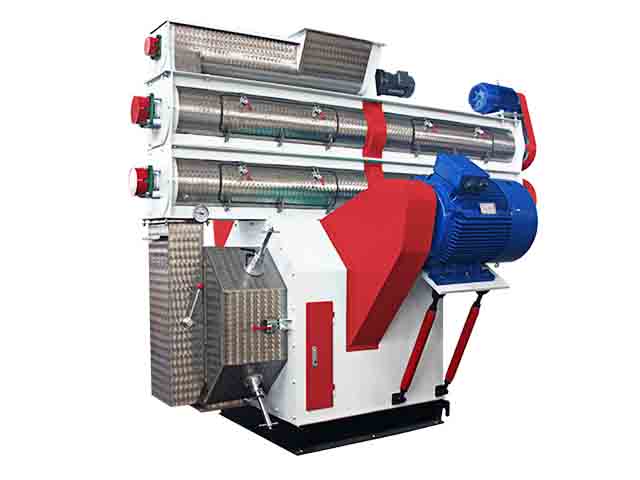
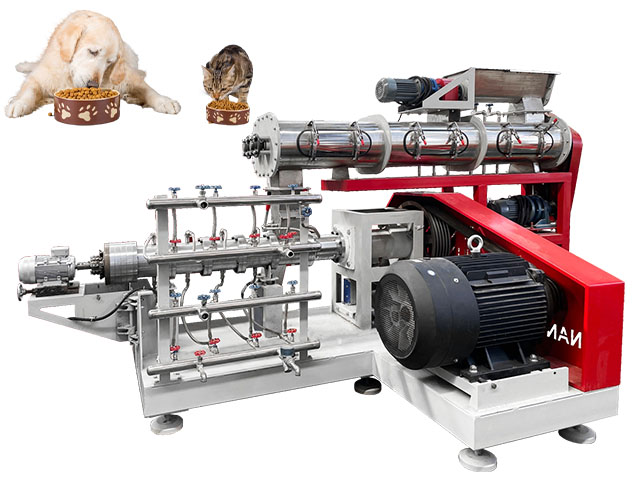
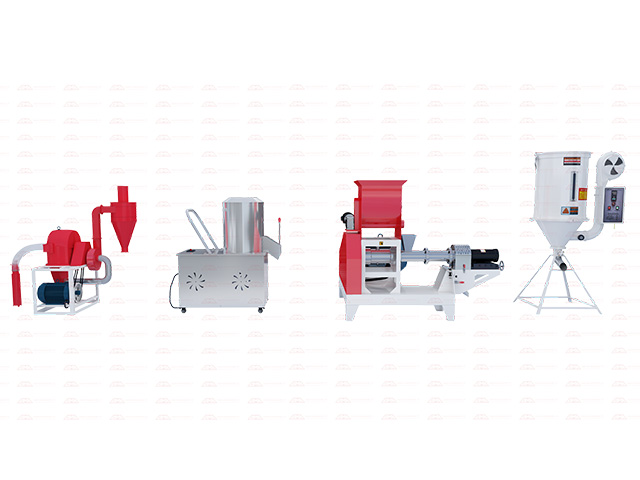
For farms and feed manufacturers equipped with independent feed processing equipment, the breeding needs of two types of poultry can be distinguished, and accurate customization of feed formula can be realized. Through grinder, mixer, pellet machine and other professional equipment, on-site production of exclusive feed, accurate regulation of nutrient ratio, particle size and molding quality, completely solve the problems of poor adaptability, nutrient loss, feeding waste and other problems of commercial universal feed, effectively improve poultry health and production efficiency, realize cost control and income improvement.
Comparison of core dimension differences between broilers and laying hens
Difference between farming use and output value
Breeding use is the core difference between the two types of poultry, which determines all subsequent breeding management, nutrition ratio and equipment configuration logic. Broilers are specially bred for commodity meat output. Variety selection focuses on weight gain speed, muscle proportion, meat quality and feed conversion efficiency. All breeding actions serve short-term rapid and high-yield meat yield. The output mode is one-time cash, and the capital turnover is flexible and efficient.
The laying hens are specially selected for commercial egg production, focusing on egg stability, egg shell quality, annual egg yield and long-term survival rate, abandoning the breeding direction of rapid weight gain. Laying hens adopt long-term continuous production mode, lay eggs stably every day after sexual maturity, can produce commercial eggs for more than ten consecutive months, do not need frequent group change and restart breeding, and the income is stable and sustainable, which is the first choice for long-term stable breeding projects.
Difference between growth rate and culture cycle
Broiler growth cycle is short, fast, turnover dense, growth explosive force is very strong. In standardized commercial breeding, the whole growth process from chick to finished chicken can be completed in 5 to 7 weeks, reaching the slaughter weight. Relying on the characteristics of rapid growth, broiler farms can complete multiple batches of breeding every year, with fast capital recovery speed, adapting to the breeding needs of high-frequency turnover and rapid realization.
Layer growth rhythm is gentle, cycle span is long, the whole is divided into two stages: breeding period and laying period. 0 to 18 weeks is the breeding period, the core cultivates healthy posture and perfect skeleton development, controls the growth speed, avoids fat accumulation, and stores energy for subsequent egg production;16 to 20 weeks gradually starts laying, and after 20 weeks enters the high yield period, it can stably lay eggs for 12 to 18 months. Laying hens have a long input cycle in the early stage and a slow return to the original, but stable output in the later stage and gentle operation and maintenance rhythm, which is suitable for long-term stable operation.
Differences in body shape and physiological characteristics
Long-term directional breeding has created two types of poultry completely different body shape and physiological function. Adult broilers have thick body, broad trunk, developed chest and leg muscles, extremely high muscle proportion, compact and full body, and the whole physiological metabolism is biased towards nutrient conversion into muscle, which is suitable for short-term high-yield meat breeding objectives.
Adult laying hens are light and slender, angular, with very little muscle and fat deposition, and their weight is much lower than that of broilers of the same age. Excessive obesity is a taboo for laying hens, which will oppress the reproductive system, reduce egg production rate and increase feed loss. The physiological metabolic core of laying hens focuses on calcium and phosphorus cycle and reproductive system homeostasis, bone toughness and metabolic stability, which directly determine the laying cycle length and egg quality.
Difference in feed nutrient requirements
The difference in nutritional needs is the core focus of the management of the two types of poultry farming and the core basis for independent feed production. The rapid growth characteristics of broilers require feeding high energy and high protein feeds in stages. During the brood period, it focuses on high digestibility nutrition to assist the development of organs and bones; during the growth period, it fine-tunes the nutrition ratio to give consideration to weight gain and intestinal tract and limb health; during the fattening period, it optimizes the formula to improve the meat quality phase and feed conversion rate, and accurately controls the calcium and phosphorus ratio to avoid bone diseases.
Layer feed nutrition logic is completely opposite, control energy and protein levels throughout the process, eliminate fat accumulation. During the breeding period, the body posture is cultivated with balanced nutrition; at the beginning of the production period, the calcium content is gradually increased to meet the needs of eggshell formation; during the high-yield period, the ratio of calcium, available phosphorus, and special vitamins is strengthened to continuously ensure the quality of eggshells and the stability of egg production. Maintain basic metabolism and nutrients needed for egg production, and avoid excessive nutrients leading to reduced production.
Differences between chicken house construction and breeding management
Broilers generally adopt closed high-density ground flat breeding mode, laying bedding on the ground to adapt to the breeding characteristics of short-term and high-frequency turnover. The core of breeding is to accurately control temperature and humidity, ventilation and illumination to ensure uniform growth of chickens and reduce stress. Daily management focuses on bedding cleaning, ammonia control and biosafety prevention and control. After each batch is released, it shall be thoroughly cleared and killed to eliminate cross infection. The overall mode is short-term high-intensity centralized control mode.
Layer breeding mode is diversified, which can adapt to cage breeding, shed breeding, free breeding and other modes. The chicken house shall be equipped with egg laying box, perch rack and exclusive lighting system to meet the long-term egg laying demand. There is no need for high-intensity operation in daily life, but it is necessary to carry out normal fine operation and maintenance. Egg picking classification, environmental regulation, chicken flock monitoring and egg laying data statistics shall be completed every day to ensure bone health and population activity for a long time. The core is long-term steady state maintenance.
Difference between manpower operation and maintenance and work intensity
The labor input of broiler breeding has the characteristics of high intensity and concentration in stages, and the workload is concentrated in the breeding cycle of 5 to 7 weeks. Chickens release, environmental regulation, feeding management and market capture all require a lot of manpower, and the management fault tolerance rate is low, and the omission will directly affect the market quality. After batch delivery, comprehensive cleaning, disinfection and equipment maintenance shall be completed, and the workload between batches shall be greatly reduced.
The labor input of laying hens was normalized, with low fluctuation and no obvious peak value. The daily process of laying period is fixed, and the work of egg picking, cleaning, feeding and monitoring is stable and continuous, without temporary additional manpower. Compared with the high-intensity management of broilers, layer breeding tests the long-term standardized process execution ability and refined maintenance patience.
Return patterns and market risk differentials
Broiler breeding has fast turnover and quick effect, but the risk is concentrated. Relying on short-term multi-batch output, rapid cash flow recovery is realized, and the annual turnover efficiency is high. However, meat market price, feed raw material market and batch epidemic disease will directly affect single batch income. Short-term market fluctuation is easy to cause profit and loss fluctuation, and the risk is sudden and strong.
Laying hen breeding returns slowly, the income is stable, the risk is long-term, there is no output in the breeding period, the capital is deposited for a long time, but after entering the high yield period, the monthly egg income is stable, which can effectively hedge the short-term market fluctuation. Its risk mainly comes from long-term epidemic disease, continuous production reduction, long-term low price market, no short-term sharp profit and loss, overall breeding stability is stronger.
Analysis on the depth of growth cycle of broilers and laying hens
Phased growth and breeding cycle of broilers
The whole growth process of broilers is designed around rapid weight gain, with clear stage division, strong pertinence of nutrition and management. 1 to 14 days of age for brooding period, chicken digestion ability is weak, growth speed is fast, need to feed high nutrition, high digestibility broken feed, assist organs and bones to form, build a solid growth foundation.
15 to 25 days of age for the growth period, broiler growth rate reached its peak, feed intake and metabolism exuberant. At this stage, fine-tune the ratio of energy and protein to maintain rapid weight gain while focusing on protecting intestinal health and limb strength, avoiding leg diseases and intestinal disorders caused by rapid growth, and ensuring the uniformity of growth of the chicken flock.
From 26 days old to slaughter, the fattening period, the breeding core changed from weight gain to optimization of meat quality and feed conversion rate. Reduce nutrient waste through formula fine-tuning, increase the proportion of chest and leg muscles, and improve carcass quality. Quickly complete chicken house killing and equipment debugging after leaving, start the next batch of breeding, realize high-frequency circulation production throughout the year, and maximize site utilization rate.
Phased growth cycle of laying hens
Laying hen breeding cycle span is long, divided into breeding, production, high and stable yield three stages, the whole focus on long-term egg production steady state. During the breeding period from 0 to 18 weeks, strictly control the growth speed, cultivate young chickens with standard posture and strong bones, avoid premature sexual maturity and fat accumulation, and balance nutrition and reserve physical fitness.
During the transition period from 16 to 20 weeks, the reproductive system of laying hens developed rapidly and the eggshell formation function was gradually started. It is necessary to replace the pre-production feed, increase the calcium ratio in a gradient manner, smoothly complete the transition of the nutrition system, and avoid the problems of delayed start-up and increased soft-shell eggs caused by nutrition mutation.
20 to 72 weeks and above is the period of high and stable yield, which can last for 12 to 18 months and is the core income stage. At this stage, the feed ratio is stable, and the core minerals such as calcium, phosphorus and vitamins are continuously supplied to stabilize reproductive function and metabolic level. Fine adjustment of formula at later stage of cultivation to compensate for nutrient loss, prolong high yield cycle and reduce elimination rate.
Core Difference of Two Types of Poultry Breeding Cycle and Its Enlightenment
Broiler breeding takes week as the unit, the core is to speed up efficiency and realize quickly; laying hen breeding takes month as the unit, the core is steady state maintenance and long-term output. Cycle differences directly determine breeding planning, feed production and risk prevention and control logic. Broilers need high-frequency formula adjustment and batch biosafety control, and laying hens need long-term stable nutrition supply and normal operation and maintenance.
The independent feed production can perfectly adapt to the cycle characteristics of two types of poultry, flexibly switch the formula according to the three-stage growth of broilers and the phased egg production requirements of laying hens, accurately regulate nutrition and feed form, completely avoid the problems of insufficient adaptability and stage nutrition deficiency of commercial universal feed, and maximize the adaptation of poultry growth and production rules.
Key points of precise adaptation of broiler and layer feed formula
Core requirements for broiler exclusive feed formula
The core logic of broiler feed is high efficiency conversion, rapid weight gain, healthy maintenance, nutrient density is much higher than layer feed, stage difference is significant. The formula shall ensure sufficient metabolic energy to support daily weight gain, match with high-purity crude protein, lysine, methionine and other essential amino acids, accurately adapt to the rapid deposition demand of muscle, and improve the appearance and lean meat percentage.
Mineral ratio is precisely controllable, calcium and phosphorus ratio adapts to rapid bone growth, avoiding stunting and metabolic burden. At the same time, sufficient vitamins, trace elements and intestinal health care ingredients are added to adapt to high-density breeding environment, improve immunity of the body, and reduce the incidence of intestinal and metabolic diseases.
The feed form is adapted according to needs, broken feed is used to improve palatability and feed intake in brooding period, standardized granular feed is used in growth and fattening period to ensure feed uniformity and reduce waste. The formula of each stage is seamlessly connected, and the slight imbalance of nutrition will lead to the decrease of uniformity of chicken flock and the increase of feed conversion rate. Therefore, the accuracy and stability of formula are the key to the profitability of broiler breeding.
Core requirements of feed formula for laying hens
The core logic of laying hen feed is steady supply, shell protection and production protection, physical fitness maintenance, abandoning high-energy and high-protein design and focusing on mineral balance. During the breeding period, the nutrition is mild, the body shape is cultivated, and the fat accumulation is eliminated; after the opening period, the ratio of calcium and available phosphorus is mainly improved, and a stable eggshell generation system is constructed to ensure the egg quality from the source.
Protein is supplied on demand, only meeting the needs of egg production and basic metabolism, avoiding excessive protein conversion into fat, causing obesity and production reduction. At the same time, a stable supply of trace elements such as vitamin D, zinc, and manganese directly ensures the hardness, smoothness, and continuity of egg production of eggshells, and reduces the proportion of defective eggs.
Laying hens have a long breeding cycle and high requirements for feed stability. Insufficient calcium and phosphorus will lead to an increase in soft shell eggs and cracked eggs; excessive energy will easily lead to fatty liver and yield reduction; lack of trace elements will lead to metabolic disorders and an increase in elimination rate. At the same time, it is necessary to control the particle size to avoid uneven nutrient intake caused by selective feeding, which may lead to decline in population production performance.
Adapting Advantages of Independent Feed Production
Purchased finished feed has strong universality, weak pertinence, and extra costs such as packaging, transportation and dealer premium. The independent feed production can flexibly adjust the formula according to the age, growth status and breeding stage of poultry, accurately control the nutritional parameters, and realize accurate feeding on demand.
Self-produced feed has high freshness, complete nutrition retention, no risk of long-term storage mildew and nutrient loss, and can maximize feed value. At the same time, it can purchase local raw materials on site, reduce production cost, accurately control particle size, hardness and molding degree, improve feeding efficiency, reduce waste, and adapt to various farm scenes of single category deep cultivation and multi-category mixed cultivation.
Farming hardware and management mode adaptation logic
Broiler breeding hardware and management core points
The broiler breeding hardware is designed around high density, fast turnover and easy killing. Closed conjoined chicken house with ground bedding is the mainstream mode. The chicken house shall be equipped with an integrated system of precise temperature control, humidity control, ventilation and illumination. The chick stage has high environmental sensitivity, so it is necessary to strictly control environmental parameters to avoid problems such as cold and heat stress and insufficient ventilation.
The daily management focuses on maintaining the cleanliness of bedding, controlling ammonia concentration, monitoring the uniformity of chickens, early prevention and control of epidemic diseases, and reducing the occurrence of foot diseases and respiratory diseases. Reasonable illumination stimulates feeding and ensures uniform growth. After batch delivery, comprehensively kill and overhaul equipment, completely cut off the transmission chain of epidemic diseases, and adapt to the rhythm of high-frequency turnover breeding.
Key points of laying hen breeding hardware and management
Laying hen breeding hardware focuses on long-term operation and maintenance, adapts to egg production demand, and has flexible and diversified breeding modes. Cage breeding is suitable for large-scale standardized breeding, shed breeding and free breeding are suitable for high-end ecological egg market. All kinds of models need to be equipped with egg laying boxes, habitat racks, district feeding and drinking water systems, standardize habitat and egg laying behavior, and reduce ground eggs and broken eggs.
Light system is the core hardware of laying hen breeding, which needs to be accurately regulated according to day age, stably stimulated and maintained laying performance, and avoided production reduction and stress casualties caused by abnormal light. The daily operation and maintenance is based on normalization, and egg picking classification, shed cleaning, chicken flock monitoring and data statistics are fixed to ensure bone health and stable egg laying performance for a long time.
Synergistic relationship between aquaculture management and feed nutrition
The nutrient utilization rate of feed is directly determined by breeding environment and management level. Poor environment will cause poultry stress, metabolic disorder, even if the formula is accurate, there will also be feed waste, growth retardation, egg production decline and other problems. Standardized breeding environment and refined management can stabilize poultry body state, maximize the absorption and utilization of feed nutrients, and convert them into weight gain and egg production benefits.
Self-feed production can dynamically adapt to the breeding environment to adjust the formula, high-density broiler breeding can increase intestinal health components, improve anti-stress ability; laying hen breeding can fine-tune mineral ratio according to the season, adapt to environmental metabolic fluctuations, realize all-round adaptation of environment, management and nutrition, and maximize breeding benefits.
Analysis on Cost Structure of Broiler and Laying Chicken Breeding
Core cost components of poultry farming
The core cost categories of broiler and layer breeding are consistent, mainly including feed, seedlings, depreciation of chicken house equipment, manpower, hydropower energy, veterinary drug epidemic prevention, consumables and bedding, etc. Feed costs always account for 60% to 70% of the total cost, which is the core breakthrough point of cost control. The core difference between the two types of farming lies in the rhythm of cost input, capital peak and amortization mode, which directly determines the project capital planning and profit model.
Cost structure characteristics of broiler breeding
Broiler breeding costs are concentrated, short-term consumption, high-frequency turnover, and all costs are compressed within 5 to 7 weeks of breeding cycle. Short-term feed consumption is large, seedlings and bedding materials are frequently killed, temperature control ventilation energy consumption is concentrated in chick stage, and labor cost shows obvious peak value with breeding cycle.
The depreciation of chicken house equipment can be apportioned to multiple batches of breeding, and the hardware cost per unit output is lower. The overall capital occupation cycle is short and the withdrawal is fast, but sufficient working capital is needed to support the continuous replenishment turnover, and the cash flow flexibility is required to be relatively high.
Cost structure characteristics of laying hens
Layer breeding early investment is high, long-term consumption is stable. There is no output during the breeding period, so seedlings, feed and operation and maintenance costs need to be continuously invested. The capital precipitation cycle is as long as 4 to 5 months. After entering the laying period, the expenditure on feed, manpower and energy consumption has been stable for a long time without obvious fluctuation.
The one-time investment of chicken house equipment is high, the depreciation is distributed to 12 to 18 months of egg laying cycle, and the hardware cost per unit time is lower. The core of overall management and control is long-term feed efficiency optimization, reducing feed consumption of single egg, and diluting the input cost in the early stage by relying on long-term stable output.
Cost control value of independent feed production
Independent feed production is the core means of reducing cost and increasing efficiency in breeding, which can avoid the middleman premium and fixed formula limitation of finished feed. By directly purchasing bulk raw materials, the cost of feed raw materials is greatly reduced, and the formula is flexibly adjusted according to the breeding stage and raw material market, so as to eliminate nutrient waste.
Accurate pellet processing technology can improve feed intake rate, reduce feed loss, further reduce unit output cost, adapt to the breeding mode of short-term high-frequency consumption of broilers and long-term continuous consumption of laying hens, and effectively improve the overall profit margin.
Comparison of profit and risk between broiler and layer farming
Cash flow and income model differences
Broiler breeding mainly focuses on fast cash flow, short-cycle multi-batch mode can quickly return to capital profit, high capital turnover efficiency, suitable for farmers with limited working capital and pursuing rapid realization. However, the batch independence of income is strong, and it is greatly affected by the current meat price and survival rate, and the fluctuation of the market will directly lead to the profit and loss of a single batch.
Layer breeding mainly focuses on stable cash flow, deposits funds in the early stage, has no short-term income, enters the high-yield period, monthly egg income continues to be stable, can smooth short-term market fluctuation, profit stability is stronger, suitable for long-term layout, large-scale normal operation breeding main body.
Earnings Core Driver Differences
The core of broiler breeding profit is feed conversion rate and batch output efficiency. Improving daily weight gain, reducing feed consumption per unit weight gain, improving uniformity and survival rate of chicken flock, and matching stable chicken house utilization rate are the keys to improve single batch profit.
The core of laying hen breeding profit is egg production continuity and egg product qualification rate, increasing annual egg yield, reducing defective egg proportion, prolonging high yield cycle, controlling feed consumption of single egg, relying on stable population health degree and long-term egg price market to realize sustainable profit.
Market and breeding risk differences
Broiler breeding is dominated by short-term sudden risks. Fluctuation of meat price, price increase of raw materials, batch epidemic diseases and extreme weather will cause single batch losses. However, the breeding cycle is short, so the scale can be adjusted quickly, the column can be suspended, the loss can be stopped in time, and the flexibility of market adaptation is high.
Laying hen breeding is dominated by long-term persistent risks. Long-term low prices, chronic diseases, persistent yield reduction and bone metabolism problems will lead to months of income damage. The breeding cycle is fixed, it is difficult to stop loss adjustment halfway, the risk rectification cycle is long and the cost is high.
Energizing Effect of Feed Independent Production on Profitability
Independent feed production is the core means to improve the profitability of breeding and resist market risks. Customized phased feed can optimize weight gain rate and slaughter quality of broilers and improve batch yield; stable mineral feed can ensure long-term laying performance of laying hens and reduce defective egg rate.
At the same time, it can avoid the fluctuation of finished feed quality and price premium. When the market is depressed and the price of raw materials rises, the profit space can be stabilized through formula optimization and cost control, so as to comprehensively improve the anti-risk ability and profit upper limit of the two breeding modes.
Practical decision-making method of broiler and layer breeding selection
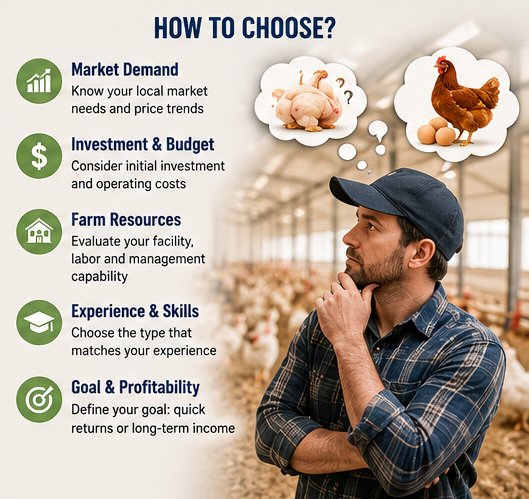
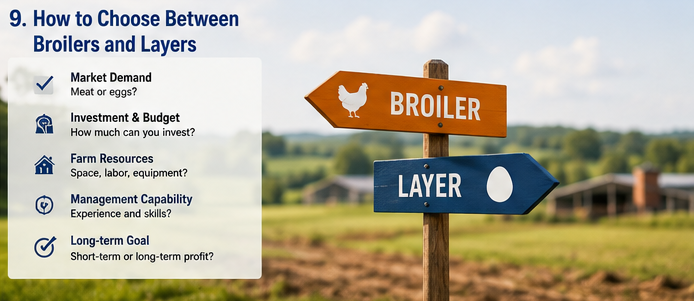
Depend on market demand to determine breeding categories
Market sales is the first core basis for selection, farmers need to investigate local and surrounding market conditions, sales and acquisition channels in advance. Live poultry slaughtering, meat processing channels are perfect, turnover is fast, priority is given to broiler breeding; supermarket, fresh, egg processing demand is stable, sales are smooth, priority is given to laying hen breeding, in line with market demand to ensure stable realization.
Combination of capital strength and cash flow planning selection
Limited working capital, pursuit of rapid return to capital turnover, adaptation to broiler short-cycle breeding mode, rapid return of funds, accumulation of profits. Sufficient capital reserve, can withstand long-term capital precipitation, pursue stable long-term income, adapt to laying hen breeding, and exchange long-term investment for sustainable and stable returns.
Selection according to manpower and management ability
Good at short-term high-intensity fine management, adapt to high-frequency batch turnover, can quickly respond to sudden problems, suitable for breeding broilers, maximize short-cycle breeding efficiency. Good at normalized standardized operation and maintenance, pay attention to long-term process landing, suitable for breeding laying hens, to stabilize daily maintenance to ensure long-term egg production performance.
Combined site infrastructure selection
The existing closed large-area flat-breeding chicken house is suitable for high-density high-frequency turnover breeding of broilers, and the transformation cost is low. The site with cage culture partition, special egg production area and long-term operation and maintenance conditions is more suitable for laying hen breeding, which can effectively improve the egg product qualification rate and breeding stability, and give priority to cost reduction and efficiency improvement by relying on the existing site selection.
Matching risk tolerance determination options
Can accept short-term fluctuations in the market, the pursuit of high turnover elastic income, flexible adjustment of breeding scale, suitable for broiler breeding. Preference for stable operation, avoidance of short-term large profits and losses, willingness to cultivate the industry for a long time, suitable for laying hen breeding, matching its own risk tolerance, and ensuring long-term stable operation of the project.
Optimizing Decision Making in Combination with Feed Production Capacity
The independent feed production capacity can bridge the gap between the two types of breeding, which is the core plus item to enhance competitiveness. Equipped with crushing, mixing and particle processing equipment, the formula can be customized according to the differentiated needs of broilers and laying hens, so as to realize precise nutrition adaptation, controllable cost and stable quality, and comprehensively improve the profit space and anti-risk ability of the two breeding modes.
sum up
There is no absolute advantage or disadvantage between broiler and laying hen breeding. The core lies in adapting their own resources and operating objectives. Broilers mainly have short cycle, high turnover, fast return, high flexibility and fast capital recovery; laying hens mainly have long cycle, stable yield, continuous return and strong ability to resist short-term market risks. The physiological characteristics, feed formulas, management models, and profit logic of the two types of varieties are significantly different. Mixing breeding schemes will inevitably lead to a decline in efficiency and loss of profits.
Farmers shall combine market channels, capital strength, manpower technology, site conditions and risk preference for comprehensive selection. Meanwhile, they shall focus on the layout of independent feed production system, realize formula customization and accurate feeding relying on professional equipment, match the nutritional requirements of broiler phased growth and laying hen long-term egg production, reduce cost and increase efficiency from the source, and improve poultry production performance and health.
All-round matching of breed selection, breeding management and nutrition adaptation is the core foundation of poultry breeding profitability. Through scientific decision-making, refined operation and maintenance and precise feed production, breeding risks can be effectively reduced, operation costs can be reduced, efficient, standardized and sustainable operation of poultry breeding can be realized, and the core competitiveness of the market can be continuously improved.