A Comprehensive Guide to Feed Pellet Machine Maintenance
- The Importance of Regular Maintenance for Feed Pellet Mills
- Core Maintenance Components of Feed Pellet Mills
- Detailed Procedures for Daily Maintenance of Feed Pellet Mills
- Weekly and Monthly In-Depth Maintenance
- Specialized Maintenance Methods for Ring Dies
- Common Faults and Maintenance Solutions
- Safety Operating Procedures for Equipment Maintenance
- Establishing a Preventive Maintenance Plan
- Criteria for Replacing Core Components
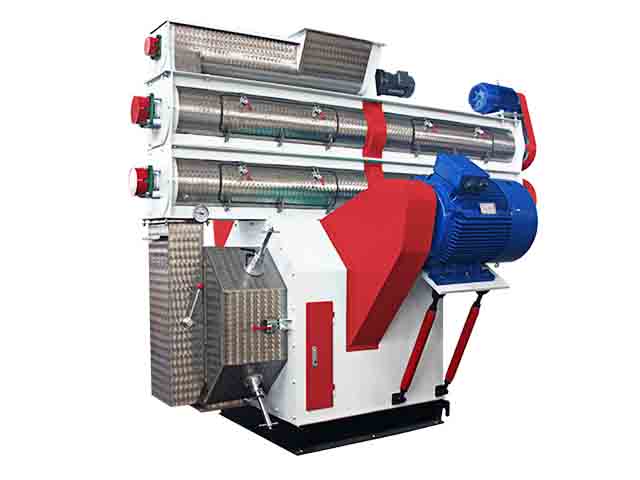
Feed pelletizers are the core equipment in feed processing production lines; their operational stability directly determines production capacity, feed quality, operating and maintenance costs, and workplace safety. Currently, most feed companies operate under a passive management model that “prioritizes production over maintenance and relies on emergency repairs after breakdowns.” Long-term neglect of preventive maintenance leads to accelerated equipment wear, frequent breakdowns, fluctuating pellet quality, and high energy consumption, severely impacting production efficiency and economic benefits. To help feed processing plants and livestock farming enterprises establish standardized operation and maintenance systems, this article systematically outlines comprehensive maintenance knowledge for feed pelletizers. It covers the value of maintenance, care for core components, tiered operation and maintenance guidelines, specialized maintenance for ring dies, troubleshooting, safety regulations, preventive maintenance plans, and standards for replacing parts. This forms a set of standardized operation and maintenance guidelines that can be directly implemented, helping enterprises improve quality, reduce costs, and increase efficiency.
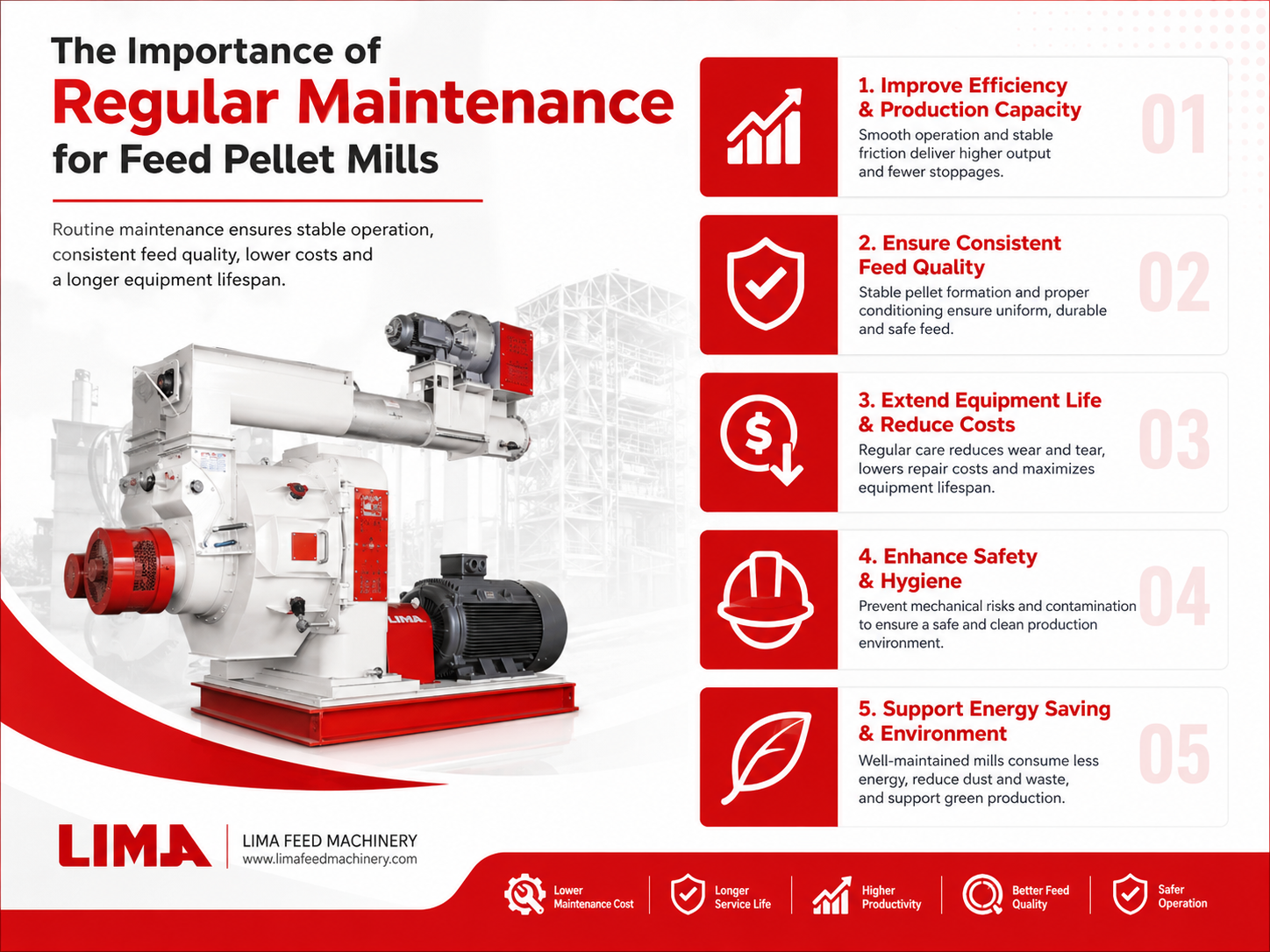
The Importance of Regular Maintenance for Feed Pellet Mills
Feed pellet mills rely on high-pressure extrusion and steam conditioning processes to transform powdered feed into palatable, easily digestible pellets, which are widely used in livestock and aquaculture. Operating under harsh conditions—including high-pressure friction, high dust levels, and continuous operation—core components such as ring dies, press rollers, bearings, and drive systems are prone to wear, buildup, clogging, and lubrication failure. Due to inadequate maintenance, many enterprises frequently experience issues such as unplanned downtime, inconsistent feed quality, and excessive energy consumption—which can even lead to mold contamination and safety incidents. Therefore, establishing a tiered, routine maintenance system is key to ensuring stable production line operation, strictly controlling operational and maintenance costs, and enhancing product competitiveness. It also holds significant practical importance for extending equipment lifespan, stabilizing production capacity, and strengthening safety measures.
1. Improving Equipment Operational Efficiency and Production Capacity
A well-maintained pellet mill ensures that its core components operate smoothly with stable frictional resistance, enabling it to maintain a high-efficiency operating state over the long term. Basic maintenance tasks—such as daily cleaning, lubrication, clearance adjustment, and tightening of fasteners—can effectively prevent issues like material jams, abnormal component wear, and assembly misalignment, thereby eliminating equipment stalling, speed reduction, and declines in production capacity. In large-scale assembly line production, even minor fluctuations in equipment operating conditions can result in significant losses in production capacity. Implementing tiered maintenance schedules—daily, weekly, and monthly—can substantially reduce periods of no-load or inefficient operation, lower the frequency of unplanned downtime, ensure the orderly execution of production schedules, and continuously improve the overall output efficiency of the production line.
2. Ensuring Consistent and Compliant Pellet Feed Quality
Indicators such as uniformity, hardness, dust content, and storage stability of pellet feed directly impact livestock and poultry feed intake and growth performance, and equipment operating conditions are the core factors determining feed quality. Equipment that is neglected is prone to issues such as clogged or worn die holes, unbalanced roller gaps, and moldy material residue. This results in poor-quality pellets that are loose, exceed dust limits, and vary in size—not only wasting raw materials but also allowing moldy residue to contaminate new batches of feed and trigger diseases in livestock. Through routine equipment cleaning, component inspections, parameter calibration, and conditioning adjustments, pellet formation can be stabilized and the defect rate reduced, thereby establishing a robust defense for feed quality and safety at the equipment level.
3. Extend Equipment Lifespan and Reduce Overall Operating Costs
Core wear-prone components of pellet mills are subject to normal, natural wear and tear; however, a lack of maintenance accelerates component aging and damage. Most sudden shutdowns and failures resulting in the scrapping of core components are caused by the long-term accumulation of minor wear, insufficient lubrication, and buildup of deposits and blockages. Implementing a tiered maintenance mechanism allows for the timely identification and resolution of potential issues, slows component wear, prevents equipment from operating while faulty or under excessive load, and effectively extends the service life of both the machine and its components. At the same time, standardized maintenance can significantly reduce various costs—such as those associated with repairs, replacement parts, and downtime losses—while minimizing raw material and energy waste, thereby ensuring low-cost, long-term, and stable equipment operation.
4. Optimizing Production Safety and Workshop Hygiene Conditions
Loose equipment components and uneven wear can easily lead to abnormal noises, vibrations, and component detachment, posing a risk of mechanical injury. Routine inspections, tightening of fasteners, component replacement, and parameter calibration can eliminate mechanical safety hazards at the source and standardize workshop production procedures. Additionally, powder residue left in equipment crevices and chambers is prone to mold growth and bacterial proliferation in high-temperature, high-humidity environments, leading to cross-contamination of feed. Regular deep cleaning, disinfection, and cleaning of hard-to-reach areas can effectively eliminate material contamination issues, ensuring workshop production complies with feed safety standards and enhancing production compliance and safety.
5. Supporting Environmental Protection, Energy Conservation, and Refined Operations
Pellet mills operating in optimal conditions achieve higher energy efficiency, effectively reducing energy consumption per unit of output. Equipment that is not properly maintained is prone to issues such as powder splatter, excessive dust levels, and excessive waste—which not only waste raw materials but also pose safety hazards due to flammable and explosive dust, while polluting the work environment. Routine maintenance reduces material loss and dust pollution, optimizes the workshop environment, minimizes environmental and safety risks, and helps enterprises achieve green, refined, and sustainable production.
Core Maintenance Components of Feed Pellet Mills
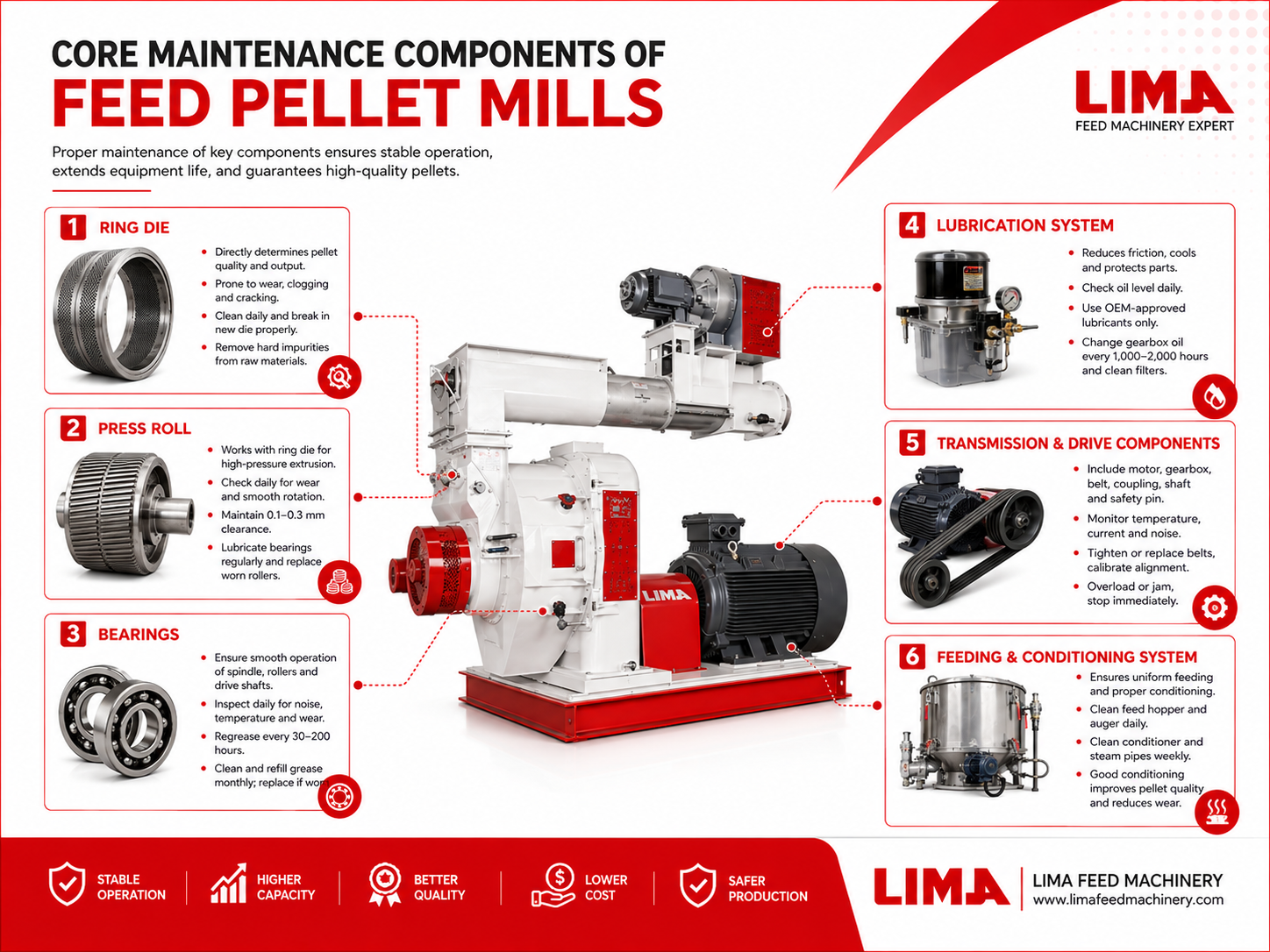
The overall operating condition of a pellet mill is determined by the coordinated performance of multiple core components; a failure in any single component will affect both production capacity and product quality. Among these, the ring die, press rollers, bearings, lubrication system, drive system, and feeding and conditioning system are core components subject to high wear rates and frequent failures. Constantly exposed to high-pressure friction, high temperatures, and dust erosion, they are the primary focus of daily maintenance. Implementing targeted, meticulous maintenance can prevent the vast majority of equipment failures at the source, stabilize production efficiency and finished product quality, and reduce operational and maintenance costs.
1. Ring Die
The ring die is the core forming component of the pelletizer; it directly determines pellet quality and production capacity, and is also the core component that wears out the fastest. During production, the ring die’s holes and inner walls are continuously subjected to high-pressure friction and high-temperature stress, making them prone to issues such as clogged holes, grooving on the inner walls, wear-induced hole enlargement, micro-cracks, and deformation. Daily maintenance requires cleaning hardened residue from the die holes and inspecting for potential issues such as cracks, chipped edges, and uneven wear. New ring dies must undergo a low-speed break-in process using engine oil and fine powder to polish the hole walls, thereby preventing loose pellets and excessive dust emissions. During production, hard impurities such as sand, stones, and metal must be strictly screened out of the raw materials to prevent scratching the die holes and premature failure.
2. Press Roll
The pressure rollers are the core power components for material extrusion and work in conjunction with the ring die to perform high-pressure forming operations. Subject to heavy loads and friction over extended periods, their wear rate is second only to that of the ring die. The flatness of the pressure rollers, the smoothness of their rotation, and the precision of the clearance with the ring die directly determine the extrusion pressure and forming quality. Daily inspections must be conducted to check the operational status of the pressure rollers and identify issues such as jamming, slippage, and wear or flaking of the roller surfaces; The standard clearance must be maintained between 0.1 and 0.3 millimeters; excessive clearance can cause the pellets to be loose, while insufficient clearance accelerates bidirectional wear on the components. High-temperature-resistant grease must be applied to the pressure roller bearings periodically, and roller sleeves with severe wear or those that cannot be balanced must be replaced promptly.
3. Various Bearings
The spindle, pressure rollers, and drive bearings are fundamental components that ensure the smooth operation of the equipment. Under high-temperature, high-dust, and heavy-load conditions, they are prone to lubrication failure, contaminant ingress, ball wear, and seal aging—all of which are the primary causes of abnormal noise, vibration, overheating, and equipment shutdowns. Daily inspections should include listening for unusual sounds, measuring temperatures, and visual checks to identify potential operational hazards; if any abnormalities are detected, immediately shut down the machine for maintenance. Re-grease the pressure roller bearings every 30–200 hours. Once a month, disassemble and clean the bearings, replace aged seals, and refill with grease. Replace bearings promptly if they become seized, exhibit excessive play, or show severe wear to prevent cascading equipment failures.
4. Lubrication System
The lubrication system includes the gearbox, lubrication ports, automatic lubrication devices, oil lines, and filter elements. Its core functions are to reduce mechanical friction, dissipate heat, and slow component wear. Lubrication failure, oil degradation, and clogged oil lines are the root causes of most equipment failures, often leading to dry friction and overheating of components, accelerated aging, and increased energy consumption. Daily inspections should be conducted to check the gearbox oil level and grease condition. Use only original equipment manufacturer (OEM)-approved lubricants; the use of inferior lubricants is strictly prohibited. Change the gearbox oil after the first 500 hours of operation, and subsequently every 1,000–2,000 hours. Simultaneously, clean the filter element and clear any blockages in the oil lines to ensure a uniform and stable oil supply.
5. Transmission and Drive Components
The transmission components consist of the main motor, gearbox, drive belt, coupling, drive shaft, and safety pin. They are responsible for power transmission and directly affect the stability of equipment operation. Prolonged power surges and load fluctuations can easily lead to belt wear and slackening, loose bolts, fatigue fracture of the safety pin, and motor overload and overheating. Routine monitoring of motor temperature, current, and noise is required. Tighten or replace worn belts promptly, secure the fasteners on the coupling and drive shaft, calibrate coaxiality, and periodically inspect the integrity of the safety pins. In the event of overload or material jams, shut down the machine immediately to protect the equipment.
6. Feeding and Conditioning System
The feeder and steam conditioning system ensure uniform material supply and meet raw material pretreatment standards, directly affecting pellet formation stability. Daily tasks include cleaning residual material from the feed hopper and auger to prevent blockages and uneven feeding, which can lead to inconsistent pellet formation and load fluctuations. Weekly deep cleaning of the conditioning chamber and steam pipes is required to remove scale and coking residues, and to check valve seals and steam quality. High-quality conditioning softens the material, improves binding properties, reduces component wear, and lowers the pellet breakage rate—making it a critical step for stable production and improved quality.
Detailed Procedures for Daily Maintenance of Feed Pellet Mills
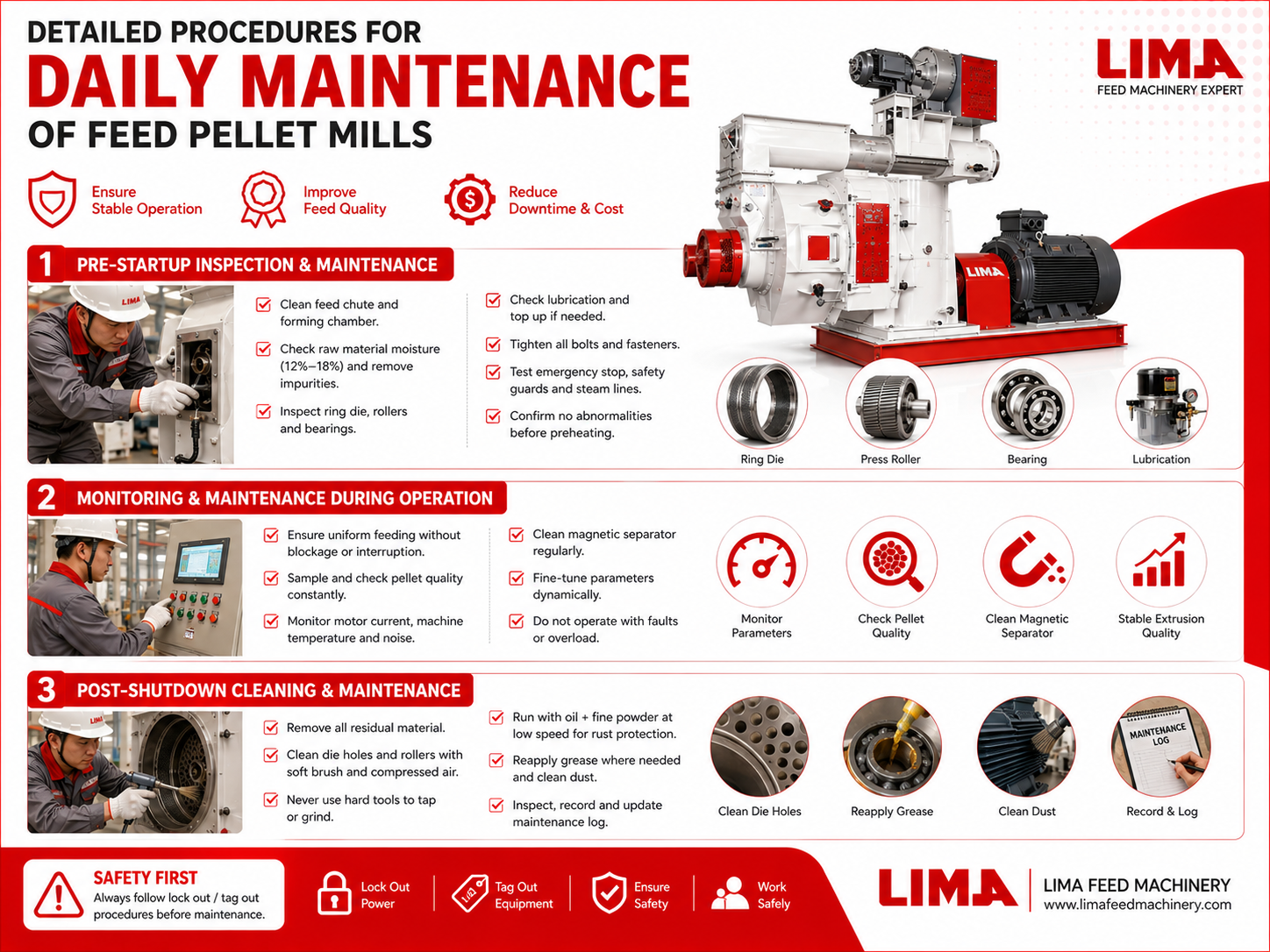
Daily maintenance covers the entire process from startup to operation to shutdown. It forms the foundation of equipment upkeep, enabling the timely identification of minor issues and preventing the accumulation of faults. All maintenance operations must follow the manufacturer’s specifications. When disassembling the machine for repairs, the shutdown, power disconnection, and “Out of Service” tag procedures must be strictly followed to ensure the safety of personnel and equipment.
1. Pre-Startup Inspection and Maintenance
Before startup, thoroughly clean the feed chute and forming chamber of debris and clumps to ensure unobstructed material flow. Maintain raw material moisture content within the optimal range of 12%–18%. Use both magnetic separation and screening to remove impurities, preventing hard foreign objects from damaging core components. Visually inspect the ring die, press rollers, and bearings for signs of wear, blockages, or looseness; Verify the lubrication status of the entire machine and top off with compliant lubricants. Tighten all loose bolts and fasteners on the equipment; test the effectiveness of emergency stop switches, safety guards, and steam lines; and confirm that the equipment is free of abnormalities before preheating and standing by.
2. Monitoring and Maintenance During Equipment Operation
During production, assign dedicated personnel to monitor the process continuously to ensure uniform and stable feeding without material interruptions or blockages. Continuously take samples to inspect pellet formation; if issues such as loose pellets, excessive dust, or inconsistent particle size are detected, shut down the machine immediately to investigate potential problems with clearances, die holes, or conditioning parameters. Monitor motor current, machine body temperature, and operating noise in real time; strictly prohibit operating the equipment while faulty or under overload conditions. Regularly clean the magnetic impurity removal device and dynamically fine-tune operating parameters to ensure stable extrusion and finished product quality that meets standards.
3. Post-Shutdown Cleaning and Maintenance
After each shift, thoroughly remove all residual material from the equipment interior. Use soft-bristle brushes and compressed air to clean scale and residue from die holes and rollers; never use hard tools to tap or grind, to preserve component precision. After cleaning, run the machine at low speed with a mixture of machine oil and fine powder to provide rust-proof lubrication for the die holes. Reapply grease to bearings and friction parts as needed, and remove dust accumulated on the machine body and motor cooling fins. Finally, conduct a comprehensive inspection for potential equipment hazards, record operating hours, maintenance details, and fault conditions, and establish a traceable operation and maintenance log.
Weekly and Monthly In-Depth Maintenance
Routine maintenance can only address superficial issues and cannot identify deep-seated, hidden hazards. It must be supplemented with weekly and monthly in-depth maintenance to achieve comprehensive inspection and calibration, thereby significantly reducing the probability of major failures. All in-depth maintenance must be performed with the machine shut down and the power disconnected.
1. Weekly Maintenance Tasks
Conduct weekly maintenance every week or after the equipment has operated for 40–200 hours, focusing on in-depth inspection, cleaning, calibration, and tightening. Thoroughly inspect the wear condition of the ring die and pressure rollers, remove impurities embedded in the die holes, and precisely calibrate the extrusion gap; check the wear on the cutting blades and scrapers, and grind or replace them promptly. Thoroughly clean stubborn scale and coking residues from the conditioning pipes, feeding system, and discharge channels; sweep away dust accumulated in the equipment’s cooling structures and hard-to-reach areas. After cleaning, perform grease lubrication throughout the entire machine, tighten all fasteners, and calibrate the tension and coaxiality of belts and chains. Finally, test the equipment’s operating parameters under load, conduct sample inspections of pellet quality, fine-tune the conditioning and operating parameters, and verify the effectiveness of safety protection devices.
2. Monthly Maintenance Tasks
Conduct systematic, in-depth maintenance monthly or after the equipment has operated for 200–500 hours. Disassemble and clean all types of bearings; remove old grease and metal contaminants; replace seals and refill with high-temperature grease. Conduct a comprehensive inspection of the lubrication system; replace expired gear oil and filter elements; clear lubrication lines; and verify the stability of the automatic lubrication system’s oil supply. Inspect components such as drive shafts, couplings, and ring die clamps for potential wear, looseness, or deformation; fine-tune the operating status of the feeding, conditioning, and cooling systems. Precisely calibrate equipment operating and molding parameters; update maintenance logs; analyze component wear patterns; and pre-stock wear-prone parts to implement preventive maintenance.
Specialized Maintenance Methods for Ring Dies
Given the high cost of ring dies and their significant impact on production, a dedicated, tiered maintenance system must be established to specifically address issues such as clogging, wear, and corrosion, thereby maximizing service life and reducing production costs.
1. Daily Specialized Maintenance
After each shift, thoroughly clean the inner walls of the ring die and remove residue from the die holes to prevent material solidification and clogging. After cleaning, run a low-speed batch of oil-based mixture through the machine to form a rust-preventive oil film on the inner walls of the die holes, isolating them from air and moisture. Visually inspect the overall condition of the ring die to identify potential hazards such as cracks, uneven wear, and embedded impurities, and mark any abnormal areas for subsequent repairs.
2. Weekly Specialized Maintenance
Conduct a thorough weekly inspection of the ring die’s inner walls, carefully polishing minor grooves and rough areas to ensure the inner walls are smooth. Precisely calibrate the clearance between the pressure roller and the ring die to identify hidden blockages and damage within the die holes. Analyze the wear condition of the ring die based on the week’s pellet quality data to predict potential failures in advance and prepare for maintenance or replacement.
3. Prevention and Clearing of Die Hole Blockages
Die hole blockages are often caused by imbalanced raw material moisture content, insufficient conditioning, excessive impurities, or mismatched parameters. On a daily basis, maintain raw material moisture content at 13%–16%, optimize conditioning parameters, strictly enforce the raw material impurity removal process, and select ring dies with appropriate compression ratios based on the feed formulation. Minor blockages can be cleared by soaking in machine oil; severe blockages can be softened and cleared by soaking in low-temperature machine oil; in extreme cases, gently drill holes to clear the blockage—under no circumstances should the precision of the die holes be compromised.
4. Break-in of New and Refurbished Dies
The bore walls of new and reconditioned dies are rough and must not be operated at full capacity immediately. A break-in process using fine powder mixed with engine oil at low speed and low load is required to gradually polish the bore walls and improve surface flatness. Operating load should be increased gradually while monitoring the extrusion quality and equipment condition. Mass production should only commence after the break-in period is complete to avoid issues such as excessive dust, loose pellets, and uneven wear.
5. Long-Term Storage and Maintenance
Ring dies that are not in use for extended periods must be stored in a dry, well-ventilated, corrosion-free, and dust-free environment. Before storage, thoroughly clean and air-dry them, apply anti-rust grease evenly, clearly label their specifications, intended use, and duration of storage, and store them by category. During storage, periodically check the condition of the anti-rust protection and reapply grease promptly to prevent rust and deformation that could affect future use.
6. Ring Die Replacement Criteria
Ring dies must be replaced promptly under the following conditions: extensive enlargement or flaring of the die holes, severe wear, or consistently substandard pellet quality; deformation, cracks, or extensive grooving on the inner walls that cannot be repaired; a significant drop in equipment capacity or a sharp increase in energy consumption that does not improve after parameter optimization; uneven extrusion adhesion or frequent die hole blockages that cannot be resolved through maintenance; or component aging, insufficient structural strength, or safety hazards.
Common Faults and Maintenance Solutions
Due to component wear, fluctuations in raw material quality, improper operation, and lack of maintenance, pellet mills are prone to various common malfunctions. By accurately identifying the root causes, implementing targeted solutions, and taking preventive measures, continuous and stable production can be ensured.
1. No Output or Decreased Output
Root Causes: Blocked die holes; new dies not properly run-in; abnormal raw material moisture content; wear on the press rollers and ring die; unbalanced clearances; feed blockage; belt slippage; insufficient power. Solutions: Clear and maintain clogged die holes; standardize the break-in process for new dies; calibrate raw material moisture content and conditioning parameters; precisely adjust the extrusion gap and replace severely worn components; clean the feed channel; tension or replace aged belts; and inspect the motor drive system.
2. Poor Pellet Quality, Excessive Dust, and Fragility
Root Causes: Conditioning and moisture parameters do not meet standards; wear on core components; uneven gaps; raw material particle size is too coarse; unstable feeding; insufficient extrusion pressure. Solutions: Optimize conditioning temperature, duration, and raw material moisture content; add an appropriate amount of binder; grind or replace worn components; calibrate the extrusion gap; refine the raw material particle size; mix the feedstock evenly; reduce the instantaneous feed rate, extend the extrusion time, and improve pellet density.
3. Abnormal noises and excessive machine vibration
Root Causes: Stiff or worn bearings, insufficient lubrication, misalignment due to component wear, excessive clearance, loose bolts, misalignment in the drive system, and hard foreign matter in the chamber. Solutions: Shut down the machine to inspect and maintain bearings, and replenish grease; adjust component clearances and coaxiality; tighten all machine fasteners and adjust the tension of drive components; remove impurities from the chamber, balance the rotor, and establish routine practices for raw material impurity removal and equipment inspections.
4. Frequent Die Hole Blockages and Equipment Jams
Root Causes: Viscous and clumped raw materials; insufficient conditioning; contamination; inadequate cleaning; momentary overload; mismatched ring die compression ratio. Solutions: Optimize raw material and conditioning parameters to prevent powder clumping; strictly enforce contamination removal procedures; thoroughly clean equipment after every shift; feed at a uniform rate and control equipment load; replace ring dies with appropriate models based on feed type.
5. Localized equipment overheating and high-temperature alarms
Root causes: Insufficient lubrication, degraded lubricant, clogged oil lines, prolonged overload operation, poor heat dissipation, and component wear causing jamming. Solutions: Replace degraded lubricant, replenish lubricating grease, and clear oil line filters; properly control equipment operating load; remove dust from heat dissipation areas and clear ventilation ducts; repair worn or jammed components to reduce mechanical friction resistance.
6. Safety Pin Breakage, Sudden Motor Shutdown
Root Causes: Hard foreign objects entering the chamber; instantaneous overload causing material jamming; unstable voltage; extrusion parameters exceeding limits. Solutions: Shut down the machine to remove foreign objects and accumulated material; replace the safety pin with a new one; stabilize workshop voltage and troubleshoot electrical faults; optimize feed rate and calibrate extrusion pressure to prevent equipment damage from overload.
Safety Operating Procedures for Equipment Maintenance
Pellet mills are heavy-duty mechanical equipment. Operations and maintenance involve safety risks such as mechanical crushing, electric shock, high-temperature burns, and dust explosions. All operation and maintenance tasks must strictly adhere to safety regulations, and non-compliant operations must be strictly prohibited.
1. General Safety Guidelines
Operation and maintenance tasks must be performed by certified professionals. High-risk disassembly operations require approval and must be supervised by a designated person; unauthorized repairs by uncertified personnel are strictly prohibited. Before work begins, clear the surrounding area and inspect firefighting and emergency equipment. During operations, it is strictly prohibited to remove safety guards or dismantle equipment recklessly; ensure the structural integrity of the equipment is maintained throughout the entire process.
2. Power-Off, Lockout, and Tagout (LOTO) Procedure
All shutdown maintenance must follow the LOTO procedure: After a normal shutdown, disconnect the main power supply and all energy sources, hang a maintenance warning tag, and lock the equipment; release residual energy from the equipment, cool high-temperature components, and secure rotating parts; perform a test start to confirm the equipment is completely de-energized before commencing work; only after the work is completed and personnel and tools have been removed may the lockout be released and power restored.
3. Personal Protective Equipment Guidelines
Operators must wear protective equipment in accordance with the specific work scenario, including safety goggles, noise-canceling earplugs, cut-resistant gloves, hard hats, and dust masks. They must wear form-fitting work clothes and slip-resistant safety shoes, remove all jewelry, and tie back long hair to prevent clothing or accessories from becoming entangled in equipment and causing safety accidents.
4. Specific Risk Prevention and Control
For electrical work, power must be disconnected and voltage tested, and insulated tools must be used; live-line work is strictly prohibited. Do not reach into the molding cavity with bare hands; heavy components must be lifted using cranes or moved by multiple personnel working together. High-temperature components must be allowed to cool completely before maintenance. Strictly control workshop dust levels, eliminate open flames, and prevent dust explosions. Store and use lubricants in accordance with regulations to avoid cross-contamination of feed.
5. End-to-End Safety Control
Before work begins, conduct risk assessments and prepare necessary materials; during operations, follow standard procedures and immediately stop and investigate any potential hazards; after work, take inventory of tools, clean equipment and the work area, restore components and safety devices to their original positions, conduct a no-load test run to confirm equipment functionality before resuming production, and update safety operation records to ensure a closed-loop management process.
Establishing a Preventive Maintenance Plan
A reactive repair model is costly and lacks stability. Standardized preventive maintenance can proactively mitigate potential hazards, reduce failure rates and downtime losses, and serves as a core method for refined equipment management.
1. Foundational Preparations
Compile all equipment model specifications, factory standards, and operational data to establish a dedicated “one machine, one file” record for each piece of equipment. Develop tailored maintenance standards and task lists based on the original manufacturer’s manual to provide a basis for standardized operation and maintenance.
2. Tiered Maintenance Schedule Planning
Based primarily on equipment operating hours and supplemented by calendar cycles, establish a tiered maintenance mechanism: daily implementation of cleaning, inspections, lubrication, and logbook entries; weekly completion of deep cleaning, clearance calibration, fastener tightening, and performance verification; monthly execution of component disassembly and maintenance, hydraulic system overhauls, and parameter calibration; quarterly conduct of specialized隐患排查 and data analysis; and every six months to one year, conduct full-unit overhauls and bulk replacement of aged components.
3. Standardization of Records and Processes
Refine maintenance operation standards at each level, clearly defining processes, acceptance criteria, and responsible personnel. Establish and maintain comprehensive O&M records to track data on equipment operation, maintenance, part replacements, malfunctions, quality, and energy consumption. Use data analysis to identify wear patterns and continuously optimize maintenance plans.
4. Personnel Training and Plan Optimization
Conduct regular O&M skills training to enhance operators’ maintenance awareness and troubleshooting capabilities, thereby reducing human-induced failures. Schedule maintenance during production downtime, deeply integrating equipment O&M with quality control and workplace safety. Dynamically iterate and optimize maintenance plans based on equipment aging and changes in operating conditions.
5. O&M Metrics Management
Establish core metrics such as equipment availability rate, mean time between failures, unplanned downtime duration, unit O&M cost, and finished product合格率, and routinely monitor and evaluate maintenance effectiveness. Address O&M weaknesses in a targeted manner to maximize the value of preventive maintenance.
Criteria for Replacing Core Components
Exceeding the service life of core wear-prone components can lead to failures, reduced quality, increased energy consumption, and safety hazards. It is necessary to accurately determine the optimal replacement timing while balancing O&M costs with production stability.
1. Replacement Standards for Ring Dies
The typical service life of a standard ring die is 500–1,200 operating hours, with a processing capacity of 4,000–6,000 metric tons. Immediate replacement is required if the following issues occur: extensive wear and enlargement of die holes, cracks or deformation of the inner wall, significant declines in production capacity and quality, frequent blockages, or poor extrusion contact.
2. Replacement Standards for Pressure Rollers
Pressure rollers have a service life of 300–1,000 operating hours; it is recommended to replace them in conjunction with the ring die. Replace the roller sleeves or entire assemblies promptly if the roller surface shows wear and indentations, slipping or abnormal noises occur, bearings fail frequently, forming quality is poor, or adjusting the clearance proves ineffective.
3. Bearing Replacement Criteria
Pressure roller bearings wear out relatively quickly, while main shaft bearings can last for a long time with proper maintenance. If issues such as abnormal bearing noise, vibration, overheating, stuttering rotation, seal failure, or frequent grease contamination occur, they must be replaced immediately to prevent major equipment failures.
4. Replacement Standards for Transmission and Gearbox Components
Change the gear oil every 1,000–2,000 hours. Inspect and replace gear assemblies when lubricating oil contains a large amount of metal debris, the gearbox emits abnormal noises or overheats, or power output decreases. Replace belts and chains as a complete set when they become aged, loose, or slip; replace couplings and pins promptly if they show signs of deformation or wear.
5. Replacement Standards for Auxiliary Components
When cutting blades and scrapers become worn or dull, affecting pellet appearance, or when augers and conditioning paddles are worn, reducing operational efficiency, seals and piping that have aged or developed leaks must be promptly sanded, repaired, or replaced to ensure stable overall equipment performance.
In summary, the stable and efficient operation of feed pelletizers hinges on routine, standardized preventive maintenance rather than reactive repairs after failures occur. Equipment capacity, feed quality, service life, operational and maintenance costs, and safe production all depend on tiered maintenance, specialized component care, precise fault diagnosis, the implementation of safety standards, and the timely replacement of parts. Feed companies must shift away from a reactive repair mindset and instead establish standardized operation and maintenance procedures, improve record-keeping systems, strengthen staff training and evaluation, and dynamically optimize maintenance plans based on production conditions to accurately determine the timing for component maintenance and replacement. Through refined equipment operation and maintenance, companies can reduce the probability of failures at the source, minimize production losses, stabilize product quality, and strengthen safety measures. This effectively extends equipment service life and reduces overall operating costs, providing a solid foundation for the efficient, eco-friendly, safe, and stable operation of feed production lines, thereby helping enterprises achieve their core business objectives of improving quality, reducing costs, and increasing efficiency.