How to Choose Floating Fish Feed Extruder
Floating fish feed is widely used in aquaculture, and the extruder is the core production equipment. This article explains the multi-dimensional equipment selection skills, to help practitioners of scientific selection, risk avoidance.
What is a floating fish feed expander
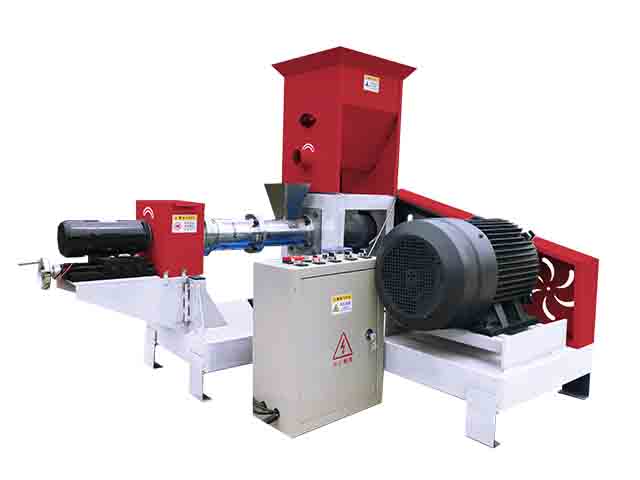
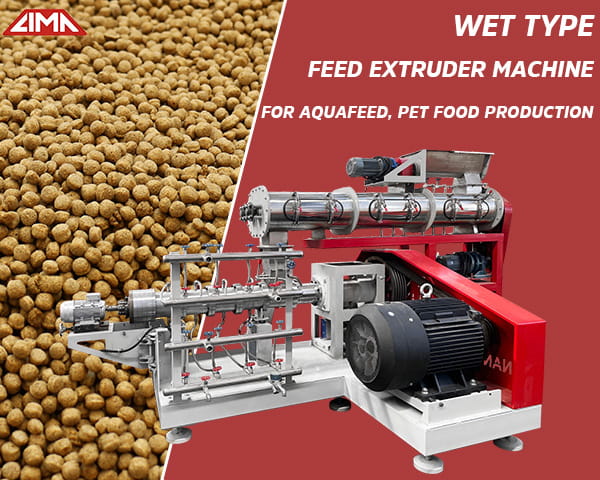
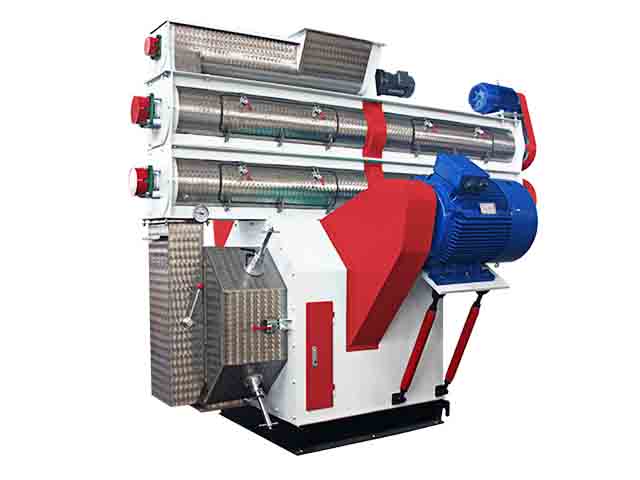
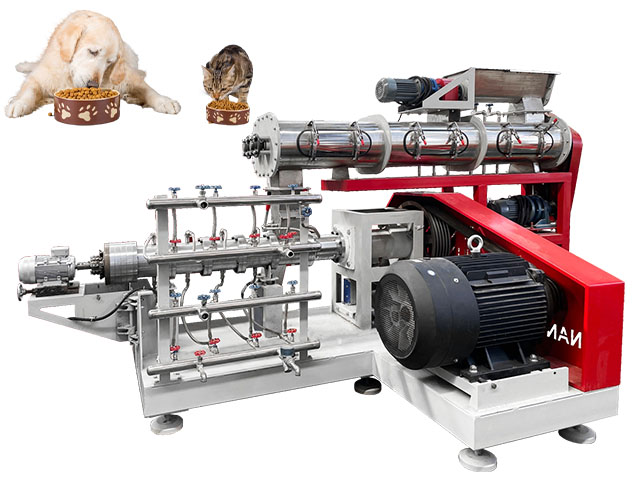
Floating fish feed expanding machine is a special industrial equipment in the field of aquaculture, mainly used for the production of fish, shrimp and other aquatic animals to eat floating feed particles. The equipment relies on extrusion expansion technology, through high temperature and high pressure maturation process to change the density of feed materials, so that the processed feed particles can float on the water surface for a long time, is one of the core equipment for modern aquatic feed production.
Core Function Characteristics
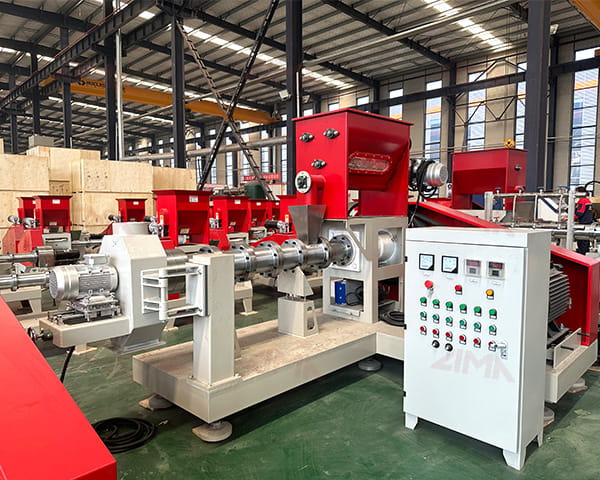
This equipment has strong adaptability, through the adjustment of raw material formula and equipment operating parameters, can produce floating, semi-floating and sinking three kinds of feed particles. Wide range of raw material adaptability, can process corn, soybean meal, fishmeal, wheat, rice bran, oil, vitamins, minerals and other types of conventional aquatic feed materials. The size of finished feed particles is flexible, the smallest can be processed 1mm seedling micro-particles, the largest can reach more than 20mm, to meet the different specifications of aquatic animals feeding needs.
The importance of choosing the right floating fish feed expander
For aquaculture enterprises, feed manufacturers and large-scale farmers, the selection of floating fish feed expander is the core decision affecting production and operation. Whether the selection of equipment to match the production needs, directly determine the feed quality, production efficiency, operating costs, and ultimately affect the profitability of aquaculture production and long-term sustainable development, the core value is reflected in six dimensions.
Decide feed quality and breeding results
The processing performance of the extruder directly controls the floating time, water stability, digestive absorption rate and nutrient retention rate of the feed. Poor quality equipment processing feed, easy to sink too fast, water collapse, uneven maturation and other issues, which will lead to a decline in feed conversion rate, fish and shrimp growth retardation, bait increased, but also enhance the probability of aquatic diseases. The high-quality equipment can achieve uniform expansion of feed, balanced density, good palatability, maximise the retention of feed nutrients, and help aquatic animals grow healthily and rapidly.
Adaptation of production scale and expansion needs
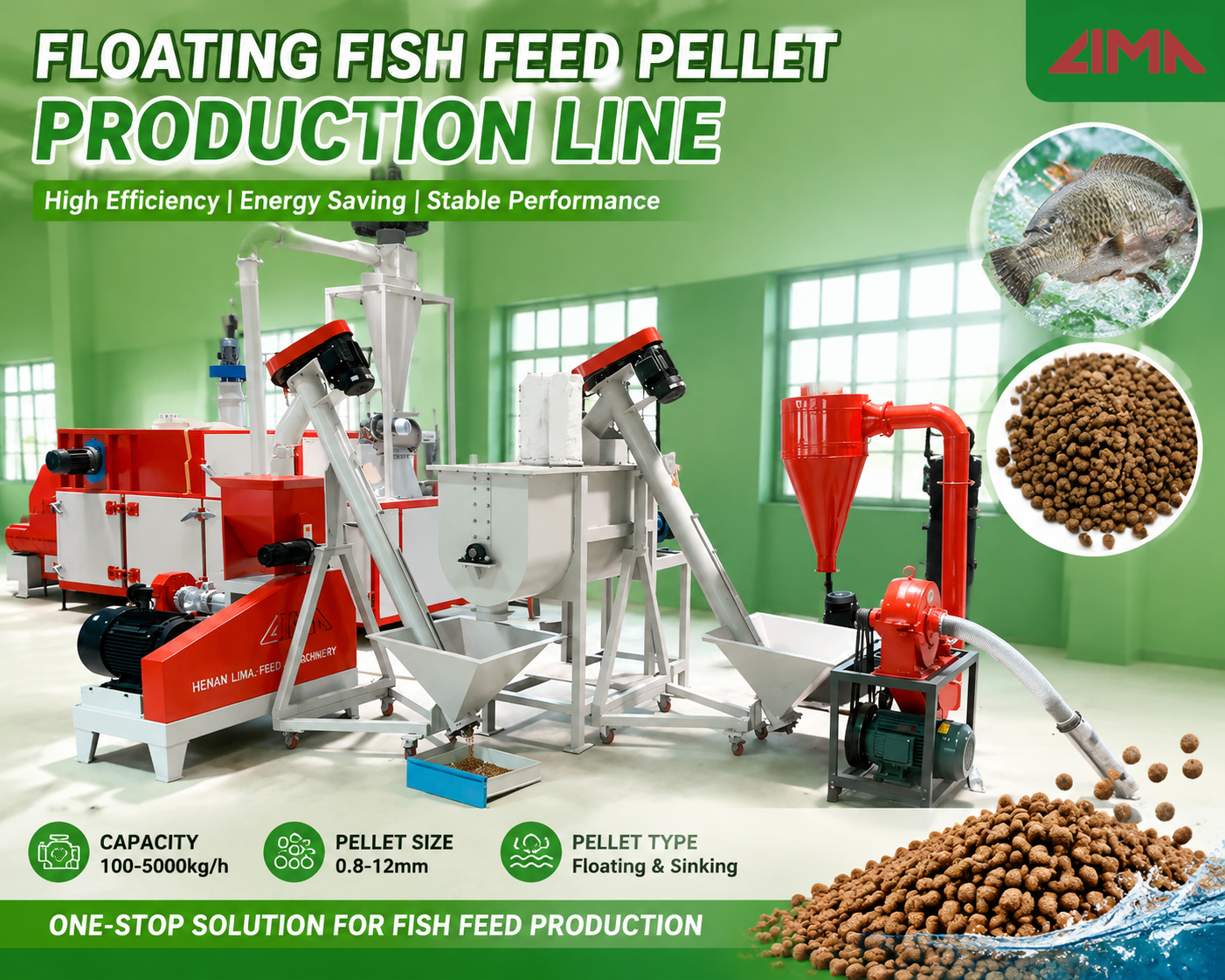
There are many models of expanders on the market, with a wide range of production capacity, from 50-200kg/h small-scale equipment, to 1-10 tonnes/h above the full coverage of industrial-grade equipment. Improper selection will directly constrain production: equipment capacity is too small, will cause production bottlenecks, can not match the expansion of farming scale; equipment capacity is too large, long-term low load operation, will cause idle capital, energy waste, increase operating costs. Accurately matching the capacity demand can effectively avoid the problem of insufficient capacity or idle equipment, and ensure the efficient operation of production.
Ensure the flexibility of feed production
High-quality extruder has strong production adaptability, can flexibly adjust the particle size, feed floating, oil content and other core parameters, not only can produce conventional floating feed, but also can be customised to slow-sinking, sinking feed, can be adapted to different formulations such as high-fat, high-protein, high-starch, etc., to meet the needs of various types of aquatic species, different growth stages of the production of special feeds, helping operators to enrich the product range, expanding the market.
Enhance the safety and stability of production and operation
Reliable puffer equipment runs stably, which can effectively avoid the risk of equipment downtime, blockage, screw wear and other failures during the peak production period, and protect the continuity of production. Modern equipment is equipped with accurate temperature and pressure control system, automated control module and safety guards, which can reduce manual errors and production safety hazards, while the equipment is easy to clean, easy to maintain, and suitable for normalised mass production.
Floating fish feed expanding machine core purchase points
The selection of floating fish feed expander directly determines the feed quality, production efficiency and long-term revenue, need to be combined with the equipment structure, production demand, quality performance, cost and operation and maintenance of multi-dimensional comprehensive consideration, to avoid selection bias, matching their own production scenarios.
Determine the type of screw structure
Limited budget, small-scale production, only processing conventional high starch floating feed, preferred single screw expander, equipment cost-effective, simple operation and maintenance, fully meet the basic production needs. If the main commercial mass production, high-end speciality feeds, high-fat and high-protein complex formulations, or the need to accurately regulate the particle size, floating effect, you must choose a twin-screw extruder, by virtue of its excellent mixing and processing performance, to ensure product quality and production flexibility.
Matching reasonable production capacity
Combined with the current capacity requirements and future expansion plans, small production scenarios are suitable for 100-500kg/h models, small and medium-sized commercial production is suitable for 1-5 tonnes/h models, and large-scale industrial production is suitable for more than 5-12 tonnes/h high-end models. When selecting the model, it is recommended to reserve about 20% capacity redundancy, to avoid production bottlenecks in the later expansion of the scale of farming, and at the same time, to eliminate the waste of resources caused by overcapacity and long-term low-load operation of the equipment.
Concerned about the quality of the particles and the ability to regulate
High-quality puffer needs to have accurate parameter control ability, through the adjustment of temperature, moisture, screw speed, die specifications, flexible control of feed floating and density. The equipment should support the adjustment of 0.5-15mm particle size, and can process the micro-particle feed for shrimp fry, fish fry and large particle feed for adult fish. The core quality indexes should be up to standard, the starch pasting rate is not less than 90%, the finished particles are uniform, water stability is strong, and the long time immersion does not collapse, not muddy water. At the same time, it is preferred to choose the model with temperature control precision ±2℃ and high degree of automation to ensure the stability of production parameters.
Adaptation of raw material formula requirements
Conventional floating feed production needs to ensure that the starch content of raw materials is not less than 20%, the purchase of equipment needs to match their own commonly used raw materials, protein, fat, fibre ratios. For long-term production of high-fat, high-fibre, non-standard formula feed, the priority is to choose the twin-screw model, which is more tolerant of raw materials, and is less likely to have problems such as material clogging, uneven processing, and rapid wear and tear of equipment, and is suitable for the production of diversified formulas.
Emphasis on energy consumption, operation and maintenance and stability
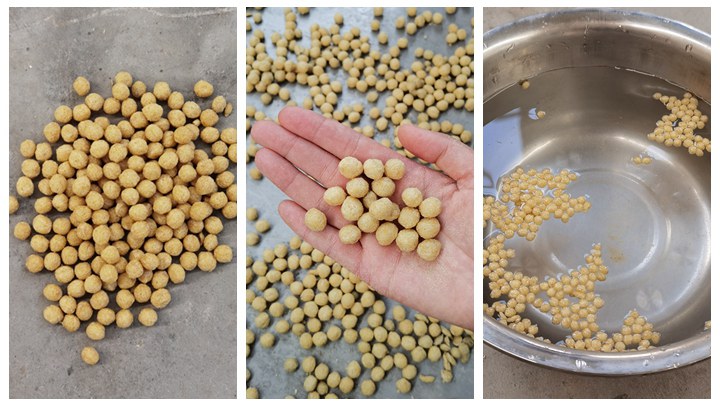
Priority is given to energy-saving models with low energy consumption per unit of production capacity, suitable for local power supply conditions. The core material contact parts of the equipment should be made of 304/316 stainless steel, which is corrosion-resistant, easy to clean and meets the feed hygiene standards. Screws, barrels and other wearing parts should be made of strong material, durability, and high universality of accessories, convenient procurement. The self-cleaning function of the twin-screw equipment can greatly reduce the workload of operation and maintenance, and is suitable for high-frequency and regular production.
Comparison of single-screw and twin-screw floating fish feed expanders
At present, in aquatic feed production, the mainstream expanders are divided into two types: single screw and twin screw, both of which can achieve the effect of feed floating through high temperature and high pressure to cook starch, but there are significant differences in equipment structure, processing performance, adaptable scenarios, purchasing and operating costs, so it is necessary to combine with the production requirements to select the type.
Core structure differences
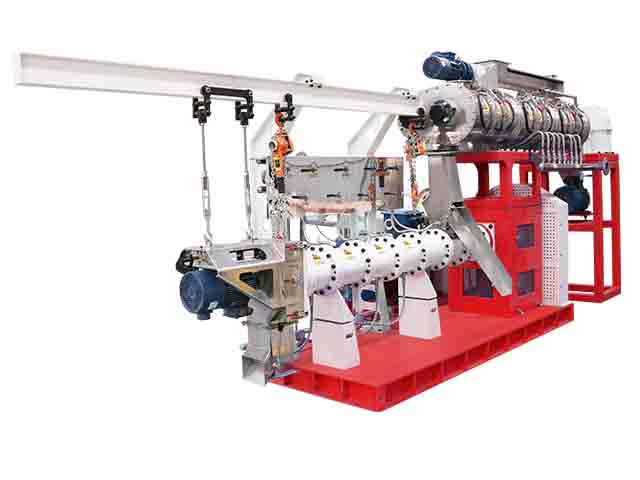
Single-screw extruder has a simple structure, with only one rotating screw in the barrel, the material is mainly transported by friction and drag force, the equipment speed regulation is basic, and the mechanical structure is simple. Twin-screw extruder is equipped with two screws meshing with each other, which can rotate in the same direction or in the opposite direction, and has the functions of forced feeding and self-cleaning, which can accurately control the material shear strength, mixing effect and residence time, and the processing can be more controllable.
All-round performance comparison
Comparison dimension single screw extruder twin screw extruder
Initial purchase cost is lower, suitable for start-up users is higher, for the single screw 2-3 times or even higher
Operating costs low energy consumption, simple maintenance, low cost of energy consumption is high, but the production efficiency is high, long-term cost-effective and better
Mixing adaptability limited adaptability, difficult to process high-fat, high-fibre complex formula mixing effect is excellent, can be adapted to high-fat, high protein, high-fibre and fresh meat and other types of formulations
Floatability control can meet the basic floating, sinking needs, precision general precision control of floating, slow sinking, sinking effect, parameter controllability is very strong.
Starch pasting rate of 80%-90%, good digestion and absorption effect of more than 95%, nutrition retention rate, palatability better
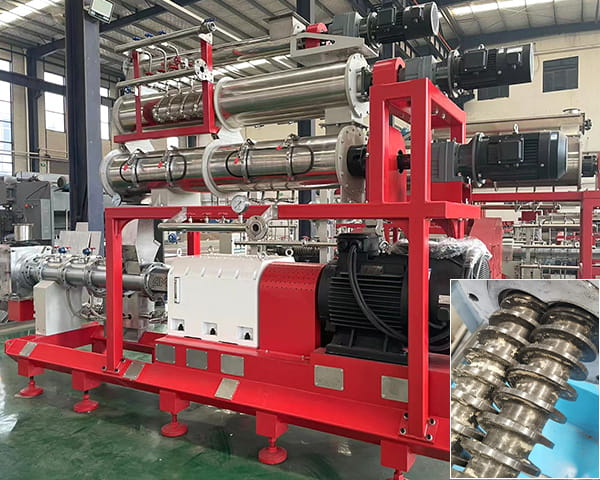
Production capacity under the same power capacity is low, suitable for small-scale production below 1 tonne/hour capacity is higher, suitable for 1-12 tonnes/hour in large-scale mass production
Product stability is affected by raw material fluctuations, the quality of the finished product is slightly different production process is stable, and the quality of the finished product is highly uniform.
Raw material tolerance is only suitable for high starch, low-fat conventional formula suitable for all kinds of raw materials, can withstand fluctuations in oil, moisture, raw material ratios
Difficulty of maintenance simple structure, operation, maintenance, maintenance, convenient and complex structure, relying on the self-cleaning function to reduce the frequency of downtime and maintenance.
Applicable sceneSmall farms, start-up workshops, basic floating feed production, commercial feed mills, high-end speciality feeds, mass production of multi-category feeds.
Advantages and disadvantages of single-screw equipment
The core advantage of single-screw extruder is cost-effective, low purchase price and daily operating costs, simple equipment operation, easy maintenance, low technical requirements for operators, very suitable for small and medium-sized aquaculture subjects and start-up producers. For tilapia, catfish and other conventional aquatic base high starch floating feed, the equipment processing results fully meet the breeding needs, and the overall energy consumption is lower.
Its shortcomings are also more obvious, the uniformity of material mixing is general, it can’t be adapted to high-fat, high-protein and other complex formulas, high pressure production state is prone to material reflux problems, the production efficiency is limited, it is difficult to process ultra-fine micro-granular feed and high-end customised feeds, and the uniformity of the product quality is general.
Advantages and disadvantages of twin-screw equipment
Twin-screw extruder has leading processing performance, excellent material mixing, heat transfer, expansion effect, precise control of feed expansion and floating, high starch paste rate, feed digestion and absorption rate, palatability, nutrient retention rate is greatly improved, and waste of residual bait and pollution of water body are significantly reduced. The equipment is suitable for a wide range of raw materials, and can produce shrimp feed, salmon feed and other high-end special aquatic feeds, with strong production stability, no cross-pollution, and outstanding advantages in large-scale mass production.
The disadvantage is that the initial purchase investment is high, the equipment structure is complicated, professional operators are required to debugging operation and maintenance, daily energy consumption and maintenance costs are higher than single-screw equipment, and there are certain requirements for the production budget and personnel technology.
Fish feed expanding machine and feed pellet machine difference
Fish feed expander and ordinary feed pellet machine are two core equipments for aquatic feed production, the processing principle, finished product characteristics, and adaptable scene are very different, and the core basis for selection is feed floating demand, breeding species, production scale, budget and quality requirements.
Core processing principle difference
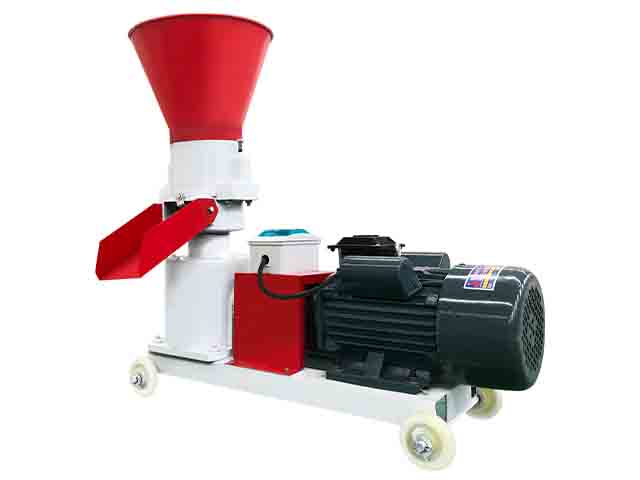
The feed pellet machine takes mechanical compression moulding as the core, extrudes the material through the pressure of die head, only with simple steam tempering, the degree of material maturation is very low, the finished pellet density is big, the texture is tight, and the sinking feed is the main. Fish feed expander relies on high temperature, high pressure, high shear instantaneous maturation process, so that the material starch fully paste and expansion, can flexibly produce floating, slow sinking, sinking three types of feed, processing technology is more advanced, more controllable.
All-round performance comparison
Comparison dimension Fish feed pellet machine Fish feed expander (single/twin screw)
Processing method: mechanical compression moulding, light steam tempering high temperature and high pressure instant maturation, extrusion expansion moulding.
Finished pellet type mainly high density sinking pellets can be customised floating, slow sinking, sinking pellets
Floating controllability has no control ability, only can produce sinking material to accurately control the duration and density of floating.
Starch paste rate of 60%-80%, insufficient ripening 80%-95% or more, complete ripening
Oil and grease tolerance degree is lower than 12%, need to add binder to assist the moulding of high oil and grease tolerance formulations, without additional binder
Water stability in general, easy to nutrient loss in the event of water, collapse excellent, can float for 12-24 hours without dissolution
Digestion and absorption rate up to standard but no significant advantage, easy to lose nutrients to improve 10-35%, higher feed conversion rate
Purchase and operating costs, low price, low energy consumption, simple maintenance, higher purchase price, wet models need to support the boiler
Suitable for the scene of shrimp, bottom layer carnivorous fish, basic sinking feed mass production of surface fish, high-end feed, multi-category customised feed production.
Advantages and disadvantages of feed pellet mill
The core advantage of feed pellet mill is very high cost performance, low cost of equipment purchase, production and operation and maintenance, simple operation and maintenance, suitable for the start-up aquaculture main body. The equipment has a high single-machine capacity, which can meet the demand for large-volume basic sinking feed production, and has a stable effect on the processing of low-fat and conventional formulated sinking feeds, which is suitable for aquaculture scenarios, such as shrimp, bottom carp, catfish, and so on.
Short board is very prominent, can not produce real floating feed, finished particles sink fast, easy to cause the accumulation of residual bait at the bottom of the pool, water pollution; low feed maturity, nutrients are easily dissolved in water loss, aquatic digestion and absorption rate is general, aquaculture feed conversion rate and growth rate to improve the effect is limited, the product homogeneity is serious, low value-added.
Advantages and disadvantages of feed expanding machine
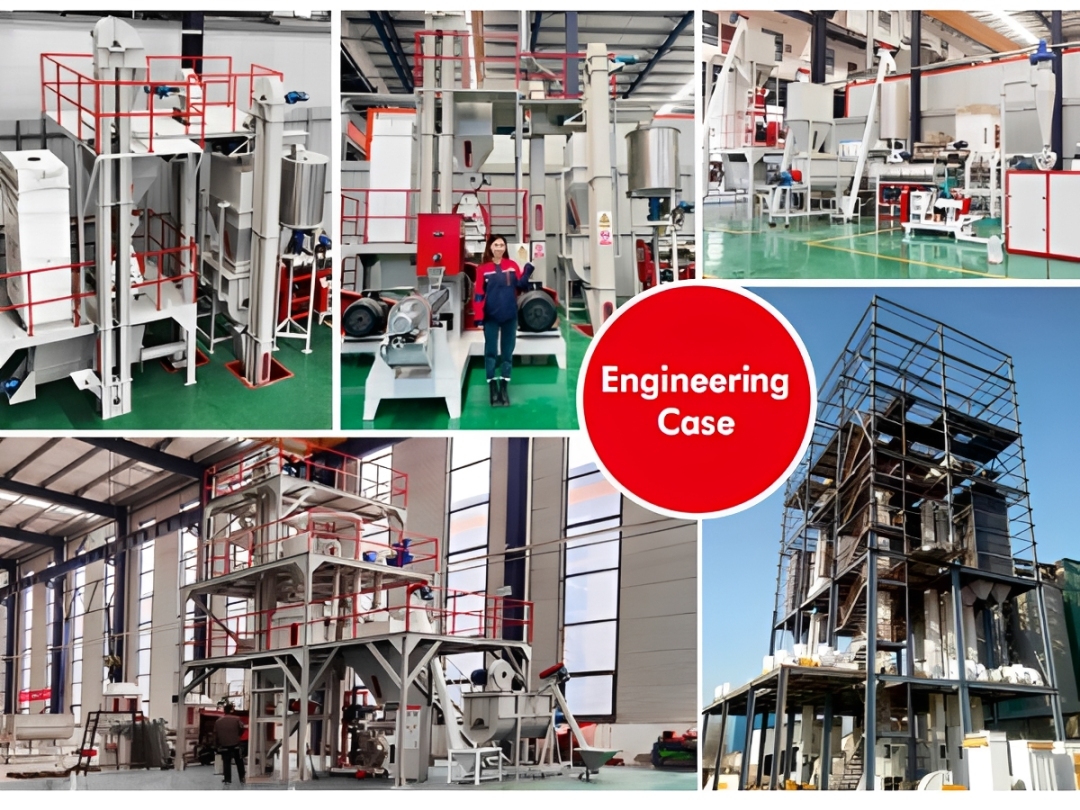
The core advantage of the extruder is that it is extremely flexible in production, and can produce all kinds of floating and sinking feeds according to demand, which is suitable for most aquaculture species. High-temperature maturation process greatly improves the feed digestion and absorption rate, palatability and nutrient retention rate, effectively reduce feed waste and water pollution, feed conversion rate is significantly optimised to accelerate the growth rate of aquaculture. At the same time, the equipment can be adapted to high-fat, high-protein, multi-fibre and other complex formulas, and the finished product has a uniform pore structure, excellent water stability, and it can also achieve feed sterilization, so the quality is far better than that of ordinary pellet feeds.
The disadvantage is that the initial purchase investment is higher, wet models need to be matched with steam boilers, equipment energy consumption, operation and maintenance costs are higher than the pellet machine, the same motor power under the single machine capacity is slightly lower, and the need for professionals to debug the formula and parameters of the equipment, the production technology has certain requirements.
Fish feed puffer manufacturer evaluation method
Equipment quality, after-sales protection, customisation capabilities rely entirely on the strength of manufacturers, scientific assessment of suppliers is to avoid procurement risks, the key to protect long-term production, from seven dimensions of the comprehensive assessment of the comprehensive strength of manufacturers.
Verification of brand reputation and industry experience
Prefer to focus on aquatic expansion equipment R & D and production of more than 10 years of manufacturers, the difference between general machinery manufacturers, professional aquatic equipment manufacturers know more about the feed production process and industry pain points. Can verify the manufacturer’s global export cases, regional customer reputation, similar farm cooperation cases, while confirming that the enterprise has the ISO9001 quality system, CE safety certification and other industry qualifications, participation in aquatic industry exhibitions, the strength of manufacturers with industry honours is more secure. Before purchasing, you can check the user evaluation through the industry community and online platform, and ask for the contact information of local cooperative customers for field verification.
Verification of product quality and technical strength
High-quality manufacturers of equipment, material contact parts are made of food-grade stainless steel, screws, barrels have been strengthened, wear-resistant and corrosion-resistant, long service life. The core performance of the equipment needs to meet the standards, starch paste rate of more than 90%, uniform particles, floating stability, quality control. At the same time, priority is given to manufacturers with technological innovation capabilities, equipment equipped with frequency conversion speed control, PLC automation control system, intelligent temperature control, quick mould change and other convenient features, production efficiency and ease of operation is greatly enhanced. Before purchasing, you can ask for the technical parameters of the equipment, raw material test machine video, finished feed samples, and if necessary, can be sent to test quality indicators.
Examination of customisation and adaptability
High-quality manufacturers can adjust the parameters of the equipment according to the customer’s customised formulas, breeding varieties, particle specifications, site conditions, and adapt to high-fat, plant-based, micro-particle and other special feed production needs, while docking the customer’s existing production line to achieve seamless compatibility of the equipment. In addition, manufacturers need to support the later upgrading of equipment, such as single-screw equipment to upgrade the automation system, expanding capacity, etc., to meet the long-term development needs of customers.
Confirmation of after-sales protection and service capacity
Formal manufacturers to provide 1-2 years of core components warranty service, equipped with professional door-to-door installation, equipment commissioning, operator training, production line production guidance services. At the same time need to verify the manufacturer’s spare parts reserve capacity, local spare parts warehouse, can be quickly shipped manufacturers, can minimise equipment downtime losses. High-quality manufacturers have 24-48 hours rapid response technical after-sales team to support remote troubleshooting, on-site maintenance, to ensure the stable operation of equipment.
Common misconceptions about purchasing floating fish feed expanders
Most buyers, especially the industry novice, procurement is easy to fall into one-sided pursuit of low prices, selection does not match, ignoring the supporting equipment and other misconceptions, resulting in frequent equipment failure, feed quality does not meet the standard, soaring operating costs, and even project stagnation, need to focus on avoiding eight high-frequency problems.
One-sided pursuit of the lowest purchase price
Low-priced equipment is generally poor quality materials, motor power is not enough, screw barrel easy to wear, process roughness and other issues, the initial investment is low, but the production is prone to unstable quality of the finished product, frequent breakdowns and shutdowns, frequent replacement of spare parts, energy consumption exceeds the standard and other issues. Procurement needs to abandon the thinking that only look at the unit price, focusing on accounting for the full life cycle cost of use, low-priced equipment, long-term operating costs are much higher than the cost of high-quality equipment.
Mismatch between equipment type and production demand
Scale mass production, high-quality feed production selection of dry single-screw equipment, there will be uneven expansion, poor floatation, lack of capacity and other issues; the production of conventional basic feed blind procurement of high-end twin-screw equipment, will cause idle funds, waste of energy; not combined with the capacity of the planning of the selection of equipment, equipment is small to constrain the production of large waste of resources, is the most common selection of misunderstanding.
Neglect the entire production line supporting equipment
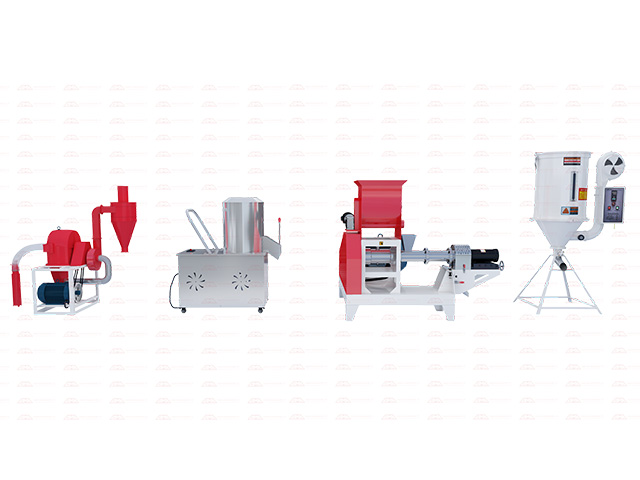
Procurement of puffing host only, ignoring the crusher, mixer, dryer, cooling machine, grease sprayer, packaging machine and other ancillary equipment, will lead to the production process fault. Expanded feed moisture up to 20% -30%, no drying equipment will quickly mouldy and deterioration; lack of spraying, sieving equipment, will lead to insufficient feed nutrition, particle specifications messy, unable to form a standardized production, seriously affecting the quality of the finished product and storage cycle.
Belittle the strength of manufacturers and after-sales protection
Some purchasers choose unqualified middlemen and small workshops to purchase equipment, which are mostly refurbished and simple machines without quality testing, after-sales guarantee and parts support. After the equipment failure, no one to repair, accessories can not be purchased, resulting in long-term downtime, seriously affecting the production schedule, while this type of equipment has no quality assurance, the finished feed is very easy to appear quality problems.
Floating fish feed puffer price cost breakdown
Price range of different models capacity
Equipment Capacity Specifications Equipment Type Reference Price (USD) Applicable Scenarios
Micro/small (30-150kg/h) dry single-screw 1800-5000 family farming, small-scale experiments, retail households for their own use
Small (200-500kg/h) dry single screw 6000-15000 small aquaculture start-up base
Medium-sized (500-1200kg/h) wet single screw 20000-60000 small and medium-sized commercial aquaculture base, feed workshop
Medium and large-scale (1-5 tonnes/h) wet twin-screw 80,000-300,000 + medium-sized professional feed production plant
Industrial (5 tonnes/h or more) high-end automatic twin-screw production line 300000-1000000 + large-scale feed mass production enterprises
The above is the equipment factory bare machine price, combined with the market situation, the main price influencing factors are as follows:
1. brand grade: the domestic mainstream brand cost-effective and outstanding, suitable for the mass market; European high-end brands in the performance, durability, automation level is more advantageous, priced at 2-4 times the domestic equipment of the same type.
2. automation configuration: equipped with PLC intelligent control system, frequency control, automatic temperature control, quick mould change and other functions, the price of the equipment will float 20% -50%, while reducing the artificial input, improve production stability.
3. equipment materials and accessories: the use of food-grade stainless steel body, reinforced wear-resistant screw barrel, multi-specification spare die head and other accessories, the purchase cost increases, but the equipment service life is longer, but also in line with the hygiene standards of feed production.
4. Logistics and tax: affected by the export area, tariff, logistics, local price increase, the final price of the equipment will be an additional 15%-40%.
5. Supporting production line: the complete production line includes a full set of equipment such as crushing, mixing, drying, cooling, spraying, packaging, etc. The total cost of a small production line is about US$50,000-15,000, and the cost of a large industrial production line can reach millions of dollars.