How to reduce feed production costs?
In the feed industry increasingly fierce competition, frequent fluctuations in raw material prices, energy and labor costs continue to rise,control production costs, improve production profits become the core of the survival and development of major feed processing plants. Feed production cost composition is complex, not a single raw material expenditure, but covers raw material procurement, formula design, equipment processing, energy consumption loss, human operation and maintenance, supply chain logistics and other links.
Many feed factories seem to have stable revenue, but due to inadequate production details control, low equipment efficiency and serious waste of raw materials, a large number of hidden costs are generated and the overall profit space is compressed. In combination with the pain points of the whole process of feed production, this paper shares a set of cost-reducing scheme for feed factories with landing and high return from the core influencing factors of cost, so as to help enterprises accurately control costs, improve quality and increase efficiency.
Core Factors Affecting Feed Production Cost
If you want to reduce costs scientifically, you must first find the source of costs. In the total cost of feed production, the proportion of each sector is clear and the primary and secondary are clear, among which the raw material cost occupies the absolute dominant position, and the hidden costs such as energy consumption, operation and maintenance, loss and so on are most easily ignored. The specific core influencing factors are divided into six categories:
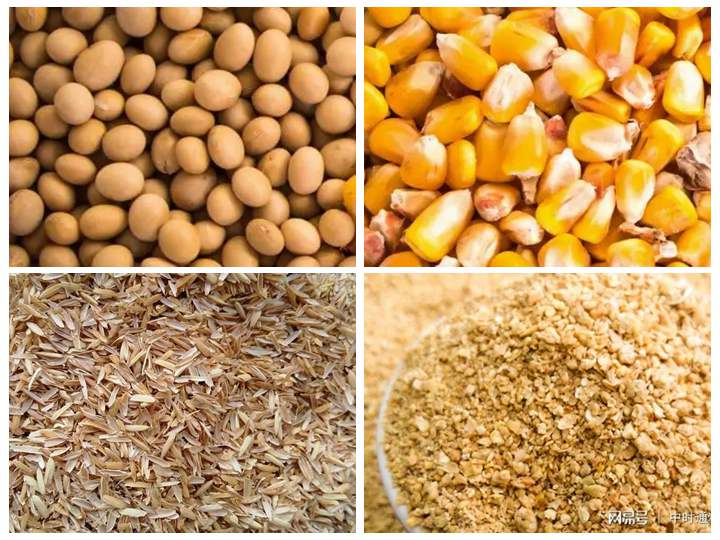
Cost of material
Raw materials are the largest cost of feed production, corn, soybean meal, wheat, oil, amino acids, vitamins and other basic raw materials and additives, directly determine the basic production cost of feed. At the same time, the price of raw materials is extremely volatile, which is affected by multiple factors such as extreme weather, global supply and demand, geopolitics, trade tariffs, biomass energy substitution demand, etc., and the price rises and falls frequently, greatly increasing the difficulty of production cost control. This is also the core reason why the costs of most feed mills remain high.
Energy consumption cost
The whole process of feed production depends on the power and heat energy support of equipment, the power consumption of crushing, mixing and granulating procedures, the steam heat energy of conditioning and drying links, and the fuel oil and water consumption of equipment operation and maintenance in the plant area, which together constitute the energy consumption cost. Although the overall proportion is lower than that of raw materials, fluctuations in energy prices, inefficient operation of equipment and waste of ineffective energy consumption will lead to continuous increase in the cost of this part, and indirectly push up the production costs of upstream raw materials and fertilizers, resulting in cost superposition.
Logistics Supply Chain Costs
Raw materials are transported from port and origin to factory area, and finished feed is distributed to breeding terminal, resulting in a large amount of logistics expenses during the whole process. Among them, the fluctuation of diesel price can directly affect nearly 40% of the wholesale price of feed. In addition, sudden problems such as railway, truck transportation, storage and loading, port congestion and supply chain interruption further aggravate the loss of logistics cost. The logistics cost of feed factories around the production area is much lower than that of factories relying on long-distance import and cross-regional transfer, and the regional cost difference is significant.
Manpower and administrative costs
Workshop operation, quality control, equipment operation and maintenance, plant management and other labor salaries and benefits are an important part of fixed operating costs. With the shortage of labor in the industry and rising inflation, labor costs have risen year by year. The traditional manual operation mode has low efficiency and large error, which not only increases labor expenditure, but also easily causes production errors and material waste, further increasing the comprehensive cost.
Production process and equipment efficiency cost
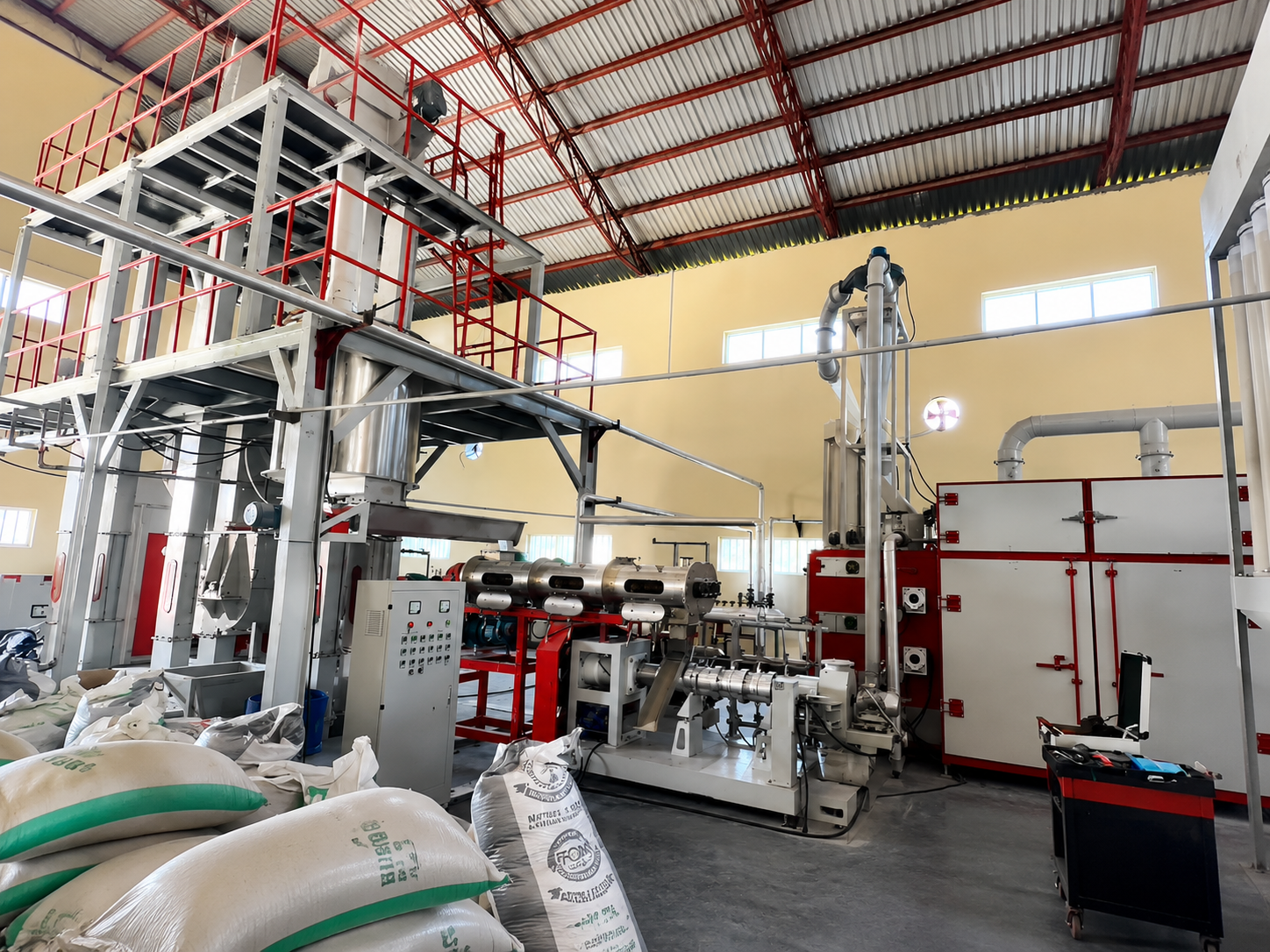
The process and equipment problems such as substandard crushing, uneven mixing, poor conditioning effect, high granulation failure rate, frequent equipment downtime, unreasonable matching of old and new equipment, etc. will directly cause production efficiency decline and insufficient production capacity. At the same time, aging equipment and improper operation and maintenance will increase energy consumption, improve scrap rate and generate a large number of hidden production costs.
Production loss cost
Water evaporation, dust loss, material spilling, ingredient error, particle crushing rework, packaging overflow, inventory loss, etc. in feed production are collectively referred to as production loss (shrinkage loss). The average loss rate of the industry reaches 0.8%, and the loss rate of factories with poor control can reach more than 2.5%. It seems to account for a small proportion. For large-scale feed factories, it will cause hundreds of thousands or even millions of economic losses every year.
Formula optimization
Since raw materials account for 70%-85% of the cost of feed production,formula optimization is the means with the highest rate of return and the most significant effect among all cost reduction methods. The core principle is to minimize the cost of formula raw materials on the premise of fully meeting the nutritional requirements of livestock and aquatic animals at various growth stages, ensuring feed conversion rate (FCR) and breeding performance.
Least Cost Formulation Technique Using Linear Programming
Professional feed enterprises generally use linear programming (LP) formula software, combined with real-time raw material prices, nutritional parameters, intelligent calculation of optimal formula scheme. The system will strictly restrict the core nutritional indicators such as feed energy, crude protein, digestible amino acids, minerals, crude fiber, etc., while avoiding the problems of anti-nutritional factors, poor palatability, processing difficulties and other problems caused by excessive addition of single raw materials, taking into account nutrition, quality and cost.
Compared with the traditional fixed formula and manual matching, the standardized minimum cost formula can achieve a normalized cost savings of 1%-5%. When the price of raw materials fluctuates violently, the optimized income can reach more than 10%. After the optimization of some poultry feed stage formulas, the cost can be reduced by as much as 14%-30%.
Raw material substitution and by-product recycling
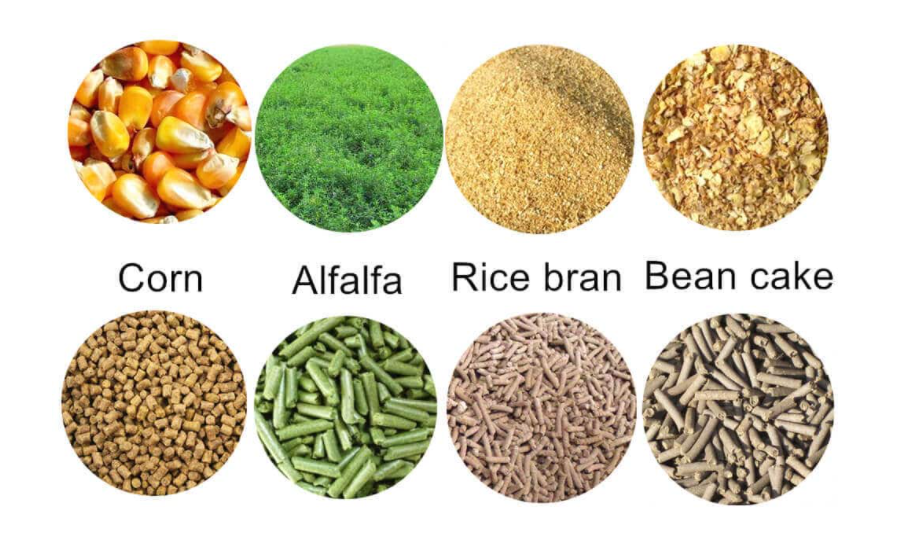
Abandon the traditional formula mode of relying solely on corn and soybean meal, replace high-priced main materials with low-cost compliant raw materials according to the real-time raw material price difference: sorghum, barley, rice bran, distiller’s grains (DDGS) and baking by-products can be selected as energy raw materials; protein raw materials can be replaced with industrial by-products such as rapeseed meal, cottonseed meal, sunflower meal and insect protein. By dynamically adjusting the raw material ratio, the procurement cost of main materials is greatly reduced.
Accurate nutrition reduces burden and reduces waste
Abandon the “conservative formula” of excessive added nutrients and cancel excessive safety redundancy. By reducing the addition amount of crude protein, combining lysine, methionine, threonine and other synthetic amino acids to balance nutrition, and adding phytase, xylanase, protease and other complex enzyme preparations, potential nutrients in raw materials are activated, the dosage of high-priced minerals and protein raw materials is reduced, the cost per ton of feed can be saved by several euros to more than ten euros, and at the same time, nitrogen excretion of animals can be reduced, and intestinal health can be improved.
Accurate raw material detection, eliminate parameter deviation loss
Discard the book standard nutrition parameters, adopt near infrared (NIR) detection equipment, detect the moisture, nutrition content, digestibility and anti-nutritional factors of each batch of raw materials in real time, and dynamically adjust the formula parameters. Even if it is a small deviation of moisture and energy of raw materials, the cost per ton of feed can be saved by more than US $1 after accurate calibration, and the long-term large-scale production benefit is extremely high.
Equipment upgrade and process optimization
Equipment is the core carrier of feed production, 40% of production energy consumption comes from granulation, 26% from crushing, 9% from mixing, old equipment, unreasonable process is the main incentive for high energy consumption, low production capacity and large loss. Through equipment upgrading, process adjustment and intelligent control, the production capacity can be increased by 10%-30% and the energy consumption can be reduced by 10%-20%.
Pulverization step
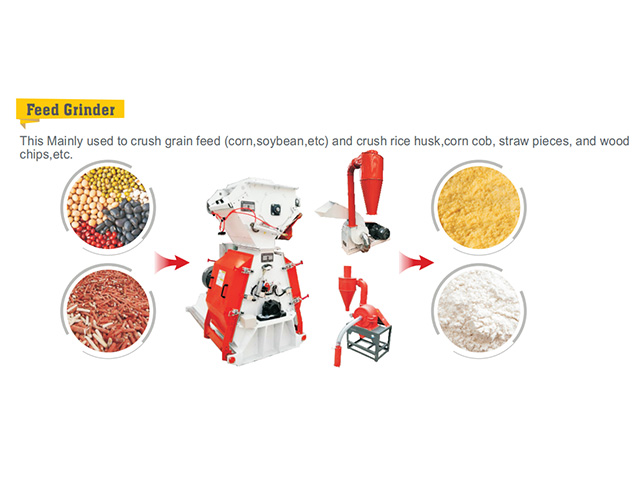
Excessive crushing will greatly increase power consumption, aggravate material moisture loss and produce excessive dust, which is a common hidden energy consumption pain point. Roller mill is preferred for coarse grinding of pellet feed. Compared with traditional hammer mill, the production capacity is increased by 15%-40% under the same power, with less dust and lower energy consumption; hammer mill is selected for fine grinding (below 500 microns) and fiber material processing.
At the same time, it is equipped with frequency conversion speed regulation system, optimize the opening rate of screen mesh, calibrate the distance between hammer and screen mesh, regularly replace wear parts, avoid the production capacity reduction and energy consumption surge caused by equipment aging, set the particle size strictly according to the breeding demand, and eliminate ineffective fine crushing.
Mixing step
The core goal of the mixing process is to achieve a high degree of uniform mixing of materials in the shortest time and to eliminate ingredient errors and cross contamination. High-efficiency mixing equipment is selected to ensure that the mixing coefficient of variation is controlled at 2%-5%, the single mixing time is stable at about 90 seconds, and the discharge is fast, low residue and pollution-free.
Calibrate weighing equipment through automatic batching system, control batching error within ±0.5%, optimize batch feeding process, accurately control liquid additive addition timing, do not blindly shorten mixing time, do not overtime ineffective mixing, give consideration to production efficiency and material mixing quality, reduce rework loss.
Granulation and conditioning process
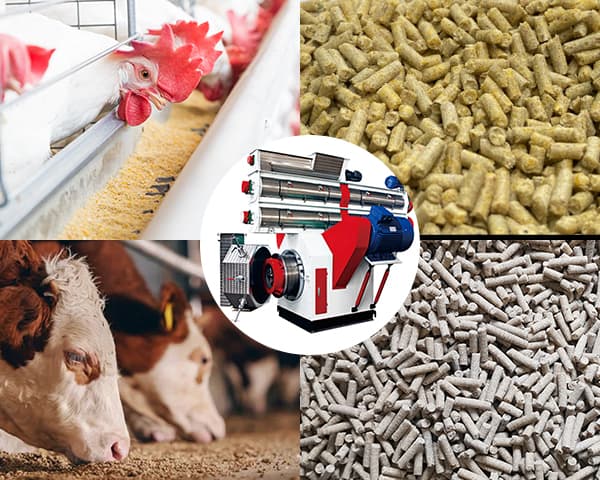
Pelletizing is the most energy-consuming link in feed production, and conditioning effect directly determines pelletizing energy consumption, pellet durability (PDI) and finished product qualification rate. Optimize steam quality, use dry and stabilized steam, accurately control tempering temperature, duration and material moisture, and directly reduce granulation energy consumption by 20% while reducing dust and broken particles.
Direct drive granulator is preferred at the equipment level. Compared with belt transmission equipment, mechanical efficiency is increased by 5%-20%; die hole diameter and aspect ratio are adapted according to feed formula, and pressure rollers and templates are regularly maintained to ensure equipment load stability above 85%, avoid low load idle energy consumption, and stabilize production capacity and pellet quality.
Back-end process
Cooling, conveying and packaging are the main scenes of material shrinkage. Equipped with automatic cooling and unloading control system, the finished product discharge temperature is controlled at +3-5℃ to avoid excessive drying and moisture loss; equipped with variable frequency speed conveyor equipment, efficient dust removal system, sealed material transmission point, collected dust, broken particles and recycled for secondary use.
Through the online moisture sensor real-time monitoring of material moisture, accurate regulation of production parameters, the finished product moisture stable in 11.5%-13.5%, batch deviation control within ±0.5%, minimize material loss.
Strictly control production shrinkage
Feed production shrinkage losses include water evaporation, dust spills, batching errors, equipment residues, pellet rework, packaging spills, etc., and are the most easily overlooked cost loopholes. For medium-sized feed mills, the conventional loss rate of 0.8% can cause tens of thousands of yuan of losses every week, and the refined control can control the loss rate below 0.5%, and the return on cost reduction is extremely high.
Four production loss reduction and fine control schemes
| Control Dimension | Core control measures | Actual cost reduction effect |
| Accurate loss accounting system | Establish a normalized data-based loss accounting mechanism, with “raw material input-finished product output” as the core statistical standard, and trace the loss source layer by layer according to production process, feed formula and production period. Equipped with intelligent weighing equipment and digital inventory system, it monitors the entire process data of raw material warehousing, workshop feeding, process transfer, and finished product delivery, avoids statistical errors and data lag problems, and accurately locates material waste loopholes. | Completely bid farewell to empirical extensive management, accurately lock hidden loss points, provide reliable data support for process rectification and cost reduction optimization, and eliminate the accumulation of invalid material loss from the management end. |
| Water loss precise control | To solve the problem of water evaporation loss in the whole process, accurately replenish water and match with water locking agent in the material mixing process to balance the moisture content of the material; optimize the parameters of the conditioning steam and the processing time to avoid excessive dehydration; scientifically adjust the cooling wind speed, material layer thickness and residence time to prevent excessive drying of the finished product. Relying on online intelligent moisture detection system, real-time dynamic compensation evaporation loss. | Effectively solve the problem of moisture loss with the strongest concealment in feed production. The industry can recover up to 3% of the material yield loss, greatly improve the yield of finished products, and significantly reduce the cost and increase the yield of large-scale factories. |
| Dust and particle recycling | Eliminate traditional open conveying equipment, adopt tubular sealed conveying structure, reduce material scattering and dust pollution from the source; upgrade efficient bag dust removal system, match with rear screening equipment, comprehensively collect production dust, broken particles and residual particles. The recycled materials qualified by quality inspection can be put into production for secondary utilization to realize material recycling. | Effective elimination of waste of available materials, conventional livestock feed can stably control the broken particle rate within 2%-3%, aquatic feed can further reduce the loss, significantly improve the comprehensive utilization rate of raw materials. |
| Compounding and site management optimization | Regularly calibrate large and small material weighing equipment to eliminate material waste and finished product rework caused by ingredient deviation; optimize equipment reloading and cleaning processes, recycle qualified residual materials in reusable equipment; standardize finished product packaging and weighing operations to eliminate packaging overflow loss. Bulk transportation is preferred for large batches of finished products to reduce packaging consumables and handling losses. | Plug the fine cost loopholes at the end of production, effectively reduce the comprehensive losses caused by batching errors, refueling residues, packaging and transportation, and comprehensively reduce the production cost of finished products. |
Fine control of energy consumption
Although the energy consumption cost is less than that of raw materials, it has strong controllability, short optimization cycle and stable return. Through targeted transformation, the entire plant’s energy consumption can be reduced by 10%-20%, and the equipment transformation cost payback period is only 1-3 years.
Popularization of frequency conversion and high efficiency motor transformation
Frequency conversion speed regulation system (VFD) is installed in feeder, fan, conveyor, cooling equipment and crushing and granulating main machine to automatically adjust equipment speed according to production load to avoid no-load and high-load ineffective operation of equipment. Single controlled equipment can save 8%-12%, and comprehensive energy saving of 10%-20% after complete transformation of the whole plant. At the same time, the old motor will be upgraded to IE4/IE5 high-efficiency energy-saving motor to adapt to long-term continuous production conditions.
Optimization of steam and heat systems
Regularly maintain boilers, steam traps and steam pipelines to reduce heat leakage and waste; optimize boiler air supply and water replenishment processes to improve thermal efficiency; accurately control the pressure and humidity of conditioned steam to avoid excessive heat consumption; recover cooling exhaust gas and boiler waste heat to realize secondary utilization of heat energy and reduce production heat costs.
Eliminate ineffective energy consumption of equipment
Optimize the linkage logic of production lines, realize automatic linkage of equipment start-up and shutdown, eliminate idle running of conveyors, fans and air compressors; repair compressed air leakage points and reasonably regulate equipment pressure parameters; reduce frequent start-up and shutdown and refueling through stable continuous production, reduce equipment energy consumption fluctuation, and improve energy consumption utilization rate per unit capacity.
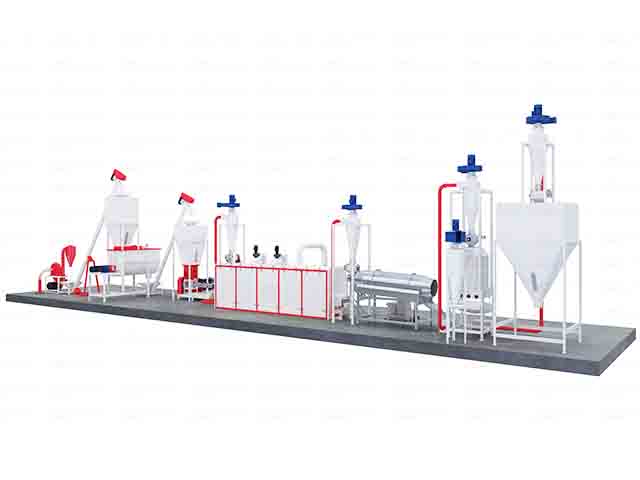
Production automation upgrade
Manual operation error is large, efficiency is low, labor cost is high, and automatic upgrading can reduce manual dependence from the root, reduce material waste, stabilize production quality, realize manpower, energy consumption, loss, operation and maintenance multi-dimensional cost reduction, equipment transformation recovery period is only 6-24 months.
Automated batching and mixing systems
Through intelligent formula system and automatic weighing and feeding equipment, accurate automatic matching of large and small materials can be realized, and the dynamic error can be controlled within 0.2%, so as to completely eliminate the problems of manual batching errors and excessive feeding, and reduce the waste of raw materials and the cost of manual duty. At the same time, it automatically optimizes the mixing sequence and refueling process, shortens the downtime and refueling time, and reduces the risk of cross-contamination.
Intelligent control of core process
The core processes of crushing, conditioning and granulation are equipped with intelligent control system, which adjusts equipment parameters in real time according to material characteristics and load status, stabilizes equipment full load operation, reduces energy consumption, reduces broken particles and rework, improves finished product qualification rate, and increases production capacity by 20%-30%.
Digital control of the whole plant
Set up PLC+SCADA plant control system to realize real-time monitoring of production data, automatic alarm of equipment failure and visual management of production process. With MES production management system, automatic statistics of core data such as capacity, energy consumption, loss, equipment utilization rate, etc., accurately locate production bottlenecks, and provide data support for continuous cost reduction optimization. At the same time, through predictive maintenance, reduce equipment sudden failure shutdown losses.
Equipment maintenance optimization
The aging damage of feed equipment templates, rollers, hammers, screens and other wearing parts, as well as core accessories such as motors and bearings, will not only increase the replacement cost of accessories, but also lead to soaring energy consumption, reduced production capacity and increased material loss. Equipment maintenance is the key to low cost production capacity and cost control.
From passive to predictive maintenance
Abandon the passive mode of “repair after failure”, establish a preventive maintenance system according to output and working hours, regularly detect the wear degree of wearing parts, equipment operating temperature, vibration parameters, motor current, predict equipment failure through data, maintain and replace in advance, and reduce unplanned downtime failures by 30%-50%.
Standardize the use and management of wearing parts
According to the production formula, adapt high-quality templates, rollers and hammers to avoid energy consumption and capacity loss caused by rapid wear of low-cost and inferior parts; regularly detect the thickness of templates and roller gaps, and timely renovate and repair accessories, which can extend the service life of wearing parts by 25%-40%; establish a spare parts inventory control mechanism, reserve core wearing parts, and avoid downtime waiting for loss.
Standardized equipment operation flow
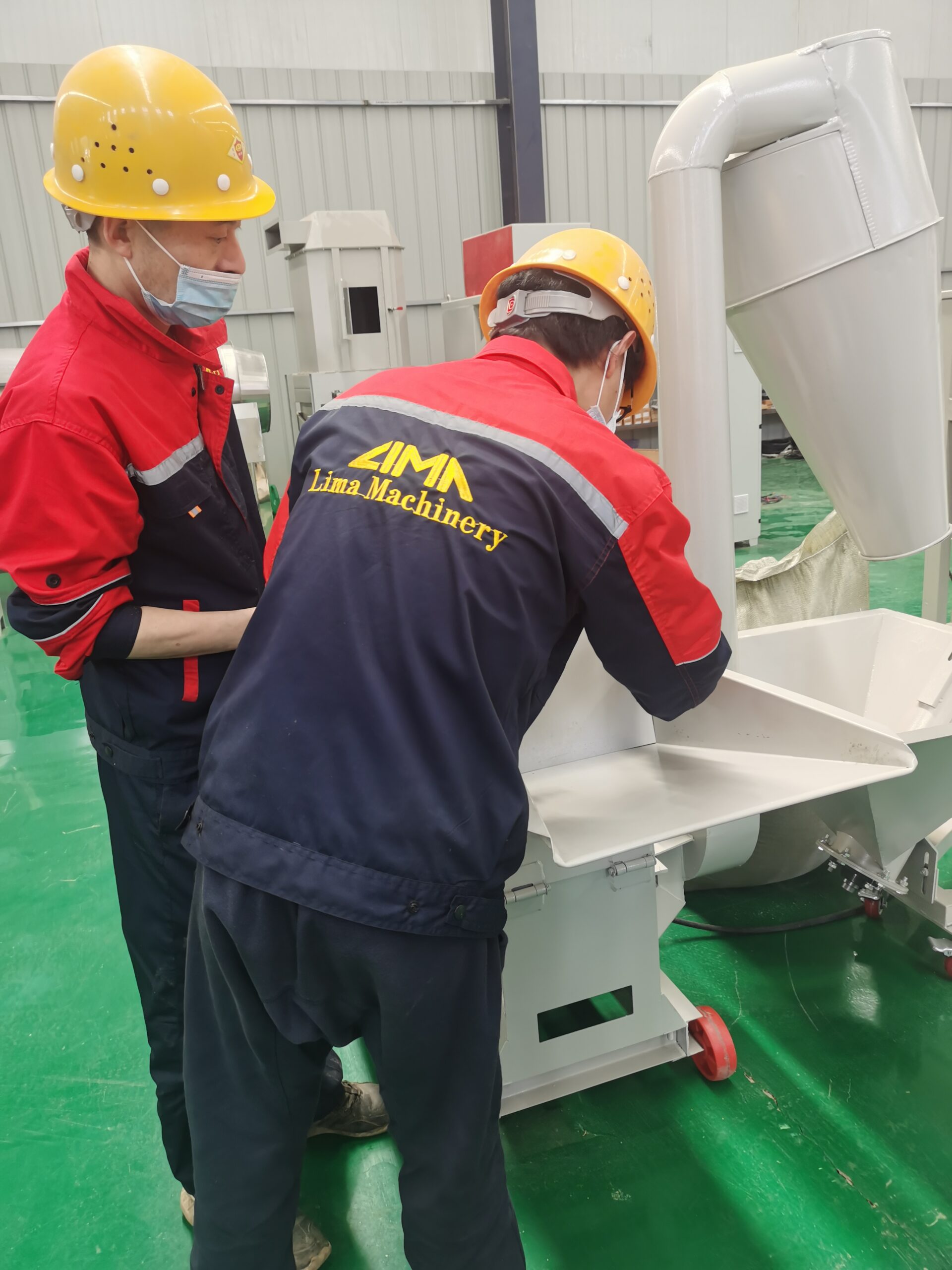
Carry out special training for operators, standardize equipment start-up and shutdown, parameter adjustment and daily cleaning procedures, eliminate equipment wear and material waste caused by illegal operation; standardize equipment lubrication, cleaning and calibration procedures, reduce equipment failure causes, prolong the overall service life of equipment, and reduce operation and maintenance costs for a long time.
Common mistakes in reducing costs in feed factories, avoiding hidden cost traps
Many feed factories have poor cost reduction effect. The core reason is that they fall into the short-term misconception of saving money. It seems that they reduce the single cost, but in fact they cause the comprehensive cost to soar. There are six hidden cost traps in daily production.
Excessive formula redundancy is the most common waste problem. In order to avoid breeding risks, many factories blindly add various nutritional raw materials in excess, resulting in a large amount of ineffective raw material loss, which will cause huge production cost waste for a long time.
The hidden danger of equipment running with faults is easy to be ignored. Long-term use of wearing parts such as hammers, templates and screens will cause a series of hidden losses such as soaring energy consumption, reduced production capacity and unstable finished product quality.
Excessive fine grinding will cause double waste. In order to pursue the fineness of materials, the workshop will carry out grinding operations beyond the actual needs of breeding, which will not only waste power consumption, but also aggravate the loss of moisture and dust.
Ignoring data management and control will lead to continuous accumulation of cost loopholes, lack of perfect statistical system of energy consumption, material loss and production capacity in factories, inability to accurately locate production shortcomings, long-term superposition of various hidden costs, and no rectification.
Blind low-cost procurement of accessories is a typical “small money loss”, although the selection of low-quality wearing parts can reduce short-term procurement costs, but will greatly increase equipment energy consumption, operation and maintenance frequency and downtime loss, the overall loss is not worth the loss.
Frequent short-batch production seriously lowers production efficiency. The production mode of small unit quantity and frequent refuelling start-up and shutdown will greatly increase the residual loss of refuelling, reduce the overall utilization rate of equipment and continuously raise the unit production cost.
Summarize
Feed production cost control is not a single link of saving money, butformula, raw materials, equipment, technology, energy consumption, loss, automation, maintenance of the whole process of fine control. Raw material fluctuation is offset by formula optimization, energy consumption waste is solved by equipment upgrading, material loss is reduced by process control, labor cost is optimized by automation, and equipment failure is avoided by preventive maintenance.
For modern feed processing plants, only by abandoning extensive production mode and relying on scientific formula, intelligent equipment, standardized process and data management and control, can the production cost per ton of feed be continuously reduced, profit space be stably improved in fierce industry competition, and long-term and high-quality development be realized.