How to reduce shrink in feed production
In the feed processing industry, production cost control is the core key to improve corporate profitability, and production loss is the core pain point that is easily overlooked, but continues to compress profit margins. Feed production from raw materials into storage, storage, processing to finished products out of the warehouse, each link will produce different degrees of material loss, the industry most factories comprehensive loss rate is generally 0.8-1%, poor management of the factory or even higher. For feed enterprises with an annual output of hundreds of thousands of tons, a 1% loss gap means hundreds of thousands or even millions of economic losses. This paper will deeply dismantle the core logic of feed production loss, from the causes, hazards to the whole process of practical operation methods, all-round explanation of the loss reduction and quality, income increase efficiency of the landing program.
Read the loss of feed production
Feed production loss refers to the phenomenon of material weight loss and nutritional quality decline in the whole process of raw materials from storage, processing, blending, pelletizing, warehousing to farm feeding. The loss value needs to be combined with inventory changes. It is calculated by the difference between raw material input and finished product output. The industry calculation formula is: loss rate = (opening inventory + total warehousing-total outbound-ending inventory)/total outbound. For example, a feed mill inputs 100 tons of raw materials, the inventory does not change, and only 99 tons of finished products are produced, the corresponding production loss rate is 1%. Loss is divided into dominant loss and hidden loss two categories, dust, leakage, equipment residue belongs to the visible dominant material loss.
Main causes of feed production loss
Feed production loss is not a single process problem, but a comprehensive loss problem that runs through the whole process of raw material receiving, storage, processing and production, and finished product delivery. Combined with the actual production scenarios of large-scale feed factories, the core incentives for feed loss can be summarized into six categories, covering the vast majority of the plant’s material loss, weight loss, deterioration, but also the main reason for the excessive loss rate of feed factories, low utilization rate of raw materials.
Water evaporation loss
Water loss is the highest loss source in feed production. In the process of crushing, quenching and tempering, granulating and cooling, the material is subjected to mechanical friction and high-temperature steam heating, and the water inside the material is continuously vaporized and evaporated, which usually causes a weight loss of 0.4-2% or even higher. If the excessive fine grinding process is used, the specific surface area of the material will be greatly increased, and the moisture volatilization rate will be further accelerated, which will aggravate the weight loss problem. This kind of moisture loss not only reduces the weight of the finished product, but also affects the particle molding effect and particle durability, resulting in more debris and dust, resulting in secondary loss. Therefore, the whole process of moisture monitoring and precise control, is the feed mill to reduce the overall loss must be the priority of the core measures.
Escape loss of dust and particles
Raw material conveying, lifting, transfer, mixing and other processes easily produce dust. The material forms fine particles under the action of impact and friction. If the equipment is poorly sealed and the dust removal and recovery system is not perfect, the dust will continue to escape and lose. Dust loss is a dominant material loss and is a very common type of loss in feed processing. The amount of dust loss in a single batch seems small, but the continuous large-scale production of the factory continues to accumulate, resulting in waste of raw materials and reducing the yield of finished products. At the same time, floating dust will pollute the workshop, accelerate the dust damage of equipment, and there is also the risk of dust explosion. Both production efficiency and safe production need to pay attention to dust control.
Equipment and labor operation loss
Equipment aging and seal failure will cause continuous material leakage in pipelines, silos and gate valves, and powder caking in dead corners of equipment, which will not only waste raw materials, but also interfere with batching accuracy. The granulation process parameters are unreasonable, which will produce a large amount of scrap and rework waste; when multiple batches are replaced, the residual materials inside the equipment will also cause loss and cross-contamination. In addition, manual operations such as feeding and transportation are not standardized, which is easy to cause material splash and leakage. Such losses continue to occur, a single loss is small, but the long-term accumulation will reduce the yield of finished products, affecting the factory production cost control.
Measurement and Data Statistics Recessive Loss
Unscheduled calibration of scales, incorrect batching parameters, rough inventory counts, and omissions in production records can all cause inconsistencies between book materials and actual stocks. Weighing tool drift, zero deviation will make each batch of ingredients produce errors, continuous production under the deviation continues to accumulate. If the inventory only relies on system estimation, does not check the silo residue on the spot, and superimposes errors and omissions in manual records, the ledger data will be distorted. This kind of loss is hidden and difficult to detect, and usually does not appear until the year-end inventory. Many feed mills only pay attention to the visible material loss in the workshop, but ignore the hidden losses caused by measurement deviation, which also hinders the accounting of loss rate and the optimization of production costs.
Storage environment and material deterioration loss
Raw materials piled up in the open air and insufficient sealing of the silo will expose the materials to wind, rain and sunshine, and the fine powder materials will be blown away by the wind, rain will infiltrate and agglomerate, and it will easily lead to rodents and birds eating pollution. If high moisture materials such as silage and wet by-products are not compacted and sealed properly, microbial fermentation loss will be obviously aggravated, resulting in weight loss and quality deterioration. Once mildew occurs, the whole batch can only be scrapped. This type of storage loss is often underestimated and easily mistaken for only occurring in the workshop. Good storage protection, pest control and environmental monitoring is an indispensable part of the overall loss reduction of feed mills.
Other Auxiliary Minor Losses
The respiration of grain storage, the return and transfer of unqualified raw materials, and the waste of feed residue at the breeding end are all secondary losses. Single-batch losses are not obvious and easy to ignore, but the medium-and long-term accumulation of large-scale production will gradually increase the overall loss rate. In order to achieve fine loss control, in addition to focusing on the control of crushing, granulation and other processes, such fine losses must also be included in the monitoring management.
The core value of strict control of production losses.
Feed is the primary cost of livestock and aquaculture, and production losses directly affect the profitability of feed mills and the quality of finished products. The gross profit of the feed industry is low. Once a 1% loss occurs, for a factory with an annual output of 200000 tons and a selling price of US $250/ton, it will incur hundreds of thousands of US dollars in losses every year. Water loss, dust escape and ingredient deviation will also disrupt the accuracy of the formula, resulting in fluctuations in the nutrition of the finished product, affecting animal growth performance and damaging brand reputation. In addition, higher losses also represent insufficient utilization of raw materials, unnecessary increases in energy consumption and labor costs, and lower overall production efficiency. Mature management of the feed mill can control the comprehensive loss in 0.5-0.8, relying on fine loss control, simultaneous realization of profit, production capacity and product quality improvement.
Raw material receiving and warehousing control
The core of feed loss control is at the source. Incomplete control of raw material receiving and warehousing will lead to the superposition of losses in all subsequent processing links, which is the first 1 key hurdle to reduce losses.
Strict control of raw materials
When raw materials enter the site, batch-by-batch sampling and testing shall be carried out, focusing on checking moisture, bulk density, impurities and mycotoxin indicators, and strictly rejecting unqualified raw materials with high moisture and high impurities. High moisture raw materials in the storage stage is easy to breed mold deterioration, but also in the subsequent crushing, conditioning, granulation and other processes to produce a large amount of water evaporation loss, is an important hidden danger of the production line loss rate exceeded. At the same time, raw materials must be weighed with regularly calibrated high-precision weighing tools, cross-compare the measured weight with the original weighing data provided by the supplier, complete the ledger records, retain traceable data, eliminate the measurement deviation of the incoming material link from the source, and eliminate the hidden material loss caused by this.
Optimize the warehousing scenario
A closed protective structure shall be built in the raw material receiving area to resist wind and rain and reduce the loss of fine powder caused by wind. The discharge point shall be equipped with a dust removal and recovery device to timely capture the dust scattered in the operation and recycle it for reuse. Standardize the unloading operation process, control the drop of materials, and avoid splashing of materials. By improving the storage environment, reduce the loss of physical materials and reduce the loss of raw materials at the receiving stage from the source.
Refined Management of Warehousing and Inventory
Raw materials and finished products storage is the most easy to produce hidden loss of the link, wet materials, accessories, green feed storage loss is much higher than the dry raw materials, need to be standardized storage control to reduce deterioration, loss, pest loss.
Choose the right storage equipment
The storage equipment is preferably sealed silo and three-sided closed sunshade and rain-proof material yard, supporting temperature and humidity monitoring equipment and controllable ventilation system, combining with the physical and chemical characteristics of different raw materials to dynamically adjust the storage environment. Warehouse management strictly implement the FIFO first-in-first-out principle, shorten the material storage cycle, to avoid long-term stacking of raw materials mildew, caking and natural weightlessness. For high-value fine powder, it is strictly prohibited to pile up in the open air, must be stored in a closed silo, effectively prevent wind dust, rain erosion caused by material loss, to ensure stable quality of raw materials.
Building a full-dimensional insect and rodent prevention system
Through comprehensive means such as sealing and blocking, bait killing and site cleaning, the prevention and control system of pests, rats and birds is comprehensively constructed to prevent pests, rats and birds from eating, pollution and damage to materials from the source, and to ensure the quality and weight stability of stored raw materials. At the same time, a normalized inventory counting mechanism will be established, combined with a digital storage system, to regularly check the storage, receipt and balance data, so as to realize the traceability of the whole process of material flow. Regularly calibrate the volume of the silo and the measurement accuracy of the scale to ensure that the inventory data is true and accurate. Through systematic investigation and timely identification of inventory deviations, material residues and other hidden problems, early detection, early correction, the storage link of the hidden loss control at the lowest level.
Precise moisture control
Water loss is the largest source of loss in feed production, and whole-process water control is the most efficient and core means to reduce overall loss, which can directly reduce processing loss by 0.5-2%.
Establishment of multi-node moisture monitoring system
Moisture detection points are set at each node of raw material warehousing, crushing, mixing and stirring, quenching and tempering, cooling and finished product delivery respectively, and material moisture data are collected in real time to realize dynamic monitoring and accurate control of the whole process of feed production. Abandon the extensive operation of blind water replenishment in the finished product stage in the traditional production, and replace it with quantitative and accurate water replenishment in the stirring process. At the same time, it is matched with functional additives such as surfactants and organic acids to enhance the permeability and adsorption stability of water in the material particles, reduce free water, reduce the weight loss caused by rapid evaporation of water in the subsequent high-temperature processing, inhibit the growth and reproduction of mold in raw materials and finished products, and ensure the storage stability of feed.
Optimization of crushing process
Avoid excessive fine crushing, reasonable control of crushing particle size, in order to reduce the total surface area of the material, from the source to reduce the water evaporation rate and dust generation. In the production process, the quenching and tempering process parameters are strictly controlled, the quenching and tempering temperature is stably maintained in the range of 75-85 ℃, and the quenching and tempering moisture is controlled at 14.5-18%. At the same time, the input steam is guaranteed to be dry and the quality is stable, and the moisture fluctuation caused by condensed water is reduced. Optimize the cooling process synchronously, reasonably adjust the air volume and cooling time, control the finished product discharge temperature at ambient temperature +3-5 ℃, and keep the cooling time for 5-8 minutes to prevent excessive air drying of materials caused by excessive cooling air volume. Through the coordinated control of the whole process, the finished product moisture is stably locked at 11.5-13.5, and the moisture deviation between batches is controlled within ± 0.5, effectively reducing moisture loss and ensuring stable particle quality.
Processing equipment and process optimization
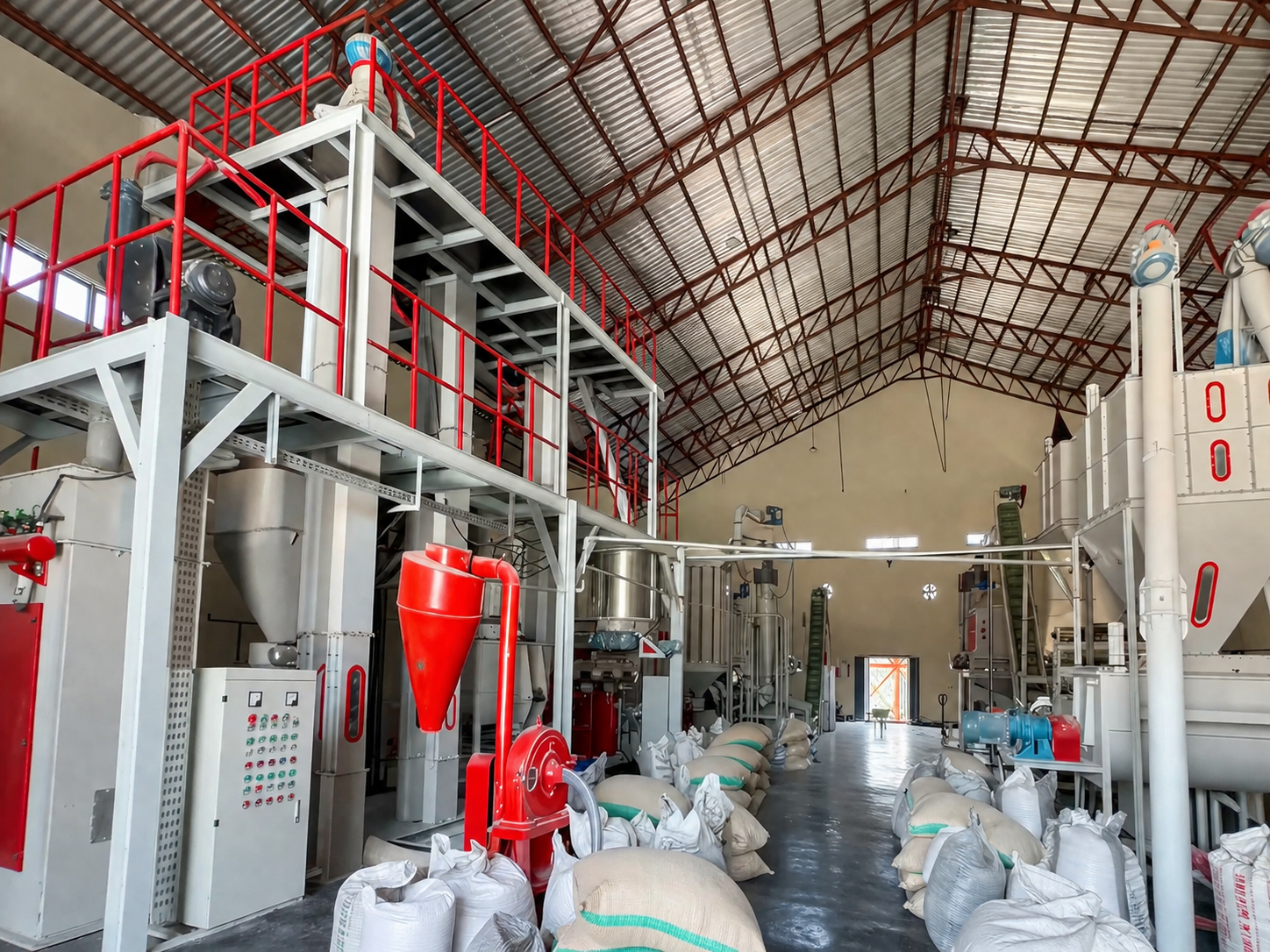
Equipment defects and improper processes in the processing links such as feed crushing, mixing, granulating and conveying are the main reasons for dust escape, material leakage and residue residue residue, which need to be reduced through equipment upgrading and process standardization.
Equipment aspect
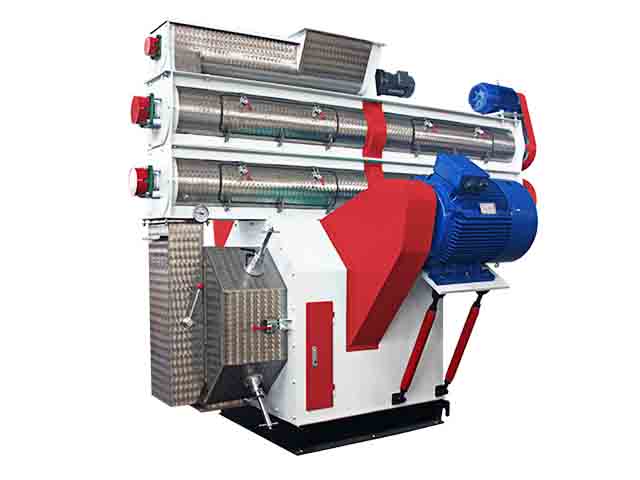
Fully transform the open conveying equipment, adopt screw conveyor and tubular sealed conveying system, close the equipment transfer point, hoist and discharge port, and prevent dust leakage. Complete dust recovery system, dust suction hood and pulse dust removal equipment are installed at high dust incidence points such as crushing, feeding, stirring and silo feeding, and the recovered powder is directly returned to the production process to realize secondary utilization of materials. Regularly check the sealing of silo, conveying pipeline and gate, timely repair the leakage and accumulation equipment, clean the equipment, and reduce the batch residual loss.
Process Aspects
Standardized crushing particle size, matching the feeding needs of different aquaculture categories, not only to prevent the particle size is too coarse to affect animal digestion and absorption, but also to avoid crushing too fine to increase the specific surface area of materials, aggravate water evaporation and dust generation. Overhaul and replace the hammer and screen of the crusher on time to ensure uniform crushing size and reduce the processing loss caused by the differentiation of large and small particles. Stabilize the operating parameters of the granulation unit, reasonably adjust the die roller gap and ring die compression ratio, improve the quality of particle molding, reduce the output of crushed particles, powder and defective products, and reduce the material loss caused by rework. At the same time, establish a regular calibration system for weighing equipment, calibrate the batching scale and automatic feeding system, avoid batching errors, flying materials and excessive feeding phenomena, and reduce material loss caused by improper debugging from the process hardware level.
Special control of mixing and granulation
Mixing and granulation is the core process of feed molding, but also the high incidence of debris, dust, ratio deviation loss, special optimization can greatly improve the yield of finished products and particle quality.
Mixing link
Regularly calibrate the mixing matching scale, for premix, trace elements and other trace additives, the use of independent special small scale to complete the pre-proportioning operation, to avoid the use of large scale weighing a small amount of materials to produce large measurement deviation. Strictly set the upper limit of single feeding of the mixer to prevent material splashing and uneven mixing caused by overload feeding. Optimize the feeding sequence, according to the process of first feeding bulk raw materials, then feeding trace auxiliary materials, and finally adding liquid materials, so as to reduce the generation of dust in the process of powder turning. The mixing and feeding port is sealed and reformed, and the supporting negative pressure dust removal system is used to recover the scattered powder. The liquid components such as grease and molasses are used to bind fine powder to further inhibit dust escape. After the mixing process is completed, the materials in the body are completely emptied, the residual materials in the dead corners of the cavity are cleaned up, the loss caused by material entrainment and accumulation between batches is eliminated, the mixing quality is stabilized, and the comprehensive material loss is reduced.
Granulation link
With improving the durability of particles as the core, the granulation molding process is optimized. Through deep optimization of quenching and tempering penetration effect, stabilization of steam pressure and temperature parameters, precise matching of ring die compression ratio and die roller gap, the compactness of particle structure and molding stability are greatly improved, the intact rate of finished particles is stably controlled within 85%-95%, and the crushed material rate after cooling is effectively controlled within 5%-8%. At the same time, the cooling and screening operation process is fully optimized, and the reverse-flow cooler is used to uniformly cool the granular materials, dehumidify and air dry, so as to avoid the problems of particle cracking and pulverization caused by local temperature difference and excessive air drying. The clean crushed materials and fine powders screened in the screening process are collected and recycled in a unified manner, and the secondary machine is returned to the machine in compliance with the regulations to re-granulate, so as to maximize the utilization of material resources and eliminate material waste in the molding process. In addition, the material conveying pipeline and transfer point are optimized and transformed to reduce the material conveying drop and high-speed impact frequency, reduce particle damage and pulverization loss from the whole process, reduce the material loss in the granulation section in all directions, and improve the output rate of finished products.
Digital control + personnel standardization
Feed production loss control is not a single optimization can be effective, need to rely on standardized processes, digital monitoring and personnel professional capabilities, the establishment of long-term control system, stable control of loss rate within the industry quality standards.
Building a digital management and control system
Through RFID bar code, automatic control system, production management software, real-time monitoring of material collection, batch weight, moisture data, equipment operating parameters, automatic check inventory data, rapid identification of abnormal loss points. Develop a clear production KPI, the loss rate, scrap rate, moisture deviation, dust recovery rate into the assessment, to achieve data control.
Establish regular equipment maintenance and calibration system
Daily check the accuracy of the scale, equipment tightness, dust removal system working conditions, quarterly professional calibration and depth maintenance, to prevent equipment failure caused by continuous loss. At the same time, full staff training will be carried out to enable operators to be familiar with the causes of loss in each link and standardized operation procedures, to clarify the economic value of loss control, to eliminate material waste caused by manual operation errors and illegal operations, and to realize fine loss control for all personnel, all processes and all periods.
Conclusion
Feed production loss runs through every link from raw materials to finished products, seemingly small loss rate, long-term accumulation is the loss of huge profits of enterprises. The core of reducing loss and increasing efficiency in feed mills is to abandon the extensive production mode, optimize the whole dimension of raw material control, storage and storage, moisture control, equipment technology, core processes and personnel management from the source, and control the comprehensive loss rate to below 0.8 percent by relying on refined, standardized and digital control methods. Under the competitive pattern of low gross profit in the industry, strict control of production loss is the best way for feed enterprises to enhance their core competitiveness and achieve quality and income.