How to Correctly Feed Sheep with Feed Pellets
1. Why Choose Feed Pellets for Sheep Feeding?
In modern sheep farming industry, pellet feed gradually replaces traditional long grass and mixed powder by virtue of its advantages of standardization, balance and high efficiency, and becomes the mainstream feeding scheme of large-scale sheep farms and family farms. Compared with the traditional feeding mode, the pellet feed for sheep is finely mixed, molded at high temperature and high pressure, perfectly adapted to the rumination physiological characteristics of sheep, which can effectively solve the breeding pain points such as picky eating, uneven nutrition, feed waste and cumbersome management, and comprehensively improve the breeding benefit.
Pellet feed can achieve uniform nutrition ratio, all raw materials after full mixing compression, forming a complete diet structure. The sheep cannot selectively eat raw materials with good palatability, avoid the problems of excess concentrate and insufficient coarse feed intake, highly consistent nutrient intake of each sheep, stabilize rumen flora environment, and greatly reduce the risk of gastrointestinal metabolic diseases. At the same time, the compact particle structure reduces the fluffiness of feed, reduces rumen filling restriction, effectively improves sheep feed intake, and helps lamb growth, ewes breeding and fattening sheep weight gain.
At the level of breeding management, pellet feed has less dust, is not easy to scatter, is resistant to wind and trampling, and has a very low feed loss rate. The high density feature greatly saves storage and transportation space, adapts to automatic feeding equipment, and significantly saves labor costs. Moreover, the granulation high temperature and high pressure process can kill most pathogenic bacteria and molds in the raw materials, improve the safety of the feed, and meet the feeding requirements of the sheep in the whole growth stage.
2. What Are the Benefits of Feeding Sheep with Pellets?
Balanced nutrition intake, stable rumen state
Pellet feed raw materials mixed evenly, compressed molding fixed ratio, put an end to sheep picky eating behavior. Every bite of sheep contains balanced energy, protein, fiber, vitamins and minerals, effectively avoiding excess or loss of a single nutrient, stabilizing the rumen microbial environment, and reducing the incidence of indigestion, flatulence, acidosis and other problems.
Improve feed intake efficiency and optimize growth performance
A number of ruminant breeding experiments showed that under the same raw material formula, the dry matter intake and daily weight gain of pellet feed were much higher than those of bulk raw materials. The particle structure is compact and palatable, which reduces the filling restriction of feed volume on the rumen, allowing the sheep to eat more and absorb more stably, effectively increasing the slaughter weight of fattening sheep, improving carcass quality, and accelerating the growth and development of lambs.
Greatly reduce waste and reduce breeding losses
Traditional hay and powder are easy to scatter, trampled, eroded by wind and rain, and the waste rate is extremely high. The pellet feed has good molding degree, less dust and is not easy to break. Whether it is concentrated feeding in the house or outdoor grazing supplement feeding, it can minimize the ineffective loss of feed and improve the utilization rate of feed.
Simplify breeding management, save labor costs
Pellet feed density, small size, storage, transportation, handling more convenient, can be adapted to automatic trough, self-feeding equipment, no manual repeated mixing, mixing. At the same time, feed by-products with poor palatability but high cost performance can be reasonably matched to further optimize the ration ratio and improve the economic efficiency of breeding.
Adapt to full-stage breeding and improve management flexibility
Pellet feed can be made into complete diet or supplement, adapt to lambs feeding, fattening, ewes pregnancy, lactation, maintenance feeding and other full scenarios, adapt to intensive, large-scale, free-range breeding and other breeding modes, management convenience is extremely strong.
3. What Ingredients Are Commonly Used to Make Sheep Feed Pellets?
Energy raw material
Energy raw material is the core foundation of sheep pellet feed, which provides basic heat for sheep growth, breeding and activity, mainly including grain, grain by-products and functional accessories. The core raw materials include corn, barley, wheat, oat, sorghum and other grains; wheat bran, wheat middling, corn bran and other grain byproducts; and coarse fiber energy raw materials such as soybean hull, sweet rapeseed meal and citrus meal. Molasses is also a commonly used excipient, which can supplement energy, improve feed palatability, enhance particle cohesion, and reduce dust and debris.
Protein raw materials
Protein material provides nitrogen source for sheep muscle growth, body repair and rumen microbial reproduction, which is the key to improve breeding performance. Mainstream raw materials include soybean meal, rapeseed meal, cottonseed meal, sunflower meal and other oil seed processing cake; alcohol residue, peas, beans, lupin and other high-quality plant protein raw materials. Non-protein nitrogen, such as urea, can be added in small amounts, but it is difficult to control. It is only used accurately in large-scale formulas. It is not recommended to add it at will in small farms.
Fiber roughage
Crude fiber is an essential nutrient for ruminant metabolism of sheep, which directly determines rumen health status and is an indispensable component of complete pellet feed. Common raw materials include alfalfa grass powder, various hay, straw, peanut vine, corn straw and other crop residues, as well as various commercial coarse feed products, effectively preventing rumen diseases caused by high concentrate feeding.
Minerals and Vitamins Raw Materials
Minerals and vitamins are responsible for regulating sheep metabolism, improving immunity and ensuring reproductive performance. Major minerals include stone powder, calcium hydrogen phosphate, salt, magnesium oxide, etc.; trace minerals include zinc, manganese, selenium, cobalt, iodine, iron and other accurately proportioned raw materials. The core vitamins are mainly vitamin A, D and E premix.
Sheep and goats are extremely sensitive to copper. Pellet feed for sheep needs to be low in copper or no copper. At the same time, ammonium chloride will be added to most formulas to effectively prevent urinary calculi in rams and fattening sheep.
4. How to Make High-Quality Feed Pellets for Sheep?
Raw material cleaning and storage
All raw materials shall be strictly inspected for moisture, impurities and mildew before warehousing. Through the screen, magnetic separation equipment to remove stones, metal debris, debris and other impurities, to prevent harmful substances mixed. Raw materials should be stored in dry, ventilated and pest-free warehouses to prevent moisture, mildew and mycotoxins from breeding, and ensure feed quality from the source.
Fine grinding treatment
Use hammer mill to crush grain and roughage to uniform particle size of 0.5 – 3 mm. Uniform particle size can improve mixing effect and enhance particle molding degree. Moderate retention of coarse particles, more suitable for sheep rumen digestion characteristics, too fine powder easy to cause rumen discomfort, too coarse will lead to loose particles, debris increased.
Precise ingredients and even mixing
Accurately weigh all kinds of raw materials in strict accordance with the formula, and eliminate the deviation of proportion. A horizontal or vertical mixer is adopted to fully mix, firstly mixing powdery premix, minerals and protein raw materials, adding molasses, grease and other liquid raw materials in the later stage, stirring for several minutes until the whole is uniform, so as to ensure that the nutrition ratio of each grain of feed is completely consistent.
Steam conditioning
Quenching is the key step to determine the quality of the particles. The mixed powder is sent to the conditioner, heated to 70 – 90℃ by steam, adjusted to 15%-18% moisture, and held for more than 20 – 60 seconds. This procedure can gelatinize starch, soften fiber, kill some pathogenic bacteria, and greatly improve feed adhesion, digestibility and particle durability.
High pressure granulation
The powder after conditioning is extruded by ring die granulator under high pressure. The particle diameter for sheep is 4 – 8mm, small particle size for lamb and standard particle size for adult sheep. The particle length is controlled by cutter 8 – 15 mm. Reasonable adjustment of die roller gap, feed speed and equipment speed, according to the formula to adjust the compression ratio, production of moderate hardness, not easy to break the finished particles.
Cooling drying and sieving packaging
The newly formed high-temperature particles are soft in texture and high in moisture. They need to be cooled to normal temperature by counter-current cooling equipment to reduce the moisture to 12%-14%, so as to prevent storage mildew and loose particles. After cooling, sieve through vibrating sieve to remove broken materials, dust and oversized particles. The broken materials can be recycled for secondary granulation, and finally classified packaging and dry storage in the dark.
5. What Size and Type of Feed Pellets Are Suitable for Sheep?
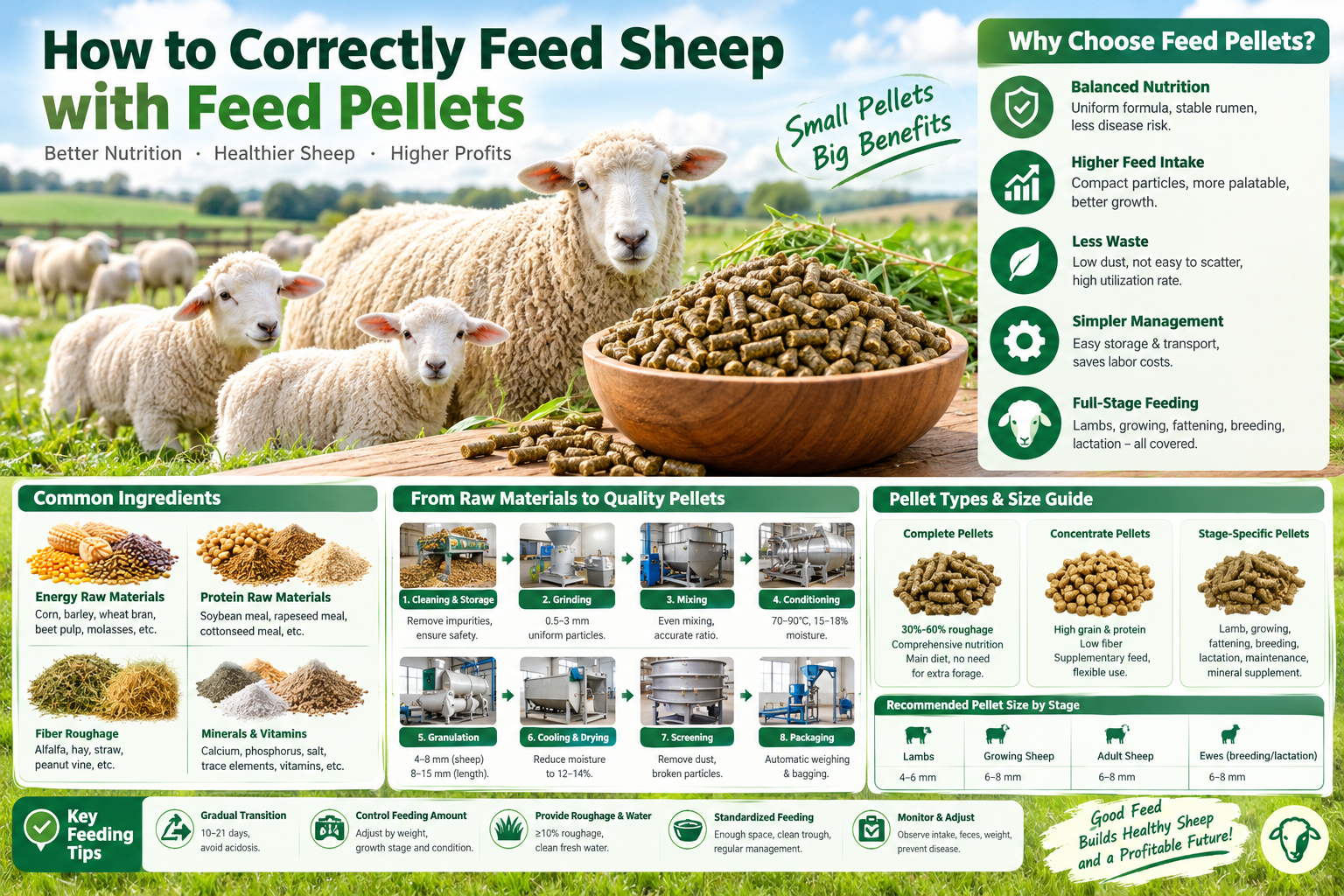
Size standard for different stage flock
Main type of pellet feed for sheep
1. Complete pellet feed: contains more than 30%-60% coarse feed, alfalfa, straw and other fiber raw materials, comprehensive and balanced nutrition, no need to match a large amount of coarse feed, can be directly used as the main diet, suitable for intensive breeding, no high-quality grassland, large-scale fattening farm, completely eliminate picky eating problems.
2. Concentrated supplement pellet feed: high grain, high protein, high energy formula, low fiber content, mainly used as supplementary feed, matched with forage, hay, silage feeding, suitable for conventional grazing + supplementary feeding mode, high flexibility, excellent cost performance.
3. Stage specific pellet feed: subdivided lamb starter feed, growth fertilizer, output fertilizer, ewes gestation feed, lactation feed, maintenance feed and mineral supplement pellets to accurately match the nutritional requirements of different stages.
Core Standards of Grain Quality and Feeding Skills
High-quality sheep particles should have the characteristics of high durability, low dust, good fluidity, moisture ≤14%, and meet the requirements of sheep exclusive formula: low copper, ammonium chloride, mineral balance. Feeding should match the type of trough, the new particles gradually transition 7 – 14 days, the whole process to ensure clean drinking water and sufficient coarse feed, home-made breeding preferred to choose 4 – 6mm general particle size, suitable for all age groups of sheep.
6. How to Choose the Right Sheep Feed Pellet Formula?
Matching formula indicators by flock growth stage
The nutritional requirements of sheep at different growth and breeding stages vary greatly, and protein and energy standards need to be accurately matched:
- Lamb starter: crude protein 16%-20%, high digestibility, high palatability, help rumen development;
- Weaning growing sheep: crude protein 14%-18%, medium and high energy, supporting bone and muscle growth;
- Fattening sheep: crude protein 12%-16%, mainly high energy, taking into account acidosis prevention and control;
- Ewe breeding period: crude protein 12%-15%, improve energy, optimize body condition, promote ovulation;
- Middle and late pregnancy: crude protein 14%-18%, high nutrition supply, support fetal growth, prevent ketosis;
- Lactating ewes: crude protein 14%-18% above, high energy and high protein, guarantee milk yield;
- Empty dry ewes: crude protein 9%-12%, low energy consumption, low cost, only to maintain basal metabolism.
Reasonable Selection of Complete Granules and Fine Supplement Granules
High-quality coarse feed is scarce, intensive captivity mode, priority is given to complete granules, coarse fiber is sufficient, nutrition is comprehensive, and it can be directly used as the main diet to eliminate the problem of picky eating. Farms with sufficient pasture and high quality hay/silage resources are preferred for fine supplement granules, combined with their own coarse feed, with higher flexibility and lower breeding costs.
Control the core nutrition ratio standard
Formula selection should focus on five indicators: first, metabolic energy to adapt to growth goals; second, crude protein matching stage standards; third, sufficient effective crude fiber to prevent acidosis; fourth, calcium and phosphorus ratio of about 2:1, adding ammonium chloride to prevent urinary stones, strictly controlling copper content; fifth, supplementing sufficient vitamins A, D, E, high concentrate formula with buffer to stabilize rumen pH value.
Combination of raw material cost and breeding condition selection
Priority should be given to the selection of locally available and cost-effective raw material formulas, detection of raw material nutrition and mildew, calculation of cost according to unit energy and unit protein, rather than simply comparing the price per ton. At the same time, the formula with good formability and high durability should be selected first to reduce feeding loss.
7. How to Properly Feed Sheep with Feed Pellets?
Progressive transitional feeding
The adaptability of rumen microorganisms in sheep is weak, and it is easy to cause rumen acidosis when feeding high concentrate pellet feed suddenly, which can cause death in severe cases. High energy pellet feed should follow the 10 – 21 day transition principle: adult sheep feed 25 – 50g on the first day, lambs 25g, every 1 – 2 days increment of 50g, gradually increase to the standard feeding amount. During the transition period, feed regularly every day, give priority to feeding high-quality coarse feed, and match pellet feed. If diarrhea, listlessness, loss of appetite and other stress symptoms occur, immediately reduce and increase coarse feed, and then continue to increase after recovery.
Precise control of daily feeding
Feeding amount is dynamically adjusted according to particle type, sheep weight, growth stage and roughage supply amount: 0.5%-1.5% of feed weight of dry ewes; 1.5%-3% of feed weight of fattening ewes; 1.5%-2.5% of feed weight of ewes in late pregnancy and lactation. 50 – 70kg adult sheep, 0.5 – 1.5 kg fine supplement granule daily feeding amount, combined with body condition score, growth speed flexible fine adjustment, strictly follow the feed label feeding standards.
Ensure the supply of roughage and clean drinking water
Roughage is the basis of rumen health of sheep. The proportion of effective roughage in the diet of captive sheep is not less than 10%, and that of lactating ewes is not less than 15%. Sufficient crude fiber can promote rumination and saliva secretion, and naturally buffer rumen pH value. At the same time, clean fresh water is supplied all day long. Under the dry feed feeding mode, the water requirement of sheep is greatly increased. Water shortage will directly affect intake and digestion.
Standardize feeding methods and daily management
The trough feeding mode ensures that each sheep has a feeding space of 15 – 30cm to avoid squeezing. Weak sheep and lambs can be fed separately; after adaptation, self-service feeding machines can be used to strictly control the feeding amount to prevent overeating; grazing supplementary feeding can be spread in long strips to ensure uniform feeding of sheep. Fixed feeding time, large feeding amount can be divided into morning and evening feeding, regularly clean the feed trough mildew, wet residue, pellet feed dry and dark storage, prevent mildew deterioration.
Normalized monitoring and refined maintenance
Daily observation of sheep feed intake, feces, mental state, regular weighing, body condition score, timely adjustment of feeding amount. When sick sheep are found, they are only isolated and cared for in time to ensure normal feeding of weak sheep. Pellet batch, formula change, also need to slow transition, to eliminate sudden change of stress. Fattening farms follow the principle of “first coarse then fine”, feeding high fiber particles first, and then gradually transition to high energy fertilizer.
8. What Equipment Is Needed to Produce Sheep Feed Pellets?
Raw material pretreatment equipment
Mainly used for raw material cleaning, disassembly, pretreatment, including cylinder cleaning screen, rotary screen, magnetic separation equipment, can completely remove stones, metals, impurities in raw materials, to ensure feed safety. For alfalfa, hay, straw and other coarse feed, need to be equipped with baler, grass cutter, the whole bundle of grass will be disassembled and chopped. When the moisture content of raw materials is too high, a tumble dryer can be used to adjust the moisture content of raw materials to 13%-15% of the granulation standard.
Breaking plant
The core equipment is hammer mill and special forage mill, which can crush grain, cake, hay and straw to 1 – 3mm standard particle size, adapt to granulation requirements, ensure particle uniformity and formability, and water drop mill is the mainstream selection for breeding feed production.
Precision batching equipment
It includes intelligent ingredient scale and automatic proportioning system, which can accurately weigh all kinds of raw materials according to the formula, eliminate manual proportioning error, and ensure the unity of nutrition indicators of each batch of feed. It is the basic equipment for standardized production.
Mixing equipment
The mainstream equipment is horizontal double-shaft blade mixer, vertical mixer, screw belt mixer, stainless steel material is easier to clean, better hygiene. It can realize uniform mixing of powdery raw materials, premix, liquid grease and molasses, and ensure no deviation of raw material ratio.
Conditioning and granulation core equipment
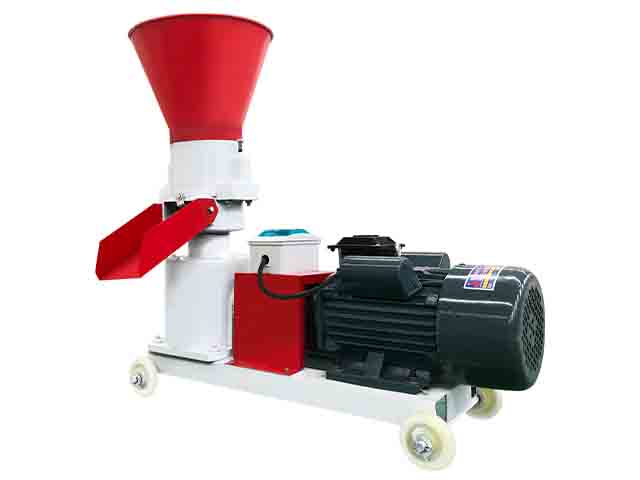
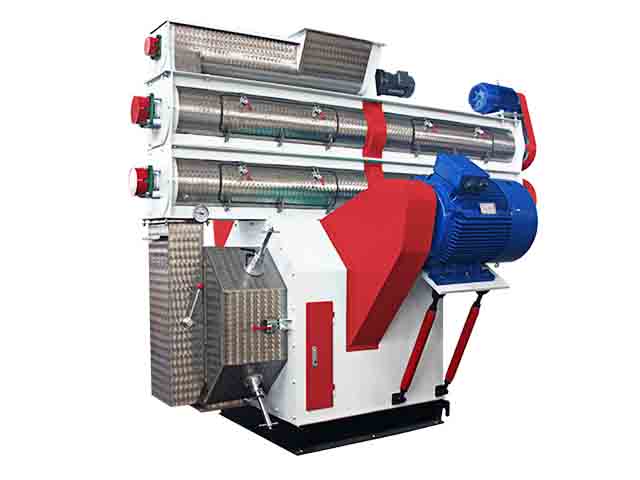
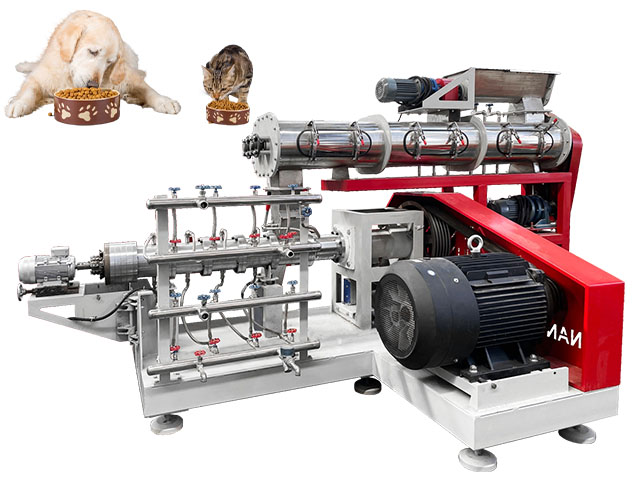
The conditioning equipment is steam conditioner, which can heat and humidify, gelatinize starch, adapt to sheep feed 70 – 82℃ conditioning standard, and improve particle quality. Granulation equipment is divided into two categories: ring mold granulator high productivity, strong stability, adapt to large-scale, industrial production line; flat mold granulator adapt to small farms, high fiber forage formula, cost-effective. Forced feeding device can be selected according to demand, suitable for alfalfa, straw and other high-fiber raw materials granulation.
Cooling, screening and packaging equipment
Cooling equipment to counter-current cooler based, rapid cooling dehumidification, solidification of particle hardness, prevent mildew. The vibrating screening machine can separate broken materials, dust, and oversized particles. The broken materials can be recycled for secondary use to ensure the uniformity of finished products. Automatic/semi-automatic packaging machine can complete weighing, bagging, sewing bag integration operation, with conveyor equipment, storage bin to achieve automatic production.
Auxiliary equipment and capacity selection
Auxiliary equipment includes belt conveyor, bucket elevator, screw feeder, pulse dust removal equipment, electric control system, steam boiler, grease molasses adding system, etc., to ensure continuous, clean and automatic operation of the production line.
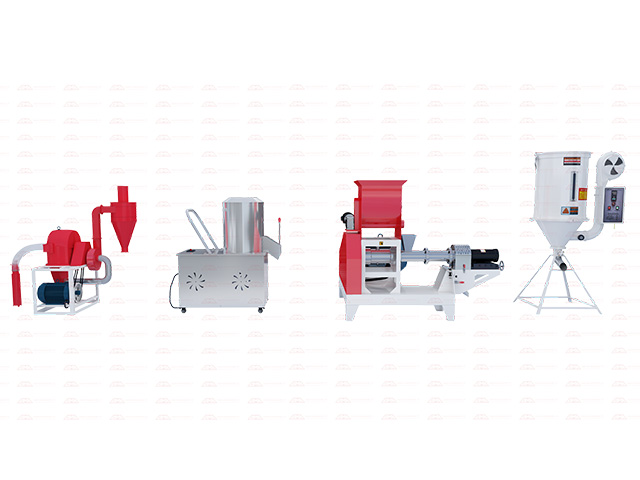
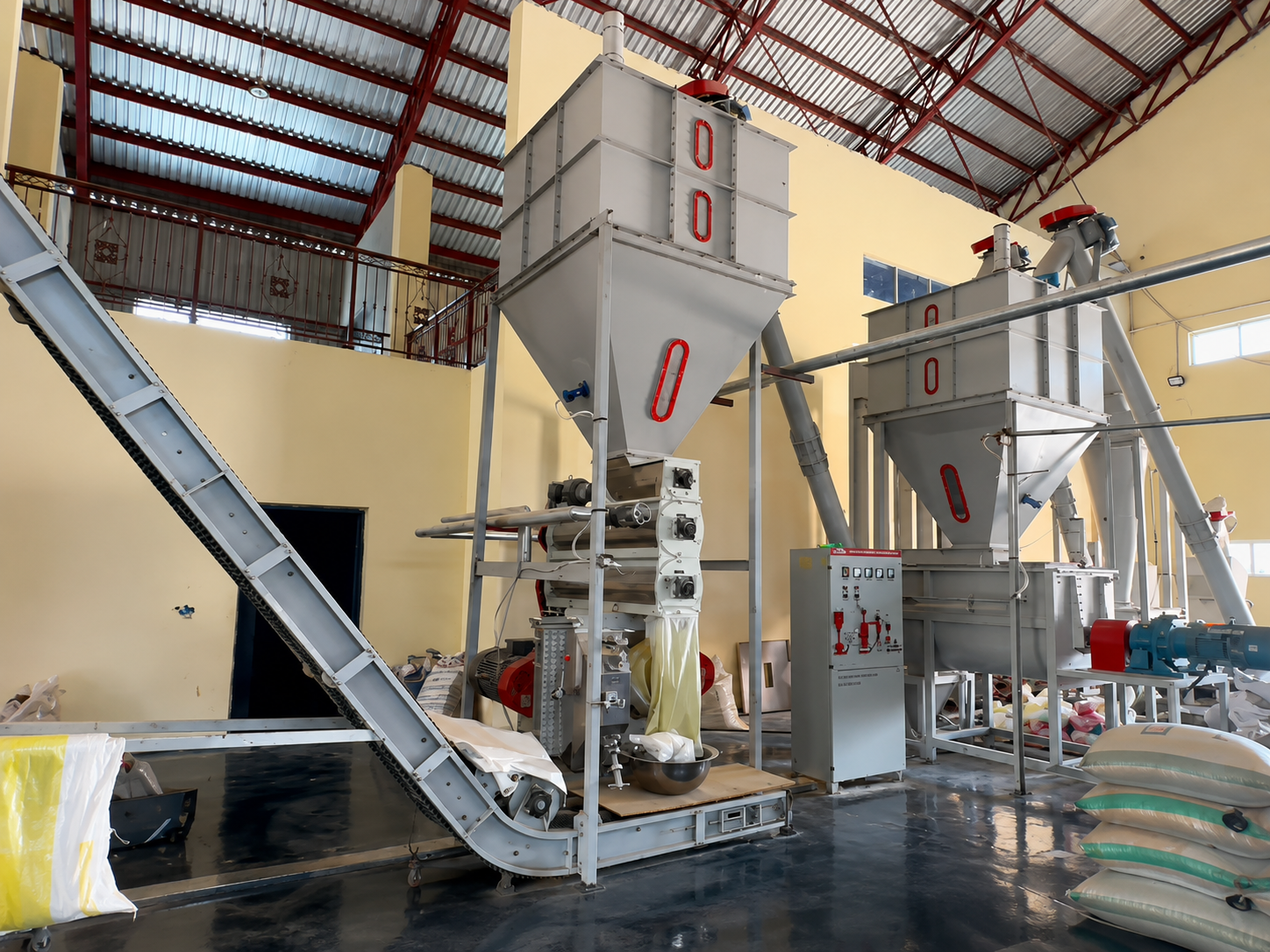
Small farms can choose simple production lines: grass cutter + grinder + small flat die granulator, capacity 0.2 – 1t/h, to meet their own needs; large-scale factories choose a full set of ring die automation production lines, capacity 1 – 40t/h, suitable for large-scale commercial production. Equipment combination can be customized according to formula, capacity and site conditions to match the production characteristics of sheep high fiber particles.