How To Start Poultry Feed manufacturing Business
The key to the core profitability of the poultry farming industry lies in feed quality and cost control. Feed costs account for 60%-75% of the total cost of poultry farming, up to 90%, which also makes poultry feed manufacturing an entrepreneurial track with strong demand, stable market and broad prospects. For entrepreneurs who want to enter the agricultural and animal husbandry processing industry, the poultry feed manufacturing business has a moderate threshold and is suitable for large-scale investment, which can accurately dock various breeding scenarios such as chicken, duck, goose, turkey, quail, etc. This article will explain how to start the poultry feed manufacturing business from the eight core dimensions of industry definition, raw material nutrition, equipment selection, quality control process, production process, particle specifications, industry pain points and competition upgrading, so as to help entrepreneurs to land steadily and make profits efficiently.
What is the poultry feed manufacturing business?
Poultry feed manufacturing belongs to the core supporting industry of poultry breeding, relying on professional processing equipment, the deployment of agricultural raw materials for processing into chicken, duck, goose, quail and other poultry stage nutrition feed. The business replaces traditional rough feeding with scientific formula and standardized production to accurately meet the needs of poultry growth, fattening, egg production and breeding, which can effectively improve breeding performance and feed conversion rate and reduce feeding losses. Feed mills mainly supply large and small farms and farming cooperatives through raw material procurement, precise matching, deep processing and standardized packaging. The products are mainly divided into three categories: powder, granular material and crushed material, which are suitable for poultry of different ages. At the same time, according to the growth stage, the opening material, growth period material, breeding fertilizer, egg-laying material and breeding poultry material are subdivided. The refined product structure is the core competition and profit advantage of feed enterprises.
Poultry Feed Raw Materials and Core Nutrition System
The core value of poultry feed lies in balanced nutrition. A single raw material cannot meet the physiological needs of the whole growth cycle of poultry. It must be scientifically matched with multiple raw materials to accurately match the nutritional standards of poultry in different categories and stages. Accurate nutrition ratio can not only improve the survival rate and production performance of poultry, but also greatly reduce feed waste. It is the core foundation for feed manufacturing enterprises to gain a foothold in the market, and it is also the core professional knowledge that entrepreneurs must master.
Essential Core Nutrients for Poultry
Poultry growth, egg laying and breeding need a complete and balanced nutrition system, which is mainly divided into eight nutrients: metabolic energy (grain and oil provide body energy); Protein and essential amino acids (building body tissues, focusing on supplementing lysine and methionine); Oil (supplementing high-energy and essential fatty acids to promote vitamin absorption); Minerals (major elements such as calcium and phosphorus maintain skeletal eggshell, trace elements such as zinc and manganese ensure metabolism); fat-soluble and B vitamins, generally supplied by premix; adequate clean drinking water; the right amount of dietary fiber, too high will reduce the efficiency of digestion; enzyme preparations, probiotics and other functional additives, improve feed utilization, maintain the health of poultry.
Nutrient Proportion Standard of Poultry at Different Growth Stages
The nutritional requirements of broilers and laying hens are significantly different, and the ratio parameters of different growth stages are strict, which is the core basis for feed customization production. Broiler breeding focuses on rapid fattening. The crude protein content of chicken feed needs to reach 21%-24% and metabolic energy 2900-3200kcal/kg in 0-3 weeks. The growth phase protein decreased to 19%-21%; The fattening period focuses on high energy and low protein, with protein content of 17%-19%. Layer breeding focuses on egg production performance, 0-6 weeks chick feed protein 18%-22%; The breeding period dropped to 14%-18%; During the laying period, the calcium content should be greatly increased to 3.5-4.5 to ensure the quality of eggshells and accurately control the effective phosphorus content.
Classification and application of core raw materials
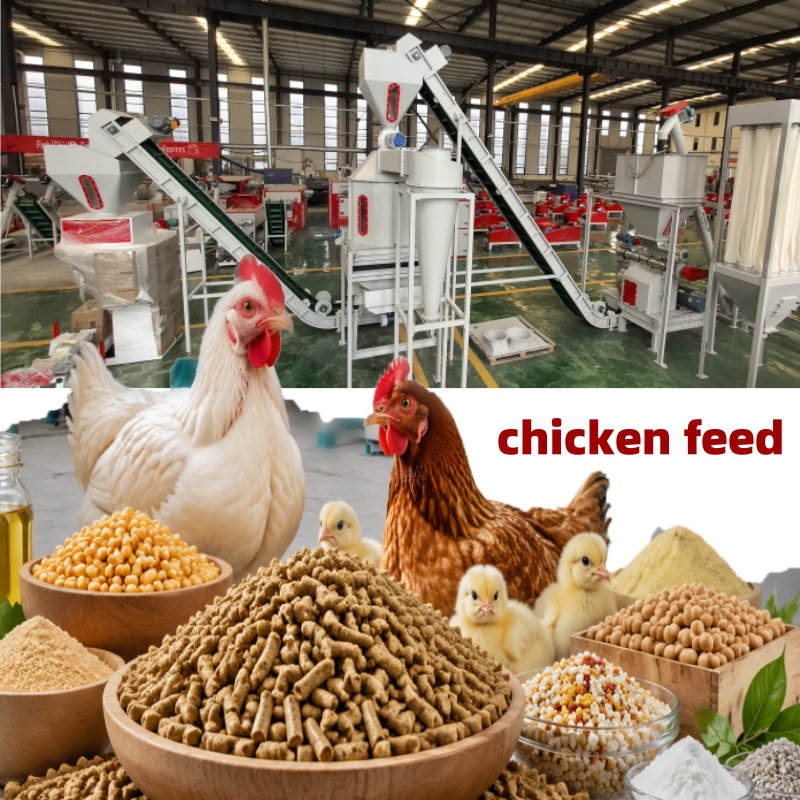
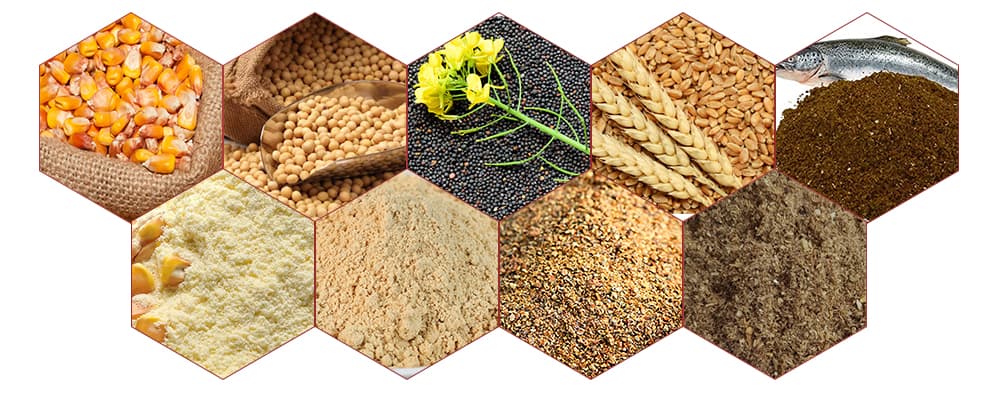
Feed raw materials are mainly divided into 4 categories, forming a complete nutrition supply system: the first 1 is energy raw materials, accounting for 50%-70% of the feed formula, mainly corn, wheat, sorghum and other grains, with by-products such as wheat bran and rice bran, supplemented by animal and plant oils to improve energy density; The second category is protein raw materials, mainly soybean meal (protein 44%-48%), with rapeseed meal, cottonseed meal, etc, fish meal and meat and bone meal are used as high-quality supplements for animal nature, and synthetic amino acids are added to optimize the ratio. The third category is mineral raw materials, calcium is supplemented by limestone and shell powder, phosphorus is supplemented by dicalcium phosphate, and premixed with salt and trace elements. The fourth category is trace premixed raw materials, which are supplemented with vitamins and trace elements to solve the problem of unbalanced nutrition of natural raw materials.
How to select suitable poultry feed manufacturing equipment
Poultry feed production equipment selection is the core link of plant planning, which directly determines the production line capacity, feed product quality, production energy consumption and long-term operating costs. Entrepreneurs need to combine their own investment scale, product positioning, raw material characteristics and budget, scientifically match the main equipment and supporting systems, reasonably plan the production capacity level, avoid idle equipment, insufficient production capacity, finished product quality is not up to standard and other business problems, for standardization, efficient production to lay the hardware foundation.
Core Basis for Equipment Selection and Capacity Positioning Standard
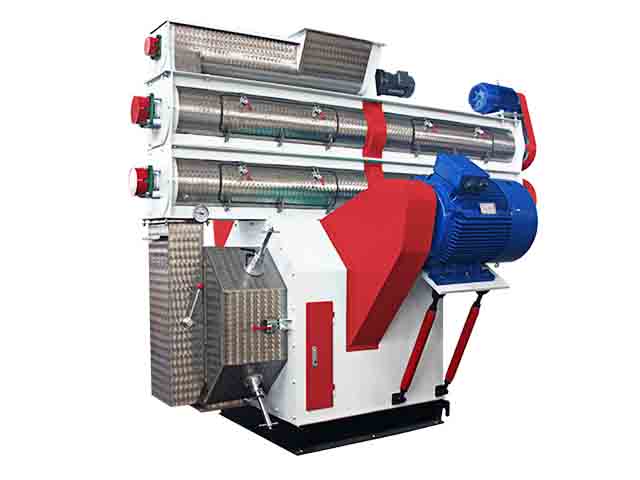
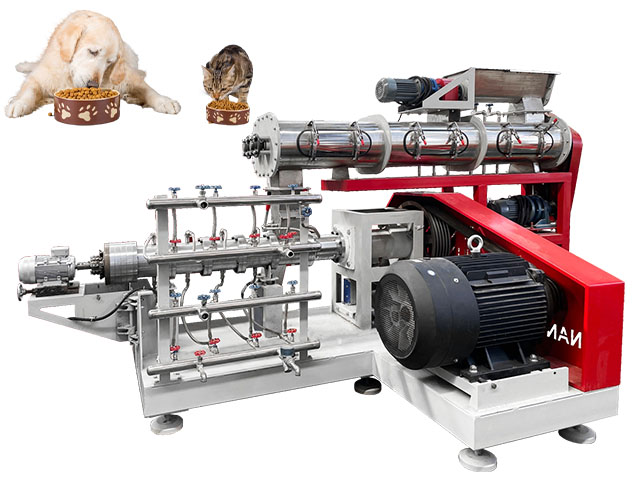
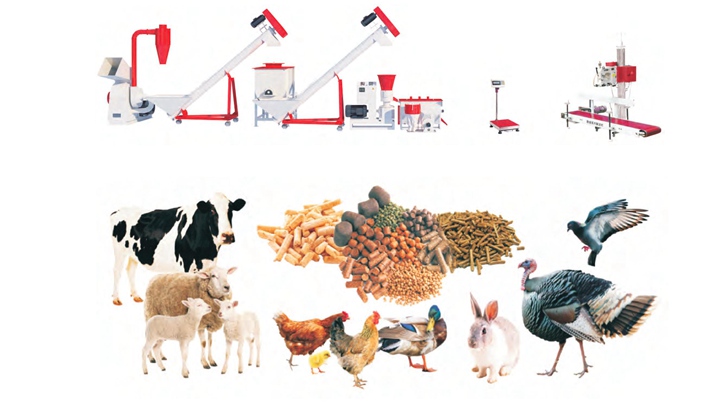
Equipment selection needs to focus on the three core parameters of production capacity, product form and raw material characteristics. It is suggested that the production capacity should be configured according to 1.3-1.5 times of the daily average peak production demand, so as to effectively avoid the problems of equipment redundancy loss and insufficient production capacity. According to the matching process equipment of feed category, only grinding and mixing equipment is required for powder materials, quenching, granulation and cooling equipment are required for granular materials of chicks. For high-fiber and high-fat special raw materials, wear-resistant and high-strength processing models are preferred. According to the scale of production capacity, production lines can be divided into three types: small farm-level, medium-sized commercial-level and large-scale fully automatic industrial production lines, which can be accurately adapted to different entrepreneurial volumes and production needs.
Complete production line core equipment and auxiliary system configuration
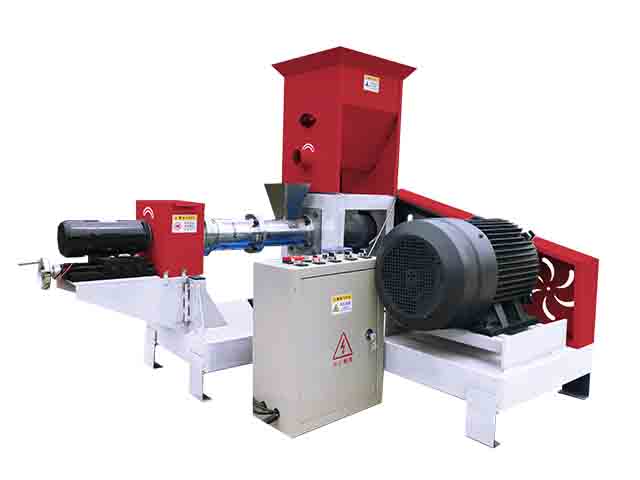
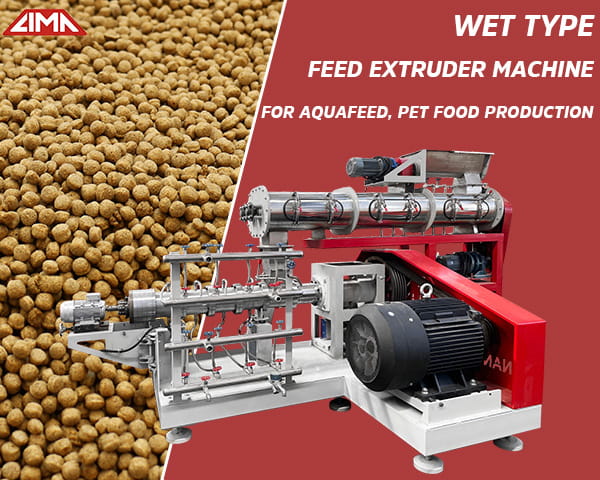
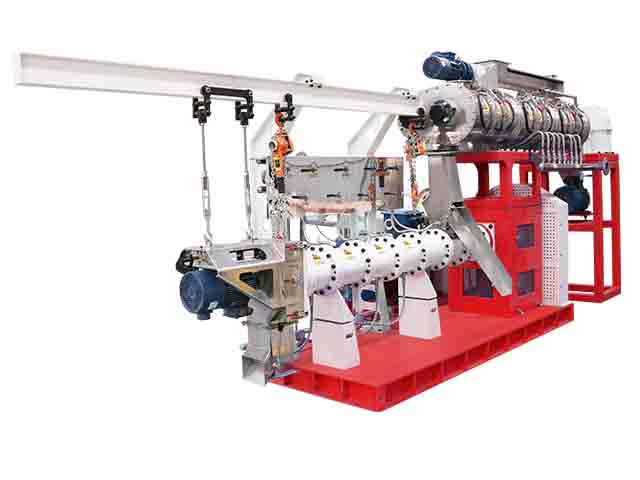
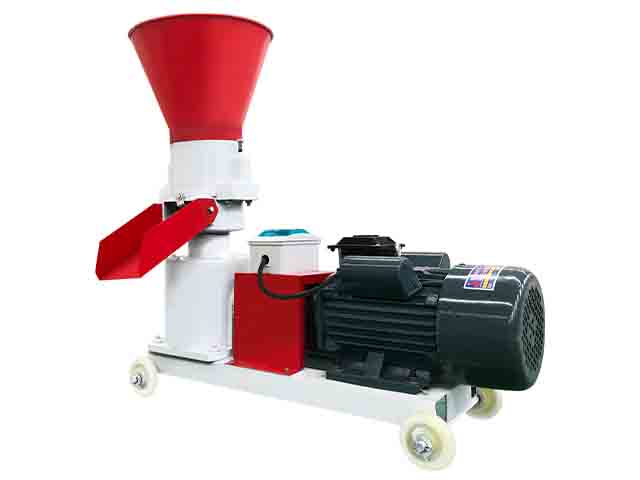
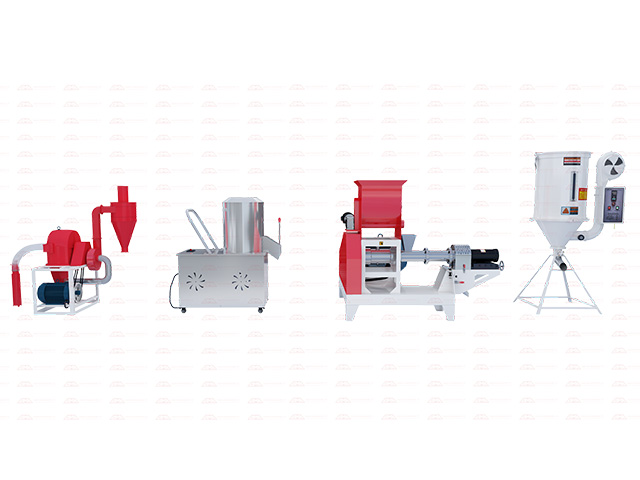
The standardized poultry feed production line consists of core production equipment and automated auxiliary systems, and each process is coordinated to ensure stable production and quality of finished products. The core equipment includes raw material cleaning equipment, hammer mill, precision batching and mixing equipment, steam conditioning equipment, granulator, countercurrent cooler, crushing and screening equipment and automatic packaging equipment. The whole process of impurity removal, crushing, mixing, conditioning, granulation, cooling, regulation and packaging is completed in turn, and the feed uniformity, molding degree and safety are strictly controlled. At the same time, with auxiliary equipment such as conveyors, dust removal systems, steam boilers, PLC intelligent control systems, etc., the degree of automation of the production line can be greatly improved, manual errors and labor costs can be reduced, and efficient, stable and clean large-scale production can be achieved.
Quality control scheme for the whole process of poultry feed manufacturing
Feed quality is the core competitiveness of feed enterprises. A sound quality control system can effectively avoid feed safety hazards, stabilize nutritional indicators, and reduce customer complaints. It is the foundation of long-term stable operation of enterprises. Poultry feed quality control covers the whole chain of raw material storage, production and processing, finished product testing, storage and logistics, relying on HACCP safety system and industry standards, to achieve the whole process controllable, standardized and traceable.
Raw material storage quality control
The quality of raw materials directly determines the basic quality of finished feed and is the most critical step in the quality control process. After the arrival of the raw materials, multi-point sampling inspection shall be carried out to visually check the appearance problems such as mildew, peculiar smell, moth and impurities, and professional inspection shall be carried out: strictly control the moisture content of grain within 13%-14% to prevent mildew in storage; Comprehensive detection of aflatoxin, ochratoxin and other mycotoxins; Review basic nutritional indexes such as crude protein, fat and fiber, and check harmful pollutants such as heavy metals, pesticide residues and salmonella. All unqualified raw materials are rejected directly, and a supplier rating system is established to continuously optimize and stabilize the high-quality supply chain.
Standardized quality control of production process
Quality control in the production process aims to ensure that the quality of each batch of feed is uniform and the process meets the standards. Enterprises need to regularly calibrate weighing equipment to ensure accurate feeding of trace additives; Strictly control the uniformity of mixing and control the coefficient of variation of mixing within 10%; According to the poultry category matching standard grinding particle size, to avoid uneven particle size affecting feeding and digestion; Accurately control the temperature, humidity and residence time of tempered steam to ensure full gelatinization of starch. The finished granular product needs to be cooled to room temperature and the moisture content drops below 12% to prevent agglomeration and mildew. At the same time, equipment killing and process isolation are done to effectively prevent cross-contamination of formulas and drug residues.
Inspection of finished product delivery index
All-round index verification shall be completed before the finished products are issued to prevent inferior products from entering the market. At the nutritional level, core parameters such as protein, calcium, phosphorus and metabolic energy are reviewed to ensure that the corresponding poultry growth standards are matched. Physical quality testing particle durability, powder proportion, hardness and specifications to ensure feeding effect; At the safety level, key items such as mycotoxins, pathogenic bacteria and drug residues are re-examined. Enterprises need to establish a normalized batch sampling system, according to the output and cycle of regular sampling, complete retention of testing data, to ensure that each batch of finished products compliance standards.
Warehouse Logistics and Traceability Management
Later storage and transportation is the last link to ensure the stability of feed quality. The warehouse strictly implements the principle of first-in, first-out, controls temperature and humidity, and does a good job of moisture-proof and insect-proof treatment to avoid the loss of feed nutrition and damp mildew. Product transport to do a good job of protection, to prevent secondary pollution. At the same time, a complete traceability ledger will be set up to cover the whole link of raw material procurement, production and processing, finished product inspection, shipment and sales, so as to realize the traceability of problems and responsibilities, and comprehensively improve enterprise compliance and product safety.
Standardized poultry feed manufacturing process
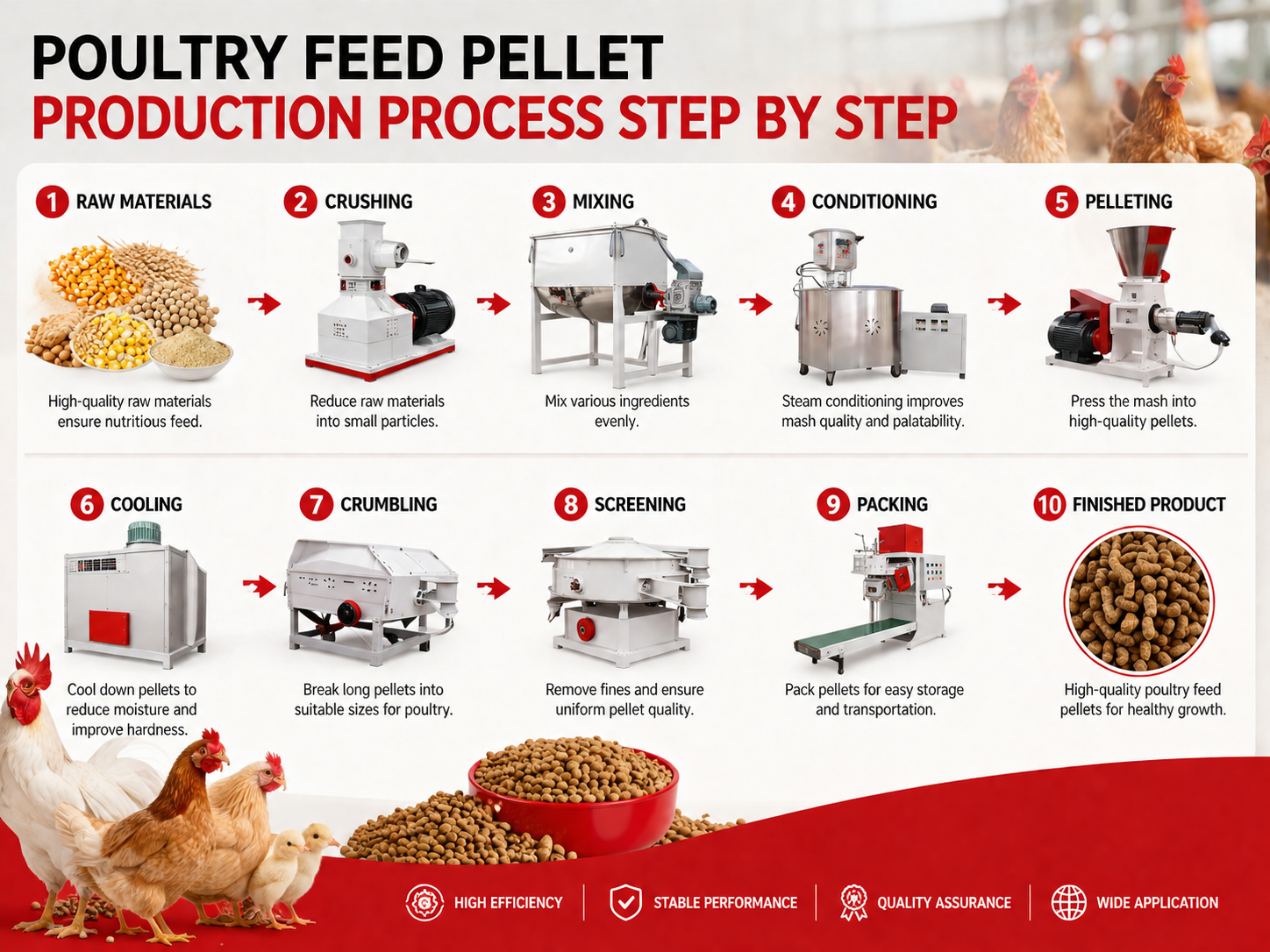
Poultry feed manufacturing process follows the principle of “precise ratio, fine processing, safety and control”, from the original raw materials to finished feed, forming a set of standardized, standardized production process, different forms of feed can be increased or decreased according to the needs of the process, adapt to the production needs of powder, granular material, crushed material. The complete pellet feed production process consists of nine core processes, which are coherent, logical and suitable for commercial mass production.
The first step is raw material receiving and pretreatment. After all kinds of grain, meal, minerals, premix and other raw materials are put into storage, weighing registration shall be completed first, impurities and metal foreign matters shall be removed through professional cleaning equipment, so as to prevent impurities from damaging equipment and affecting feed safety. Qualified raw materials shall be classified and stored in the silo for standby.
The second step is fine crushing. According to the requirements of the production formula, adjust the screen size of the pulverizer, grind the raw materials to the suitable particle size, the particle size of the chick feed is more fine, and the adult feed is moderately thickened. After crushing, the dust is cleaned through the dust removal system to ensure the workshop environment and the purity of the raw materials.
The third step, precise ingredients and mixing. Relying on the computer formula system, in strict accordance with the nutritional standards of different poultry categories and growth stages, all kinds of main materials, auxiliary materials and trace additives are accurately weighed, put into a mixer to fully mix, and liquid raw materials such as oil and syrup are added simultaneously to ensure uniform nutrition for each 1 of feed.
The fourth step, steam conditioning. The mixed powder enters the quenching and tempering equipment, and an appropriate amount of steam is introduced to adjust the temperature and humidity, soften the texture of raw materials and gelatinize starch, which can not only improve the palatability and digestion and absorption rate of feed, but also kill some harmful bacteria and improve the safety of feed and the effect of particle forming.
The fifth step, high pressure granulation. The raw materials after conditioning are sent to the granulator, and the die is compressed and molded under high pressure. The die with corresponding aperture is selected according to the production requirements to process cylindrical pellet feed with uniform specifications. The high temperature and high pressure process further optimizes the feed structure and reduces the waste of feeding.
The sixth step, low temperature cooling. The newly formed granular material has high temperature, large moisture and soft texture, and needs to be sent to a counter-current cooler to quickly cool down and dehumidify through fresh air, so that the granular material can harden and set, reach the standards of storage, transportation and feeding, and prevent subsequent mildew and agglomeration.
The seventh step, particle crushing (optional process). According to the demand of chicks for opening materials, the cooled granular materials are sent to the granulator and crushed into fine and uniform granules, which are suitable for the feeding characteristics of young birds with small mouths and solve the problems of difficult feeding and waste of feed for chicks.
The eighth step, grading screening. Finished feed is screened by vibrating screen to separate powder, oversized particles and qualified finished products. Unqualified powder and particles can be recycled and reprocessed to ensure uniform specifications and high quality of finished feed.
The ninth step, finished product packaging and storage. Qualified finished feed is accurately weighed, sealed and coded by automatic packaging equipment, marked with formula type, applicable poultry, production date and other information, stored in warehouse and classified, and finished product sampling and quality inspection is completed at the same time, and can only be sold to the outside world after passing the standard.
Poultry feed pellet size selection core skills
The size of feed particles directly affects the feed intake, respiratory health, digestive efficiency and feed conversion rate of poultry, which is the key detail to determine the economic benefits of breeding. Large particles are easy to cause poultry eating difficulties, picky food refusal to eat, too small particles are more dust, high waste and easy to stimulate the respiratory tract. Farmers and feed mills need to accurately match the specifications of pellets or crumpies according to poultry species, age and growth stage, and at the same time customize the particle size by adjusting the diameter of the granulator mold to maximize the feeding effect and product suitability.
Standard for Size of Special Granules for Broilers
The size of broiler particles follows the principle of adaptation from fine to coarse. 0-14-day-old chicks have weak feeding ability and are not suitable for hard granules. 2-3.5mm crushed grains should be used, which is more conducive to open feeding and digestion. 11-28 days old broilers are adapted to standard granules of 3-4.5mm and 5-7mm in length, taking into account the growth rate and feed utilization rate. At the later stage of fattening over 28 days old, 3-5mm large particles can be used to improve feeding efficiency and reduce pelleting processing costs without affecting production performance.
Particle size adaptation requirements for laying hens and breeding birds
Laying hens and breeding birds focus more on growth and development stability and laying performance. 0-6 weeks old chicks suitable for 1.5-3mm fine grain, eating more easily, lower loss. The breeding stage can gradually transition to 2-3.5mm small particles, exercise muscle stomach digestion ability. After entering the peak period of egg laying, it is recommended to use 4-6mm medium and large granules to effectively reduce the waste of feed spilling. At the same time, it is matched with 2-4mm granular calcium source to stabilize calcium supplement and improve eggshell hardness and egg laying stability.
Specification for particle size for waterfowl and small rare birds
The feeding structure of different niche poultry is quite different, and the particle size needs to be customized. Ducks, geese and other waterfowl beak, feeding ability, adult individuals can tolerate 4-6mm and above large pellet feed, suitable for large-scale rapid feeding. Quail and other small rare birds are small in size and have slender esophagus. 1-2mm ultra-fine particles must be used to avoid eating difficulties, choking and insufficient feeding, and ensure normal growth and development. Feed enterprises can customize the mold according to the main breeding category to create fine, high-fit stage feed products.
Common Core Challenges in the Poultry Feed Manufacturing Industry
Poultry feed manufacturing is a rigid demand industry with small profits but quick turnover. In the process of production and operation, it will face multi-dimensional challenges such as raw materials, technology, cost, policy and technology. All kinds of problems are interrelated and directly affect product quality, production cost and enterprise profitability. Novice entrepreneurs are familiar with the pain points of the industry in advance and make a good response plan, which can effectively avoid business risks and stabilize production and operation.
The price of raw materials fluctuates greatly and the supply chain is unstable.
Corn, soybean meal as the core raw materials, accounting for 85%-90% of the cost of feed, prices by the weather, geo-market, trade policy, energy market fluctuations, raw material shortages, price increases will directly compress profits, and even lead to production line production, shutdown, disrupt production plans.
The quality of raw materials is uneven and the safety risk is high.
The nutritional content of raw materials from different places of origin and batches is quite different. Some raw materials have problems such as excessive moisture, mildew, excessive mycotoxins, adulteration and so on. If the detection is not in place, it will lead to nutritional imbalance of feed and potential safety hazards, thus affecting the health of poultry and causing customer complaints.
The stability of feed quality is difficult to control.
Affected by raw material differences, equipment wear, manual operation deviation, prone to uneven ingredients, poor particle durability, high powder rate, nutritional ratio imbalance and other issues, resulting in inconsistent feed quality between batches, affecting poultry growth stability, reduce customer stickiness.
Equipment operation and maintenance and production costs are high.
Crusher, granulator core accessories are easy to wear, frequent blockage, failure shutdown problems, increase maintenance costs, while crushing, granulation process energy consumption is extremely high, superimposed labor, packaging, logistics costs, further compression of the industry’s thin profit space, small processing plant cost control pressure is greater.
Compliance and quality control system requirements are strict.
The industry has clear specifications for feed safety, labeling, residue control and traceability system. Problems such as cross-contamination of veterinary drug feed, incomplete testing records and lack of compliance procedures can easily lead to punishment, product recall and affect the reputation of enterprises.
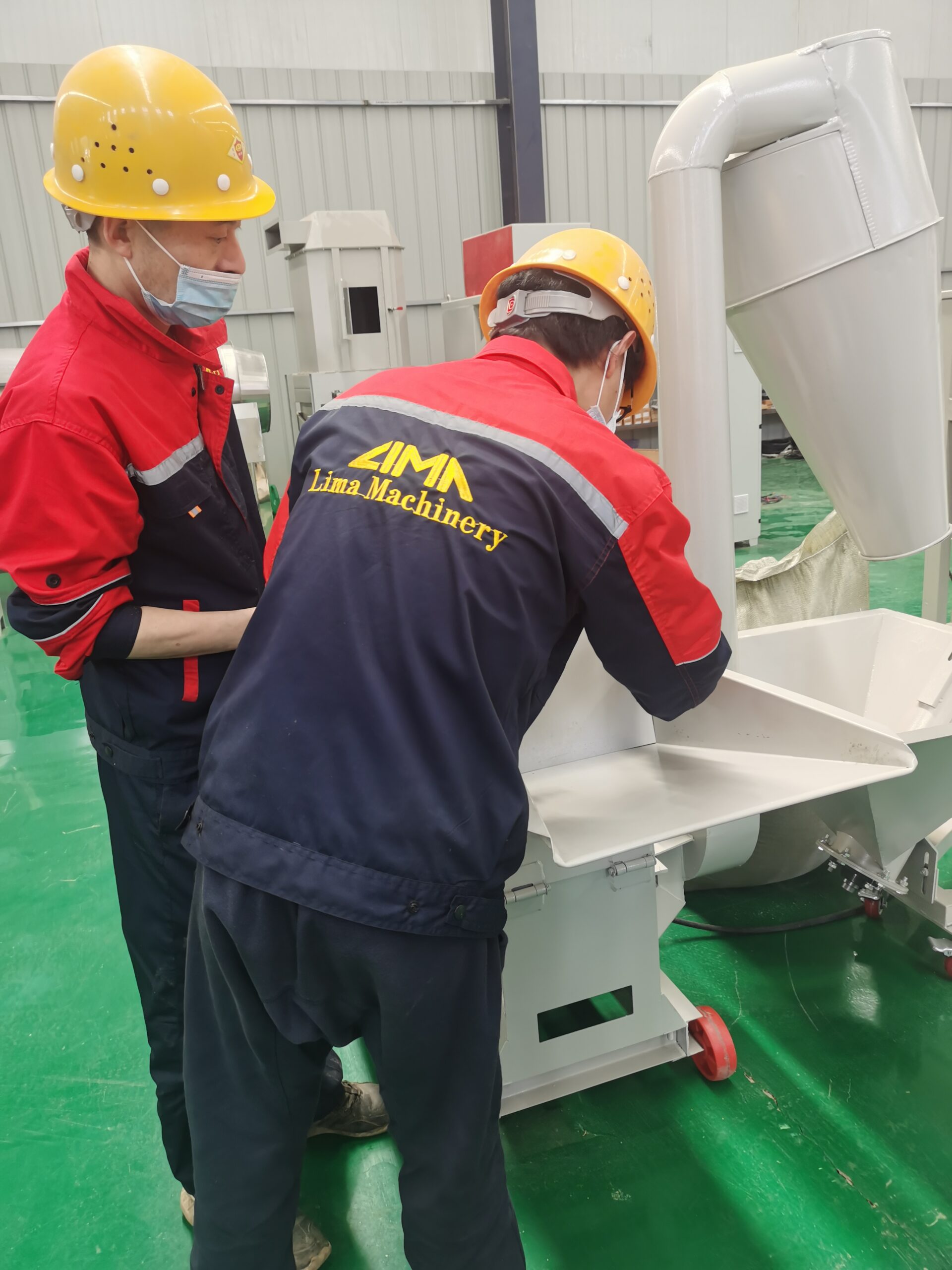
Practical Strategies to Enhance the Core Competitiveness of Poultry Feed Enterprises
The homogenization of the poultry feed industry is highly competitive, and it is difficult to make a long-term profit simply by low-price competition. In order to stand firm in the market and improve profits, we need to make multi-dimensional efforts from cost control, quality upgrading, product differentiation, service empowerment, technology iteration and supply chain optimization to create differentiated competitive advantages and upgrade from “selling feed products” to “providing breeding solutions.
Optimize the raw material supply chain and strictly control cost risks.
Through multi-channel and multi-origin procurement, the risk of raw material price fluctuation is dispersed. The price of raw materials is stabilized by batch procurement and long-term contract signing. The introduction of near-infrared rapid detection equipment to produce according to the actual nutritional value of raw materials, instead of simply purchasing by weight, accurately reduces the formula cost; At the same time, the rational use of local agricultural and sideline products and compliance replacement of raw materials will reduce the production cost without affecting the quality.
To create the ultimate stability of product quality, the establishment of word-of-mouth barriers.
Abandon the simple thinking of low-cost formula, adopt accurate nutrition ratio, focus on digestible amino acids and accurate metabolizable energy indexes, and adapt to the growth needs of different poultry; Strictly implement the whole process of quality control, stabilize the core indicators such as particle hardness, size and low powder rate, and ensure the uniform quality of each batch of feed; Targeted optimization of formula, the introduction of non-resistant feed, intestinal maintenance feed, high-yield egg feed and other high-end products to meet the needs.
Achieve product and service differentiation and jump out of low prices.
Abandon the single product sales mode and customize exclusive refined formulas for different categories such as broilers, laying hens, waterfowl and rare birds. Provide private formula customization service for large-scale customers; At the same time, supporting value-added services, providing farmers with services such as breeding technical guidance, feed conversion rate detection, disease prevention consultation, binding customer stickiness and enhancing product premium space.
Optimize production operations, reduce costs and increase efficiency.
Establish a regular equipment maintenance system to reduce equipment downtime losses; Targeted upgrades of automated batching and packaging equipment to reduce manual errors and labor costs; Strict control of raw materials and finished product losses in production, storage and transportation to reduce energy consumption and material waste and maximize the profit per ton of feed.
Leveraging technology and brand upgrades to broaden the market.
Use professional formula software and real-time detection equipment to realize intelligent production and improve formula accuracy and production efficiency; Build a perfect traceability system and compliance qualification to connect the high-end breeding market with large-scale cooperation channels; Deeply cultivate the local market, build regional reputation brands, strengthen brand credibility through customer cases and breeding effect data, and gradually expand market share.
Summary
Based on the full text, poultry feed manufacturing is a rigid, stable, and sustainable agricultural and animal husbandry entrepreneurial project. The entry threshold is moderate and can be adapted to various investment scales such as small family workshops, small and medium-sized processing plants, and large-scale industrial production lines. The core logic of entrepreneurial success does not lie in blindly expanding production capacity and low-price competition, but in precise nutritional formulas, stable product quality, extreme cost control, and differentiated service systems.
Novice entrepreneurs can follow four core priorities when landing: first, strictly control the quality of raw materials and procurement costs, and avoid quality and risk problems from the source; Second, standardize the production process to ensure stable quality of feed batches; Third, focus on the breeding effect and use feed conversion rate and poultry growth capacity data to build core competitiveness. Fourth, fine operation, reduce production losses and improve customer service quality. Relying on a scientific production system and operational thinking, the poultry feed manufacturing business can achieve long-term stable profitability and continue to take root in the agricultural and animal husbandry track.