Feed pellet size and its effect on poultry production performance
- Core value of feed pellet size for poultry farming
- Effects of feed pellet size on feed intake and feed intake of poultry
- Standard for suitable feed pellet size for poultry at different growth stages
- Key Factors Affecting Optimal Feed Pellet Size
- Regulation of Particle Size on Poultry Feed Conversion Ratio
- Effects of Particle Size on Digestive Function and Intestinal Health of Poultry
- Effect of Particle Size and Quality on Feed Waste and Its Economic Value
- Precise control method of particle size in feed production
- Overall Optimization Strategy of Poultry Feed Pellet Size
- Conclusion
In the production of large-scale poultry breeding, breeding practitioners often focus on the core indicators of feed nutrition ratio, raw material quality, trace element matching, but easy to ignore the key value of the physical form of feed, in which feed particle size is the core hidden factor affecting the efficiency of poultry breeding. The diameter, length and overall uniformity of feed particles directly determine the feeding behavior, feed intake, digestion and absorption efficiency of poultry, and profoundly affect the growth and development of poultry, egg production performance, group uniformity and survival rate, and ultimately the overall profitability of the farm. The particle size is too small will produce a large amount of dust, causing poultry selective feeding, nutrition waste, the decline of air quality in the house and other issues; the size is too large will lead to young birds feeding difficulties, insufficient feed intake, growth stagnation, uneven population growth. With the iterative upgrade of modern breeding technology and feed processing equipment, precise matching of the exclusive particle size of poultry at different growth stages has been a standardized means of production for large-scale breeding from theoretical research, and has become a key gripper to enhance the level of refinement and core competitiveness of poultry breeding.
Core value of feed pellet size for poultry farming
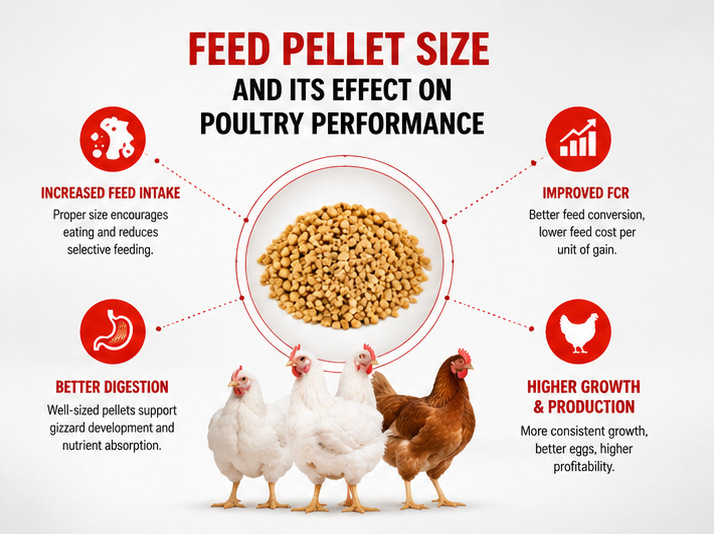
Feed pellet size is one of the most practical and cost-effective breeding control factors for regulating poultry production performance, and it is also an indispensable core link in the modern poultry nutrition management and control system. Under the premise of fixed feed formula and balanced matching of nutrients, the difference of particle physical form will directly change the feeding mode and digestion and metabolism efficiency of poultry, and form a completely different breeding effect. Different from quantifiable nutritional indicators such as protein, energy and vitamins, particle size interferes with the growth mechanism of poultry through physical action, and becomes the key to unlock the maximum utilization rate of feed nutrition.
The scientifically adapted particle size can accurately match the size of poultry beak, the degree of digestive tract development and daily nutritional requirements, effectively improve the independent feed intake of poultry, promote the healthy development of muscle and stomach, greatly reduce feed waste and dust loss, continuously optimize the feed conversion rate, and make poultry grow evenly and lay eggs stably. On the contrary, the particle size adaptation imbalance, even if the feed nutrition formula perfect standard, there will be low feed efficiency, nutrient absorption is not complete, growth and development lag, egg production performance fluctuations and other problems, directly pull down the economic benefits of breeding. A large number of breeding practices and scientific research experiments have confirmed that the fine control of particle size is the core means to improve the comprehensive performance of poultry breeding at low cost and high efficiency.
Effects of feed pellet size on feed intake and feed intake of poultry
The feeding mode of poultry has fixed physiological characteristics, relying on a single pecking to pick up a single feed particle to complete eating, will not actively grind the feed, its feeding efficiency depends entirely on the matching degree of the feed particle size and its own physiological conditions. The slight deviation of particle size will directly change the difficulty, time and enthusiasm of poultry, and ultimately affect the average daily feed intake and total nutrient intake, which is the basic factor to regulate the growth rate of poultry.
The size of the standard, moderate size of the pellet feed, can let the poultry single peck to get more nutrition, greatly reduce the physical consumption and time cost in the process of feeding. As the age of poultry grows, the daily nutritional and energy requirements continue to increase, and the adapted large-size particles can efficiently meet their feeding needs and avoid the growth lag caused by insufficient feeding efficiency. Compared with powdered feed and finely divided pellet feed, regular and moderate pellet feed can significantly increase the willingness of poultry to actively feed, especially in the early stage of poultry growth, which can quickly establish stable feeding habits and build a solid foundation for subsequent growth and development.
Too small particles and excessive dust can cause serious selective feeding behavior. Poultry will take the initiative to screen large particles in feed and discard fine dust and tiny particles, which will not only cause serious feed waste, but also lead to unbalanced nutritional intake of poultry. Some poultry will suffer from nutritional deficiency and weak growth due to picky eating. At the same time, finely divided feed is easy to spill and fly in the feeding process, further increasing the feed loss, but also worsen the air quality of the chicken house and induce respiratory problems. However, particles with too large size will form feeding barriers for young birds. Young birds with short beaks and limited oral capacity cannot peck and swallow large particle feed smoothly, resulting in insufficient feed intake and low average daily weight gain, which will lead to uneven group growth and prolonged breeding cycle.
Standard for suitable feed pellet size for poultry at different growth stages
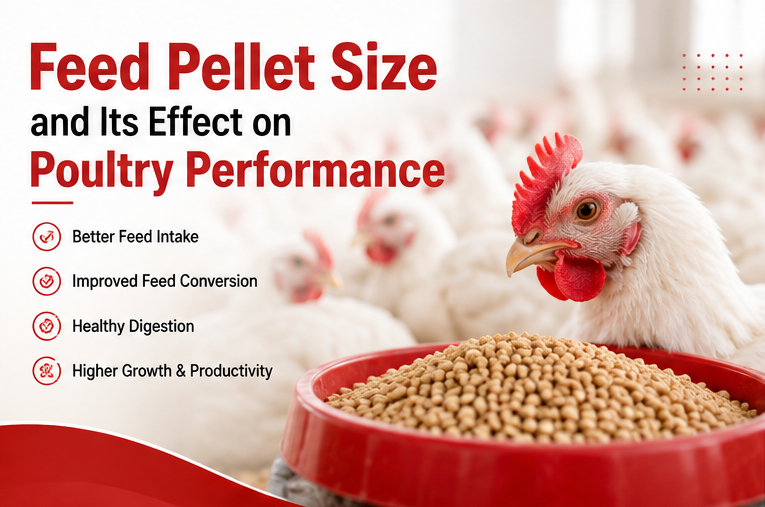
The size of the beak, the degree of muscle and stomach development, the maturity of the digestive tract and the nutritional requirements of poultry will change rapidly with the growth stage, and there is no universal feed pellet size standard. According to the different growth cycles of broilers and laying hens, matching the exclusive particle diameter and length is the core premise to ensure the stable growth of poultry and realize the production potential, and is also the core control point of modern fine breeding.
brooding stage of chicks
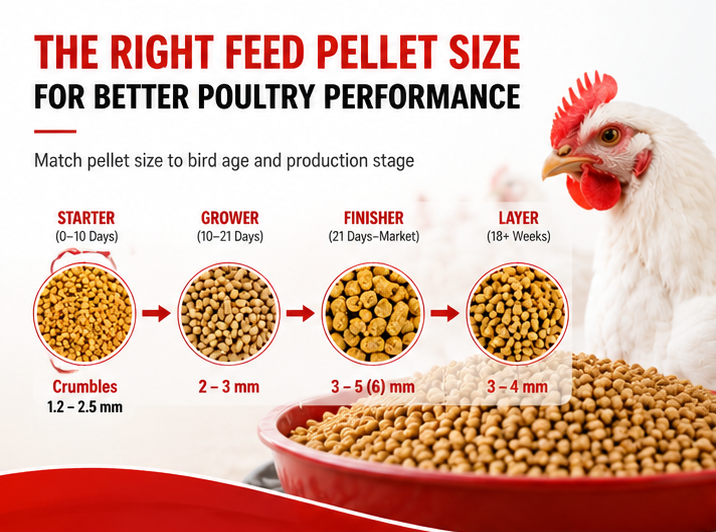
0-14 days old chicks are in the most critical foundation stage of growth and development, with very small beak, undeveloped digestive tract, weak muscle and stomach function, limited feeding and swallowing ability, and extremely high sensitivity to feed particle size. At this stage, it is suitable for 1.2-2.5mm broken materials or micro-particles. Such fine particles have uniform texture and moderate weight, which are in line with the physiological characteristics of chicks. They can make chicks peck and swallow easily, effectively improve the early feed intake, and ensure that chicks can quickly establish feeding habits.
A large number of breeding test data showed that the average daily weight gain, population uniformity and feed conversion rate of chicks using 1.2-2.5mm standard particle crushing material during the brooding period were significantly better than those of chicks using powdered feed or large particle feed. If the large particles are blindly used during the brooding period, it will lead to difficulty in feeding, insufficient feed intake and lag in early growth and development of chicks. However, this short growth board is difficult to make up for completely in the subsequent growth stage, which will eventually affect the overall slaughter weight and breeding benefits. At the same time, at this stage, the particle size is uniform and the amount of dust is low, which can effectively avoid the chicken picky food and feed waste, and ensure the orderly development of the group.
Broiler Breeding and Fattening Stage
Broilers aged 14-28 days enter the breeding period, the strength of the beak and the capacity of the oral cavity are greatly improved, the digestive function of the muscle stomach and intestinal tract is gradually improved, the adaptation range of the particle size is significantly expanded, and the smooth transition to the pellet feed with a diameter of 3-4mm and a length of 5-6mm can be achieved. The size of the particles can not only meet the rapid growth of broiler feeding needs, improve the nutritional intake of a single pecking, reduce the consumption time and physical consumption, while retaining a moderate particle thickness, continue to stimulate the development of the muscle stomach, strengthen the digestive function, help broiler steady weight gain.
Broilers from the age of 21 days to the fatten period have a peak growth rate, a significant increase in nutrition and energy requirements, and can be adapted to large-size pellet feed with a diameter of 3-5mm and a length of 4.5-10mm. Under the scenario of stable breeding conditions and up to standard pellet durability, 5-6mm diameter pellets can also be used normally. Large-sized particles can greatly increase the feed intake of a single intake, shorten the daily intake time, reduce the energy loss in the feeding process, and allow more nutrients to be used for body growth and muscle deposition.
It is important to note that the premise of increasing the particle size in the breeding and fattening stages is to ensure the quality of the particles. If the particle durability is insufficient, easy to break, produce a large number of dust and fine particles, not only can not play the advantages of large particles, but also induce selective feeding, feed waste and other problems, offset the size optimization of the breeding gain. The practice of large-scale broiler breeding shows that accurate matching of large-size regular particles at this stage can effectively increase daily weight gain, optimize feed conversion rate, increase feed processing capacity, reduce energy consumption per ton of feed, and achieve two-way efficiency in breeding and processing.
Full production cycle of laying hens
Compared with the fast-growing broilers, the growth rhythm of laying hens is gentle, the production cycle is longer, the particle size adaptation standard is more stable, and there is no need to adjust frequently. The physiological characteristics of 0-6-week-old brooding early-stage laying hens are consistent with those of broiler chicks. They are suitable for 1.5-2.5mm crushing materials and micro-particles to ensure smooth feeding and normal development of young chickens and build a solid foundation for body growth.
From the breeding period to the peak laying period after 6 weeks of age, standard particles with a diameter of 3-4mm are the best choice, which can run through the entire core production cycle of laying hens. The uniform and stable particle size can make the laying hens maintain a stable average daily feed intake, continuously and stably take in energy, protein and minerals, and ensure the normal development of the reproductive system and stable egg laying performance. At the same time, regular particles can effectively avoid the waste of layer picky eating and feed spilling, maintain the uniform body of chickens, lay eggs neatly, and reduce the occurrence of defective eggs and discontinued chickens. Most large-scale laying hen farms will use 3-4mm pellet feed after the laying hens are mature. Only by adjusting the feed nutrition formula to meet the needs of different laying stages, there is no need to change the pellet size, thus greatly simplifying the breeding control process and ensuring the stability of production.
Key Factors Affecting Optimal Feed Pellet Size
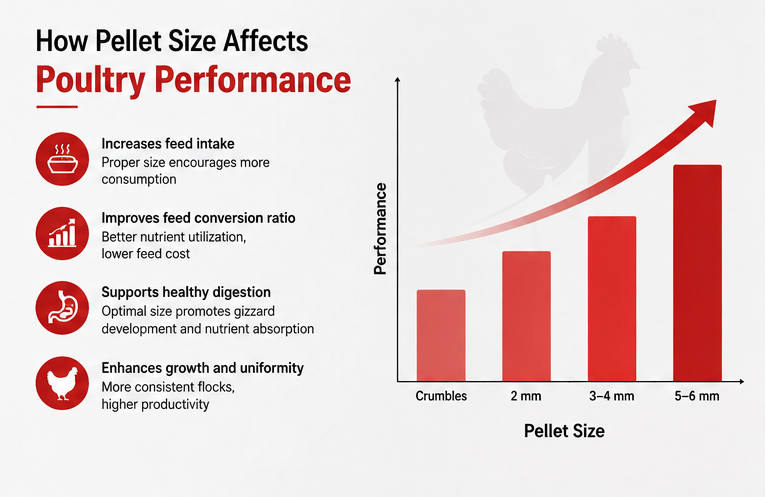
The general particle size adaptation standard of the industry provides a basic reference for aquaculture production, but there are differences in the breeding conditions, varieties and equipment configuration of different farms, so it is necessary to fine-tune the particle size according to the actual situation in order to achieve the optimal breeding effect. Various influencing factors interact to determine the optimal particle size parameters in different scenarios.
Poultry breed and growth genes are the core factors. There are obvious differences in the growth speed and physiological structure of different strains of poultry. For fast-growing broiler strains, the beak and digestive tract develop faster and can be adapted to large-sized pellet feed earlier. However, the slow-growing high-quality native chickens and characteristic laying hens have a slow development rhythm, so it is necessary to delay the upgrading time of pellet size appropriately to avoid poor feeding adaptation.
Farming equipment and feeding mode directly affect the effect of particle adaptation. The feed storage and conveying methods of trough feed line and disc feed line are different, and there are differences in the requirements for the integrity and size uniformity of particles. Open trough space is sufficient, poultry feeding freedom is high, can adapt to large particles. At the same time, when the breeding density is too high, it is necessary to ensure regular particle size and convenient feeding, so as to avoid insufficient feeding of vulnerable poultry, resulting in uneven growth of the population.
Particle quality and dust proportion are the key conditions that can not be ignored. No matter how high the size matching degree is, if the particle durability is poor, it is easy to break during transportation and feeding, and the dust proportion exceeds the reasonable threshold of 10%-15%, the adaptation advantage of particle size will be destroyed. Excessive dust can induce problems such as picky eating, waste, and digestive disorders, which directly offset the performance improvement brought about by size optimization.
The breeding environment and raw material conditions will also have a slight impact. The climate temperature and humidity in different regions are different, which will affect the feeding activity and digestion and metabolism speed of poultry. Different crude fiber and moisture content of feed raw materials will change the forming effect and hardness of particles. Breeding practitioners need to slightly fine-tune the particle size and hardness in combination with local breeding experience and raw material characteristics to adapt to local breeding scenes.
Regulation of Particle Size on Poultry Feed Conversion Ratio
Feed conversion rate (FCR) is the core index to measure the economic benefits of poultry breeding, which directly determines the cost of breeding feed, and a small increase in conversion rate can produce considerable cost savings in large-scale breeding. Feed particle size is the key to optimize the cost of breeding by regulating the four dimensions of feed efficiency, energy consumption, nutrient digestibility and feed loss rate, which profoundly affects the feed conversion rate.
The adapted particle size can greatly reduce the inefficient energy consumption of poultry feeding. When poultry eat finely divided feed, they need to peck and screen feed repeatedly, which consumes a lot of physical energy and time. Excessive energy consumption in the feeding process, and the proportion of nutrients used for growth and egg production is greatly reduced. However, the moderate size, regular and complete particles enable poultry to obtain more nutrition from a single feeding, with short feeding time and less physical consumption, more nutrition can be deposited into body weight or converted into egg output, and feed conversion rate can be continuously optimized.
A large number of scientific and experimental data confirmed the value of particle size optimization. The uniform micro-particles of 1760-2172μm in the chick stage have a significant improvement effect on the feed conversion rate compared with ultra-fine powdered feed. The conversion rate of high-quality particles of 3-5mm in the broiler breeding and fattening stage is better than that of small-sized fine particles under the premise of controllable dust amount and satisfactory particle integrity. On the other hand, the imbalance of size adaptation will directly worsen the conversion rate, the feeding of young birds with oversized particles leads to insufficient feed intake and growth lag, and the feeding of large birds with finely divided particles leads to picky eating waste and uneven nutrient intake, which will greatly increase the feed consumption per unit weight gain and unit egg production.
At the same time, particle size indirectly improves nutrient utilization by improving the digestive function of poultry. The particles of standard size can stimulate the normal development of muscle stomach, strengthen the grinding ability of muscle stomach, prolong the residence time of feed in the digestive tract, make the feed fully contact with digestive juice, and improve the digestion and absorption rate of protein, energy and minerals. The lack of physical stimulation of ultra-fine feed will lead to dysplasia of the muscle stomach, excessive emptying of feed, inadequate digestion of nutrients, and a large number of nutrients will be discharged with feces, which will greatly reduce the efficiency of feed utilization.
Effects of Particle Size on Digestive Function and Intestinal Health of Poultry
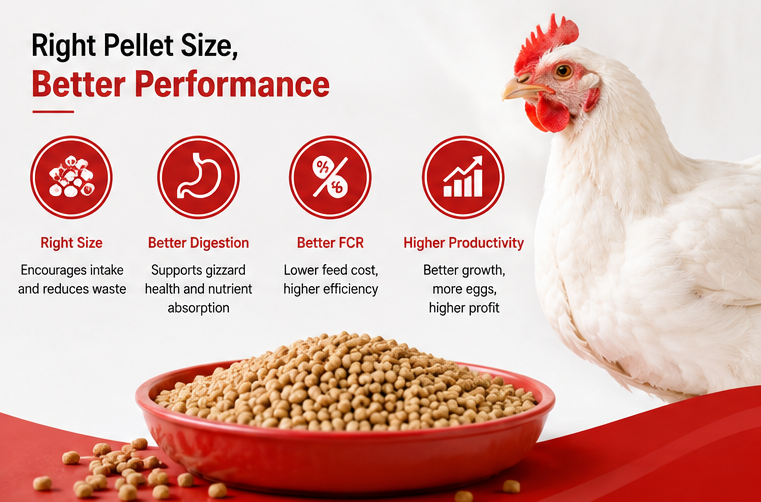
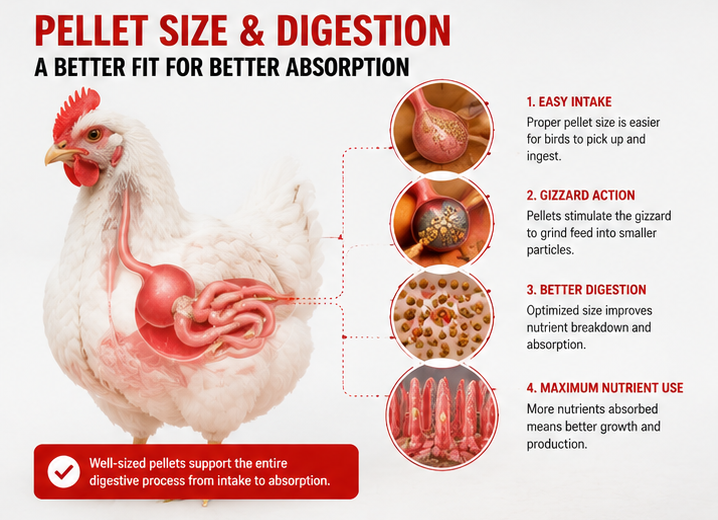
Feed particle size not only affects the efficiency of poultry feeding, but also directly interferes with the development of poultry digestive tract, digestive and metabolic process and intestinal microecological balance, which is the core physical factor to ensure the health of poultry intestinal tract and enhance the immunity of the body. As the core grinding organ, the development and function of poultry muscle stomach are completely dependent on the physical stimulation of feed particles, and the imbalance of particle size will directly cause digestive function defects and induce various intestinal problems.
The moderate particle size can effectively promote the development of the muscle stomach and strengthen the mechanical grinding function. The standard particles of 3-4mm can retain moderate coarse fiber structure and particle hardness, continuously stimulate the muscle and stomach muscle contraction, and make the muscle and stomach muscle more developed and stronger grinding ability. After the feed enters the muscle stomach, it can be fully ground and crushed to increase the nutrient contact area, promote the decomposition of nutrients by digestive enzymes, and greatly improve the utilization rate of nutrient digestion. Poultry fed with uniform size and complete structure of pellet feed for a long time have full development of muscle stomach, perfect function and stronger digestive stability.
Particle size also regulates the residence time of the feed in the digestive tract. The complete and moderate particles will not dissolve and empty quickly, and can stay in the muscle stomach and gland stomach for a longer time, fully contact with gastric acid and digestive enzymes, and realize the deep decomposition and absorption of nutrients. However, superfine dust and superfine particle feed will quickly pass through the digestive tract, the digestion reaction time is insufficient, and a large number of nutrients will be discharged from the body without being fully absorbed, which will not only waste feed, but also disrupt the metabolic rhythm of the intestinal tract.
Stable digestive rhythm can further maintain the intestinal microecological balance. The muscle stomach grinding function is perfect and the feed emptying speed is stable, which can effectively reduce the burden of the intestinal tract, avoid intestinal flora disorder, and reduce the incidence of intestinal diseases such as enteritis, diarrhea, and indigestion. Studies have shown that long-term feeding of finely divided feed poultry, the prevalence of muscle stomach dysplasia, abnormal intestinal peristalsis, flora imbalance and other issues, weak intestinal resistance, vulnerable to external stress, and precise adaptation of the particle size can effectively avoid such problems, build a solid foundation for poultry intestinal health.
In different growth stages, the digestion and adaptation logic of particle size has its own emphasis. The chick stage should take into account both the convenience of feeding and the stimulation of basic digestion. Small crushed materials can not only ensure feeding, but also initially stimulate the development of muscle and stomach, laying the foundation for the subsequent improvement of digestive function. In the fattening stage, emphasis should be placed on the structural integrity of particles, and the function of digestive organs should be continuously strengthened through moderate size. Stable particle size in egg laying stage can maintain stable digestion and metabolism and ensure continuous output of egg laying performance.
Effect of Particle Size and Quality on Feed Waste and Its Economic Value
Feed cost accounts for more than 60% of the total cost of large-scale poultry breeding. Feed waste is the core hidden problem that causes the loss of breeding profits, while unreasonable particle size and substandard particle quality are the main causes of feed waste. Compared with the visible feed sprinkling, the hidden waste caused by dust loss, selective feeding waste and incomplete digestion and absorption has a more far-reaching impact on the breeding benefits.
Precisely adapted particle size reduces feed loss from the root. The size of the particle feed matching the physiological characteristics of poultry, poultry can be completely pecked and swallowed at one time, there will be no pecking, spilling, omission and other problems, greatly reducing the physical loss in the process of feeding. When the particle size is uniform, poultry will not appear picky eating behavior, will not deliberately retain large particles, discard small particles and dust, and realize 100% feed utilization.
Dimensional imbalance can cause multiple waste problems. The particles are too small and the dust is too much, which can easily be blown away by the air flow and scattered from the gap of the trough, resulting in dominant loss. Poultry picky eating and abandoning finely divided feed will cause large area waste of feed residue. When the particles are too large to be eaten by young birds, the young birds cannot swallow normally and will peck the feed continuously, resulting in a large amount of finely divided residues, which will eventually accumulate and deteriorate and cannot be used, thus forming a serious waste.
Particle quality and size complement each other and together determine the feed loss rate. Even if the size is accurate, if the particles are poor in durability and easy to break, after processing, conveying and feeding, the complete particles become dust and fragments, which will still trigger waste problems such as picky eating, spilling and deterioration. High-quality particles have moderate hardness and stable structure, and can maintain complete size throughout the process, maximizing the loss reduction advantage of size optimization.
From the perspective of breeding economy, the fine control of particle size and quality can continuously reduce the rate of feed loss and improve the utilization rate of feed, and long-term large-scale breeding can save huge feed costs. At the same time, low dust particles can optimize the air quality of chicken houses, reduce the incidence of respiratory diseases and intestinal diseases, reduce the cost of veterinary drugs and the rate of death, further improve the comprehensive income of breeding, and form a virtuous breeding cycle.
Precise control method of particle size in feed production
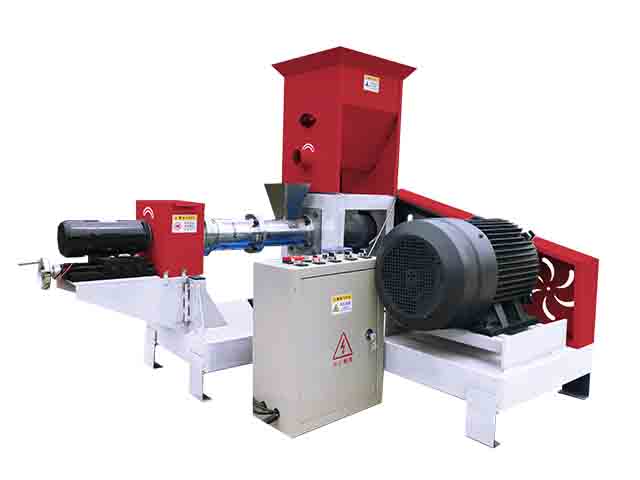
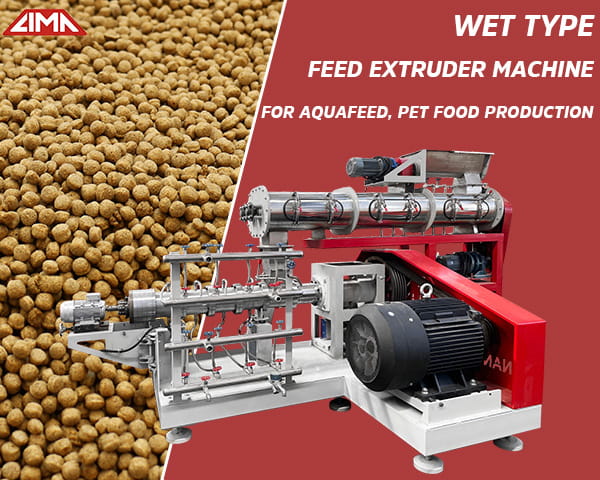
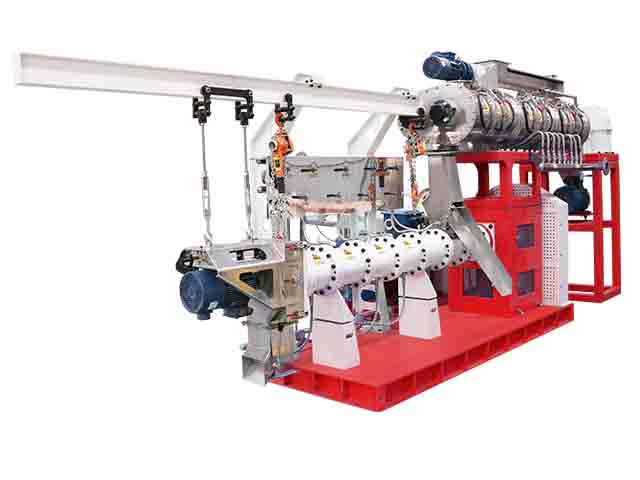
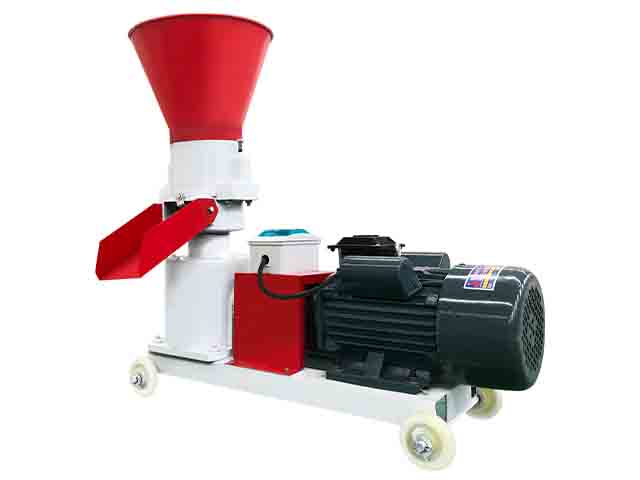
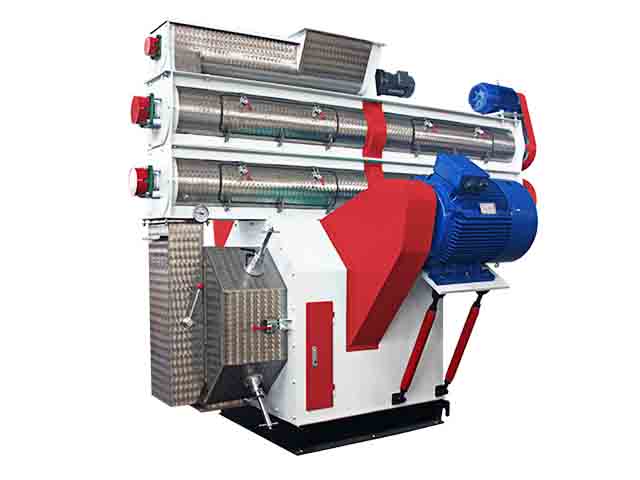
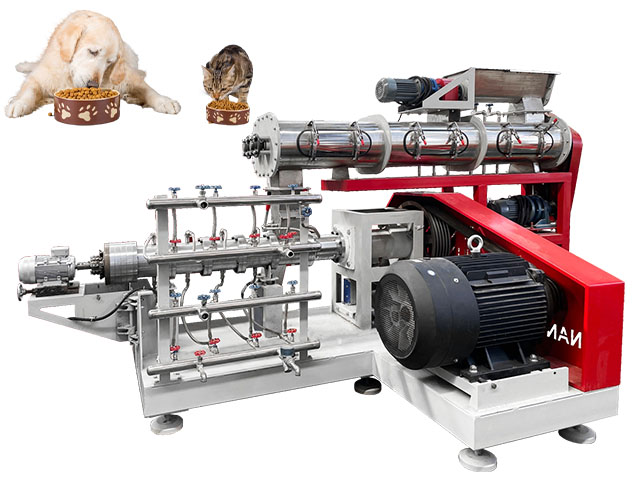
Accurate and stable particle size is not randomly generated, but depends on the precise control of feed processing equipment and standardized process control. The parameter setting, accessory selection and process control of feed pelleting equipment directly determine the particle diameter, length, uniformity and integrity, which is the core guarantee for the optimized breeding scheme of landing size.
Matching die aperture precise control of particle diameter
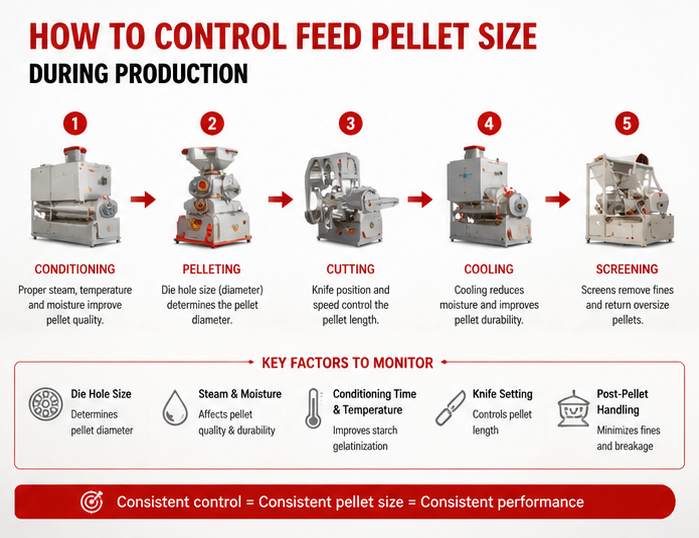
The diameter of the ring die is the core factor that determines the diameter of feed particles, and it is also the first 1 pass for particle size control. Feed processing plants need to be equipped with exclusive specifications according to the poultry growth stage. The 1.2-2.5mm small aperture mold is used for chick feed production, the 3-4mm standard mold is suitable for laying hens and broilers, and the 3-5mm large aperture mold is used for broiler fattening production to accurately match the needs of different breeding scenarios.
At the same time, the mold state directly affects the quality of particle molding. Wear, deformation, hole blockage of the mold, will produce uneven thickness, rough surface, easily broken particles, resulting in a large number of dust debris. In daily production, it is necessary to regularly check the mold state, clean up blocked holes in time, replace worn molds, ensure uniform particle diameter and standard specifications, and control particle size accuracy from the source.
Adjusting cutter parameters to control particle length
The length of the pellets is precisely controlled by the spacing, sharpness and alignment of the external cutters of the pelletizer. The smaller the distance between the cutter and the die surface, the shorter the cut particles; the larger the distance, the longer the particle length. Breeding enterprises can accurately adjust the knife spacing according to the adaptation needs of different poultry, and produce standard particles with different lengths of 4.5-10mm, which can meet the needs of the whole stage of brooding, breeding, fattening and egg laying.
The sharpness of the cutter is as critical as the mounting accuracy. Passivated, offset cutters will produce pull-type cuts, resulting in rough particle ports, varying lengths, and a large amount of irregular debris, reducing particle integrity. Regular grinding of the cutter and calibration of the installation position can ensure smooth cutting, uniform particle length, reduce dust and waste generation, and maintain particle size stability.
Optimize the tempering process to improve the quality of particle molding
Steam conditioning is the core process to improve particle forming effect, ensure dimensional stability and reduce dust rate. Reasonable tempering temperature, humidity and material retention time can make feed raw materials fully soften and bond, improve particle compactness and durability, and avoid crushing and deformation of molded particles in subsequent links.
Insufficient tempering will lead to insufficient adhesion of raw materials, loose particles, insufficient hardness, and easily broken to produce dust; excessive tempering will cause raw materials to agglomerate and exceed the moisture content, which not only affects the uniformity of particle size, but also is not conducive to feed storage. Standardized conditioning process control can stabilize the quality of particle molding, so that particles of designed size can be accurately delivered to the breeding terminal, and the breeding effect of optimized size can be guaranteed.
Refine crushing, screening and quality control process
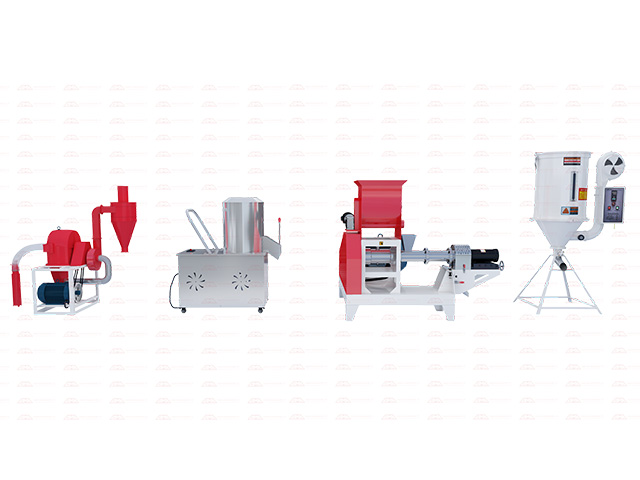
The micro particles and broken materials needed by chicks need to be processed by a special crusher. Accurate adjustment of the nip spacing of the crusher can control the particle size range of the crushed material, cooperate with multi-layer screening equipment to screen out over-large particles and ultra-fine dust, retain standard fine particles of 1.2-2.5mm, and ensure uniform feed size for chicks.
In the process of mass production, it is necessary to establish a normal quality control mechanism, regularly sample the particle diameter, length, integrity, dust proportion, timely comparison of standard parameters fine-tuning equipment parameters. Through real-time process monitoring, the output of unqualified particles in batches is avoided, the particle size of each batch of feed is stable and the quality is up to standard, and stable support is provided for the fine breeding of poultry.
Overall Optimization Strategy of Poultry Feed Pellet Size
Feed pellet size optimization is a systematic and refined breeding plan, not a single 33.33cm-inch adjustment. It needs to combine poultry growth cycle, feeding characteristics, digestion mechanism, equipment and technology to form a standardized control system for the whole process, maximize the release of pellet size optimized breeding value, and comprehensively improve poultry production performance and breeding economic benefits.
First of all, it is necessary to establish a phased size adaptation system, and set the exclusive particle parameters strictly according to the poultry growth cycle. The brooding period focuses on small, uniform and low dust to ensure convenient feeding and early development; the breeding period smoothly transitions to the standard size, taking into account the feeding efficiency and digestive stimulation; the fattening period moderately enlarges the particle size to improve the feeding efficiency and weight gain rate; the laying period fixes the standard size to maintain stable production performance. Combined with poultry varieties, breeding mode small fine-tuning parameters, to put an end to one-size-fits-all general standards.
Secondly, it is necessary to balance the three core objectives of feed intake efficiency, digestive development and feed loss. Optimizing particle size should not only increase feed intake, but also take into account intestinal development and cost reduction and efficiency enhancement, avoid blindly pursuing large size to increase feed intake speed and ignoring particle quality and digestive stimulation. It is also impossible to excessively pursue fine and low loss, resulting in dysplasia of muscle and stomach and decreased digestive efficiency, and realize coordinated optimization of feed intake, digestion and loss reduction.
At the same time, it is necessary to strengthen the precision control of the whole process of feed production, relying on standardized molds, precise cutter adjustment, scientific conditioning technology, and perfect screening quality control to ensure stable particle size and uniform quality. Relying on the precise control ability of modern granulation equipment, it can quickly switch different specifications of granules to meet the needs of different growth stages, while ensuring the stability of mass production and reducing size fluctuations and quality deviations.
Finally, the particle size optimization should be integrated into the overall aquaculture nutrition system. The optimization of particle physical form is the basis for improving nutrition utilization efficiency. It needs to be combined with feed nutrition formula, raw material selection and feeding management. On the premise of stabilizing particle size and quality, the nutrition ratio is accurately controlled, so that high-quality nutrition and adaptive physical form complement each other, maximize feed value, and realize the core breeding objectives of uniform growth, stable egg production, reduced loss and improved efficiency of poultry.
Conclusion
Feed particle size is the core physical factor affecting poultry feeding behavior, digestive health, feed conversion rate and production performance, and it is also the most easy to land and cost-effective means of efficiency reduction in the breeding process. From the micro-crushing materials in the brooding stage of chicks, to the standard and large-size particles in the fattening stage, to the stable specification particles in the laying stage, the accurate adaptation of particle size in stages, and the coordination of high-quality particle molding process and standardized production control can effectively solve various breeding problems such as poultry feeding difficulties, picky eating waste, indigestion, uneven growth, egg production fluctuation, etc. Under the trend of modern large-scale and refined poultry breeding, precise control of feed particle size and deep integration of feed physical form optimization with nutrition control and feeding management can continuously improve the standardization and scientific level of poultry breeding, help breeding enterprises to realize the double improvement of production performance and economic benefits, and build the competitive advantage of core breeding.