Advantages of pellet feed compared with powder feed in broiler breeding
- Introduction to basic feed morphology
- Difference of two kinds of feed used in broiler breeding
- Pellet feed improves feed intake of broilers
- Pellet feed improves feed conversion efficiency
- Pellet feed accelerates growth and weight gain of broilers
- Pellet feed effectively reduces feed waste
- Pellet feed improves nutrient utilization
- Pellet feed optimizes feed hygiene and storage effect
- Pellet feed reduces comprehensive feeding costs
- Selection method of pellet feed for broiler breeding
- epilogue
Advantages of pellet feed compared with powder feed in broiler breeding
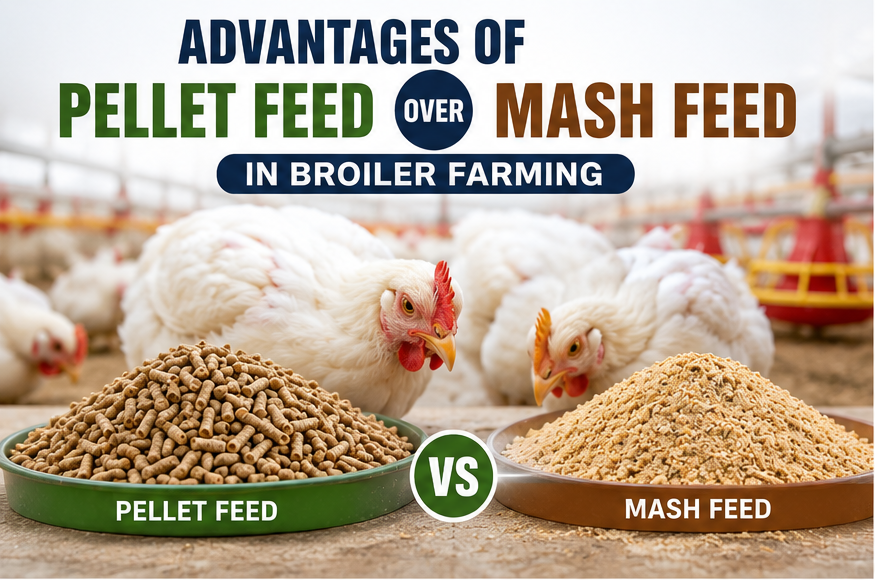
In modern broiler breeding system, feed pattern is one of the core factors affecting broiler growth performance, feed utilization rate and overall profit level. At present, the mainstream feed for broiler breeding is divided into two categories: powder feed and pellet feed. Powder feed is still widely used in small and low-cost farms. However, in the large-scale commercial broiler breeding scene, the application advantage of high-quality pellet feed is extremely prominent.
Combined with the research data of poultry gene breeding enterprises for many years, the results of livestock nutrition experiments and the practice of first-line breeding, under the same nutrition ratio, the pellet feed with good molding degree can optimize the production index of broiler breeding in an all-round way.
Replacing breeding feed from powder feed to high-quality pellet feed is a safe way to improve broiler growth rate, feed conversion rate, chicken group uniformity and improve feed input return rate. The core of these advantages depends on the stable production of high-durability pellet feed by feed processing equipment.
Introduction to basic feed morphology
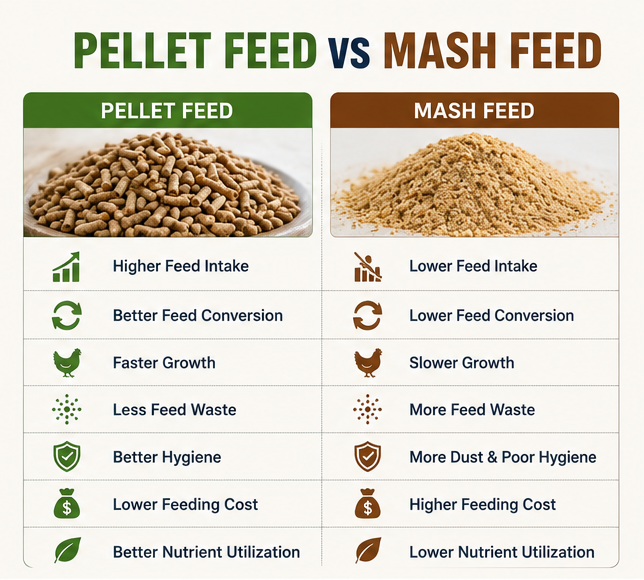
Definition and core characteristics of powdered feed
Powder feed is also known as powder feed and crushed feed. It is a loose mixture of grain, protein raw materials, vitamins, minerals and various additives that has not been compressed and cured after precise crushing and mixing. The production process is simple, only includes three core steps of raw material crushing, precise mixing and direct filling, without additional processing equipment and energy consumption, and the production cost is lower.
From the point of view of physical characteristics, the powder feed as a whole presents a powder-like, fine particle loose state, all kinds of raw materials still retain their original particle size after mixing, and the stacking density is much lower than that of pellet feed. This structural characteristic leads to the existence of natural breeding short board in powder feed.
Broilers will independently select large grain palatable raw materials during feeding, and the remaining fine nutritional raw materials are easy to be left behind and wasted. At the same time, the powder is easy to appear raw material stratification phenomenon in the transportation and storage process, and the dust content is high, which not only causes feed loss, but also pollutes the breeding environment and affects the respiratory tract health of broilers.
Definition and core characteristics of pellet feed
Pellet feed is a kind of high density cylindrical pellet feed made of powder as basic raw material, which is processed by steam conditioning, high pressure pressing, cooling and drying through feed pelletizing equipment. For chicken breeding field, it can also break the formed pellets into fine particles to meet the feeding needs of chickens. On the basis of powder processing, steam conditioning, high-pressure granulation, cooling and air-drying, screening and powder removal are added to the production process, so the process is finer and the quality stability of finished products is stronger.
The core characteristic of pellet feed is that the raw material fusion degree is high, all nutrients are firmly locked in a single pellet, and the problem of raw material stratification and selective intake of powder feed is completely solved. After steam heating and mechanical high-pressure pressing, starch in feed will be partially gelatinized, effectively destroying anti-nutritional factors in raw materials, reducing the content of harmful microorganisms in feed, and greatly reducing the proportion of dust. The finished product has high particle density and compact structure, which is convenient for storage, transportation and automatic feeding equipment transportation, and perfectly adapts to large-scale and intensive commercial broiler breeding mode.
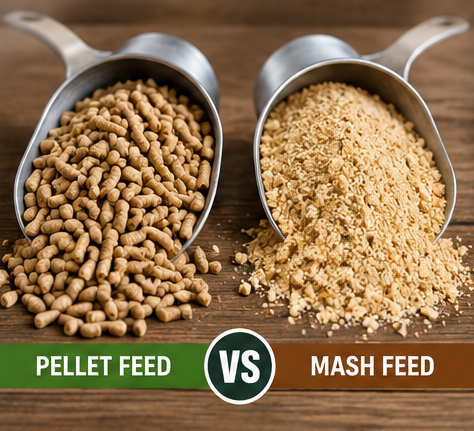
Difference of two kinds of feed used in broiler breeding
In the large-scale breeding scenario of broilers, even if pellet feed and powder feed adopt completely consistent nutritional formula and nutritional parameters, there is still a significant difference in actual feeding effect and breeding benefit between the two types of feed, which directly affects the growth performance of broilers and the profit space of farms. Powder feed adapts to small-scale and low-cost breeding mode by virtue of its advantages of low cost and easy processing, but there are obvious shortcomings in production performance and resource utilization rate; although pellet feed has slightly higher processing cost, it can optimize all core indexes of breeding in an all-round way, which is the optimal scheme for commercial high-yield breeding.
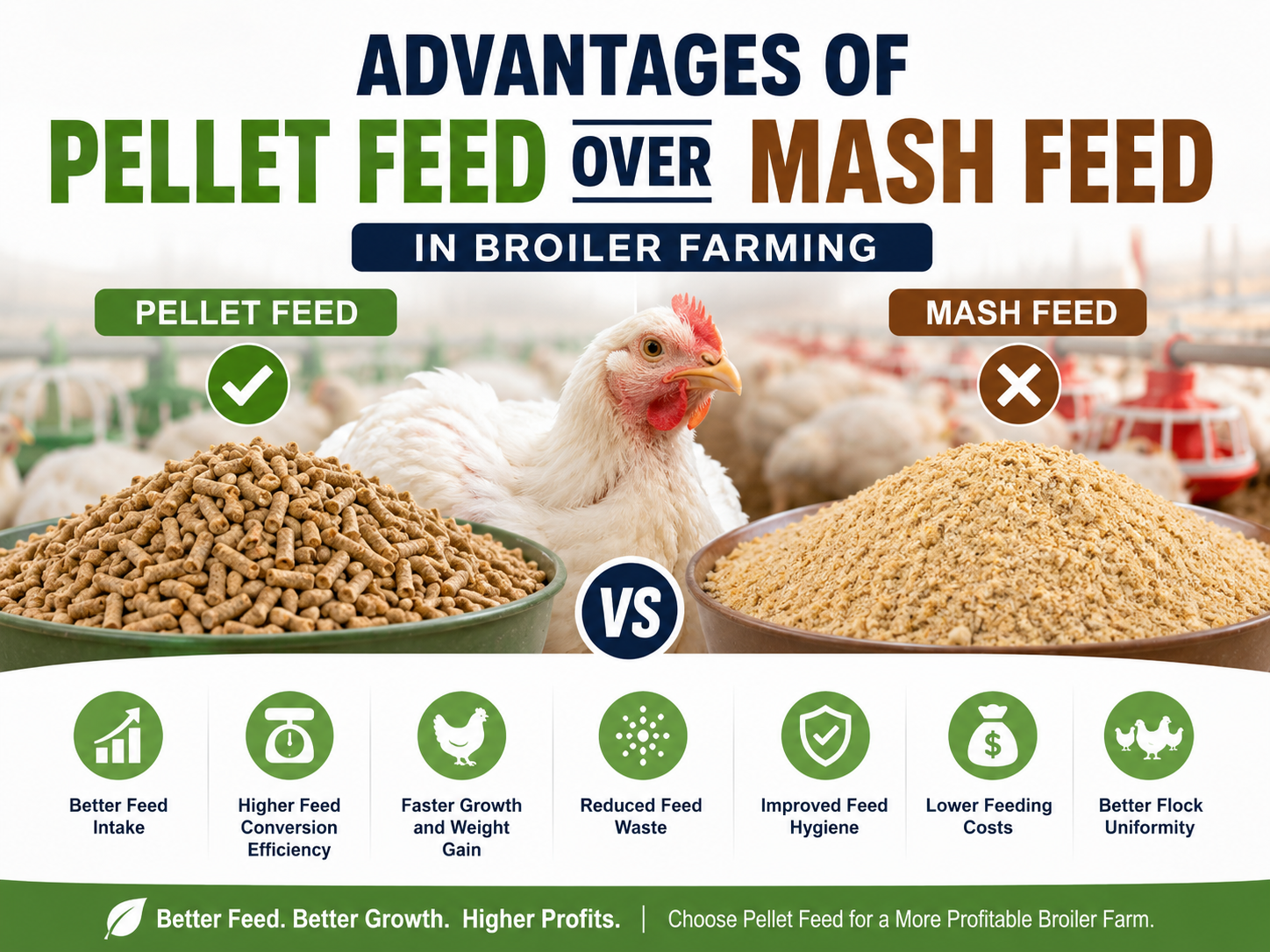
From the point of view of broiler feeding behavior, pellet feed is less difficult to eat and more efficient, broilers do not need to spend a lot of time pecking fine powder, food consumption is greatly reduced, and more nutrition and physical energy can be used for growth and weight gain. However, the powder feed particles were fine and loose, and the feed was easy to be spilled and wasted when the broilers were eating, and the selective feeding behavior was prominent, which led to the imbalance of individual nutrition intake and the decline of growth uniformity. From the breeding environment and feed management point of view, pellet feed dust less, strong stability, storage is not easy to layer deterioration, feeding is not easy to pollute the chicken house environment; powder dust amount is large, easy to induce broiler respiratory diseases, storage process nutrition stratification problem is prominent.
It should be clear that the breeding advantage of pellet feed completely depends on the quality of pellets. If the pelletizing equipment technology is not up to standard and the processing process is not properly controlled, the molded pellets are easy to break and produce a large amount of powder, which will directly lose the core advantage of pellet feed and the feeding effect will approach that of powder feed. In actual breeding applications, high-quality granulated granules can be used in the early stage of chicks, and standard granulated feed can be used throughout the middle and late stages of growth. However, powdered feed is only suitable for low-cost small-scale breeding farms and cannot meet the needs of intensive high-yield breeding.
Pellet feed improves feed intake of broilers
Improving broiler independent intake is the most intuitive and stable breeding advantage of pellet feed, and it is also the core basis for optimizing broiler growth performance.
A large number of breeding control experiments showed that under the premise of complete consistency in nutritional components, breeding environment and chicken breeds, the daily intake of broilers fed with high quality pellet feed was significantly higher than that of powder feed group, and this advantage ran through the whole cycle of broiler breeding, growth and fattening.
Pellet feed adapted to broiler feeding habits
Broiler chickens had obvious selectivity and high efficiency in feeding habits, preferring compact granular raw materials that could be pecked and swallowed in a single time. Powder feed is composed of a large number of fine loose particles.
Broilers need to peck repeatedly and eat frequently when eating. The feeding process is time-consuming and laborious. Related breeding observation data showed that the time spent on feeding powder was about three times that of feeding pellet feed for broilers of the same age, and a large amount of physical energy was consumed in feeding action, which indirectly restricted growth efficiency.
The pellet feed is compact in structure and uniform in particle size, and broilers can peck and swallow it completely in a single time, greatly shortening the feeding time and reducing the physical consumption in the feeding process. At the same time, the pellet feed has no fine dust, and the situation that the feed falls from the beak or falls into the bedding or drinking equipment when the powder feed is taken does not occur, effectively avoiding the hidden loss in the feeding process, and greatly improving the effective intake of broilers.
Increased feed intake drives growth performance optimization
The steady increase of broiler feed intake directly led to the increase of total nutrition and energy intake, providing sufficient material basis for rapid weight gain. Compared with powder feeding mode, broilers fed pellet feed grew faster, and the growth advantage appeared from the early stage of brooding and continued through the growth and fattening stages. In the medium and low energy feed formula system, this advantage is more obvious, broilers can make up for the energy shortage of feed by increasing feed intake to meet the energy requirements of their own growth and development; even in the high energy feed formula, pellet feed can still maintain a stable intake advantage to ensure growth stability.
Grain quality determines feeding dominance stability
Not all pellet feeds can achieve the desired intake enhancement effect, pellet durability is the core key. If the feed pelletizing process is not perfect, the finished particles are not hard enough and easy to break, a large amount of powder will be produced during transportation and feeding, the feed form will tend to be powder, the difficulty of feeding broilers will rise, the waste will increase, and the feed intake advantage will disappear quickly.
In order to keep the feeding advantage stably, the steam conditioning temperature, humidity, material retention time and mold parameters must be accurately controlled during the feed processing process. Through standardized cooling and screening procedures, the integrity and compactness of finished particles shall be guaranteed, the proportion of powder impurities shall be reduced, and the structure of pellet feed from bin to feeder shall be stable.
Pellet feed improves feed conversion efficiency
Feed conversion rate is a core indicator to measure the economic benefits of broiler breeding. It represents the amount of feed required to produce each kilogram of live broiler weight. A small increase in conversion rate will directly reduce the cost of breeding a single broiler and increase overall breeding profits. Long-term breeding experiment and commercial practice proved that the feed conversion efficiency of high-quality pellet feed was much better than that of powder feed under the same nutrition ratio.
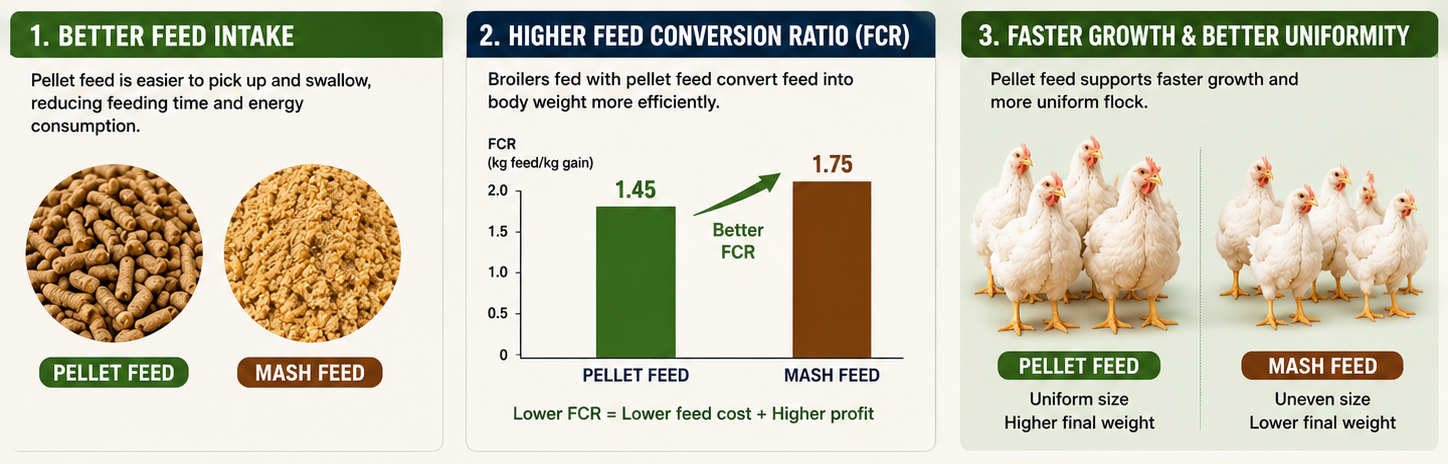
Pellet feed The core principle of optimizing feed conversion
The core logic of pellet feed to improve conversion rate stems from the dual effects of effective intake enhancement and feed loss reduction. On the one hand, pellet feed greatly reduces the physical consumption of broiler feeding, and the energy and nutrition in the feed do not need to be supplied in large quantities, and can be more used for body growth and muscle deposition; on the other hand, pellet feed completely eliminates selective feeding problems, each pellet contains balanced protein, energy, vitamins and minerals, and broilers can obtain standardized nutrition every time they feed, and the overall nutrition intake of the chicken flock is uniform, avoiding some idle nutrition waste.
At the same time, the pellet feed effectively avoids various loss problems such as powder scattering, dust loss, raw material residue, etc. The feed put into the farm can be absorbed and digested by broilers to the maximum extent, converted into body weight, greatly reducing the ineffective consumption of feed, and fundamentally optimizing the feed conversion ratio.
Difference in transformation effect in actual farming
A large number of commercial breeding data show that the conversion advantage of pellet feed is stable and universal, and only fluctuates slightly according to feed formula, pellet quality, broiler age and breeding management level. In the scenario of medium and low energy feed formula, the conversion advantage of pellet feed is the most prominent, which can effectively make up for the short board of formula and improve the nutrient utilization rate; in the scenario of high energy formula, the high-quality pellet feed can still maintain the conversion advantage continuously to ensure the stable breeding benefit.
During broiler brood, growth and fattening cycle, stable pellet quality can optimize feed conversion rate continuously, but once pellet is broken and pulverized, conversion efficiency will decrease rapidly, approaching powder feeding effect. This also means that the stability of feed processing equipment and the standardization of technology directly determine the final income of feed conversion in farms.
Practical application value of breeding end
Feed cost accounts for most of the total cost of broiler breeding, which is the core control point of breeding profit. Without adjusting feed nutrition formula and optimizing breeding management mode, feed conversion rate can be stably improved only by replacing high-quality pellet feed, which is one of the best ways to reduce cost and increase efficiency in large-scale broiler breeding. For chick breeding, the particle size can achieve the same transformation advantage, adapt to the feeding habits of chicks, assist the early growth and development, and lay the foundation for later fattening.
Pellet feed accelerates growth and weight gain of broilers
The core objectives of commercial broiler breeding are to shorten the breeding cycle, improve the slaughter weight and ensure the uniformity of chicken growth. Feeding high-quality pellet feed is the most direct and safe way to accelerate broiler growth and improve weight gain efficiency in current breeding scenarios.
The core reason why pellet feed promotes rapid growth
The core support of pellet feed to accelerate weight gain of broilers is the superposition of three advantages: increasing independent feed intake, reducing feed loss and balancing nutrient intake. Compared with powder feed, broilers ingesting pellet feed have higher effective nutrient intake, and do not need to consume a lot of physical intake, higher metabolic efficiency and faster nutrient deposition. At the same time, the pellet feed eliminates the nutritional imbalance caused by selective intake, and the nutritional intake standard of each broiler is unified to avoid excessive individual growth gap.
In addition, the ripening treatment in the pellet feed processing process can soften the feed raw materials, improve the palatability, further stimulate the enthusiasm of broilers, and allow broilers to accumulate more nutrients and achieve faster weight gain within the same breeding cycle.
Actual growth performance
The results of control experiment showed that the body weight of pellet feed group was significantly higher than that of powder feed group for broilers of the same breed, same age and same breeding condition. In the standardized commercial breeding system, high-quality pellet feed can effectively shorten the broiler slaughter cycle, or increase the slaughter weight within the fixed breeding cycle, greatly improving the batch production capacity of the farm.
The improvement of chicken growth uniformity is also one of the core advantages. Under the powder feeding mode, the selective intake of chickens leads to large differences in individual nutrition intake, uneven flock size, high proportion of defective chickens and weak chickens; pellet feed can realize synchronous growth of chickens, higher uniformity of slaughter, and effectively improve the purchase quality and overall price of finished broilers.
Effect of Grain Quality on Growth Effect
The growth boosting effect of pellet feed completely depends on the durability of pellets. Poor pellets are easy to break and powder, which will directly lose the core advantages of intake, nutrition balance and low loss. The growth speed and uniformity of broilers will decrease greatly. Only by accurately controlling the tempering temperature, material humidity, granulation mold and cooling process to produce high-quality granules with stable structure and low powder proportion can the growth boost effect be continuously exerted.
Pellet feed effectively reduces feed waste
Feed loss is a cost loophole that is easily overlooked in broiler breeding. In large-scale breeding scenarios, minute feed waste will accumulate into huge cost loss. The physical characteristics of powder feed lead to its high loss rate, and high-quality pellet feed can reduce all kinds of feed waste from the root, which is the core means of breeding cost reduction.
Main inducement of powder feed waste
The powder feed is loose and finely divided. During the feeding process of broilers, the finely divided powder is easy to fall off from the beak and fall into the chicken house bedding and drinking water equipment, which cannot be reused. At the same time, broilers are born with selective feeding habits, they will give priority to eating grain particles with good palatability, and the remaining fine nutrient powder and mineral additives will remain in the feeder for a long time, and eventually deteriorate and waste, resulting in a large amount of invisible waste.
In addition, the powder feed dust is large, during the feeding, cleaning and ventilation process, a large amount of feed dust will be scattered in the air, attached to the surface of equipment, chicken feathers and bedding, completely unable to be eaten by broilers, further aggravating feed loss. Accumulated for a long time, the comprehensive waste rate of powder feed can reach double digits, greatly reducing the profit margin of breeding.
The core advantage of pellet feed to reduce waste
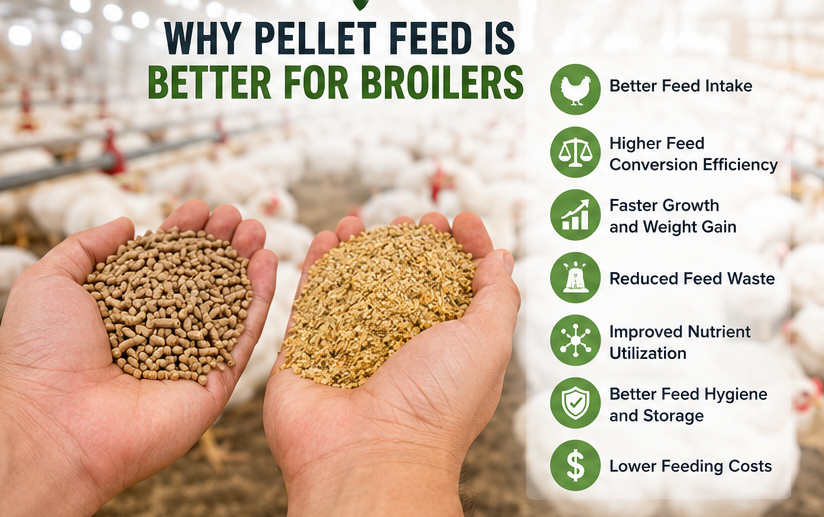
Pellet feed structure is compact, integrity is strong, broilers can be swallowed completely after a single pecking, almost no spilling, falling, from the source to eliminate physical loss in the process of feeding. At the same time, all nutrient raw materials are pressed and fused into a whole by high pressure, broilers cannot selectively pick food, the problem of raw material residue waste does not exist, and feed in the feeder can be completely consumed and utilized.
Even if a small amount of particles accidentally fall into the litter, the complete particle form is also convenient for broilers to peck for recycling, and the recycling rate is greatly improved compared with scattered fine powder. The extremely low proportion of dust also completely eliminates the loss of feed caused by dust dispersion, so that each batch of feed put into the farm can maximize its value.
Economic benefit of breeding by reducing advantages
For large-scale broiler farms, the feed consumption of each batch is as high as several tons or even dozens of tons, even if the loss difference is 1%-2%, there will be considerable cost difference. The low-loss characteristic of pellet feed can directly reduce the input cost of single batch breeding feed, and at the same time reduce the pollution problem caused by waste feed and deteriorated feed, giving consideration to the dual effects of cost reduction and quality improvement.
Pellet feed improves nutrient utilization
Feed nutrient utilization rate refers to the efficiency of energy, protein, amino acids, minerals and other nutrients in feed digested and absorbed by broilers and converted into body weight, which directly determines the actual value of feed. Under the same nutritional formula, the nutrient utilization rate of pellet feed is much higher than that of powder feed, so that feed nutrition is no longer idle waste.
Increase effective nutrient intake
Pellet feed greatly improves the total effective nutrient intake of broilers by optimizing the intake experience and reducing feed loss. Under the powder feeding mode, a large amount of nutrients are spilled with the feed, dust is scattered, and raw material residues are lost. The actual nutrients consumed by broilers are far below the formula design standards; while pellet feed can ensure that most of the feed is eaten by broilers, and the total amount of nutrients is absorbed. Significantly increased. At the same time, the broiler feed energy consumption is reduced, no need to consume nutrients for frequent feeding action, more nutrients can be used for digestion and absorption, body growth.
Achieve uniformity of nutrient intake in chickens
During the transportation and storage of powder feed, raw material stratification is easy to occur, raw materials with high density sink and light powder floats, resulting in inconsistent feed nutrition ratio in different periods. In addition to selective feeding behavior of broilers, there is a great difference in individual nutrition intake within the flock, some broilers have insufficient protein and energy intake, some broilers lack trace element intake, and the overall growth is uneven.
Pellet feed solidifies all nutrient raw materials in a single pellet, and the nutrient ratio of each pellet completely conforms to the formula standard. Regardless of feeding time and feeding order, each broiler can obtain balanced and comprehensive nutrition, completely solve the problem of uneven nutrient intake, and improve the overall nutrition utilization efficiency of chickens.
Process optimization Nutrient digestibility
The steam conditioning and high pressure pressing technology of pellet feed can play a role in pretreatment of feed raw materials. High temperature and high humidity environment can make starch in feed fully gelatinized, destroy the cell wall structure of plant raw materials, and make nutrients more easily decomposed and absorbed by digestive enzymes of broiler intestines; at the same time, it can effectively degrade anti-nutritional factors in feed, reduce digestive burden of intestines and stomach, reduce nutrient metabolism waste, and further improve nutrient utilization rate. It should be noted that the core of the improvement of nutrient utilization rate comes from the integrity of intake and the balance of intake, and the process optimization is only an auxiliary effect.
Pellet feed optimizes feed hygiene and storage effect
Feed hygiene quality and storage stability are directly related to broiler health status, feed quality stability and breeding operation efficiency. Pellet feed has the advantages of hygiene control, storage transportation and feeding management, which is incomparable to powder feed, and can guarantee the stable quality of feed from processing plant to chicken house feeding end.
Improve feed hygiene
The steam conditioning process in the pellet feed processing process will carry out high temperature and moist heat treatment on the feed, which can effectively kill most pathogenic bacteria, mold and other harmful microorganisms attached to the raw materials, reduce the microbial load of the feed, and reduce the intestinal diseases and mildew problems caused by bacteria in the feed from the source. Compared with the powder feed without high temperature treatment, the hygiene safety of pellet feed is greatly improved.
At the same time, the particle feed dust content is extremely low, which avoids the air pollution of the chicken house caused by powder dust dispersion, reduces the irritation of the respiratory tract mucosa of broilers, reduces the incidence probability of respiratory diseases, and optimizes the working environment of breeding personnel. The compact granular structure can also prevent local raw materials from accumulating moisture and breeding bacteria, further improving the hygiene level of feeding.
Strengthen storage and transportation stability
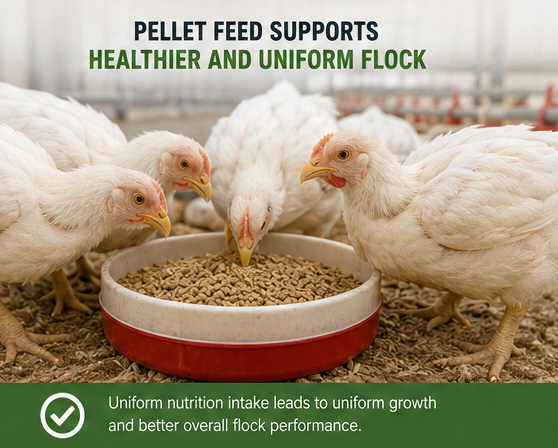
Pellet feed has a high stacking density and a compact structure. The same storage space can store more feed, greatly improving storage utilization and reducing investment in farm storage facilities and material transfer frequency. In the process of transportation and storage, the pellet feed will not have the phenomenon of raw material stratification, and the nutrient ratio will be uniform throughout the whole process, and the feed quality stability will be stronger.
Compared with loose powder feed which is easy to damp, caking and deterioration, pellet feed has better moisture resistance and stability, is not easy to be affected by environmental temperature and humidity, and can effectively reduce feed mildew and deterioration loss during storage. At the same time, pellet feed has stronger fluidity, which can perfectly adapt to automatic feeding equipment, avoid problems such as powder blocking equipment, bridging and material breaking, and improve the automatic operation efficiency of breeding.
Pellet feed reduces comprehensive feeding costs
From the point of view of single processing cost, the ex-factory price per ton of pellet feed is slightly higher than that of powder feed due to multiple processing procedures and equipment energy consumption input. However, from the overall breeding cycle and comprehensive breeding cost accounting, high-quality pellet feed can greatly reduce the feeding cost per unit weight gain of broilers and improve the overall profit of breeding.
The core factor offsetting the processing premium
The processing cost premium of pellet feed can be completely offset by reducing feed loss, increasing conversion rate and shortening growth cycle. First of all, the extremely low feed waste rate greatly improves the effective utilization rate of each ton of feed and reduces the total amount of feed purchased; secondly, the better feed conversion rate reduces the feed consumption per unit weight gain and directly reduces the cost of core raw materials; finally, the faster growth rate can shorten the breeding cycle and reduce the fixed cost allocation of water and electricity, labor, epidemic prevention and equipment depreciation of chicken houses.
At the same time, the uniformity of chickens fed by pellet feed is higher, the proportion of defective chickens and weak chickens is extremely low, the qualified rate and average weight of finished products are higher, which effectively improves the sales output value of broilers and further enlarges the profit space of breeding. According to comprehensive calculation, the comprehensive feeding cost of pellet feed is much lower than that of powder feed.
Particle quality determines cost control effectiveness
The advantage of reducing cost and increasing efficiency of pellet feed depends entirely on stable pellet quality. If the granulation process is not up to standard, the granules are easy to break and powder, the feed loss rises, the conversion rate decreases, and the growth advantage disappears, not only can the cost reduction be realized, but also the breeding cost will be increased due to the processing premium. Therefore, the stability of feed processing equipment and accurate control of process parameters are the core prerequisites for farms to give full play to the cost advantages of pellet feed.
Selection method of pellet feed for broiler breeding
The pellet feed quality in the market is uneven, and the pellet feed with different particle size, durability and formula has a significant difference in breeding effect. Scientific selection and adaptation of farm scenery can maximize the breeding advantages of pellet feed and ensure stable growth and controllable cost of broilers.
Prioritize particle physical quality
Pellet physical quality is the first core standard for selection, far exceeding feed label identification. Farmers should pay attention to the durability of pellets and the proportion of powder. The finished product of high-quality pellet feed has high integrity, moderate hardness, is not easy to break during transportation, loading and unloading, and the impurity content of powder is extremely low. Suppliers with complete quality inspection systems can be preferred to confirm that the quality of the particles is stable between batches, so as to avoid losing breeding advantages due to particle powdering.
Matching broiler growth stage particle size
The feeding ability of broilers of different ages varied greatly, and particle size should be matched according to needs. Chickens have small beaks and weak feeding ability in brooding stage, so fine particles, granular particles or micro-particles are suitable to avoid too large particle size affecting feeding; broilers have greatly improved feeding ability in growth and fattening stage, and complete particles of standard specifications can be selected to meet feeding needs and reduce feed loss. Scientifically matched particle size can guarantee the feeding efficiency and growth performance of the whole cycle.
Check the feed nutrition formula standard
The morphological advantages of pellet feed cannot replace scientific nutritional formula. When selecting feed, it is necessary to strictly check the core indicators such as feed energy, protein, amino acids, vitamins and minerals to ensure that the formula adapts to the breed characteristics, growth cycle and slaughter target of broilers. Due to the higher intake of pellet feed, some nutritional formulas need to adjust nutrient density to avoid excessive or insufficient nutrients and optimize growth performance and meat quality.
Focus on supplier quality stability
The growth performance of chickens is very sensitive to the fluctuation of feed quality. The slight fluctuation of particle durability, powder proportion and nutrient ratio will lead to the instability of chicken growth. Farmers shall select feed suppliers with mature processing technology, perfect quality control system and stable supply to ensure uniform feed quality among batches. At the same time, it is necessary to regularly observe the particle shape, feeding status and growth rate of broilers in daily breeding, and timely control the feed quality.
Consider feed storage adaptability
High-quality pellet feed should have good storage and transportation stability, not easy to damp, not easy to break, not easy to stratify, can adapt to the storage conditions and automatic feeding equipment of the farm, avoid the problems of particle powdering and equipment blockage during storage and transportation, and ensure the stability of the whole feeding process.
epilogue
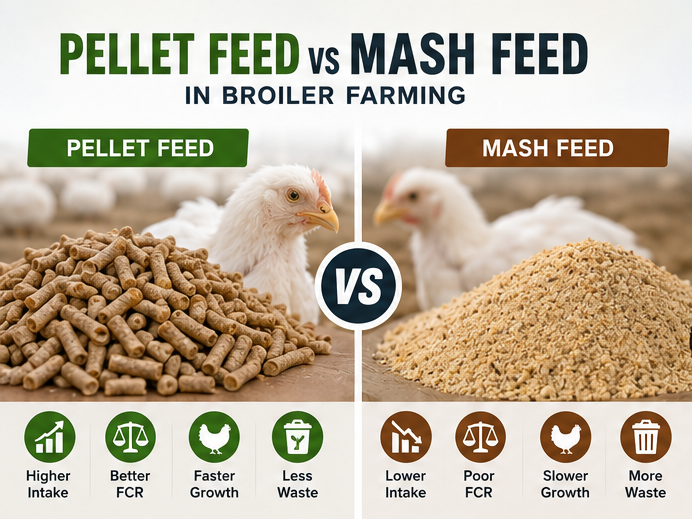
In modern and intensive broiler breeding mode, pellet feed has the advantages of omni-directional, landing and quantifiable compared with traditional powder feed. From intake efficiency, growth rate, feed utilization rate, feed loss, sanitary quality and comprehensive breeding cost, high-quality pellet feed shows absolute advantages, which can fully release the growth genetic potential of broilers and improve the uniformity of chicken flock and breeding economic benefits.
It needs to be clear that the landing of all breeding advantages, the core relies on stable pellet processing quality, standardized granulation equipment, precise processing technology control, is the basis to ensure the value of pellet feed. For large-scale broiler farms, abandoning the traditional powder breeding mode and selecting high-quality pellet feed suitable for the growth stage is the core measure to reduce cost and increase efficiency, improve quality and increase yield without greatly adjusting the breeding mode, and is also the inevitable development trend of modern broiler breeding.