Complete analysis of the types of poultry pellet feed
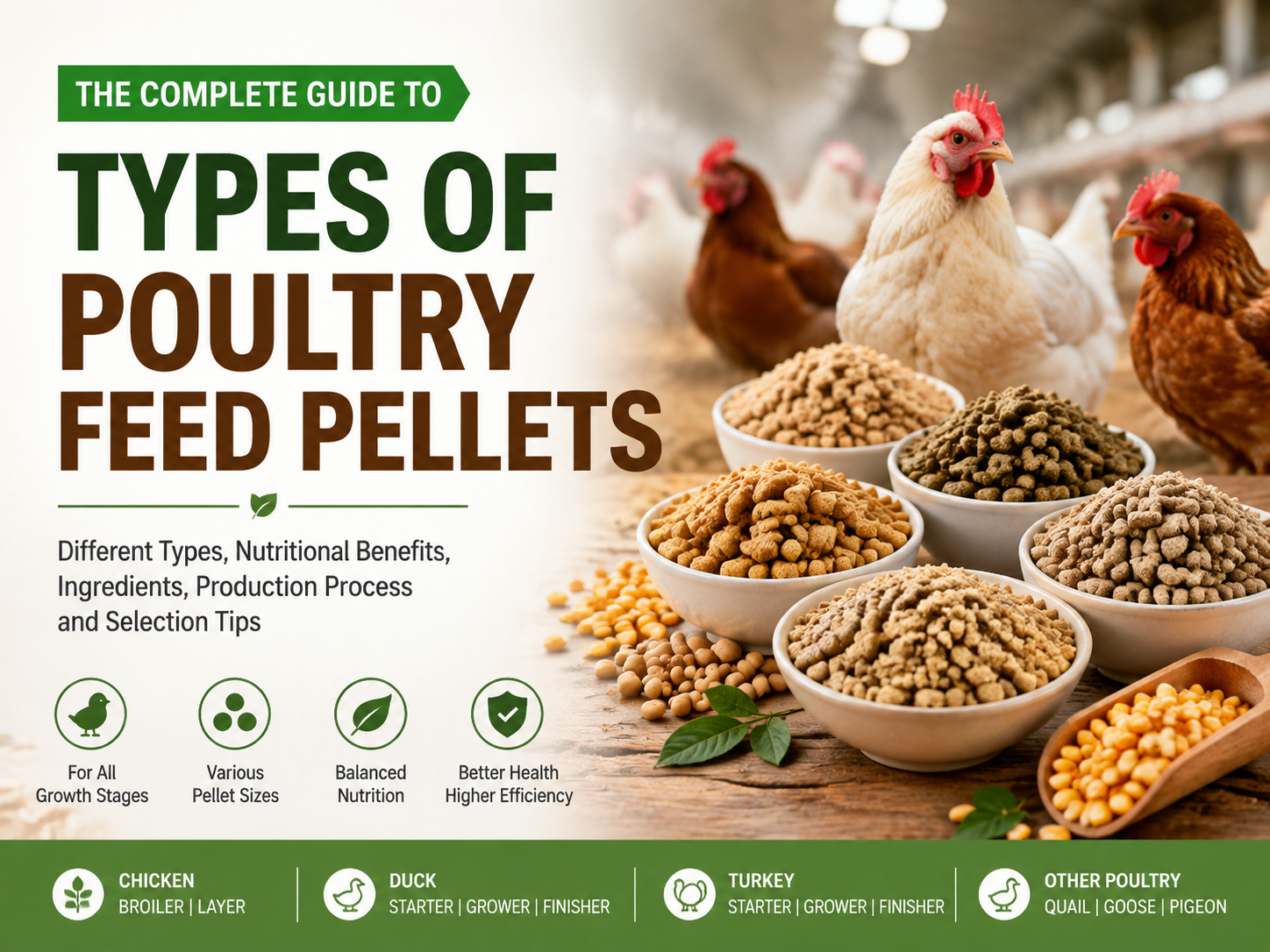
Feed is the core factor that determines poultry growth efficiency, egg production performance and economic benefit in poultry large-scale and standardized breeding industry. Compared with traditional powder feed, pellet feed is the mainstream feed form of commercial poultry breeding at present after steam conditioning, high temperature and high pressure compression molding, uniform nutrition ratio, low loss rate and high digestion and absorption rate. There is no unified standard category of poultry pellet feed, which will be divided into different types according to poultry growth stage, breeding use, pellet size and raw material formula to meet the growth needs of broilers, laying hens, waterfowl and other poultry.
This article will comprehensively disassemble all kinds of subdivision categories of poultry pellet feed, explain the nutritional characteristics, applicable scenarios, production technology and selection points of different feeds in detail, and provide professional reference for accurate selection and independent production of pellet feed for farm households.
1. Definition and core advantages of poultry pellet feed
Poultry pellet feed basic definition
Poultry pellet feed is a cylindrical uniform pellet feed made of corn, soybean meal, grain, minerals, vitamins and other core raw materials through grinding, precise proportion, steam conditioning, high temperature and high pressure extrusion, cooling and screening and other processes. The diameter of conventional poultry particles is concentrated in 2-5 mm, and the diameter of large adult poultry particles can reach 6 mm, and the particle length is 1.5-2 times the diameter. For young poultry such as chicks, complete particles can be broken into broken particles to adapt to the feeding ability of young birds. Different from powdered feed, each pellet feed contains complete and balanced nutrients, eliminating the problem of picky eating and food selection of poultry from the root.
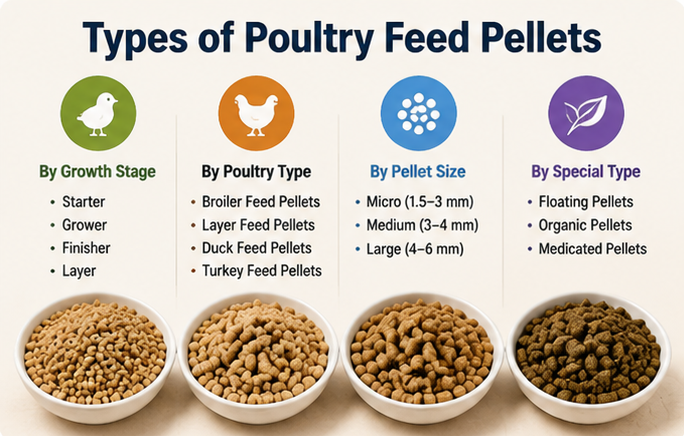
Poultry pellet feed core advantages
Compared with traditional powder feed and broken feed, poultry pellet feed has multiple breeding advantages, which is also the core reason why it is widely used in large-scale farms. First of all, the feed loss is greatly reduced, the pellet feed structure is compact, no dust, no fine powder scattered, compared with the powder feed can reduce the feed waste by 6%-15%, the energy-saving benefit under large-scale breeding scenario is very significant. Secondly, the feed conversion rate is higher. The high temperature conditioning process makes the starch in the raw materials fully gelatinized, and the nutrients are more easily digested and absorbed by the poultry stomach, which can improve the weight gain efficiency and feed utilization rate by 5%-15%.
At the same time, pellet feed can realize uniform nutrition intake, eliminate the selective intake of single raw material by poultry, and avoid the problems of unbalanced nutrition and uneven growth of the population. High temperature and high pressure processing can kill harmful pathogens such as Salmonella, improve feed hygiene safety and reduce the incidence of poultry intestinal diseases. At the breeding management level, pellet feed is not easy to agglomerate, easy to store and transport, and suitable for automatic feeding equipment, which can greatly save labor cost and adapt to large-scale and intensive breeding mode. In addition, by adjusting the production equipment mold and formula, different types of pellet feed can be quickly switched to meet the nutritional needs of poultry throughout the growth cycle.
2. Pellet feed types classified by poultry growth stage
The gastrointestinal function, growth and development requirements and physiological metabolism characteristics of poultry in different growth cycles are very different, and the corresponding feed nutrition ratio, particle size and shape also need to be adjusted accordingly. Divided according to the growth stage, it is the core and most commonly used classification method of poultry pellet feed, mainly divided into two categories: special stage pellet feed for broilers and special stage pellet feed for laying hens, covering the whole cycle of poultry from young birds to adult birds and laying eggs.
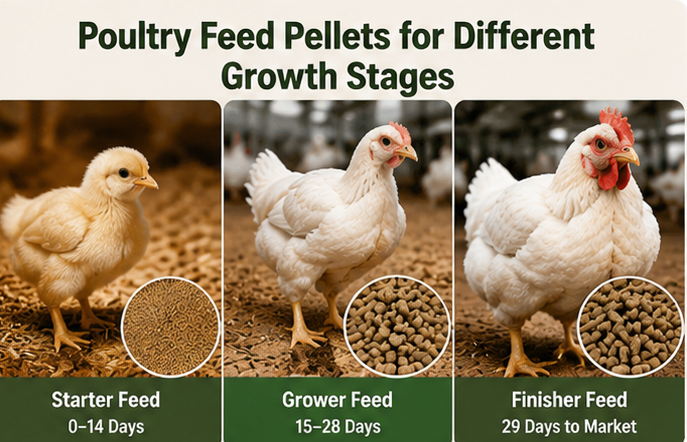
Pellet feed for broilers at various growth stages
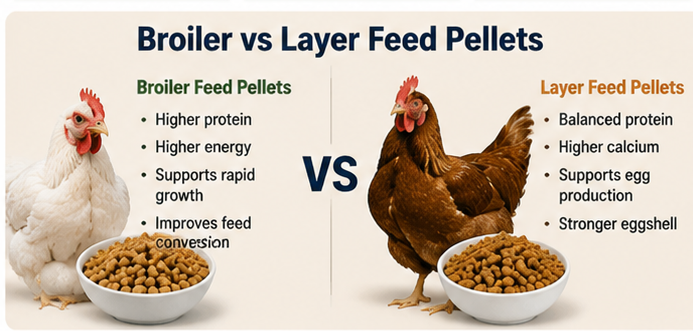
Broiler breeding takes rapid weight gain and short-term slaughter as the core goal, short growth cycle and fast development speed, and can reach slaughter weight in 0-7 weeks. The feed formula takes high protein and high energy as the core, and is divided into three stages: starter feed, growth feed and fertilizer according to the growth rhythm.
Chickens open particle debris is suitable for 0-14 days old chicks, is the core feed of broiler breeding early stage. At this stage, the beak of chicks is small, the gastrointestinal digestive system is not yet developed, and the ability to feed is weak. Therefore, the feed is processed into 1.5-3 mm micro-particles or broken particles, which are soft in texture and easy to digest. The crude protein content is controlled at 21%-24%, rich in essential amino acids such as lysine and methionine, balanced vitamins and trace elements, and the crude fiber content is extremely low, which can not only stimulate the appetite of chicks, guide them to eat, but also support the development of internal organs, construct and perfect the immune system, and lay the foundation for rapid growth in the later period. Part of the special starter will add anti-coccidiosis ingredients to prevent high incidence of coccidiosis in chickens.
The pellet feed is suitable for 14-25 day old broilers and is the key stage feed for broilers muscle rapid development. The particle size is upgraded to short particles of 3-4 mm, which is suitable for the gradually developing feeding ability of broilers. At the nutritional level, the proportion of protein should be appropriately lowered, and the crude protein should be maintained at 20%-21%. The energy density of feed should be increased simultaneously, giving consideration to bone development and muscle growth, so as to avoid metabolic burden caused by excessive protein. At this stage, the calcium and phosphorus ratio of feed is balanced, which can ensure the healthy bones of broilers, prevent paralysis, lameness and other problems in the growth process, and maintain the uniform growth of chicken weight.
Fattening pellet feed is suitable for broilers from 25 days old to slaughter stage. The core goal is to maximize weight gain and optimize feed conversion rate. The particle size is 3-5 mm, and the maximum can be adapted to 6 mm particles. The particle length is moderate, which reduces the feeding time and feed waste of broilers. Nutritional formula further adjusted, crude protein reduced to 17%-19%, greatly increased metabolic energy level, focused fat and muscle rapid deposition, improved output weight and meat quality. At the same time, the feed at this stage strictly follows the breeding specifications, stops all kinds of drug additives in advance, ensures the safety of poultry food, and adapts to the market slaughtering standards.
Pellet feed for laying hens at various growth stages
The core of laying hen breeding is to cultivate healthy chicken flocks and ensure sustained stable and high yields in the future. The growth cycle is longer and is divided into three stages: brooding period, breeding period, and laying period. The feed formula focuses on regulating calcium content and protein levels to avoid premature calcification. Damage the chicken body while ensuring stable eggshell quality during the laying period.
Layer brood particle debris is suitable for 0-8 week old chicks, particle size 2-3 mm, mainly broken particles and micro particles. The crude protein content is controlled at 18%-20%, and the calcium content is kept at a very low level to avoid excessive calcium damaging the kidney function of young chickens. The feed formula focuses on balanced nutrition, assists chicken feather growth, bone development and body shaping, ensures neat growth of chicken flock, healthy physique, and avoids uneven egg laying performance in later stage.
The pellet feed is suitable for 6-18 weeks old young laying hens and is the key transitional feed for laying hens before opening. The particle size was upgraded to 3-4 mm, the crude protein was reduced to 15%-17%, and the calcium was moderately increased but maintained at a moderate level. At this stage, the feed does not pursue rapid weight gain, focuses on regulating the body shape development and skeleton growth of laying hens, regulates the steady development of reproductive system, prevents young chickens from being too fat or thin, avoids problems such as delay in laying and shortening of laying peak period, and reserves physical energy for subsequent continuous laying. In some breeding scenarios, special pellets for pre-production will be added before the start of production, so as to smoothly transition the diet of laying period.
Special pellet feed for laying hens over 18 weeks old is the core feed to ensure egg production efficiency and eggshell quality. The particle size is 3-6 mm, which is suitable for the feeding habits of adult laying hens. The biggest characteristic of nutrient ratio is high calcium formula, calcium content reaches 3.5%-4.5%, calcium phosphorus ratio maintains the optimal range of 4:1 to 5:1, meets the calcium demand of eggshell formation, and reduces the incidence of soft shell eggs, broken shell eggs and thin shell eggs. Crude protein is stable at 16%-18%, with sufficient vitamin D3, trace elements and amino acids, which can not only maintain the health of laying hens, but also guarantee the nutrition required for daily egg production and prolong the peak period of egg production. Oyster shell powder is often used ad libitum in aquaculture to further optimize calcium supplementation.
III. Types of poultry pellet feed classified by pellet size
Particle size is a key factor affecting poultry intake efficiency, feed loss and gastrointestinal digestion. size adaptability directly determines breeding efficiency. Poultry pellet feed can be divided into three types according to size: micro-particle, small and medium-sized particle and large particle. Each size corresponds to the special farm scene.
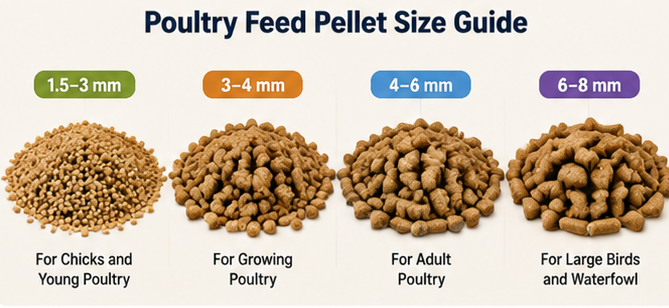
Micro pellet and particle feed
This kind of feed diameter interval is 1.5-3 mm, is all poultry young stage special feed, mainly contains chicks, ducklings, young turkeys and other young poultry starter. In the production process, the equipment first presses out miniature complete particles, and then crushes them into irregular fine particles through a particle crusher, which is more suitable for the small beak of young birds and solves the problem that young birds cannot peck on complete particles. The fine texture and less dust of the micro-particles can effectively avoid the respiratory tract stimulation of young birds, and at the same time, the difficulty of feeding is low, which can quickly guide young birds to eat and improve the early survival rate. This kind of feed is very versatile, can be used in all poultry brooding stages, the core is suitable for 0-2 weeks old young birds, it is the core feed category for breeding start.
Small and medium pellet feed
Small and medium-sized particles with a diameter of 3-4 mm belong to the general feed for poultry growth in the middle stage, with the widest range of adaptation. The size particles are suitable for poultry in the growth stage of broilers, laying hens, young waterfowl, young turkeys and the like in the middle growth stage. The granules are uniform in length and compact in structure, which not only does not cause the problem of feeding difficulties, but also effectively stimulates the muscle and stomach motility of poultry, exercises the digestive function of stomach and intestines, and improves the digestion and utilization rate of feed. Compared with micro-particles, small and medium-sized particles have less dust, stronger stability, less damage during storage and feeding, can effectively reduce feed waste, balance growth nutrition supply and breeding cost, and are the mainstream feed for poultry breeding in the middle stage.
large pellet feed
The diameter of large particles is 4-6 mm, and some special breeding poultry can adapt to 8 mm particles. It is specially designed for adult poultry, including broiler chickens, laying hens, adult ducks and adult turkeys. Large size particles have high molding degree, moderate hardness and are not easy to break. Adult poultry can feed faster, shorten feeding time and reduce feed scattering loss during feeding. At the same time, large particles can eliminate picky eating behavior of poultry, ensure balanced nutrition of each bite, and reduce pica problems such as feather pecking and anal pecking of poultry. The particles have high energy density, can fully meet the high nutrient consumption requirements of adult poultry weight gain, egg production and reproduction, and are suitable for large-scale automatic feeding scenarios of adult poultry.
IV. Composition of core raw materials for poultry pellet feed
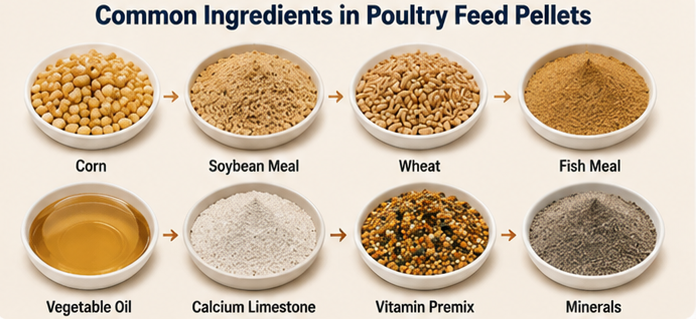
The core of high-quality poultry pellet feed is scientific raw material ratio. All kinds of pellet feed are composed of six categories: energy raw materials, protein raw materials, oils, minerals, vitamins and functional additives. The ratio of various raw materials is dynamically adjusted according to feed category and poultry growth stage, which constitutes the nutritional basis for poultry growth, production and reproduction.
energy raw material
Energy raw materials account for 50%-70% of the total feed ratio, which is the main energy source for poultry growth, activity and egg production, mainly grain raw materials. Corn is the core energy raw material of global poultry feed, with high digestibility, sufficient energy and balanced amino acid ratio, which is suitable for all kinds of pellet feed. Wheat, sorghum, barley and other grains can be used as alternative raw materials, flexible selection according to regional raw material costs. At the same time, wheat bran, rice bran, corn distiller’s grains and other agricultural and sideline products will also be added in an appropriate amount to supplement crude fiber and micronutrients, adjust feed palatability and control breeding costs. The proportion of energy raw materials will be adjusted according to the growth stage. The feed in fattening period and laying period will appropriately increase the proportion of grain and increase the energy density.
protein raw materials
Protein raw materials account for 20%-35%, which is the core nutrition for poultry muscle growth, body repair and eggshell formation. Soybean meal is the most mainstream plant protein raw material, protein content as high as 44%-48%, amino acid ratio perfect, suitable for all kinds of poultry full cycle feed. Rapeseed meal, sunflower meal, corn gluten meal and other plant protein raw materials can be used to assist in matching, optimize protein structure and reduce formula cost. Chickling feed, broiler growth feed will add appropriate amount of fish meal, meat and bone meal and other animal protein, protein digestibility is higher, can quickly support the development of young birds. At the same time, through the synthesis of lysine, methionine and other amino acid additives, balance the overall protein nutrition, improve protein utilization rate.
grease raw material
The oil raw materials include soybean oil, rapeseed oil, poultry fat, animal butter, etc. Although the addition ratio is low, it is critical. Oil can greatly improve the energy density of feed, meet the needs of chicken fattening and winter cold-resistant breeding, and improve the particle formation degree, reduce dust and improve the palatability of feed. In addition, fat can promote the absorption of fat-soluble vitamins such as vitamins A, D, E, K, etc., and avoid nutrient loss. Broiler fattening period feed oil addition is highest, young poultry feed oil addition is low, ensure feed easy digestion.
mineral raw material
Minerals are divided into major elements and trace elements, which directly affect the bone development and production performance of poultry. Limestone and oyster shell are the core calcium sources of egg-laying feed to ensure eggshell hardness; dicalcium phosphate and calcium hydrogen phosphate supplement phosphorus to balance calcium and phosphorus ratio; salt maintains electrolyte stability of poultry. Trace element premix can provide manganese, zinc, iron, selenium and other nutrients, prevent poultry metabolic diseases, improve feather quality, and ensure reproductive performance. Brooding feed focuses on calcium and phosphorus balance, laying feed focuses on calcium supply.
Vitamins and functional additives
Vitamin premix contains vitamins that cannot be synthesized by all kinds of poultry to ensure the normal operation of metabolism and immune function of the body. Functional additives are selected according to breeding needs. Enzyme preparations can decompose indigestible ingredients in feed and improve nutrient absorption rate; probiotics and prebiotics regulate intestinal flora of poultry and prevent intestinal diseases; anti-coccidiosis additives are mostly used in poultry feed to prevent coccidiosis; pigments, Omega-3 and other additives can improve egg yolk color and improve poultry product quality. Compliant additives can maximize breeding benefits without affecting poultry health.
V. Poultry pellet feed production technology and supporting equipment
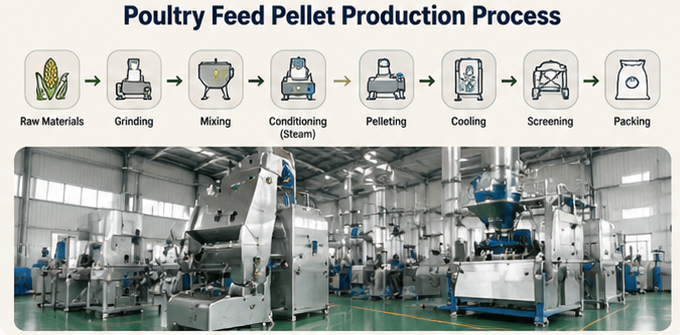
The production process of poultry pellet feed of different categories, size and formula is basically unified, and differentiated production can be realized only by adjusting equipment mold, temperature, pressure and formula proportion. Standardized production process is the key to ensure the quality, nutrition uniformity and molding stability of pellet feed. The complete production process includes eight core links and special processing equipment.
Raw material cleaning and storage
In the early stage of production, all raw materials such as corn and soybean meal need to be inspected and cleaned, and stones, metal impurities, dust and other foreign matters in raw materials are removed by vibrating screens and magnetic separators to avoid impurities damaging equipment and affecting feed quality. The cleaned qualified raw materials are classified and stored in storage silos and storage tanks, and are subject to moisture, mildew and pollution prevention treatments to ensure the freshness of raw materials and lay the foundation for subsequent processing. This link is the first line of defense for safe feed production.
Raw material crushing processing
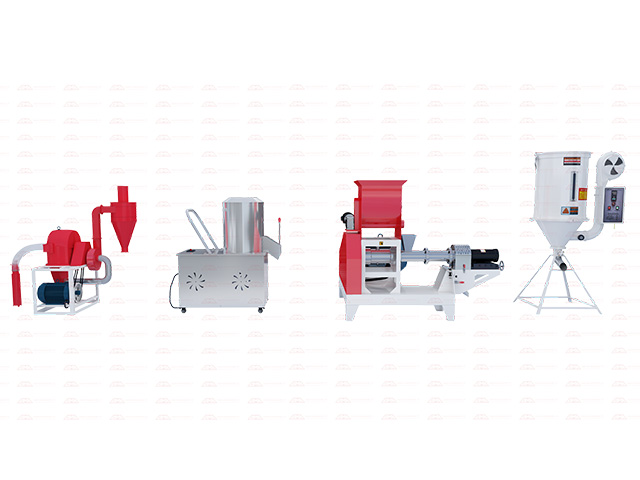
Crushing process core equipment for hammer mill, will be all kinds of granular grain, lump raw materials crushed into uniform powder. The grinding granularity is adjusted according to the feed category, and the fineness of the young poultry feed powder is controlled at 0.8-1.5 mm, and the fine texture is suitable for the digestion of the young poultry; the fineness of the adult poultry feed powder is 1.5-2.5 mm, and the molding degree and the digestibility are considered. Uniform crushing particle size can ensure the effect of subsequent mixing and granulation, avoid uneven particle formation, nutrition stratification and other problems, which is the basic process of high-quality pellet feed production.
Precision ingredient mixing
Through the automatic batching system according to the preset formula, accurately weigh all kinds of energy, protein, minerals, additives raw materials, error control in a very small range, to ensure formula accuracy. The weighed raw materials enter a horizontal mixer and a paddle mixer for full mixing, and the coefficient of variation of mixing uniformity is less than 5%, so as to ensure that the nutrient ratio of each feed is completely consistent. Liquid raw materials such as grease and molasses are sprayed evenly into the mixed materials by spraying to avoid local accumulation and improve the palatability and molding effect of the feed.
steam conditioning
After mixing, the powder enters a conditioner for steam conditioning to raise the temperature of the material to 80-90 DEG C and adjust the moisture content to 15%-18%. High temperature steam can make starch in raw materials fully gelatinized, improve the cohesiveness of raw materials, make particles more compact and not easy to break; at the same time, high temperature can kill harmful bacteria in raw materials, improve feed hygiene level; softened materials are easier to extrude, reduce equipment loss, improve feed digestion and absorption rate, which is the core process to determine particle quality.
high pressure granulation
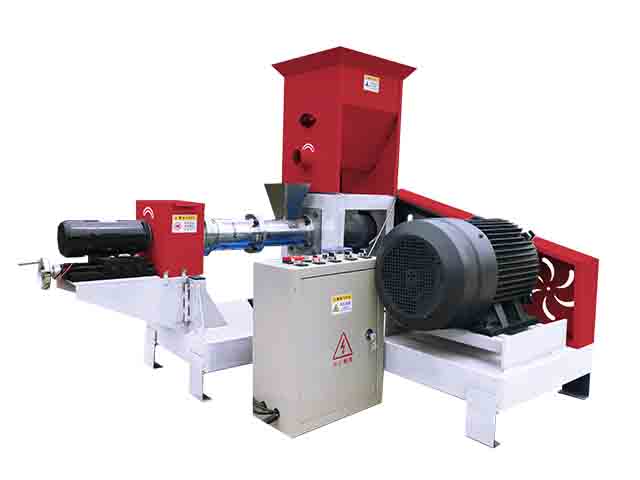
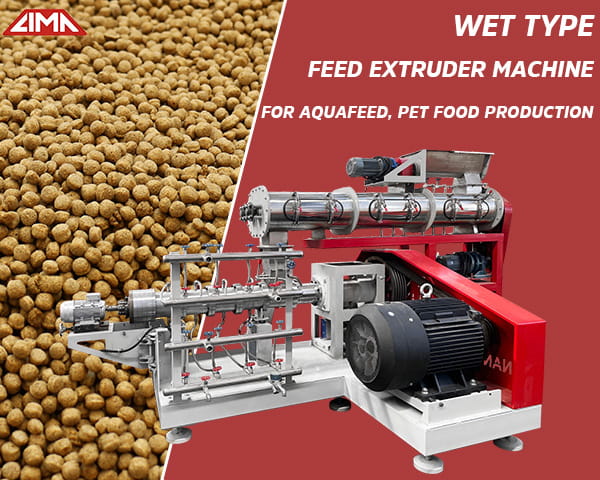
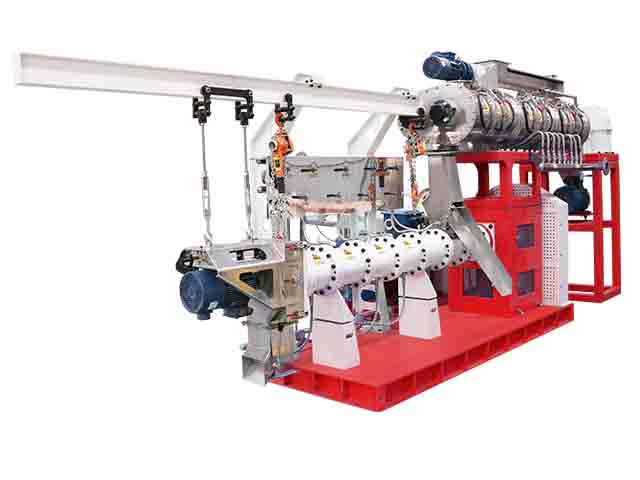
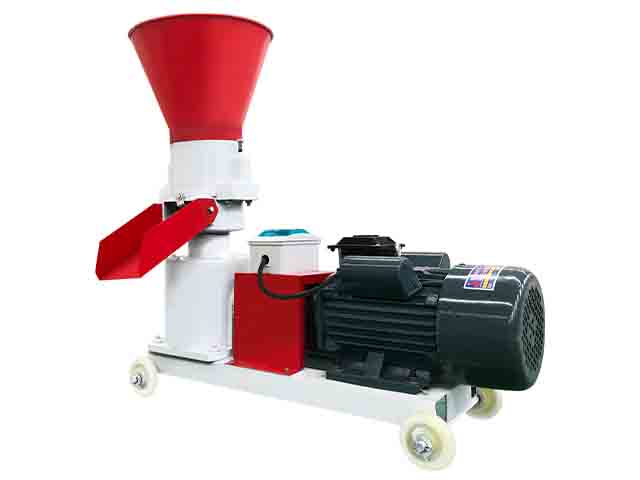
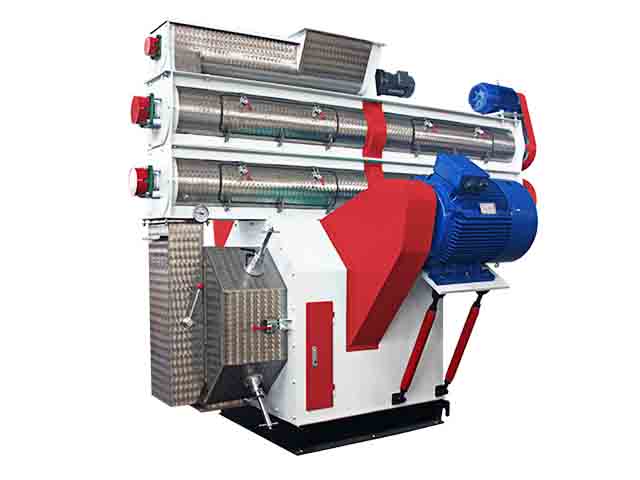
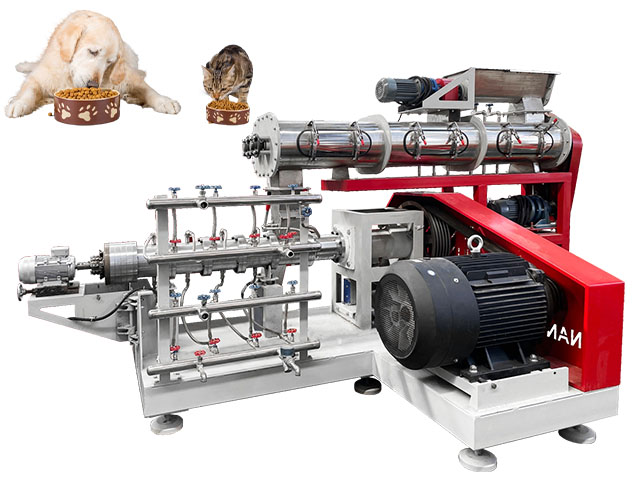
Pelletizing is the core link of feed molding. The core equipment is divided into flat die granulator and ring die granulator. Flat die granulator is suitable for small farms and family workshops, with a production capacity of hundreds of kilograms per hour. It is simple to operate and has high cost performance to meet the needs of self-ingredients. Ring die granulator is suitable for large and medium-sized feed factories and large-scale breeding bases. It has high production capacity, uniform particle molding, and durable molds, suitable for batch standardized production. By changing molds with different apertures, pellet feed of different size of 1.5-6 mm can be quickly produced to meet the growth needs of various poultry. The material passes through the die under the extrusion of the press roller of the equipment to form uniform cylindrical particles.
particle cooling and setting
Just pressed finished particles high temperature, moisture, soft texture, easy to mold caking. It needs to be sent to a counter-current cooler, quickly cooled to room temperature by normal temperature wind, and the moisture content is reduced to 12%-13% of the safe storage standard, so that the particle texture is hardened and stabilized, the hardness and wear resistance of the particles are improved, and damage and mildew in the subsequent transportation and feeding process are avoided.
particle crushing treatment
This procedure is optional and is only applicable to opening of young birds. After cooling, the complete large particles are sent to a particle crusher, crushed into fine particles, which are suitable for the feeding ability of young birds, and at the same time, the nutrition ratio of the original particles is completely retained, so as to solve the problem that young birds cannot eat complete particles, and the nutrition uniformity and feeding convenience are considered.
Sieving, packaging, storage
After molding and cooling, the particles are screened by a vibrating screen to remove fine powder, unqualified residual particles and oversized particles, and the qualified particles after screening are uniform. The powder produced by screening can be recycled to the mixer for secondary processing to avoid waste of raw materials. Qualified finished particles can be packaged directly in bags or stored in bulk bins for automatic feeding in the field to complete the entire production process. The complete production line is also equipped with conveying equipment, dust removal equipment and intelligent control system to realize automatic and standardized production.
Six, farm pellet feed selection core skills
There are many kinds of poultry pellet feed on the market, and accurate selection is the key to improve breeding benefit and reduce breeding risk. Whether the farm purchases finished feed or produces feed independently, it needs to comprehensively judge the breeding category, growth stage, breeding mode and equipment conditions, so as to avoid problems such as slow growth, egg production decline and feed waste caused by improper selection.
Match poultry category to breeding target
Firstly, the purpose of poultry breeding is clarified, broiler breeding focuses on rapid weight gain, priority is given to selecting phased high-protein and high-energy formula granular feed, and the weight gain rhythm is accurately matched in strict accordance with the three stages of brooding, growth and fattening; laying hen breeding focuses on stable and high yield, low-calcium balanced nutritional feed is selected during brooding and breeding period, and high-calcium special granular feed is replaced during laying period, so as to prevent damage to chicken body by feeding high-calcium feed in advance; Waterfowl and special poultry can refer to chicken size standard, appropriately increase particle size, adjust energy ratio, adapt to their feeding and growth characteristics. Eliminate single feed feeding in the whole process and avoid mismatch between nutrition supply and demand.
Precise adaptation of growth stages to particle size
Strictly follow the principle of “small particles for small days and large particles for large days”. Young birds aged 0-2 weeks must use crushed particles or 1.5-3 mm micro-particles to prevent excessive particles from causing feeding difficulties and growth lag; mid-growth poultry should be adapted to 3-4 mm medium-sized particles to take into account feeding efficiency and gastrointestinal development; adult poultry should use 4-6 mm large particles to reduce feed waste and improve feeding efficiency. At the same time, according to the growth stage, accurately adjust the nutritional parameters, control the dynamic changes of protein, calcium and energy, and meet the physiological needs of poultry.
Strictly control the quality index of pellet feed
The high-quality pellet feed has uniform appearance, consistent color, no dust, no mildew, no peculiar smell, moderate hardness, light kneading is not easy to break, and the proportion of fine powder is extremely low. When purchasing feed, check formula parameters, production date and quality inspection report, and focus on checking protein content, calcium and phosphorus ratio and additive compliance; control grinding fineness, conditioning temperature and cooling effect during independent production to ensure stable particle formation and uniform nutrition. Poor quality powder, easily broken pellet feed, will greatly increase the breeding loss, affecting poultry health.
Combination of culture scale and feeding equipment selection
Small-scale free-range breeding and family breeding can directly purchase finished bagged pellets, which is convenient to operate and does not require equipment investment; large-scale breeding farms and large-scale breeding bases are more suitable for independent configuration of pelletizing equipment, independent production of customized pellets, flexible adjustment of formula, guarantee of feed freshness, and greatly reduce long-term breeding costs. Automatic feeding equipment is suitable for all kinds of standard pellet feed, and the pellets with high molding degree and no broken powder shall be selected preferentially to avoid equipment blockage and uneven feeding; manual feeding can adjust the particle size according to the feeding speed of poultry.
Balancing feed costs and aquaculture benefits
Feed conversion rate, loss rate, poultry weight gain and egg production benefit should be comprehensively considered instead of only paying attention to feed unit price when selecting feed type. Low-priced and inferior pellet feed has high loss and unbalanced nutrition, which easily leads to slow growth of poultry, more diseases and higher overall breeding cost; high-quality customized pellet feed has high unit price, but high conversion rate, less waste, excellent poultry production performance and better comprehensive benefit. Self-produced pellet feed can utilize local raw materials to further reduce costs, and at the same time realize precise customization of formula to meet the specific breeding needs.
VII. Core precautions for the use of poultry pellet feed
Choosing the right pellet feed is only the foundation, scientific feeding and reasonable control can maximize the advantages of pellet feed. In the breeding process, details such as reloading mode, storage management, feeding control, equipment maintenance, etc. will directly affect feed utilization rate and poultry growth status.
Scientific completion of feed transition
Poultry stomach adaptability is weak, different stages of pellet feed formula difference is large, it is strictly prohibited to one-time sudden change. It is necessary to adopt gradient refeeding mode, gradually replace the old and new feeds in 3-5 days. On the first day, the proportion of new feed is 30%, the old feed is 70%, on the second day, the new feed is 50%, the old feed is 50%, on the third day, the new feed is 70%, and the old feed is 30%. On the fourth day, the new feed is completely replaced, so as to avoid the problems such as poultry feed intake decrease, diarrhea, growth stagnation and egg production fluctuation caused by refeeding stress.
Standardize feed storage management
Pellet feed is easy to mildew due to moisture absorption. It should be stored in a dry, ventilated, light-proof and moisture-proof warehouse or bin. The ground should be high and far away from the wall to avoid moisture agglomeration. The storage period of finished feed should not be too long, and short-term turnover should be given priority in high temperature and humid environment in summer to prevent mold breeding, nutrient loss and toxin exceeding the standard. Self-produced pellet feed has higher freshness, can be stored for a short time, and can retain nutritional activity to the greatest extent.
Optimize daily feeding management
According to the age and stock of poultry, accurately control the feeding amount, feed a small amount for many times, and avoid long-term accumulation of moisture and deterioration in the feed tank. Regularly clean the trough, feeding equipment, remove residual powder, mildew feed, prevent poultry from eating disease. At the same time, ensure sufficient clean drinking water. Insufficient drinking water will directly reduce the digestion and absorption rate of feed, affecting growth and laying performance. Regularly observe poultry feeding status, growth rate, egg quality, fine-tune feed formula and feeding amount according to actual situation.
Regular maintenance of granulation production equipment
For farms that produce feed independently, it is necessary to regularly clean the grinder, granulator, conditioner and cooling equipment to avoid mildew and clogging of raw material residues. Regularly check the wear of the mold. The severely worn mold will lead to uneven particle size, poor molding degree and increased dust. It needs to be replaced in time to ensure the stable quality of pellet feed. Standardized equipment maintenance is the core guarantee for long-term stable production of high-quality pellet feed.
epilogue
The category subdivision of poultry pellet feed accurately conforms to the physiological characteristics and production requirements of poultry in the whole growth cycle. Pellet feed of different growth stages, different size and different formula supports healthy growth and efficient production of poultry. From micro-particles in brooding period to medium-sized particles in breeding period, to large-sized particles in fattening and laying period, from scientific proportion of basic energy and protein raw materials to functional additives, from standardized production technology to precise selection and feeding skills, every link determines feed utilization rate and breeding economic benefit. For poultry farms, accurate recognition of the characteristics of various pellet feeds, on-demand selection, scientific feeding, and at the same time can rely on professional granulation equipment to achieve independent customized production, not only to ensure the healthy and stable growth and high yield of chickens, but also to effectively control breeding costs, improve the core competitiveness of large-scale breeding, and assist the standardized and efficient development of poultry breeding industry.