Pellet feed or powder feed which is better?
Pellet feedandpowder feed are the two most mainstream compound feed forms in large-scale breeding production of livestock, sheep and pigs. The core raw materials of the two are completely the same, which are composed of corn, wheat and other grains, soybean meal and other protein raw materials, vitamins, minerals and functional additives, but there are significant differences in processing technology, physical morphology, feeding effect and breeding cost.
Many farmers often struggle: breeding in the end to choose pellet feed or powder feed is better? In fact, there is no absolute advantage or disadvantage, only the difference of adaptation scene. This article will comprehensively analyze the two feeds from the dimensions of basic definition, nutrition function, core difference, advantages and disadvantages, selection factors, production equipment, common problems of transformation, etc., so as to help you accurately match breeding needs and improve breeding benefits.
What is powder feed and pellet feed?
Mash Feed
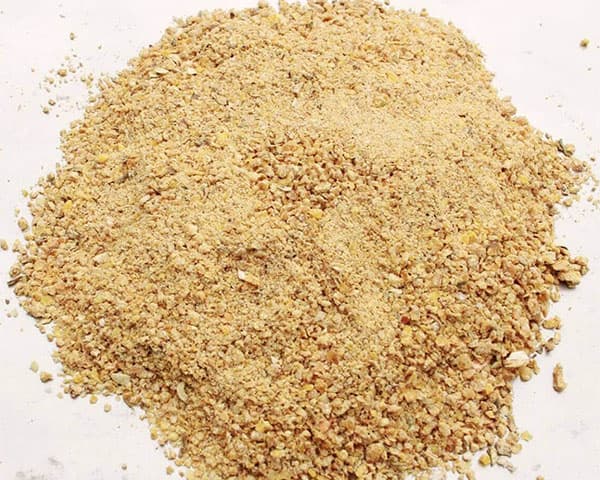
Powdered feed is the simplest and most basic form of compound feed. It is only made by crushing raw materials and fully stirring and mixing. It does not require deep processing such as steam heating or high-pressure compression. The overall texture is loose and in a powdery or coarse-grained state. The texture is similar to Corn flour and flour are similar, and the raw material particles are independent of each other. Layered separation problems are prone to occur during storage and feeding. With its soft texture and mild palatability, powder feed is very suitable for chicks, laying birds and livestock with weak beak and digestive ability. It is also the mainstream choice for small family farms and retail farming.
Pellet Feed
Pellet feed takes powder as basic raw material, through steam conditioning, high temperature humidification, high pressure compression process, through granulator mold pressed into uniform and dense cylindrical particles, and then through cooling, screening fine processing, finished product texture is hard, density is uniform, size is uniform, each particle contains all nutrients with balanced proportion, completely solves the problem of powder raw material stratification and uneven nutrition, relying on high digestion utilization rate, low feeding loss, The outstanding advantage of convenient scale management is widely used in broilers, turkeys, fattening pigs, cows and other commercial and large-scale breeding farms.
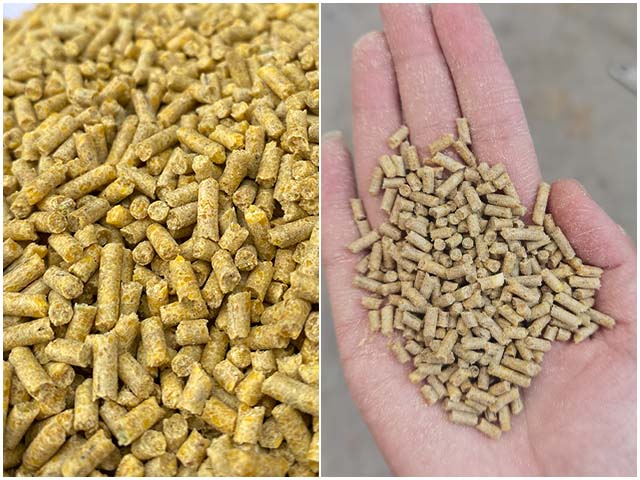
Key Effects of Feed Forms on Animal Nutrition
In the nutrition of livestock and poultry breeding,the physical form of feed and nutritional formula are equally important. Even if the raw material ratio and nutrient composition are completely consistent, powder and pellet feed will change the growth performance of animals from many dimensions such as intake efficiency, digestion and absorption, intestinal health, feed loss, breeding benefit, etc.
Nutritional function of powder feed
The powder material retains the original form of feed raw materials, the loose texture can simulate the natural foraging habits of livestock and poultry, can effectively stimulate the development of poultry stomach muscles, assist the gradual digestion and absorption of young livestock and poultry intestines, and is flexible in proportion. It can conveniently add additives such as drugs and probiotics to meet various personalized breeding needs. However, its disadvantages are also obvious, which is easy to cause the problem of selective feeding of livestock and poultry, leading to the preference of livestock and poultry for picky eating grain particles, residual protein and mineral powder. Long-term feeding will cause imbalance of nutrition intake, uneven growth of livestock and poultry, high dust content of powder, easy to stimulate respiratory tract of livestock and poultry to induce diseases, large loss in feeding process, will directly increase breeding waste and hidden breeding cost.
Nutritional role of pellet feed
in that production proces of the pellet feed, through a high temperature and high pressure condition process, starch gelatinization reaction can occur in the feed, starch gelatinization rate is increased from 10 -12% of raw material to more than 40%, energy utilization rate is obviously improved, anti-nutritional factors in the feed are effectively degraded, harmful pathogenic bacteria such as salmonella are killed, the hygiene safety of the feed is greatly improved, nutrition of the pellet feed is uniform and controllable, and balanced nutrition can be ensured for livestock and poultry every bite. Completely eliminate selective feeding problems, effectively optimize feed conversion rate (FCR), improve daily feed intake and growth rate of livestock and poultry, comprehensively improve the production performance of livestock and poultry weight gain, milk production, egg production, etc. However, the pellet feed is hard in texture and is not suitable for young livestock and poultry who are newly born and weak in physique. At the same time, excessive thermal processing may also cause a small amount of micronutrient loss.
Transition feed: crumbles
Granule is a derivative form of pellet feed, which is made from broken whole pellets. It takes into account the dual advantages of easy intake of powder and uniform nutrition of pellets. It is the first choice for livestock and poultry from young brood period to breeding period, and perfectly connects the use scenarios of two kinds of feeds.
Pellet vs powder feed
In order to distinguish the differences between the two feeds more intuitively, we compared them in detail from seven core dimensions: production process, physical form, nutritional effect, cost loss and adaptation scenario:
| Compare Dimensions | powdered feed | pellet feed |
| manufacturing technique | Simple, only crushing, mixing, no high temperature compression, low energy consumption | Complex, need conditioning, granulation, cooling, screening, high energy consumption, multiple processes |
| physical form | Loose powder/coarse powder, raw materials are easy to separate | Compact and uniform hard particles, stable morphology without layering |
| nutrient uniformity | Generally, there is a risk of nutritional imbalance caused by picky eating | Extremely high, each particle nutrient ratio is exactly the same |
| digestion utilization rate | Medium, suitable for weak livestock | Higher, starch gelatinization improves energy absorption, less antinutrient factors |
| Feed loss and dust | Large dust, excessive sprinkling and serious waste | Low dust, low spillage, minimal storage and transport losses |
| cost of production | Low, less equipment investment, low energy consumption | High, large equipment investment, high processing energy consumption |
| Adapt scene | Small farms, brooding, laying birds, budget farming | Large-scale commercial breeding, fattening period, high-yield livestock and poultry |
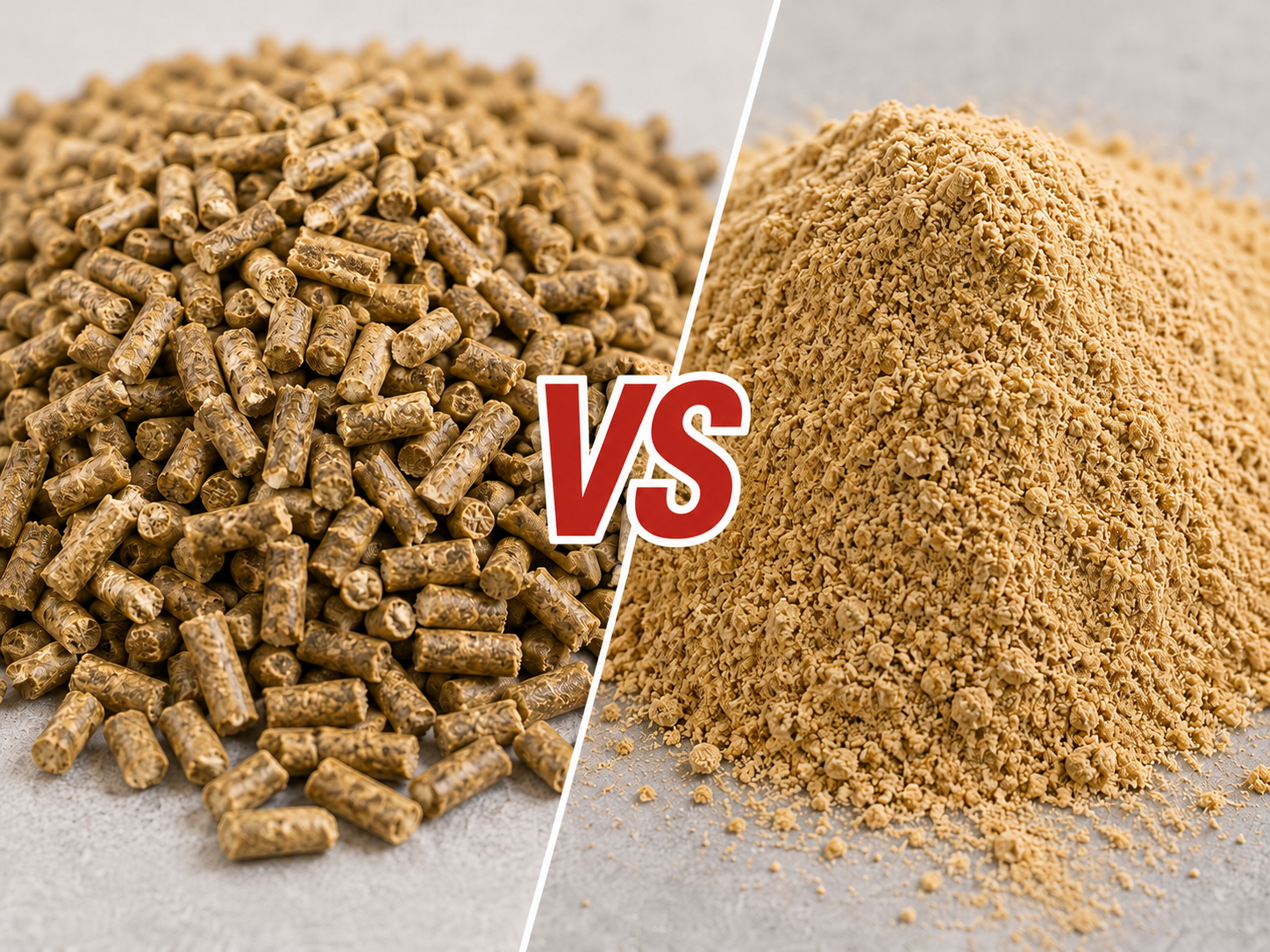
From the all-round comparison results, it can be clearly seen that the core difference between powder feed and pellet feed stems from the difference of processing technology, and this basic difference directly derives from the all-round difference between the two in morphology, nutrition, cost and adaptation scene. The powder feed production process is extremely simple, only crushing and mixing treatment are needed, and the production energy consumption, equipment investment and overall production cost are lower. However, the loose powder form is easy to cause raw material stratification and picky eating of livestock and poultry, resulting in unbalanced nutrient intake. At the same time, the dust amount is large, the feeding waste is much, the overall feeding loss and hidden breeding cost are high, and it is only suitable for small breeding, brooding livestock and poultry, laying poultry and other lightweight breeding farms. On the other hand, pellet feed, after steam conditioning, high-pressure granulation, cooling screening and other multiple deep processing procedures, although the production process is more complex, energy consumption and equipment investment costs are higher, but the finished pellets are dense and uniform, stable in nature, eliminating the problem of raw material stratification and selective feeding from the root, and the nutrient ratio of each feed is highly balanced. At the same time, high temperature and high pressure processing improves starch gelatinization rate of feed, reduces anti-nutritional factors, greatly improves digestion utilization rate and feed conversion rate, and has less dust, low loss, more convenient storage and transportation, perfectly adapts automatic feeding system and medium and large commercial breeding, can effectively assist livestock and poultry to fatten quickly, improve production capacity, and bring higher comprehensive economic benefits for large-scale breeding.
Summary of the core advantages and disadvantages of the two feeds
Advantages and disadvantages of powder feed
Core advantages: simple powder feed production process, low technical threshold, no need for complex granulation equipment, equipment investment, energy consumption and processing costs are lower, suitable for small farms and retail investors with limited budgets. Its ingredients are flexible, and additives such as drugs, probiotics and vitamins can be added as needed to meet the needs of personalized breeding. The feed is soft and mild in texture, suitable for young livestock and poultry, young birds and animals with weak digestive ability to eat, and can restore the natural pecking habits of livestock and poultry, effectively exercise the muscle stomach of poultry, promote the development of gastrointestinal system, and ensure the healthy growth of livestock and poultry.
Main short board: powder feed raw materials have different particle size and density, and are easy to stratify during storage, transportation and feeding, which easily leads to selective feeding of livestock and poultry, resulting in unbalanced nutrient intake, uneven growth, slow development and reduced production capacity of livestock and poultry. At the same time, the large amount of powder dust can easily irritate the respiratory tract of livestock and poultry, induce respiratory diseases, and increase the risk of breeding diseases. High spillage loss in feeding process, easy moisture deterioration in storage, high hidden breeding cost. In addition, the powder has poor fluidity and is easy to agglomerate, so it cannot adapt to automatic feeding equipment, only suitable for artificial feeding, and difficult to adapt to large-scale and standardized large-scale breeding mode.
Advantages and disadvantages of pellet feed
Core advantages: pellet feed is compressed and molded under high pressure, and the nutrition ratio is uniform and stable, which can completely avoid the problem of picky eating and nutrition imbalance of livestock and poultry, and effectively improve the growth uniformity of livestock and poultry groups. The high temperature conditioning process in the production process can kill harmful bacteria in the feed, improve the hygiene safety of the feed, and reduce the occurrence of intestinal diseases of livestock and poultry. At the same time, high temperature and high pressure can promote starch gelatinization, degrade anti-nutritional factors, significantly improve feed digestion and absorption rate and feed conversion rate, accelerate livestock growth speed and improve breeding capacity. In addition, pellet feed has less dust, low loss, strong stability, storage resistance, automatic feeding equipment, large-scale and standardized breeding, which can effectively reduce labor and management costs and improve the overall economic benefits of breeding.
Main shortcomings: pellet feed production process is complex, need to be equipped with a full set of professional granulation equipment, early equipment investment, production energy consumption and operation and maintenance costs are higher, there are certain requirements for breeding funds and production conditions. The grain texture is hard and the size is fixed, which is not suitable for young livestock and poultry whose stomach and beak are not fully developed. Direct feeding is easy to cause feeding difficulties and indigestion. At the same time, the quality of pellet feed is highly dependent on process control. Excessive high temperature conditioning will destroy heat-sensitive nutrients such as vitamins and probiotics, resulting in a small amount of nutrient loss and affecting the feeding effect.
Difference between powder and pellet feed production equipment
The raw material system of powder feed and pellet feed is basically the same, but the molding process is very different, and the required production equipment, site conditions, energy consumption cost and technical operation and maintenance threshold are different, which directly determines the input cost and production efficiency of feed production line, and is also an important reference basis for farmers to purchase equipment and build their own ingredient production line. The differences in equipment configuration between the two types of feed will be compared in detail below.
Common infrastructure
Powder and pellet feed production lines should be equipped with basic general equipment, which is the core premise to ensure feed quality and realize standardized production. The basic equipment mainly includes raw material cleaning equipment, grinder, precision batching equipment, mixer, dust removal equipment and automatic packaging equipment, which can complete the whole basic procedures such as impurity removal, crushing, precise proportioning, uniform mixing, dust removal and finished product packaging, effectively avoid the problems of raw material impurities, proportioning deviation, production dust and so on, and guarantee the basic quality and production safety of feed from the source.
Powder special equipment
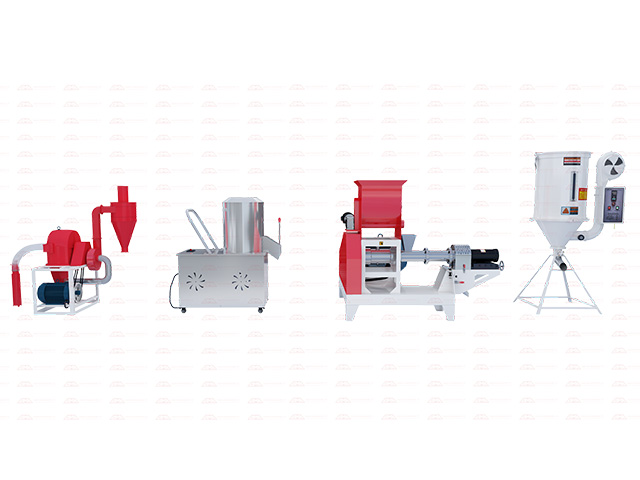
The powder feed production process is simple, and the production can be completed only by basic crushing and mixing equipment. The required equipment is small, the site requirements are low, and the overall procurement, installation, operation and maintenance and energy consumption costs are lower. It is easy to operate, low technical threshold, novice can quickly start, very suitable for small-scale feed processing plants, family farms and retail small-scale self-ingredient mode, can stably produce qualified feed at low cost, fully meet the daily feeding needs of small-scale breeding.
New equipment for granules
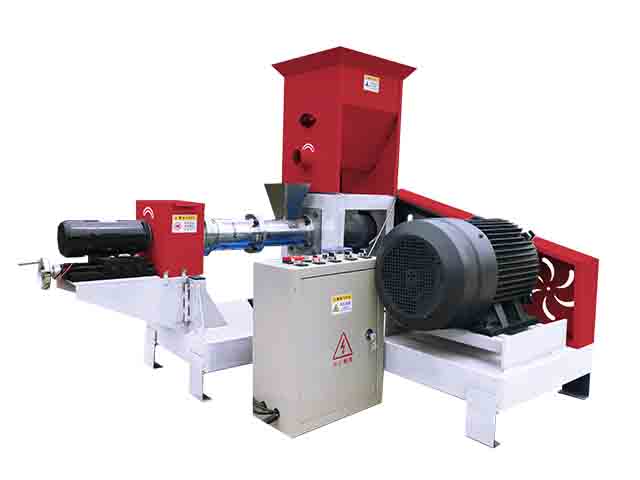
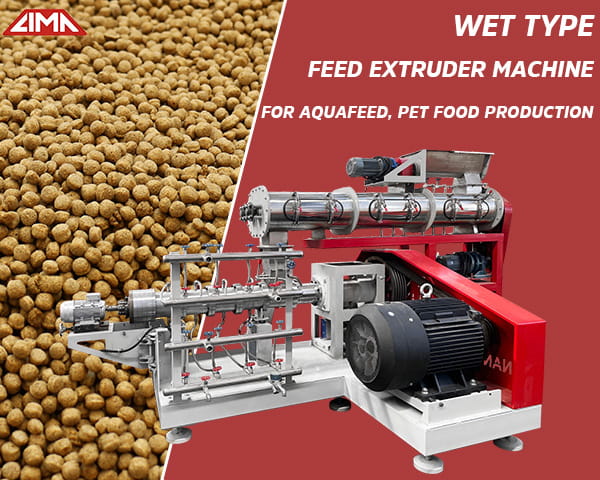
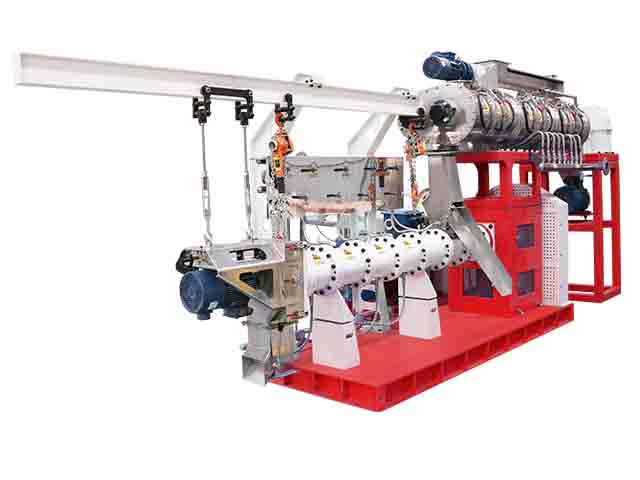
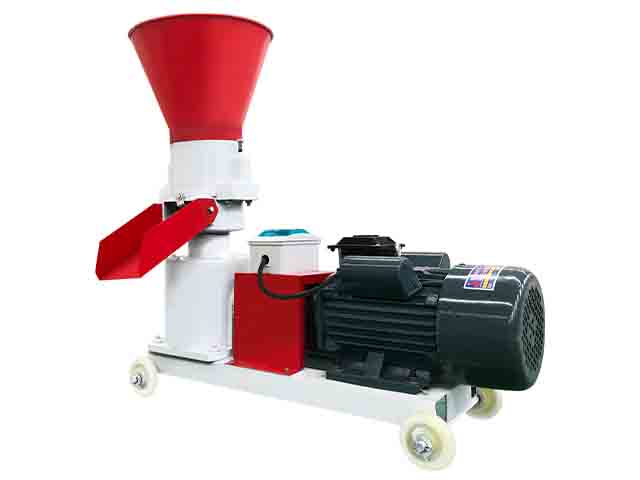
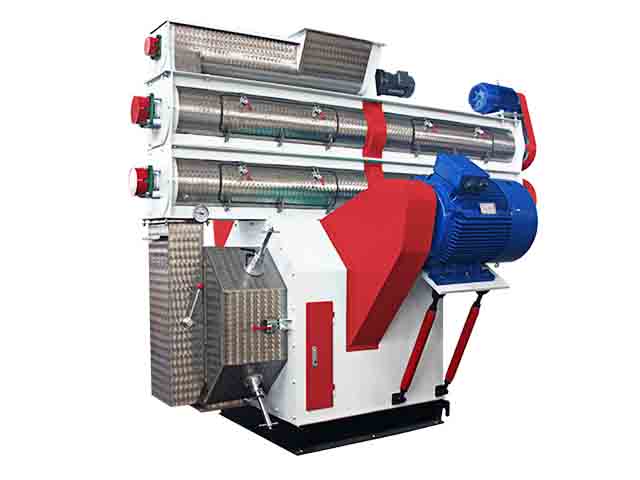
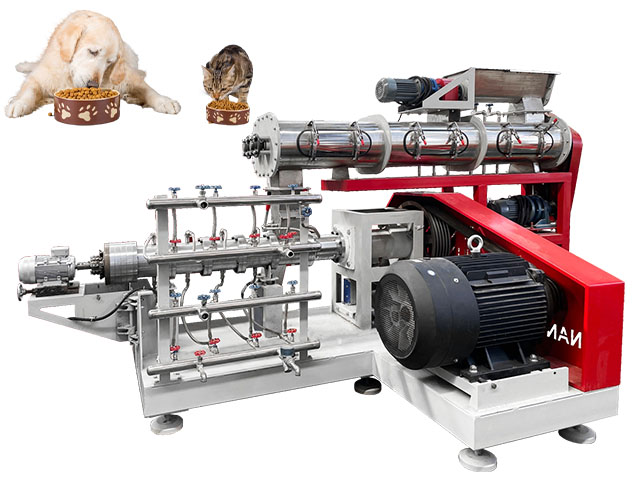
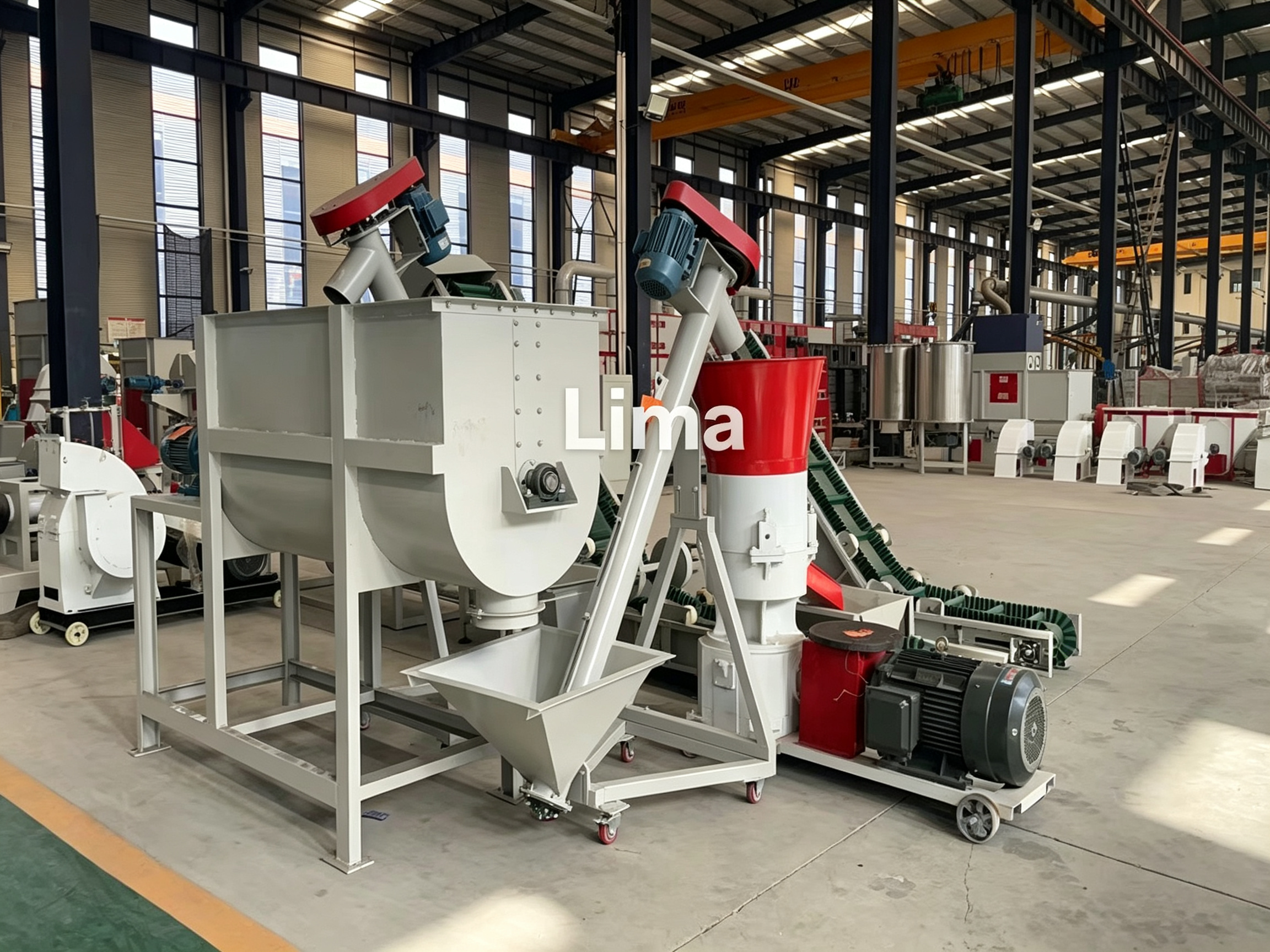
Pellet feed needs to be based on the powder basic equipment, supporting a complete deep processing granulation production line. The core equipment includes steam conditioner, granulator, countercurrent cooler and sieving machine, which are respectively responsible for raw material softening and gelatinization, high-pressure molding, cooling and dehumidification and finished product screening to ensure regular molding, stable quality and storage resistance of pellet feed. In addition, the high-end production line can be equipped with auxiliary equipment such as particle crusher and grease spraying machine to meet the feeding and nutrition needs of different livestock and poultry. The whole set of pelletizing equipment has high investment, large energy consumption, high site requirements, and certain threshold for production process control and operation and maintenance technology, which is more suitable for medium and large feed factories and large-scale breeding enterprises.
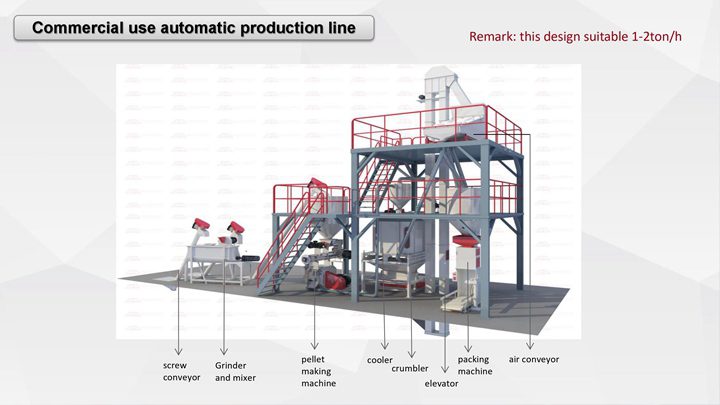
Core considerations for the selection of pellet feed and powder feed
When selecting pellet feed and powder feed, it cannot be judged only by a single dimension, but should be comprehensively considered in combination with multiple factors such as breeding scale, livestock and poultry category, growth stage, cost budget, breeding facilities and technical ability. Scientific selection methods can maximize the growth performance and comprehensive income of livestock and poultry while controlling breeding costs. The following are comprehensive and structured selection references.
Breeding Scale and Operation Mode
For small-scale farms, family free-range farming, courtyard farming or self-ingredient mode, powder feed is a more appropriate choice, with low equipment investment, simple production process, low operation threshold, and adaptation to small-scale and lightweight farming operation scenarios. Medium and large commercial scale farms are more suitable for pellet feed, which can realize feeding standardization, maximize breeding efficiency, ensure stable feed quality and large-scale replication of production.
Type and growth stage of livestock and poultry
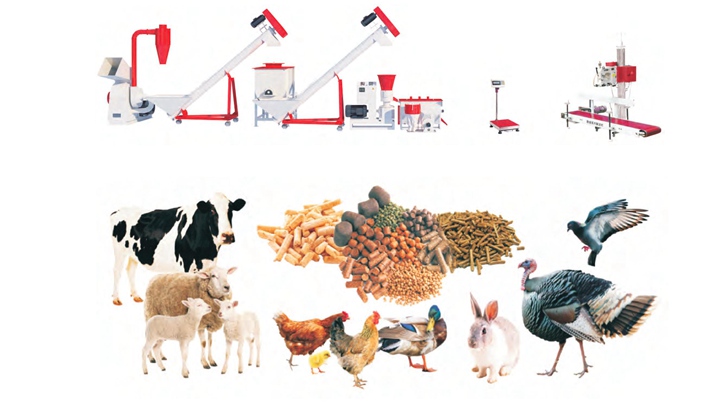
Young birds, young livestock and laying poultry are more suitable for powder or broken particles, soft and easy to eat, easy to digest, suitable for the feeding ability of weak livestock and poultry, while retaining the natural feeding habits of livestock and poultry, helping gastrointestinal development. Broilers, turkeys, fattening pigs, cows and other livestock and poultry with growth and weight gain and high yield as the core goals are more suitable for pellet feed, which can stably improve growth speed, feed conversion rate and production performance. From the category difference, poultry has strong adaptability to both feeds, while ruminant cattle and sheep rely more on stable and balanced nutrition supply of pellet feed.
Budget and cost considerations
From the perspective of early production cost, powder feed production equipment is simple, energy consumption is low, investment is less, suitable for farmers with limited budget. However, when accounting for the overall breeding cost, we should not only look at the unit price of feed purchase and production, but also comprehensive cost such as feed loss, labor cost, livestock growth rate and morbidity. Although pellet feed has higher equipment, energy consumption and production costs in the early stage, it can greatly reduce feed waste, reduce manual management costs, improve livestock breeding benefits, and has more advantages in long-term return on investment. In addition, the equipment maintenance and energy consumption costs of pellet feed production line are also significantly higher than those of powder production line.
Breeding objectives and performance expectations
If the core goal of breeding is to quickly fatten, improve the uniformity of output, improve milk production and egg production capacity, and pursue the ultimate breeding efficiency, pellet feed shall be preferred. Pellet feed can eliminate the problem of picky eating of livestock and poultry, improve the digestion and utilization rate of feed, and maximize the production potential of livestock and poultry. If more emphasis is placed on breeding flexibility and the natural growth habits of livestock and poultry are retained, various additives such as drugs and probiotics need to be frequently added, and the powder feed will be more suitable, and the raw materials will be visualized and more flexible to be blended. At the same time, at the feed sales end, pellet feed market recognition is higher, the price is better, and the commercial value is stronger.
Feed Quality and Livestock Health Management
The nutrition ratio of each pellet of pellet feed is balanced, which can ensure that the nutrition of livestock and poultry is uniform; the high temperature conditioning process in the production process not only improves the starch digestion and absorption rate, but also effectively kills harmful pathogenic bacteria such as Salmonella, improves the hygiene grade of feed and reduces the incidence probability of livestock and poultry. However, there will be a certain adaptation cycle when changing feed form. When switching from powder feed to pellet feed, livestock and poultry need a period of time to adapt to the feeding and digestion rhythm. In the breeding process, they need to transition gradually to avoid stress reaction.
Production equipment and technical capability
Powder production requires only basic crushing and mixing equipment, and the technical threshold is extremely low, and novices can also quickly start. Pellet feed production needs supporting granulator, steam conditioner, cooling screening equipment and other professional equipment, not only equipment investment is higher, but also professional technicians need to control steam temperature, mold selection, cooling process and other key parameters, production technology and quality control ability requirements are higher.
How to choose the right feed according to your own needs
When farmers select powder feed and pellet feed, the core basis is the breeding scale, operation mode and production target of their own farms. The cost structure, feeding equipment, management mode and benefit demand of different breeding scale are very different, and the feed form is completely different. The following will explain the feed selection plans for each scale in detail according to the classification of small, medium and large farms.
Small family farms/retail farming
Small farms, yard free-range, family self-ingredient mode, small number of breeding, mainly artificial feeding, no automatic equipment, limited breeding budget, core requirements are cost control, flexible feeding, lower breeding threshold, sopowder feed is the best choice. Powder production and procurement costs are lower, no high equipment investment is required, and it is suitable for the production conditions of small farms. At the same time, the powder texture is soft, which is very suitable for chicks, laying birds and weak-aged livestock to eat, and drugs, vitamins and probiotics can be added at any time for personalized preparation to meet the needs of small-scale fine management and protection. For small farms, there is no need to blindly replace pellet feed, powder can completely meet the basic breeding needs, avoid the extra cost waste caused by equipment and energy consumption, and realize low-cost stable breeding.
Medium-sized farms
Medium farms have moderate breeding quantity, basic feeding equipment, cost and production capacity, pursue steady efficiency improvement, balanced income, and adapt to the feeding mode of powder feed + pellet feed in stages, which is also the selection scheme with the highest cost performance. In the brooding period and young maintenance stage of livestock and poultry, powder or broken pellets can be continuously used to ensure smooth feeding of livestock and poultry, protect gastrointestinal development, and reduce breeding stress and mortality rate; in the breeding period, fattening period and high yield period, pellet feed can be switched comprehensively, and the advantages of uniform nutrition, high conversion rate and low loss of pellet feed can be utilized to improve the growth speed, uniformity of slaughter and milk production capacity of livestock and poultry. Medium-sized farms can rely on the existing equipment to switch flexibly, which not only avoids the high cost pressure of the whole process of granular material, but also solves the disadvantages of slow growth and high loss of the whole process of powder material, giving consideration to the breeding cost and production benefit.
Large commercial farms
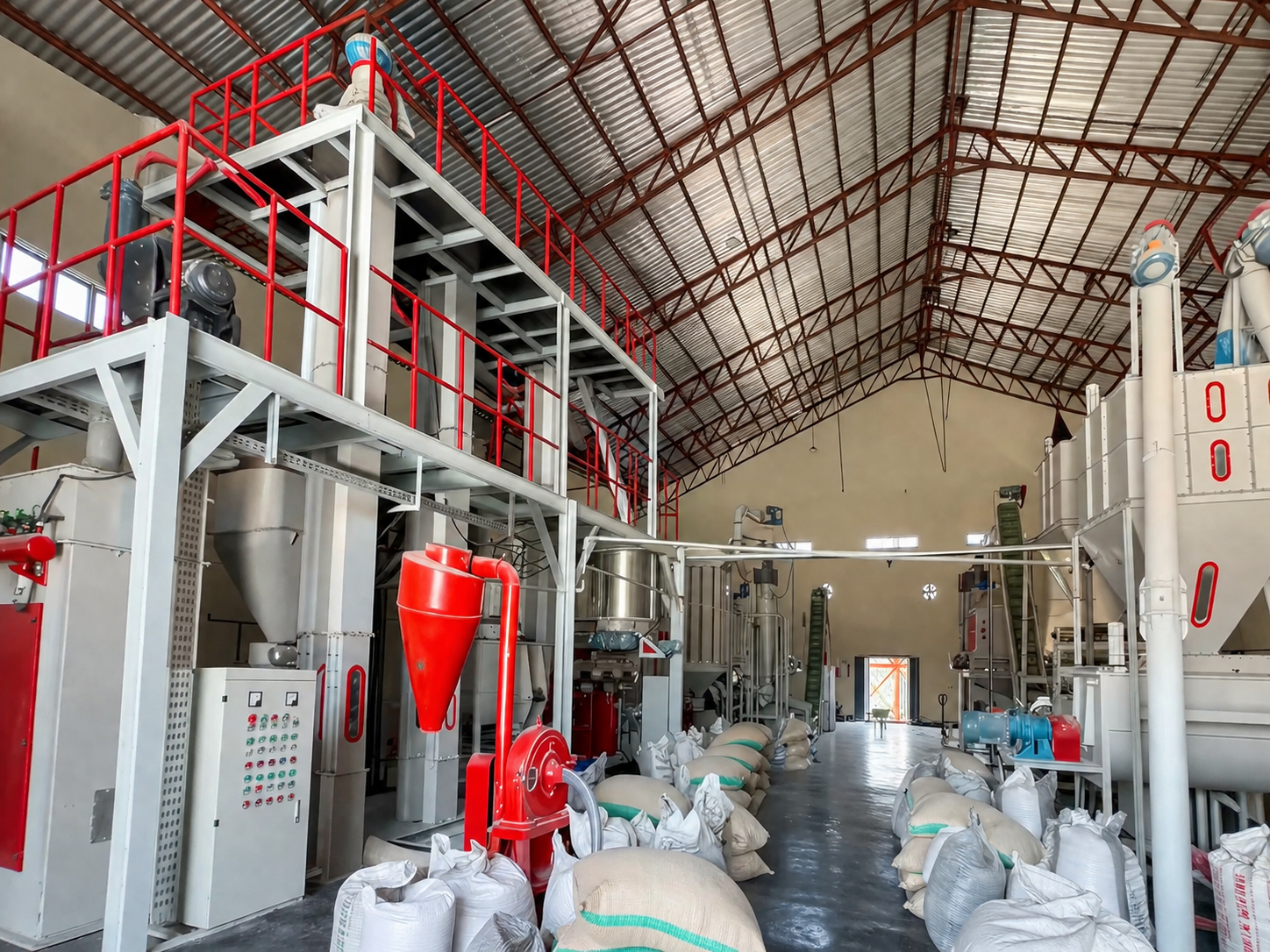
Large-scale standardized and commercial farms, focusing on large-scale mass production, efficient fattening, standardized management, equipped with a full set of automatic feeding and storage equipment, the core requirements are ultimate production efficiency, stable livestock quality, and reduced manual loss, sopriority is given to the comprehensive use of pellet feed. The nutrition of pellet feed is balanced and unified, completely eliminating the problems of picky eating and uneven nutrition of livestock and poultry, ensuring that the whole group of livestock and poultry grows neatly and has stable production capacity, and adapting to large-scale standardized breeding standards. At the same time, pellet feed has low dust, less loss, good storage resistance, good fluidity, perfect adaptation to automatic feed line and intelligent feeding equipment, greatly reducing manual management costs. Although the unit price of pellet feed production and purchase is higher, the lower feed waste, lower disease probability and better feed-meat ratio can continuously reduce the comprehensive breeding cost, maximize the overall profit of large-scale breeding, and fully adapt to the commercial operation objectives of large-scale farms.
Common problems and solutions of powder to pellet feed
When many farmers upgrade their breeding models and switch from powder to pellet feed, they often encounter adaptation problems. Mastering corresponding solutions can quickly avoid losses:
Initial feed intake decreased
Livestock and poultry eat soft powder for a long time, and have poor adaptability to hard particles, so they are prone to reduce intake and delay growth. Solution: 7-14 days gradual transition, gradually increase the proportion of pellet feed, reduce the proportion of powder; early can add molasses, oil to improve palatability, or first use broken pellets transition.
gastrointestinal upset
Pellet feed density, digestion rhythm is different, easy to appear mild diarrhea, dyspepsia. Solution: Poultry farming supplement gravel to assist muscle stomach grinding digestion, ensure adequate clean water, closely observe the state of feces during the transition period, and fine-tune feed formula if necessary.
equipment adaptation failure
The original powder feeding equipment is easy to have the problems of bridging, crushing and poor discharge of granular materials. Solution: Improve the trough, material line, install anti-bridging device, standardize the operation process, reduce particle damage.
deviation of expected benefit
At the initial stage, due to the adaptation period of livestock and poultry, it is impossible to reflect the high efficiency advantage of granular material, which is easy to mistake for low cost performance. Solution: Record feed intake, feed to meat ratio and weight gain data before and after switching. After the adaptation period, the advantages of low loss and high conversion rate will gradually become prominent.
sum up
To sum up, there is no absolutely better feed form, only a more suitable choice.
Powder feed wins in low cost, high flexibility, easy to adapt to young livestock and poultry, is the best solution for small breeding and brood stage; pellet feed wins in high nutrient utilization rate, low loss, high breeding benefit, easy scale management, is the core choice for commercial breeding and fattening high yield stage.
The mainstream trend of the industry is: powder/granular materials are used in brooding period, granular materials are switched between breeding and fattening periods, and the breeding cost and growth benefit are considered through phased mixed feeding mode to maximize the breeding income. Farmers can combine their own breeding scale, livestock and poultry stage, budget goals, flexible use.